

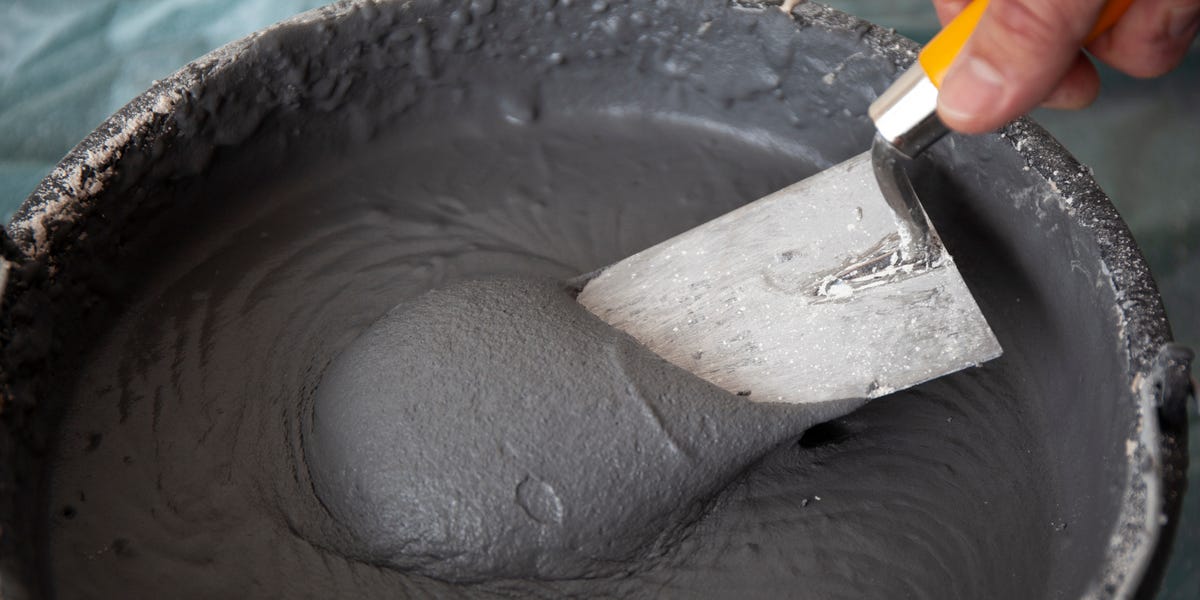
Concrete is not exactly famous for having a glamorous social life. It sits there quietly under highways, homes, bridges, sidewalks, and parking garages, doing the world’s least flashy but most important job: holding civilization up. But every so often, this gray workhorse gets a plot twist. And this one is a good one.
Researchers have developed a new concrete-like material called StarCrete that, in laboratory testing, reached compressive strength levels of about 72 megapascalsmore than double the roughly 32 megapascals often associated with ordinary concrete. That headline is real, the test data are real, and the idea is genuinely fascinating. The catch, which is also the fun part, is that this is not your average driveway mix. StarCrete was designed with space construction in mind, using simulated Martian soil, potato starch, and a small amount of salt.
Yes, potato starch. Concrete has officially entered its comfort-food era.
Still, this is more than a quirky science story. The breakthrough points to a bigger shift in modern materials science: researchers are no longer asking only how to make concrete harder. They are asking how to make it stronger, tougher, more durable, more sustainable, and easier to produce with local materials. That matters because concrete is everywhere, and even small improvements in performance or emissions can ripple across the entire built environment.
What Is This New Concrete, Exactly?
The material behind the title is StarCrete, a starch-based biocomposite developed for off-world construction. Instead of relying on traditional Portland cement as the main binder, the researchers used ordinary starchderived from potatoesas the binding ingredient in a mixture with simulated extraterrestrial dust. In tests, the Martian version reached about 72 MPa, while a lunar version made with simulated moon dust reportedly performed even better, passing 90 MPa.
That is a serious result, because conventional concrete used in many everyday applications often falls within a much lower compressive-strength range. In simple terms, compressive strength measures how much squeezing force a material can withstand before it fails. For columns, slabs, walls, and many structural elements, that number matters a lot.
StarCrete also improved on an earlier off-world material concept that used proteins from human blood and compounds from urine as binders. That earlier formulation was scientifically clever, but let’s be honest: very few astronauts are likely to say, “Sure, I’ll donate bodily fluids so we can finish the guest room.” Potato starch is a much more practical option if future crews are already growing food as part of a life-support system.
So yes, the new material is stronger than ordinary concrete in lab compression tests. But the bigger story is why researchers are chasing this result. Shipping conventional building materials from Earth to Mars would be absurdly expensive. If future missions can use local dust plus a simple binder to produce shelter, landing pads, or protective walls, that changes the economics of extraterrestrial construction in a major way.
Why “Twice as Strong” Is ImpressiveBut Not the Whole Story
Whenever a headline says a material is “twice as strong,” it is worth slowing down for a second. Stronger in what sense? Under what test? For what use?
Concrete is a tricky material because it is excellent in compression but weak in tension. That is why standard concrete structures on Earth often rely on steel reinforcement. A material can post a fantastic compressive-strength number in the lab and still face major real-world questions about cracking, shrinkage, fatigue, moisture movement, freeze-thaw durability, fire resistance, and long-term behavior.
That is the lesson engineers have learned over decades of concrete research. Cracks are not just cosmetic drama lines in a sidewalk. They can allow water, salt, and chlorides to penetrate deeper into the material, eventually accelerating corrosion of reinforcement and shortening service life. In other words, a better concrete is not only one that survives a crushing test. It is one that stays durable in ugly real-world conditions where weather, traffic, chemicals, and time all gang up on it at once.
That is why the most exciting concrete research today usually combines several goals at once: higher strength, better crack resistance, longer lifespan, and lower carbon emissions. StarCrete is exciting because it pushes the strength conversation in an unusual direction. But it also belongs to a bigger wave of innovation that is rethinking what concrete can be.
Why the World Wants Better Concrete So Badly
Concrete is one of the most widely used materials on Earth, which is both its superpower and its climate problem. The biggest emissions issue usually comes from cement, the binding ingredient in concrete. Cement production is energy-intensive and releases carbon dioxide both from fuel use and from the chemical process of making clinker.
That means every advance in concrete has two scorecards. One is structural performance. The other is environmental impact.
This is where the broader context gets interesting. On Earth, many researchers are not trying to replace concrete entirely. They are trying to make it smarter. That includes using supplementary cementitious materials, improving curing methods, storing carbon dioxide inside concrete, developing better testing and mix-design tools, and even using AI to find alternative cement recipes that can cut emissions while preserving performance.
And here is the part that surprises people: stronger is not always greener. If producers “overdesign” concrete and use more cement than necessary just to create a safety cushion, emissions rise. So the smartest future concrete may not simply be the strongest concrete ever made. It may be the concrete that is exactly as strong as needed, far more durable than today’s mixes, and far less carbon-intensive to produce.
How StarCrete Fits Into the Bigger Concrete Revolution
StarCrete sounds unusual because it is unusual. But in spirit, it fits right alongside several other serious innovations already reshaping the field.
1. Ultra-high-performance concrete is raising the bar
Transportation agencies in the United States have spent years studying ultra-high-performance concrete (UHPC), a dense, fiber-reinforced material with compressive strengths far beyond normal mixes. UHPC can reduce permeability, improve toughness, and allow slimmer structural components. In bridge work, it has already proven valuable for connections, repairs, and long-lasting structural elements.
The existence of UHPC shows that the industry already knows how to build stronger concrete. The challenge is making those gains practical, scalable, and affordable for more applications. StarCrete is not competing directly with UHPC for a highway bridge tomorrow morning, but it reinforces the same idea: the era of “plain old concrete” is ending.
2. Carbon-storing concrete is moving from theory to practice
Another promising direction is carbonated concrete, where carbon dioxide is introduced into the material in controlled ways. The goal is to lock carbon into the concrete while maintaining strength and durability. That is a big deal because it attacks concrete’s climate problem without asking the construction industry to give up a material it depends on.
Some recent approaches suggest that concrete can absorb and store carbon dioxide during manufacturing or curing while preserving performance. That is not science fiction. It is engineering with a climate strategy attached.
3. Self-healing concrete could save money and time
Researchers are also working on self-healing concrete that can seal cracks before they turn into expensive failures. That matters because maintenance is often the hidden villain of infrastructure budgets. A bridge deck does not fail all at once like in an action movie. More often, it slowly degrades, crack by crack, season by season, repair bill by repair bill.
If concrete can heal small cracks on its own, even partially, the result could be fewer repairs, longer service life, and lower life-cycle emissions. Suddenly the real competition is not just between one concrete mix and another. It is between repair-prone concrete and resilient concrete.
4. Ancient concrete is inspiring modern durability
Even ancient Roman concrete is back in the conversation. Researchers studying Roman structures have found clues about why some of them remained astonishingly durable over long time spans. Those insights are helping modern scientists think differently about crack behavior, mineral reactions, and long-term resilience.
So while StarCrete sounds futuristic, it is actually part of a wonderfully weird timeline that runs from Roman harbors to modern highways to potential homes on Mars.
Could This New Concrete Work on Earth?
This is where expectations need a reality check. StarCrete is not about to replace the ready-mix truck that shows up outside a suburban home remodel next Tuesday. It was developed as a low-energy, locally sourced material for extraterrestrial environments, not as an immediate drop-in replacement for every foundation, bridge pier, or apartment tower on Earth.
That said, the idea behind it absolutely has relevance here at home.
First, it proves that bio-based binders deserve serious attention. Second, it shows that local materials can sometimes be combined in clever ways to deliver surprisingly strong results. Third, it challenges the assumption that next-generation concrete must always come from more industrial complexity. Sometimes innovation is not about adding more exotic chemistry. Sometimes it is about rethinking the binder.
For Earth-based construction, any new concrete-like material would still need extensive testing for building-code compliance, long-term durability, moisture behavior, temperature cycling, fire performance, workability, reinforcement compatibility, and economic feasibility. That is a long road. The concrete industry does not adopt new structural materials because a lab result looked cool on the internet. It adopts them when they perform consistently, predictably, and safely.
In that sense, StarCrete is best understood as a signal, not a finished product for mass terrestrial deployment. The signal is that concrete science is moving fast, and the future will probably include many specialized materials instead of one universal mix for everything.
What This Means for the Future of Construction
The headline says this new kind of concrete is twice as strong as conventional concrete. The deeper takeaway is that the future of construction will likely depend on materials tailored to context.
On Mars, that could mean potato-starch biocomposites made from local regolith. On Earth, it might mean UHPC in bridge joints, carbon-storing concrete in precast panels, self-healing materials in high-maintenance infrastructure, or AI-optimized cement blends that cut emissions without sacrificing reliability.
The days when concrete was treated like one generic gray blob are fading. Engineers now see it more like a platform technologysomething that can be redesigned, tuned, upgraded, and specialized. That is great news for infrastructure, for climate strategy, and frankly for anyone tired of watching new sidewalks turn into cracked mosaics after a few punishing winters.
And perhaps the funniest part is that one of the most intriguing ideas in advanced construction currently owes a lot to potatoes. Humanity really does have a gift for turning lunch into engineering.
Experience and Real-World Perspective: What Better Concrete Would Actually Change
Talk to anyone who has spent time around buildings, roads, parking decks, retaining walls, or bridge repairs, and you hear the same theme over and over: concrete rarely fails in a dramatic movie scene. It fails in slow motion. A hairline crack appears. Water gets in. Freeze-thaw cycles widen the damage. Salts reach the reinforcement. Rust expands. Corners spall. Repairs begin. Then the repairs need repairs. Suddenly a structure that looked perfectly fine a few years earlier becomes a rolling maintenance project with an expensive personality.
That is why materials breakthroughs like StarCrete catch so much attention. People do not get excited only because a test cylinder posted a bigger number. They get excited because better concrete hints at fewer headaches down the line. A contractor sees fewer callbacks. A city engineer sees a bridge deck lasting longer before its next intervention. A property owner sees less patching, less water intrusion, and fewer ugly cracks making a “new” surface look tired before it even hits middle age.
There is also the experience of waste. Anyone around construction long enough knows how often materials are overused just to stay on the safe side. That instinct is understandable, but it is not always efficient. If future concrete systems can be modeled more accurately, tested more consistently, and engineered more precisely, teams can stop playing the old game of “just add more and hope.” That saves money, reduces embodied carbon, and improves confidence at the same time.
Then there is the design experience. Stronger, tougher concrete can open doors for thinner sections, longer spans, lighter prefabricated pieces, and details that were once too risky or too maintenance-heavy to justify. For architects and structural engineers, that is not a minor upgrade. That changes the conversation from “what can we get away with?” to “what can we responsibly build now that the material is better?”
And on the sustainability side, the experience could be even bigger. The public often hears about breakthrough climate technologies as if they will arrive in one magic package and instantly fix everything. Real life is messier. Progress usually comes from dozens of improvements layered together: a lower-carbon binder here, better crack resistance there, longer service life somewhere else, less cement overdesign in another place. A stronger concrete-like material matters because it might become one piece of that larger puzzle.
So the real experience connected to this topic is not just the thrill of a clever new recipe. It is the possibility of a built world that ages more gracefully, wastes less material, demands fewer repairs, and performs better under stresswhether that stress comes from traffic, storms, heat, salt, or, one day, life on another planet. That is when a concrete story stops being niche engineering news and starts sounding like something everyone should care about.
Conclusion
StarCrete’s “twice as strong” result is the kind of headline that earns a click, but it also earns serious attention. The material shows that unconventional binders and locally available resources can produce surprisingly high performance under the right conditions. More importantly, it helps spotlight a broader transformation in concrete science, where strength, durability, resilience, and lower emissions are all being pursued at the same time.
That is the real breakthrough. Concrete is no longer just the thing we pour. It is becoming the thing we engineer much more intelligently. And if that smarter future happens to involve Mars dust and potatoes, honestly, that only makes the story better.