

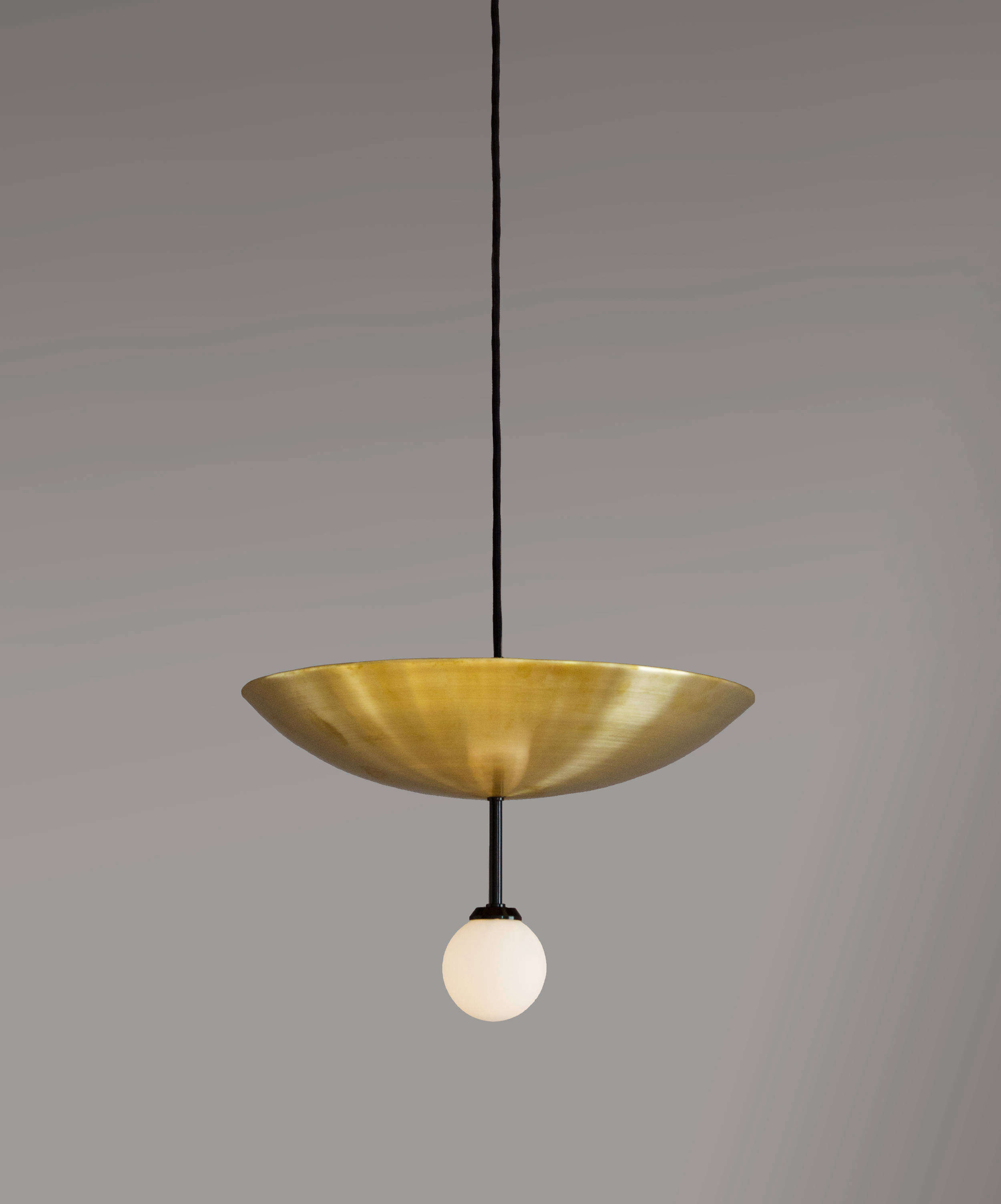
Some lighting fixtures politely illuminate a room. Others enter like they have been cast in a small, extremely stylish theater production. Atelier Areti belongs firmly in the second camp. The London-connected design studio has built a reputation for sculptural lamps that balance geometry, material warmth, and just enough visual mischief to keep a minimalist interior from becoming a beige hostage situation.
Founded by sisters Gwendolyn and Guillane Kerschbaumer, Areti creates lighting that feels architectural without becoming cold, decorative without becoming fussy, and artistic without requiring a gallery label beside the sofa. From the memorable Up Pendant and Calyx Light to later collections that explore color, flowers, leaves, and expressive forms, Areti proves that modern lighting can be both intellectually sharp and emotionally inviting.
Why Areti Lighting Still Feels Fresh
Plenty of contemporary lighting brands can produce a globe, a brass rod, and a matte-black finish. Areti’s difference lies in how it arranges familiar ingredients. A sphere may appear suspended at the end of a slender arm. A brass dish may turn a bulb into a tiny moonrise. A geometric frame may lean, hang, or sit against a wall as if it is testing the limits of gravity for fun.
The studio was founded in 2008 and works across the United Kingdom, Germany, and Europe, with a strong emphasis on design, craftsmanship, customization, and made-to-order production. That approach matters because Areti lights are not designed as disposable décor. They are meant to occupy space with intention, becoming part lamp, part sculpture, and part conversation starter for guests who suddenly develop strong opinions about brushed brass.
The Kerschbaumer sisters bring backgrounds in visual art, sculpture, architecture, product design, and art history to the studio. That multidisciplinary mix is visible in nearly every piece. An Areti pendant does not simply hang from the ceiling; it draws a line through the room. A wall light does not merely brighten a corridor; it changes how the wall is read. The fixture becomes an active participant in the interior rather than a final detail chosen after everyone is tired from selecting cabinet pulls.
The Original Trio: Up, Calyx, and Plant
The Up Pendant: Small Gesture, Big Personality
The Up Pendant captures one of Areti’s most appealing habits: taking a simple lighting idea and making it feel unexpectedly poetic. Its composition combines powder-coated metal, brushed brass, and white glass, producing a fixture that is clean-lined but far from sterile. Depending on the variation, the light seems to lift upward or direct its glow downward from a brass bowl-like form.
This is the sort of pendant that works beautifully in a breakfast nook, above a narrow dining table, over a bedside table, or in a hallway where a standard flush mount would otherwise provide the emotional excitement of office carpeting. Its modest scale allows it to be used alone, while its graphic shape also makes it ideal for a repeated arrangement in pairs or rows.
The lesson behind the Up Pendant is simple: a light does not need to be enormous to make a room feel designed. A well-proportioned fixture can create impact through silhouette, material contrast, and placement. In other words, sometimes the lighting equivalent of a whisper is more memorable than a chandelier yelling from the ceiling.
The Calyx Light: Botanical Without Becoming Literal
The Calyx Light takes inspiration from the protective cup-like structure that surrounds a flower bud, but it does not turn the ceiling into a garden center. Instead, it uses brass forms and a textile-covered cable to create a sculptural pendant with a soft botanical reference. Available in variations using milled or cast brass, the design lets material texture do much of the work.
This is where Areti’s lighting design becomes particularly interesting. The fixture hints at nature, but it remains disciplined. It is not covered in leaves, vines, or enough floral detail to make a Victorian parlor nervous. The appeal comes from the tension between organic inspiration and controlled geometry.
In a dining room, the Calyx Light can add warmth to stone, plaster, oak, or painted cabinetry. In a bedroom, it can make a simple space feel more intimate without introducing visual clutter. In an entryway, it offers a gentle first impression: sophisticated, a little unusual, and not remotely interested in being mistaken for builder-grade lighting.
The Plant Light: A Sculptural Nudge Toward Nature
Areti’s Plant Light extends the studio’s interest in organic references. Rather than treating nature as a decorative sticker applied after the fact, the design uses plant-like form as a structural idea. This approach is consistent with Areti’s broader work, where branches, leaves, flowers, and stems are often translated into precise metal lines, globe lights, and balanced compositions.
The result is not rustic lighting. It is modern lighting with a pulse. The Plant Light is especially effective in interiors that need a break from hard edges: kitchens full of stone and steel, apartments with straight-lined built-ins, or living rooms where every object seems to be competing for an architecture degree.
From Pure Geometry to Romantic Modernism
Areti’s later collections show how the studio has expanded beyond its earlier language of spheres, cones, rods, and discs. The Elements collection explored the basic anatomy of a light: a base, an arm, and a source of illumination. By shifting, inverting, stretching, or rebalancing one of those elements, the designers created fixtures that feel both rational and slightly offbeat.
Then came the more lyrical Reflections collection, which brought in references to tulips, leaves, trees, and the curve of a swan’s neck. The important part is that these forms remain organized. A leaf does not flop around like it has given up on life; it is held within a deliberate composition. A floral motif is balanced by strong geometry. Romance is allowed into the room, but it is asked to remove its muddy boots at the door.
This evolution explains why Areti’s lighting feels relevant in so many different interiors. The studio can serve someone who wants strict minimalism, someone who prefers warm modernism, and someone who wants their ceiling fixture to feel like a charmingly strange object discovered in an art collector’s apartment.
How to Choose the Right Areti Light for Your Home
Start With the Room’s Job
Before choosing a sculptural pendant or wall lamp, decide what the light needs to do. Is it task lighting for a desk? Ambient lighting for a living room? A visual focal point over a dining table? Accent lighting in a corridor? Beautiful lighting can still be frustrating if it leaves you trying to chop vegetables by the glow of a decorative bulb.
For workspaces, look for directable or downward-focused light. For dining areas, pendants with a warm, diffuse glow can create a more comfortable atmosphere. For hallways and entryways, wall lights or compact pendants can turn overlooked circulation space into a design moment.
Consider Scale Before Falling in Love
Areti lighting often looks light and airy in photographs, but a sculptural fixture can still dominate a small room. Measure ceiling height, table width, wall space, and visual clearance. A dining pendant should feel connected to the table below it, not like a spacecraft hovering above a hostage negotiation.
In rooms with low ceilings, consider wall-mounted fixtures, compact pendants, or a small cluster rather than one oversized piece. In rooms with generous height, a vertical composition or multiple-globe pendant can make the most of the volume without overwhelming the furniture.
Use Material Contrast Intentionally
Brass, powder-coated metal, glass, stone, and painted surfaces appear frequently in Areti’s design vocabulary. These materials are most effective when they create contrast with the room. A brass fixture can warm up cool plaster walls. A black metal lamp can bring structure to a pale room. White glass globes can soften dark wood, colorful tile, or textured stone.
The goal is not to match every finish perfectly. A room where every metal is identical can feel overly coordinated, like a hotel lobby that is trying very hard to receive a compliment. Mixing finishes carefully usually creates a richer result.
Where Areti Lighting Works Best
In a dining room, an Areti pendant can become the visual center of the table, especially when paired with natural wood, stoneware, and low-profile furniture. In a kitchen, a linear or repeated pendant arrangement can add warmth above an island while still providing useful light. In a hallway, a graphic wall light can transform an area usually reserved for shoes, coats, and the occasional mysterious pile of mail.
Bedrooms are another strong setting. A pair of compact pendants or wall lamps can replace traditional bedside lamps, freeing nightstand space and giving the room a more tailored look. In a living room, a sculptural floor or wall light can provide a softer alternative to overhead lighting and help create layers of illumination for reading, entertaining, or dramatically staring out the window during a rainstorm.
Craftsmanship, Customization, and the Value of a Long-Lived Fixture
Areti’s made-to-order approach supports a more thoughtful relationship with lighting. These fixtures are not designed to be swapped out every time a social-media trend decides that chrome is over, brass is over, or lamps should apparently resemble giant mushrooms again. Their forms are built around proportion, material quality, and visual longevity.
Customization can also be valuable for architects, interior designers, and homeowners working with unusual ceiling heights, specific finishes, hospitality projects, or electrical requirements. Before ordering, confirm dimensions, bulb type, mounting details, dimmer compatibility, local electrical standards, and lead time. A beautiful pendant is much less romantic when it arrives and discovers that the ceiling junction box has other plans.
Final Thoughts: Lighting That Does More Than Light a Room
The appeal of Areti lighting is not just that it is beautiful. It is that the studio understands light as an object, a line, a material experience, and a mood-setting tool. The Up Pendant, Calyx Light, and Plant Light demonstrate how much personality can be created from carefully balanced geometry and expressive materials. Later collections push that language further, adding color, romance, and figurative references without losing the studio’s disciplined core.
For homeowners and designers looking for modern lighting that feels less predictable than a standard globe pendant and less theatrical than a crystal chandelier, Areti offers a compelling middle path: sculptural, useful, refined, and just strange enough to be unforgettable.
Experiences With Areti-Inspired Lighting: Living With Sculpture After Dark
The real test of designer lighting begins after the installation crew leaves, the packaging disappears, and the room returns to ordinary life. A pendant may look magnificent in a studio photograph, but can it survive breakfast, laundry, late-night emails, family dinners, and the annual moment when someone asks whether the light fixture is supposed to look like that? Areti-style lighting tends to perform well in these everyday scenes because it creates atmosphere without demanding constant attention.
Imagine walking into a kitchen early in the morning. The room is still quiet, the coffee machine is making noises that suggest it has a personal grievance, and the only light on is a brass-and-glass pendant above the island. Instead of blasting the room with harsh overhead brightness, the fixture creates a warmer pool of light. The kitchen feels less like a work zone and more like a place where a person might willingly make toast.
In a dining room, sculptural lighting changes the rhythm of an evening. During the day, a pendant can read as a graphic object against the ceiling. At night, it becomes part of the ritual of gathering. Its glow defines the table, softens faces, and makes even takeout noodles feel slightly more intentional. This is not magic, exactly. It is simply the difference between being lit and being well lit.
Bedrooms offer another kind of experience. Replacing bulky bedside lamps with pendants or wall lights can make a compact room feel calmer and more spacious. The absence of crowded nightstands is surprisingly powerful. Suddenly there is room for a book, a glass of water, and the phone charger that previously lived beneath a tangled pile of cables like an endangered species.
The visual experience changes throughout the day, too. In daylight, brass can reflect a muted warmth while white glass softens the fixture’s silhouette. At dusk, shadows become more noticeable. A long arm, a circular disc, or a cluster of globes may cast subtle patterns on walls and ceilings. The light becomes less of a product and more of a quiet performance that shifts with the room.
There is also a practical emotional benefit to choosing a fixture with a strong identity. It helps a room feel finished. Many interiors have good furniture, decent paint, and carefully selected rugs, yet still seem slightly unfinished because the lighting was treated as an afterthought. A considered pendant or wall light can connect those elements. It gives the eye somewhere to land and tells the room what kind of place it wants to be.
Of course, living with sculptural lighting also means accepting that people will notice it. Guests may ask who designed it. Someone may describe it as art. Someone else may tilt their head and say it reminds them of a flower, a satellite, or a very elegant piece of plumbing. That is part of the charm. Good lighting should not need to explain itself, but it should be interesting enough to start a conversation when the conversation needs help.
Ultimately, the best experience with Areti lighting is not about owning a status object. It is about using light to make daily life feel a little more deliberate. The fixture is there when the room wakes up, when people gather, when work runs late, and when the house finally gets quiet. That is a lot to ask from a lamp. Fortunately, Areti seems to enjoy the assignment.