

For decades, starting an antidepressant often came with an irritating instruction: take the medication every day, watch for side effects, and wait several weeks to learn whether it is actually helping. Foork, or feel interested in anything beyond staring at the ceiling, “please wait” is not exactly a thrilling treatment plan.
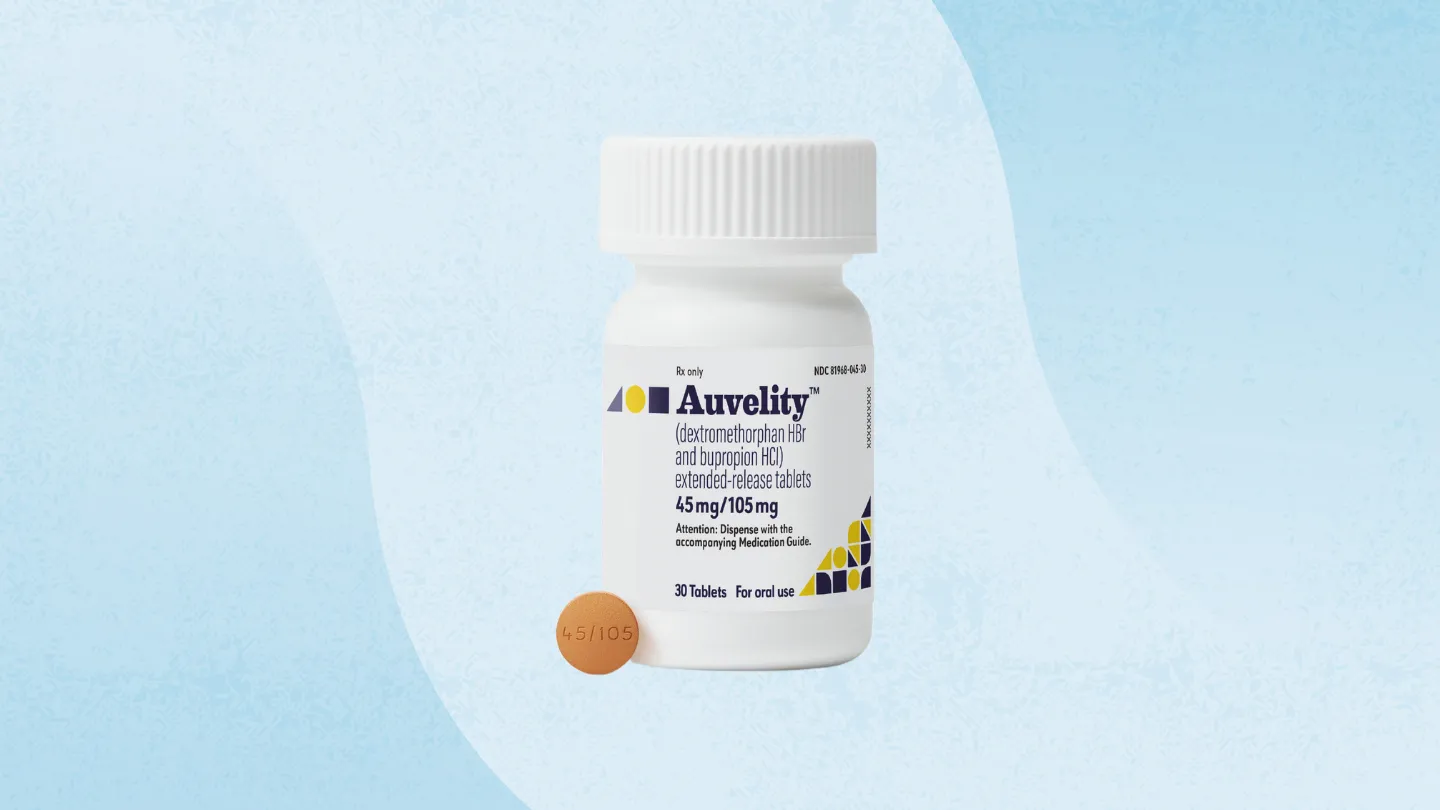
Auvelity offers a different approach. The U.S. Food and Drug Administration first approved Auvelity on August 18, 2022, for the treatment of major depressive disorder in adults. The prescription tablet combines dextromethorphan and bupropion and acts through pathways that differ from those targeted by most traditional antidepressants. Its clinical studies also detected improvement in depressive symptoms as early as the first week of treatment.
Why the FDA Approval of Auvelity Mattered
Major depressive disorder, frequently called clinical depression, is more than a temporary bad mood. It can involve persistent sadness, loss of pleasure, low energy, sleep or appetite changes, guilt, difficulty concentrating, slowed thinking, restlessness, and thoughts of death or suicide. Symptoms generally interfere with everyday responsibilities and continue for at least two weeks.
Depression treatment may include psychotherapy, medication, lifestyle support, brain-stimulation treatments, or a combination of approaches. Selective serotonin reuptake inhibitors, serotonin-norepinephrine reuptake inhibitors, bupropion, and other established antidepressants help many people. However, finding the right treatment can involve trial and error.
Traditional antidepressants often require four to eight weeks to produce their full effects, although sleep, appetite, or concentration may improve earlier. This delay can be discouraging and clinically significant, particularly for people with severe symptoms. Auvelity attracted attention because its pivotal placebo-controlled trial demonstrated a measurable benefit beginning at week one. That does not mean every patient will feel dramatically better within seven days, but it represents a potentially valuable difference in the antidepressant landscape. time of its original approval, Auvelity was notable as the first oral treatment for major depressive disorder designed around NMDA receptor antagonism. In other words, it gave psychiatrists another neurological door to knock on instead of repeatedly ringing the serotonin doorbell.
What Is Auvelity?
Auvelity is the brand name for an extended-release combination of two active ingredients:
- Dextromethorphan hydrobromide: an uncompetitive N-methyl-D-aspartate, or NMDA, receptor antagonist and a sigma-1 receptor agonist.
- Bupropion hydrochloride: an aminoketone antidepressant that affects norepinephrine and dopamine activity and inhibits the CYP2D6 enzyme.
Each tablet used for major depressive disorder contains 45 milligrams of dextromethorphan hydrobromide and 105 milligrams of bupropion hydrochloride.
Dextromethorphan may sound familiar because it has long been included in certain over-the-counter cough medicines. That does not make Auvelity a fancy bottle of cough syrup wearing a necktie. The prescription formulation, dose, extended-release design, pharmacology, medical screening, and safety requirements are different. Patients should never attempt to reproduce Auvelity by combining cough products with bupropion.
Using nonprescription dextromethorphan products in this way could result in the wrong dose, accidental exposure to additional cold-medicine ingredients, dangerous interactions, serotonin syndrome, seizures, poisoning, or other serious complications.
How Does Auvelity Work for Clinical Depression?
Dextromethorphan Targets NMDA and Sigma-1 Receptors
The exact way Auvelity relieves depression is not completely understood. Dextromethorphan acts as an NMDA receptor antagonist and sigma-1 receptor agonist. These actions influence glutamate-related signaling, cellular communication, and brain networks associated with mood and emotional processing.
Glutamate is one of the brain’s major excitatory chemical messengers. Researchers have increasingly studied abnormal glutamate signaling as a possible contributor to depression. Interest in this pathway grew partly from research involving ketamine and esketamine, which can produce rapid antidepressant effects in some patients.
Auvelity is not ketamine, however. It is an oral medication with its own ingredients, dosing schedule, evidence, benefits, and risks. Putting every NMDA-related treatment into one bucket would be like calling every vehicle with wheels a bicycle.
Bupropion Helps Dextromethorphan Remain Active
The bupropion component performs two jobs. It has antidepressant activity of its own, and it inhibits CYP2D6, an enzyme that would otherwise metabolize dextromethorphan relatively quickly. Slowing that metabolic process increases and prolongs exposure to dextromethorphan.
Bupropion is a relatively weak inhibitor of norepinephrine and dopamine reuptake and does not inhibit serotonin reuptake. The FDA label notes that the precise mechanisms through which both ingredients improve major depressive disorder remain uncertain. The most accurate description is therefore not “scientists solved depression,” but “researchers developed a clinically useful combination based on several promising biological pathways.”
What Did the Auvelity Clinical Trials Find?
The Six-Week Placebo-Controlled Study
FDA approval relied primarily on a six-week Phase 3 study commonly known as GEMINI, along with supporting evidence from a second study comparing the combination with sustained-release bupropion.
In the placebo-controlled study, adults ages 18 to 65 with major depressive disorder received either Auvelity or a placebo. Depression severity was measured with the Montgomery-Åsberg Depression Rating Scale, or MADRS. This clinician-administered scale evaluates symptoms such as sadness, sleep changes, reduced appetite, difficulty concentrating, lack of energy, pessimism, and suicidal thoughts.
At the beginning of the study, average MADRS scores were approximately 33 points in both groups, reflecting substantial depressive symptoms. By week six, the least-squares mean score had decreased by 15.9 points in the Auvelity group and 12.1 points in the placebo group. The adjusted difference favoring Auvelity was 3.9 points, and the difference was statistically significant.
Importantly, the difference between Auvelity and placebo was already statistically significant at weeks one and two. The study does not prove that every user will improve in one week, and an early statistical difference is not the same thing as instant remission. It does show that the treatment effect separated from placebo earlier than is commonly expected with many standard antidepressants. rison With Bupropion Alone
A separate randomized trial compared dextromethorphan-bupropion with bupropion alone. The combination produced a greater average reduction in MADRS scores across the six-week treatment period.
At week six, remission was reported in 46.5% of participants receiving the combination and 16.2% receiving bupropion alone in the study’s efficacy population. Response, defined as at least a 50% reduction in MADRS score, occurred in 60.5% and 40.5%, respectively. This trial helped demonstrate that dextromethorphan contributed meaningfully to the combination’s antidepressant effect. the Results Do Not Tell Us
Clinical trial averages cannot predict an individual outcome. Some patients may experience substantial improvement, some may improve only partially, and others may receive no meaningful benefit. Trial participants are also carefully selected and monitored, so results may not fully represent every person encountered in everyday psychiatric practice.
Longer-term research and real-world experience are important for understanding durability, adherence, uncommon adverse reactions, and how Auvelity compares with other treatments across diverse patient groups.
How Is Auvelity Taken for Major Depressive Disorder?
For adult major depressive disorder, the current FDA-recommended starting dosage is one 45-mg/105-mg tablet each morning. On day four, the dosage is increased to one tablet twice daily, with doses separated by at least eight hours. Patients should not take more than two doses in one day.
The tablets may be taken with or without food and must be swallowed whole. They should not be divided, crushed, or chewed. Extended-release tablets are engineered to release medication in a controlled manner; attacking one with a kitchen knife is not clever pharmaceutical innovation.
A lower maximum dosage may be required for people with moderate kidney impairment, known CYP2D6 poor metabolism, or concurrent use of a strong CYP2D6 inhibitor. Severe liver impairment is another important concern. Dosing must be determined by a qualified prescriber rather than copied from another patient’s instructions.
Common Auvelity Side Effects
In the six-week placebo-controlled study of adults with major depressive disorder, the most common adverse reactions occurring in at least 5% of Auvelity-treated patients and at more than twice the placebo rate were:
- Dizziness: 16%
- Headache: 8%
- Diarrhea: 7%
- Sleepiness: 7%
- Dry mouth: 6%
- Sexual dysfunction: 6%
- Excessive sweating: 5%
Nausea occurred in 13% of Auvelity-treated patients and 9% of placebo-treated patients. Anxiety, constipation, decreased appetite, insomnia, fatigue, tingling sensations, and blurred vision were also reported.
Dizziness deserves special attention. Patients should understand how the medication affects them before driving, climbing ladders, operating equipment, or attempting any activity in which unexpectedly feeling like the room has become a carnival ride could be dangerous.
In the study, 4% of Auvelity-treated participants stopped treatment because of adverse reactions, compared with none in the placebo group. Anxiety was the adverse reaction most clearly associated with discontinuation. Side effects should be discussed with the prescriber, especially when they are persistent, severe, or worsening.
Serious Warnings and Contraindications
Suicidal Thoughts and Behavioral Changes
Auvelity carries the boxed antidepressant warning concerning suicidal thoughts and behaviors in pediatric and young adult patients. It is not approved for pediatric use.
Patients of every age should be monitored for clinical worsening, unusual behavioral changes, agitation, or emerging suicidal thoughts, particularly during the first months of treatment and following dosage changes. A sudden increase in energy before mood has fully improved may also require close attention.
Seizure Risk
Bupropion can cause seizures, and the risk increases with dose and with certain medical conditions, medications, or substance-use patterns. Auvelity is contraindicated in people with a seizure disorder or a current or previous diagnosis of anorexia nervosa or bulimia.
It is also contraindicated during abrupt discontinuation of alcohol, benzodiazepines, barbiturates, or antiepileptic medications. Patients should disclose head injuries, strokes, brain tumors, metabolic disorders, heavy alcohol use, stimulant use, and all medicines that may lower the seizure threshold.
Blood Pressure and Bipolar Disorder
Auvelity may raise blood pressure or worsen hypertension. Blood pressure should be evaluated before treatment and monitored periodically.
Antidepressant treatment can also trigger mania or hypomania in susceptible people. Prescribers should screen for personal and family histories of bipolar disorder. A person whose depression suddenly transforms into almost no need for sleep, racing thoughts, impulsive spending, grand plans, or unusually intense energy needs prompt medical assessmentnot congratulations on becoming “extremely productive.”
Serotonin Syndrome and Drug Interactions
Combining Auvelity with certain serotonergic drugs, including some SSRIs and tricyclic antidepressants, may increase the risk of serotonin syndrome. Symptoms can include agitation, confusion, sweating, fever, rapid heart rate, muscle stiffness, tremor, overactive reflexes, nausea, vomiting, or diarrhea.
Auvelity must not be taken with monoamine oxidase inhibitors or within the required 14-day separation period. Reversible MAO inhibitors such as linezolid and intravenous methylene blue are also important concerns.
Patients should tell their clinician and pharmacist about every prescription drug, over-the-counter product, cold remedy, vitamin, and supplement they use. This is especially important because many cough and cold products contain dextromethorphan, while several medications contain bupropion. Accidentally doubling an ingredient is surprisingly easy when medicine cabinets begin resembling tiny, poorly organized pharmacies.
Who Might Be Considered for Auvelity?
Auvelity is FDA approved for major depressive disorder in adults. Its depression indication does not state that a patient must first fail a specific number of conventional antidepressants. Nevertheless, treatment decisions depend on medical history, previous medication response, symptom severity, interactions, insurance requirements, cost, pregnancy considerations, and patient preferences.
A clinician might discuss Auvelity when faster symptom improvement is especially desirable, when previous antidepressants have not provided adequate relief, or when its pharmacological profile appears appropriate. It may be unsuitable for someone with seizure-related risk factors, an eating-disorder history, uncontrolled hypertension, bipolar-spectrum symptoms, a significant interaction, or certain kidney or liver problems.
Auvelity should not be viewed as automatically “better” than SSRIs, SNRIs, psychotherapy, transcranial magnetic stimulation, esketamine, or other depression treatments. The best choice is the one that balances effectiveness, safety, accessibility, tolerability, and the individual patient’s circumstances.
Auvelity Is Medication, Not the Entire Treatment Plan
Medication can reduce symptoms, but recovery often involves more than a prescription. Psychotherapy may help patients address distorted thinking, trauma, relationship problems, avoidance, stress, and habits that medication alone cannot reorganize.
Regular sleep, physical activity, social connection, reduced alcohol or drug use, and treatment of medical conditions can also support recovery. These steps are not magical cures, and telling a severely depressed person to “just exercise and think positively” is roughly as useful as telling someone with a broken ankle to walk it off. They are supportive pieces of a broader, individualized plan.
Follow-up appointments are especially valuable during the first weeks. Clinicians may monitor mood, anxiety, sleep, blood pressure, adherence, side effects, activation, and suicidal thinking. Patients should not stop Auvelity suddenly or change the dosage without guidance from the prescriber.
Frequently Asked Questions About Auvelity
How quickly does Auvelity work?
In the pivotal placebo-controlled study, a statistically significant difference in depressive symptoms was observed by week one. Individual experiences vary, and some patients may need more time before noticing a useful change.
Is Auvelity approved for treatment-resistant depression?
Auvelity is broadly approved for major depressive disorder in adults rather than being limited to treatment-resistant depression. Evidence does not guarantee that it will work after multiple other treatments have failed.
Does Auvelity contain a cough suppressant?
It contains dextromethorphan, an ingredient also used in certain cough medicines. Auvelity is a specialized prescription formulation combined with bupropion. Over-the-counter cough medicines are not substitutes.
Can Auvelity be taken with an SSRI?
Some clinicians may prescribe combinations after reviewing the risks, but using Auvelity with SSRIs can increase the risk of serotonin syndrome. No antidepressant combination should be started without professional medication review.
Is Auvelity a controlled substance?
The FDA label states that its ingredients are not controlled substances. That does not make misuse safe. Dextromethorphan can produce serious toxic effects when abused, particularly at high doses or in dangerous combinations.
Has the FDA approved Auvelity for anything else?
Yes. On April 30, 2026, the FDA expanded Auvelity’s approval to include treatment of agitation associated with dementia due to Alzheimer’s disease in adults. That is a separate indication with a different titration schedule. The medication was initially approved in 2022 for adult major depressive disorder.
What Starting Auvelity May Feel Like: A Realistic Treatment Experience
The following approximately 500-word discussion is a hypothetical composite based on common treatment considerations. It is not the story of a specific patient and should not be interpreted as a guaranteed outcome.
Before the First Dose
Imagine an adult named Jordan who has been experiencing months of low mood, exhaustion, poor concentration, early-morning waking, and a complete loss of interest in hobbies. Jordan has tried another antidepressant but stopped because the improvement was limited and the side effects were frustrating.
Before prescribing Auvelity, the clinician reviews Jordan’s medication list, blood pressure, alcohol use, seizure risk, eating-disorder history, kidney and liver health, and personal and family history of bipolar disorder. This conversation may feel surprisingly detailed, but it is not paperwork theater. Each question helps identify avoidable risks.
Jordan is instructed to take one tablet in the morning for the first three days. The pharmacist emphasizes that the tablet must be swallowed whole and that cold medicines containing dextromethorphan should not be added casually.
The First Several Days
During the first morning, Jordan does not suddenly leap from bed singing show tunes. Rapid-acting does not mean cinematic. The first noticeable effect is mild dizziness about two hours after the dose, followed by a slightly dry mouth.
Jordan avoids driving until it is clear how the medication affects balance and alertness. Drinking water and standing up slowly help, although persistent dizziness would still warrant a call to the prescriber.
On day four, the dosage increases to two tablets per day, spaced at least eight hours apart. Jordan uses phone reminders because depression can turn simple routines into elaborate scavenger hunts. The second dose is scheduled early enough that any activating effect is less likely to interfere with sleep.
The First Two Weeks
Near the end of the first week, Jordan notices that answering email requires slightly less mental bargaining. Showering no longer feels like preparing for an expedition. These changes are modest, but modest improvements matter when basic tasks have felt impossible.
During week two, Jordan’s partner observes more conversation and fewer hours spent isolated in bed. Jordan is cautiously encouraged but continues attending therapy and follow-up appointments. One better afternoon is not declared a permanent cure, and one difficult morning is not interpreted as proof that the medication has failed.
The clinician checks for anxiety, agitation, suicidal thoughts, unusual energy, reduced need for sleep, impulsivity, and blood-pressure changes. Jordan reports mild sweating and occasional nausea but no severe reaction. Together, they decide that the side effects remain manageable.
Weeks Three Through Six
By week four, Jordan can concentrate longer, prepare meals more regularly, and resume short walks. Pleasure returns more slowly than energy. This uneven recovery is common: depression symptoms do not always disappear in a polite, orderly line.
At week six, standardized symptom scores show meaningful improvement, but some sleep problems and negative thinking remain. The clinician and Jordan discuss continuing medication, maintaining therapy, and watching for relapse signals.
Another patient could have a completely different experience. Someone else might improve later, struggle with dizziness or anxiety, need a dosage adjustment, or discontinue the medication. A third person may receive little benefit. The useful lesson is not that Auvelity guarantees a six-week transformation. It is that careful screening, realistic expectations, symptom tracking, and honest communication give treatment the best chance to work safely.
Conclusion
The FDA approval of Auvelity added an important option to the treatment of clinical depression. By combining dextromethorphan with bupropion, the medication influences NMDA, sigma-1, norepinephrine, and dopamine-related pathways while using CYP2D6 inhibition to maintain therapeutic dextromethorphan exposure.
Clinical studies found meaningful improvement compared with placebo and bupropion alone, with a statistically significant benefit appearing as early as week one in the pivotal trial. That faster onset is encouraging, but Auvelity is not an instant cure and is not appropriate for everyone.
Seizure risk, suicidal thinking, blood-pressure changes, bipolar activation, dizziness, serotonin syndrome, drug interactions, pregnancy considerations, and kidney or liver function must all be evaluated. The smartest next step is not attempting a homemade version with cough medicine. It is having a detailed conversation with a qualified health professional.