

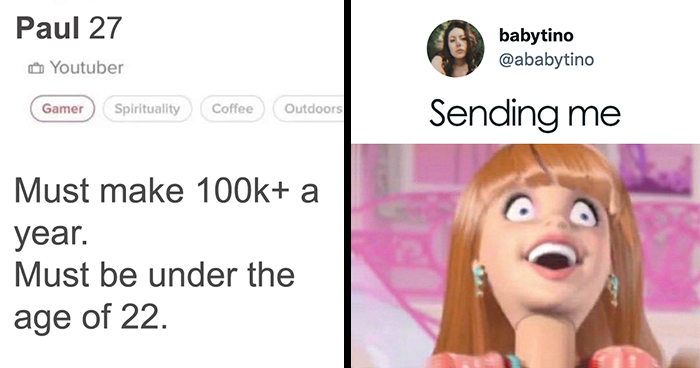
Dating apps are supposed to help people find compatible partners. Usually, that means posting a few flattering photos, mentioning your unhealthy devotion to tacos, and hoping somebody appreciates your carefully curated personality. One viral Tinder profile, however, apparently skipped the “getting to know each other” stage and went directly to writing a job description for Girlfriend Inc.
The profile, attributed in viral screenshots to a 27-year-old Austin-area man named Paul, described him as a tall professional YouTuber who was supposedly “open minded and fun.” Then came the plot twist: a 14-point list of requirements for women. Among them were being taller than 5 feet 9 inches, weighing under 125 pounds, earning at least $100,000 a year, having virtually no male friends, maintaining only limited female friendships, being available six days per week, gaming, meeting a minimum attractiveness rating, and being younger than 22.
Research basis for the viral profile and its reported requirements.
Internet users reacted exactly as the internet tends to react when somebody accidentally uploads a spreadsheet instead of a dating profile: mercilessly. The contradictions alone were comedy fuel. A woman was apparently expected to establish a six-figure career before turning 22 while somehow keeping six days every week free. Apparently Tuesdays are when she runs the Fortune 500 company.
Note: The reactions below summarize and creatively paraphrase themes from the viral discussion rather than reproducing individual social-media posts word-for-word.
The Tinder Bio That Turned Dating Preferences Into Procurement Specifications
Having preferences is normal. Wanting someone who shares your values, enjoys similar activities, doesn’t want children, or has compatible political beliefs can save everyone time. Dating compatibility matters.
The problem arises when a profile stops communicating compatibility and begins sounding like somebody is ordering a custom character from an extremely underfunded video game.
According to coverage of the viral profile, the complete list included these requirements:
- Taller than 5 feet 9 inches
- Earning at least $100,000 annually
- Under 125 pounds
- Lovable and funny
- No male friends
- Only limited female friends
- No pets
- No children
- Fewer than five previous sexual or romantic partners
- Moderate political views
- Available at least six days per week
- A gamer
- At least a “9/10” in attractiveness
- Younger than 22
Detailed requirements corroborated by contemporaneous coverage.
Some individual preferences on that list could be perfectly ordinary in isolation. Not wanting children or pets can represent legitimate lifestyle compatibility. Wanting a politically compatible partner isn’t unusual either. Put everything together, though, and the profile becomes a mathematical puzzle with suspiciously few possible solutions.
Why The $100K Requirement Had Everyone Reaching For A Calculator
The income-and-availability combination was especially irresistible to commenters. The requirement essentially asked for somebody under 22 making more than $100,000 while remaining available six days out of seven.
For perspective, Bureau of Labor Statistics data for the second quarter of 2026 shows median weekly earnings of $831 for full-time workers ages 20 to 24, with women in that group earning a median $789 per week. Six figures at that age certainly exist, but they are nowhere near typical.
U.S. earnings context.
Then there is the scheduling issue. A person building a high-paying career at 21 generally does not spend Monday through Saturday staring at the calendar in case a Tinder match suddenly wants nachos.
The Height And Weight Combination Raised Another Question
American women ages 20 and older average about 63.5 inches tall, according to CDC dataroughly 5 feet 3.5 inches. Requiring someone taller than 5 feet 9 inches already dramatically narrows the dating pool.
Current U.S. body-measurement data.
Combining that height requirement with a maximum weight below 125 pounds makes the filter even narrower. CDC adult BMI examples note that for someone exactly 5 feet 9 inches tall, 124 pounds or less falls below a BMI of 18.5, classified as underweight. BMI is only a screening measure and cannot determine an individual’s health by itself, but the numbers explain why so many commenters immediately focused on this particular combination.
CDC BMI categories and limitations.
50 Savage Reactions To The Viral Tinder Requirements
The original thread generated jokes about everything from impossible salaries to relationship résumés. Here are 50 paraphrased roast-style reactions capturing why the profile became such an internet spectacle.
- Apparently he’s dating in the Build-A-Girlfriend premium subscription tier.
- Six-figure salary, under 22, free six days a week. So… a lottery winner?
- This isn’t Tinder. It’s an entry-level job requiring ten years of experience.
- “Open minded” apparently means the opening is approximately three millimeters wide.
- The girlfriend position offers zero salary but requires full-time availability.
- Imagine completing all 14 requirements and discovering the prize is Paul.
- He didn’t write a bio. He published eligibility requirements.
- Human Resources would like him to stop stealing its worst ideas.
- That dating pool isn’t small. It’s a decorative teaspoon.
- He may have confused Tinder with a character-creation screen.
- Being a 9/10 apparently still leaves one whole point available for disappointment.
- She earns $100,000 but somehow has six weekdays available. Incredible benefits package.
- Maybe she makes the entire salary during her Sunday shift.
- No male friends and barely any female friends? Networking clearly disqualifies applicants.
- His soulmate’s biggest challenge will be existing.
- Somewhere, mathematics itself has swiped left.
- The salary requirement has more ambition than the relationship description.
- At least he saved potential matches fourteen separate unpleasant surprises.
- His standards aren’t high. They’re currently requesting clearance from air traffic control.
- This list needs a recruiter, not Cupid.
- Imagine saying “open minded” immediately before closing fourteen different doors.
- Even fictional characters are asking whether these requirements are negotiable.
- The woman he describes is probably too busy being CEO to update Tinder.
- Six days of availability? Does the relationship come with paid vacation?
- His dating profile accidentally became an Indeed listing.
- The biggest mystery isn’t who matches the criteria. It’s who requested them.
- Apparently personality begins only after salary verification.
- Imagine asking “What do you bring to the table?” while holding a clipboard.
- A background in gaming is mandatory. Emotional maturity apparently remains optional.
- The “9/10 minimum” sounds extremely scientific and definitely not ridiculous.
- Love may be blind, but apparently Paul’s application process has excellent eyesight.
- He’s looking for compatibility, provided compatibility passes an audit.
- Some people seek chemistry. Others apparently seek ISO certification.
- Dating him apparently requires references, financial statements, and a weekly schedule.
- The girlfriend application probably has a second-round interview.
- If she meets all these requirements, she probably has requirements too. Uh-oh.
- There are easier ways to announce that you’re comfortable remaining single.
- This profile somehow makes “I like long walks on the beach” look sophisticated.
- Perhaps the 15th requirement is possessing a portal to an alternate universe.
- A $100,000 salary with six free days sounds less like employment and more like inheritance.
- His ideal partner has no friends because apparently LinkedIn connections count as competition.
- Even dating algorithms looked at this and requested overtime.
- When your dating pool requires scientific notation, reconsider the filters.
- He wants a gamer, but somehow missed the importance of realistic difficulty settings.
- This quest has clearly been designed on Nightmare Mode.
- His profile didn’t raise a red flag. It opened a red-flag distribution warehouse.
- Cupid saw the requirements and transferred departments.
- The algorithm isn’t failing him. The algorithm is protecting everybody else.
- Somewhere there’s probably one woman who qualifiesand she already swiped left.
- The true final requirement: willingly dating someone who wrote requirements one through fourteen.
Why The Profile Went Viral
The Contradictions Were Almost Designed For Comedy
The internet loves contradictions, and this profile supplied them wholesale. A person supposedly had to be independently successful yet overwhelmingly available, socially entertaining yet barely social, extremely attractive according to a numerical rating while also fitting unusually specific physical measurements.
That tension turned the Tinder bio from merely picky into inherently memeable.
It Treated A Potential Partner Like A Product
There’s a meaningful difference between saying, “I’d love to meet someone who enjoys gaming,” and saying a woman “must” play games while meeting another dozen specifications.
The first describes compatibility. The second sounds transactional.
Research published in PLOS ONE found that original dating-profile text and concrete self-disclosure were positively associated with impressions of intelligence, humor, attractiveness, and dating intention. In simpler terms, showing potential matches who you actually are can work better than turning your bio into an elimination tournament.
Research on online dating profile originality and impression formation.
Bumble’s own profile guidance similarly recommends emphasizing what you like rather than filling a bio with negative dealbreakers. “I want someone who enjoys outdoor adventures,” for example, communicates substantially more warmth than presenting hiking ability as Condition 7B of the Relationship Licensing Agreement.
Dating-profile guidance emphasizing positivity and authenticity.
The Friendship Restrictions Felt More Serious Than Funny
Jokes aside, the restrictions involving male friends and limited female friendships prompted a more serious reaction. Healthy relationships can include boundaries, but attempting to determine who another adult may befriend is quite different from communicating a personal boundary.
Tinder’s current community guidelines explicitly emphasize respectful communication and prohibit harassment, intimidation, bullying, and other harmful behavior. They also tell users who encounter someone outside their personal preferences simply to move on rather than attack them over characteristics such as appearance or body type.
Tinder community standards.
Online Dating Is Huge, Which Makes Profiles Matter
It would be easy to dismiss this whole episode as nothing more than internet comedy, but dating profiles genuinely influence how millions of people meet.
Pew Research Center found that 30% of U.S. adults had used a dating site or app in its 2022 survey. Among adults under 30, the figure was 53%. Tinder was the most commonly used platform among the eight services Pew measured: 46% of people who had ever tried online dating reported using it.
Pew Research Center online dating statistics.
Long-term relationships happen online, too. Stanford sociologist Michael Rosenfeld and colleagues found that meeting online had become the most common way heterosexual couples in the United States met in their nationally representative 2017 data, overtaking introductions through friends.
Stanford and PNAS research on how couples meet.
Your dating bio, therefore, isn’t merely disposable text floating beside a bathroom selfie. It can function as somebody’s entire first impression of your humor, priorities, values, and attitude toward relationships.
There Is Also A Serious Side To Dating-App Red Flags
While ridiculous Tinder requirements are entertaining when they become memes, online dating can involve genuinely uncomfortable behavior. In Pew’s research, 48% of people who had used dating sites or apps reported experiencing at least one of four unwanted behaviors examined by researchers. Among women under 50 who had used online dating, 66% reported at least one of those experiences.
Pew data on unwanted online dating experiences.
Safety concerns extend beyond bad bios. The FBI and Federal Trade Commission continue to warn about romance scammers who create false identities, build emotional trust, move conversations away from platforms, avoid meeting in person, and eventually request money or investments.
U.S. government online-dating safety guidance.
A weird checklist does not automatically mean someone is dangerous or dishonest. But profiles can provide useful information about how somebody views relationships. Contempt, entitlement, extreme possessiveness, insults directed at entire groups, and efforts to dictate another person’s social life are reasonable signals to notice rather than rationalize away.
What A Better Tinder Bio Could Do Instead
If you genuinely have preferences, there is no need to pretend otherwise. The trick is communicating them as invitations rather than commandments.
“Must be a gamer” becomes “Looking for a co-op partner who won’t abandon me during a boss fight.”
“Must be moderate in politics” becomes “Political compatibility matters to me, and I value thoughtful conversations without shouting matches.”
“Must be available six days a week” becomes… well, perhaps that one should simply disappear unless you’re hiring an executive assistant.
A strong online dating profile tells people what spending time with you might actually feel like. It offers conversation hooks. It reveals interests. It shows humor. Most importantly, it explains what you bring rather than presenting strangers with a compliance checklist.
Experiences And Lessons From Encountering Extreme Dating Profiles
Anyone who has spent enough time around dating apps eventually encounters what might be called the “requirements bio.” The details change, but the format remains surprisingly consistent. Sometimes it’s height. Sometimes salary. Sometimes education, fitness habits, politics, appearance, hobbies, zodiac signs, pet ownership, or whether somebody uses the wrong kind of punctuation. After five minutes of swiping, you can feel less like you’re browsing potential dates and more like you’re applying for airport security clearance.
One useful lesson from these experiences is that dating profiles are filters in two directions. A person writing an aggressive list may believe they’re efficiently removing incompatible matches. They’re also showing everyone else how they communicate expectations. That information can be more revealing than any professionally photographed sunset picture.
Another common experience is discovering how differently a preference sounds when phrased positively. Consider two hypothetical profiles. The first says, “No boring people. No couch potatoes. Don’t message me if you hate traveling.” The second says, “Weekends usually find me hiking somewhere new, and I’d love a partner who wants to explore with me.” Both communicate roughly the same desired lifestyle. Only one makes a stranger feel as though they’ve already been scolded.
Dating apps also magnify the temptation to optimize people. When hundreds of profiles appear one swipe apart, it’s easy to imagine that one more filter will produce perfection: exactly the right height, profession, hobbies, education, politics, music taste, and preferred pizza toppings. But humans are inconveniently resistant to database normalization. Someone can match every checkbox and create zero chemistry. Another person can violate three supposedly essential preferences and become the best date you’ve had in years.
That doesn’t mean abandoning standards. Standards involving kindness, honesty, emotional availability, compatible relationship goals, financial responsibility, or respect can be extremely important. The distinction is between choosing what works for your life and demanding that strangers reorganize their lives to qualify for you.
The viral Tinder profile also demonstrates why friends often become valuable reality checks. If your bio sounds completely reasonable in your head but causes three friends to stare silently at the ceiling for ten seconds, further editing may be advisable. Dating profiles are self-advertising, and like every advertisement, they benefit from somebody asking the essential question: “Would this make anyone actually want the product?”
Finally, funny viral Tinder profiles remind us that online dating already contains enough pressure. People worry about photographs, opening messages, ghosting, rejection, safety, attractiveness, careers, and whether waiting 11 minutes before replying looks enthusiastic or desperate. Adding a 14-item entrance examination hardly improves the process.
A good profile doesn’t need universal appeal. It needs enough personality and honesty to attract compatible people while allowing incompatible people to move along peacefully. That’s a much healthier objective than trying to locate a 21-year-old, six-figure-earning, six-day-free, tall, ultra-lightweight gamer with almost no friends and a mysterious willingness to complete the application process.
Conclusion: Dating Standards Are Fine, But Humans Aren’t Custom Orders
The reason this infamous Tinder bio attracted so much attention wasn’t simply that one man appeared unusually selective. It was the collision of contradictory demands, rigid physical criteria, social restrictions, career expectations, and numerical attractiveness ratingsall introduced by a claim of being open-minded.
The internet responded with exactly the weapon it handles best: jokes.
Yet underneath the roast is a surprisingly useful lesson about online dating etiquette. Preferences help people identify compatibility. Boundaries protect personal well-being. Neither requires treating potential partners like contestants trying to qualify for the final round of a reality show.
Dating profiles work best when they communicate identity rather than entitlement: who you are, what you enjoy, what kind of relationship you want, and what another person might enjoy about knowing you.
And if your list of requirements needs numbered pages, supporting documentation, and a salary verification form, perhaps Cupid isn’t the professional you need. Try HR.