

Celebrity apologies have become their own miniature entertainment category: part crisis communication, part internet courtroom, and part group therapy session conducted entirely in comment sections. The latest example that had people debating sincerity, accountability, and the awkward shelf life of old talk-show jokes involved Emily Blunt, a beloved actress known for The Devil Wears Prada, A Quiet Place, Mary Poppins Returns, and Oppenheimer.
The controversy began when a clip from a 2012 appearance on the U.K.’s The Jonathan Ross Show resurfaced online. In the video, Blunt recalled visiting a Chili’s restaurant in the United States while filming Looper. During the exchange, host Jonathan Ross made a joke about Americans and body size. Blunt then added that the restaurant worker serving her was “enormous,” followed by a comment suggesting the server may have received free meals from the restaurant.
Years later, that remark landed with the grace of a dropped tray of fajitas. Some viewers called the comment fatphobic and unnecessary. Others argued that Blunt’s apology was clear, direct, and more thoughtful than many celebrity statements. The result was a split reaction: forgiveness from some, skepticism from others, and a larger conversation about body-shaming, service workers, public apologies, and whether old jokes deserve new consequences.
What Happened With Emily Blunt’s Resurfaced Interview?
The clip came from 2012, when Emily Blunt was promoting Looper, the sci-fi thriller directed by Rian Johnson and starring Joseph Gordon-Levitt and Bruce Willis. During the talk-show story, Blunt described eating at a Chili’s while working in the United States. The anecdote was supposed to be about a server recognizing her and asking whether she looked like “Emily Blunt.”
Instead, the detail that caught the internet’s attention was not the movie, the restaurant, or even the awkward celebrity-recognition moment. It was the unnecessary comment about the server’s body. Many people felt the worker’s size had nothing to do with the story. The joke was not needed to explain the interaction. It did not make the plot clearer. It was, as many online critics put it, just mean.
That is why the backlash moved beyond one word. The issue was not only that Blunt used the word “enormous.” It was that a private person, apparently just doing her job, became the punchline in a celebrity’s talk-show story. Unlike actors, hosts, and public figures, restaurant workers do not sign up to become characters in someone else’s comedy routine. They are just trying to survive a shift, remember who ordered the skillet queso, and maybe make enough tips to cover rent. A little dignity should come with the chips and salsa.
What Emily Blunt Said In Her Apology
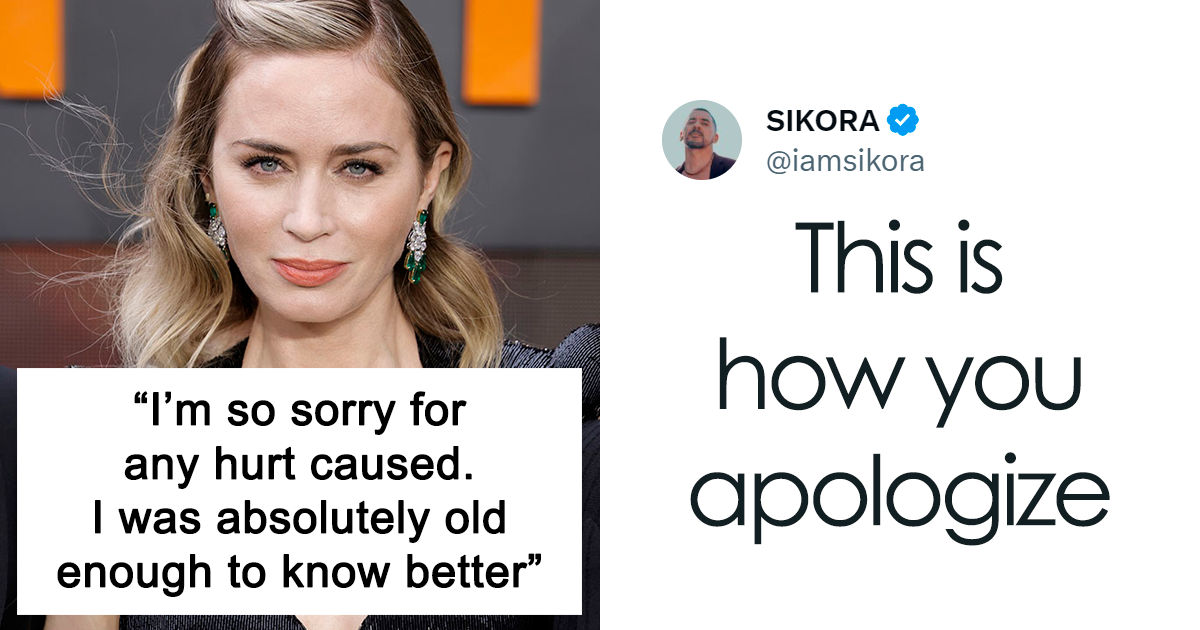
After the clip resurfaced, Emily Blunt issued a public apology. She said she was shocked watching the old footage and described her remark as “insensitive,” “hurtful,” and unrelated to the story she was trying to tell. She also said the behavior felt unrecognizable to who she believes herself to be and admitted she was old enough at the time to know better.
That last line mattered to many people. Instead of blaming the era, the host, editing, nerves, British humor, talk-show pressure, or Mercury being in retrograde, Blunt acknowledged that she said it. She did not frame the issue as people being too sensitive. She did not say the server misunderstood. She did not attempt the classic celebrity apology gymnastics routine: “I’m sorry if anyone was offended by the thing I technically still think was fine.”
For supporters, that made the apology stronger. It was direct, brief, and did not try to turn Blunt into the real victim. For critics, however, the apology still arrived only after the clip gained attention online. That timing led some to wonder whether the statement reflected genuine reflection or simply good crisis management during a high-profile point in her career.
Why People Had Mixed Reactions
Some People Thought The Apology Was Sincere
A portion of the public praised Blunt for addressing the situation head-on. In a digital culture where famous people often dodge accountability like they are in an action sequence, her apology seemed refreshingly straightforward. She named the behavior, expressed regret, and accepted responsibility.
Fans also pointed out that the clip was more than a decade old. People change. Social attitudes change. The way mainstream media talks about bodies has changed dramatically since 2012. A joke that might have passed as casual banter on a late-night couch back then can now sound cruel, lazy, and dated. Supporters argued that holding someone accountable should leave room for growth, especially when the person apologizes without making excuses.
There is also the reality that many people have said something in the past they would be embarrassed to hear replayed today. Most of us are simply lucky that our worst throwaway comments were not recorded in high definition, uploaded to YouTube, and rediscovered by thousands of strangers with Wi-Fi and strong opinions.
Others Felt The Comment Revealed Something Unpleasant
Critics were not convinced. For them, the problem was not only the single remark. It was what the remark suggested: that a worker’s body could be turned into a punchline for entertainment. Some viewers said the comment felt classist as well as body-shaming because it targeted a service worker who had less power in the situation.
This is where the controversy became bigger than Emily Blunt. Many people who have worked in restaurants, retail, hotels, airlines, call centers, salons, or other public-facing jobs know the feeling of being evaluated by customers as if they are part of the decor. Too slow. Too cheerful. Not cheerful enough. Too young. Too old. Too big. Too loud. Too quiet. The list is endless, and none of it helps refill a Diet Coke faster.
That lived experience shaped the reaction. People were not only responding to a celebrity clip; they were responding to every time someone made a casual comment about their appearance while they were trapped in professional politeness. A server cannot easily snap back at a rude guest without risking a complaint. So when viewers saw a famous actress repeat that kind of judgment on television, it hit a nerve.
Some Saw The Backlash As Overblown
Another group argued that the internet had turned an old, bad joke into a full-blown moral trial. They agreed the comment was unkind but questioned whether every resurfaced clip needs to become a scandal. To them, Blunt apologized, the comment was from 2012, and the public should be able to move on without building a courtroom out of quote tweets.
This reaction reflects a growing fatigue with online outrage cycles. People see a clip resurface, watch the backlash build, wait for the apology, then watch the apology get judged, dissected, and sometimes rejected. The entire process can feel predictable, like a celebrity PR weather forecast: scattered outrage by morning, apology by afternoon, backlash to the apology by dinner.
Still, even those tired of cancellation debates often agreed on one point: commenting on someone’s body for laughs is unnecessary. The disagreement was less about whether the remark was wrong and more about how long the public should stay angry about it.
Why The Word “Enormous” Sparked Such A Strong Response
Body-related language carries weight beyond the dictionary definition. Words like “enormous,” “huge,” or “massive” can be especially hurtful when aimed at a person rather than an object. Describing a mountain as enormous? Fine. Describing a sandwich as enormous? Usually a compliment. Describing a server’s body as enormous on television? That is where the room gets quiet.
Research and advocacy groups have long warned that weight stigma can harm mental health, self-esteem, body image, and social well-being. Body-shaming comments may seem casual to the person making them, but they can linger for the person being discussed. Even when the target never hears the remark directly, the broader message travels: certain bodies are acceptable, and others are fair game for jokes.
That is why many people objected to the clip so strongly. The server’s body was not relevant to the story. Her job performance was not the joke. Her excitement at recognizing a celebrity was not the joke. The joke became her size, and audiences today are less willing to laugh at that.
The Service Worker Angle: Why This Hit Hard
One reason the Emily Blunt apology gained traction is that it touched a very ordinary workplace reality. Restaurant workers are often expected to absorb rudeness with a smile. They deal with long hours, unpredictable tips, difficult customers, aching feet, and the mysterious human behavior of people who say “we’re ready” and then spend five minutes staring at the menu.
When a celebrity tells a story about a server, the power balance is already uneven. The celebrity has the microphone, the audience, the professional makeup, and the cultural authority. The worker has no chance to respond. She becomes an unnamed supporting character in a story about someone else’s fame.
That imbalance made Blunt’s remark feel worse to many people. Had she made a self-deprecating joke about her own awkwardness, the story might have passed unnoticed. Had she focused only on the funny misunderstanding about whether Looper was a real movie title, the anecdote probably would have worked. Instead, the server’s appearance became part of the entertainment, and that is exactly what many viewers found unfair.
Apology Culture: Why Celebrity Statements Are Judged So Closely
Celebrity apologies are difficult because they have to satisfy several audiences at once. Fans want reassurance that the person they admire is still worth admiring. Critics want accountability. Publicists want the story to stop spreading. Casual observers want drama but also pretend they are above drama. Everyone wants something slightly different, which is why even a decent apology can become a second controversy.
A strong public apology usually does a few things well. It names the harm, avoids excuses, expresses regret, and shows that the person understands why people were hurt. Blunt’s statement checked many of those boxes. She acknowledged the comment was hurtful and unrelated to the story. She accepted that she was old enough to know better. She did not ask people to feel sorry for her embarrassment.
However, public trust is not built by one statement alone. Some people judge an apology by timing. Others judge it by tone. Others look for evidence of changed behavior. In Blunt’s case, the apology was praised by some because it was clear, but questioned by others because it came only after the old clip resurfaced.
The Internet Never Forgets, But It Does Reinterpret
The Emily Blunt controversy also shows how old media moments can take on new meaning. A 2012 talk-show clip did not stay in 2012. It traveled into a new cultural context, where audiences are more aware of fatphobia, workplace dignity, and the casual cruelty built into older entertainment formats.
This does not mean every person should be permanently defined by the worst thing they said in a decade-old interview. It does mean public figures should understand that old content is not buried; it is archived. Yesterday’s throwaway joke can become tomorrow’s headline, especially when the person involved is back in the spotlight.
In Blunt’s case, the clip resurfaced during a period of major attention around Oppenheimer. That timing added another layer to the conversation. Some critics suggested the apology was influenced by awards-season image management. Supporters countered that regardless of timing, a sincere apology is better than silence.
What The Reaction Says About Changing Humor Standards
Comedy changes. What audiences once tolerated as edgy, cheeky, or harmless can later look lazy or mean. Body jokes, in particular, have aged poorly because they often rely on the same tired formula: point at someone’s appearance, exaggerate, wait for laughter. It is not exactly the Mount Everest of wit.
Modern audiences tend to ask a sharper question: Who is the joke aimed at? If the target is a powerful institution, a public figure, or the speaker’s own behavior, the joke may feel fair. If the target is an unnamed worker, a marginalized group, or someone with less power, the joke can feel like punching down.
That shift explains why the Emily Blunt clip produced such a strong reaction. The story did not need a body-size detail. The humor did not depend on it. Removing the comment would not damage the anecdote. In fact, it would probably improve it. That is the difference between a colorful detail and a cruel one.
Could Emily Blunt Recover From The Backlash?
In practical terms, yes. The controversy did not erase Blunt’s career, and it did not appear to become a long-term professional crisis. She remains widely respected as an actress, especially after her role as Kitty Oppenheimer in Christopher Nolan’s Oppenheimer. But the incident did add a complicated footnote to her public image.
For celebrities, these moments rarely disappear completely. They become part of the searchable record. Fans may forgive, critics may remember, and future interviews may be read through the lens of the apology. That is not necessarily cancellation. Sometimes it is simply accountability with a very long internet memory.
The best path forward for any public figure is not perfection. Nobody has that, not even celebrities with excellent stylists. The better goal is consistency: show through future behavior that the apology was not just a statement but a lesson learned.
Related Experiences: What This Controversy Teaches Us In Everyday Life
The Emily Blunt apology is a celebrity story, but the lesson is painfully ordinary: people remember how you talk about them, especially when they are not in a position to respond. Most of us have seen some version of this play out in real life. A group leaves a restaurant and someone comments on the server’s body. A coworker jokes about a customer’s size after the person walks away. A family member describes someone at a party using weight as the first identifying detail. The room may laugh for two seconds, but the joke usually reveals more about the speaker than the person being described.
In everyday settings, appearance-based comments often sneak into conversation because people treat them as harmless observations. But “I’m just describing them” can quickly become an excuse for reducing someone to a body. A server is not “the enormous waiter.” A cashier is not “the skinny girl.” A colleague is not “the big guy in accounting.” People are more than the easiest physical detail available. Language shapes how we see others, and lazy descriptions can turn real people into caricatures.
Anyone who has worked a service job knows the special exhaustion of being judged while having to stay polite. You may be tired, underpaid, and carrying three plates, but you are still expected to smile while customers discuss you as if you are background scenery. That is why the Blunt clip resonated with so many people. The server in the story was not a celebrity. She did not get a press statement. She did not have a team. She was simply doing her job and became part of a public joke years later.
The experience also reminds us that apologies work best when they do not demand instant forgiveness. A good apology opens the door; it does not drag people through it. Some people may accept Blunt’s statement and move on. Others may still feel disappointed. Both reactions can exist at the same time. Accountability is not a vending machine where someone inserts “I’m sorry” and receives forgiveness immediately.
For readers, the practical takeaway is simple: when telling a story, ask whether a physical detail is necessary. If the answer is no, leave it out. If the story is funny only because someone’s body is the punchline, the story probably needs better material. Humor does not have to be cruel to be sharp. In fact, the funniest people usually know how to make a point without making a stranger pay for it.
Conclusion
Emily Blunt’s apology for calling a restaurant worker “enormous” sparked mixed reactions because it touched several cultural nerves at once: body-shaming, celebrity accountability, service-worker dignity, old clips resurfacing, and the complicated art of saying sorry in public. Some people saw her apology as sincere and responsible. Others saw the original comment as a revealing example of casual cruelty. Many landed somewhere in the middle, recognizing that people can grow while still believing harmful comments deserve criticism.
The bigger lesson is not just about one actress or one resurfaced interview. It is about how easily jokes can punch down, how quickly the internet can revive old mistakes, and how important it is to talk about people with basic respect. Fame may magnify the consequences, but the rule applies to everyone: if someone’s body is not relevant to the story, it probably should not be the punchline.
Note: This article is based on publicly reported information about Emily Blunt’s 2012 interview, her 2023 apology, and the wider public discussion around body-shaming, celebrity apologies, and online reactions.