

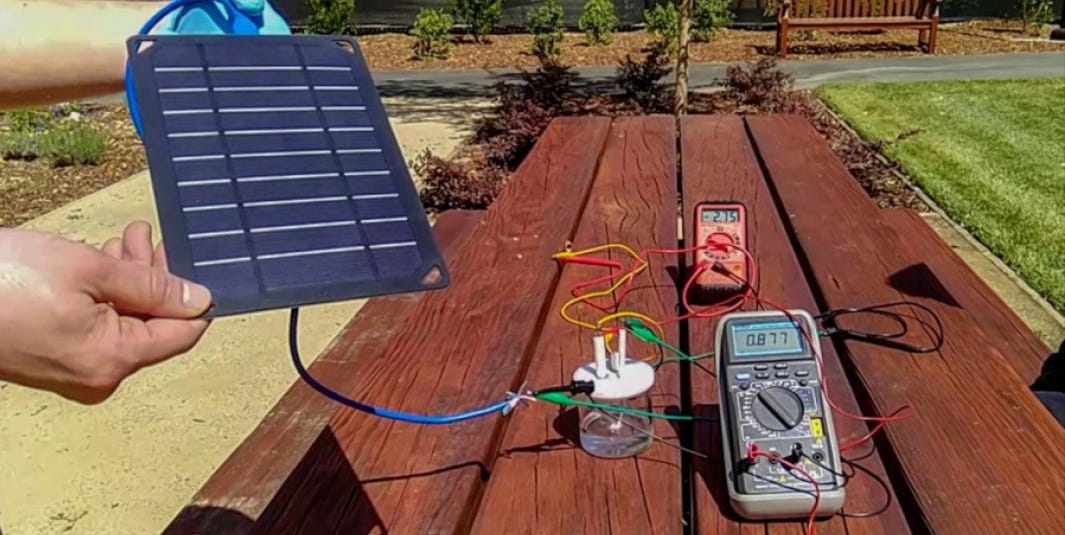
Imagine standing beside the ocean, looking at all that restless blue water, and thinking, “Could this become fuel?” For years, that sounded like something a science-fiction submarine captain might say right before dramatically pointing at a glowing control panel. Today, however, scientists are taking the idea seriously. Around the world, research teams are developing ways to transform saltwater into hydrogen fuel using electricity, sunlight, new membranes, corrosion-resistant materials, and smarter catalysts.
The short version is simple: water contains hydrogen, and hydrogen can store energy. The tricky version is where the science gets interesting. Seawater is not just water with a pinch of table salt. It is a chemical soup filled with chloride ions, sodium, magnesium, calcium, sulfate, microorganisms, minerals, and other ingredients that love to clog equipment, corrode metals, and create unwanted side reactions. In other words, seawater is abundant, but it is also a tiny ocean-sized troublemaker.
Still, the promise is enormous. If researchers can produce green hydrogen from seawater at scale, coastal regions, islands, offshore wind farms, ports, shipping routes, and water-stressed communities could gain a new pathway to clean energy without relying heavily on freshwater. That does not mean tomorrow’s cars will run on beach water poured through a funnel. But it does mean the clean energy toolbox is getting more creative, more coastal, and frankly, a lot more exciting.
What Does It Mean to Turn Saltwater Into Hydrogen Fuel?
Turning saltwater into hydrogen fuel usually refers to a process connected to electrolysis. Electrolysis uses electricity to split water molecules into hydrogen and oxygen. If the electricity comes from renewable energy such as solar, wind, hydropower, or other low-carbon sources, the hydrogen produced can be considered green hydrogen.
Hydrogen itself is not an energy source in the same way oil, coal, or natural gas are pulled from the ground. It is better described as an energy carrier. Scientists use electricity to produce it, store it, move it, and later use it in fuel cells, industrial systems, power plants, or chemical processes. When hydrogen is used in a fuel cell, the main byproduct is water. That is why hydrogen has become so attractive for sectors that are hard to electrify directly, including heavy industry, long-duration energy storage, fertilizer production, steelmaking, maritime transport, and heavy-duty vehicles.
The problem is that most hydrogen used today is still made from fossil fuels, especially natural gas. That process is cheaper and mature, but it releases carbon dioxide unless paired with carbon capture. Green hydrogen aims to change that by replacing fossil-based production with water electrolysis powered by clean electricity. Saltwater hydrogen research asks an even bolder question: can we use Earth’s most abundant water resource instead of purified freshwater?
Why Scientists Care About Seawater
Freshwater is precious. Many conventional electrolyzers need highly purified water because impurities damage membranes, poison catalysts, and reduce system performance. That may be acceptable for small installations, but it becomes a bigger issue when imagining huge green hydrogen facilities. Large-scale hydrogen production could require significant water treatment infrastructure, especially in dry regions where clean water is already under pressure.
Seawater, by contrast, covers most of the planet. Coastal areas also happen to be excellent places for renewable energy. Offshore wind farms, coastal solar installations, tidal systems, and port infrastructure could all connect naturally to hydrogen production. Instead of transmitting every electron back to land, future offshore systems might convert some renewable power into hydrogen at or near the source.
This is why researchers are exploring both direct and indirect seawater-to-hydrogen systems. In a direct system, seawater enters the electrolyzer itself. In an indirect system, seawater is first desalinated or distilled, and then the purified water is split into hydrogen and oxygen. Both approaches have advantages. Direct seawater electrolysis sounds elegant, but it must survive harsh chemistry. Indirect systems are often easier to control, but they add extra equipment, cost, and complexity.
How Seawater Electrolysis Works
An electrolyzer has two main electrodes: an anode and a cathode. When electricity flows through the system, hydrogen forms at the cathode, while oxygen forms at the anode. A membrane or electrolyte helps move ions while keeping gases separated. In clean water, this is already a challenging engineering task. In seawater, it becomes a full-contact sport.
The biggest villain is chloride. Chloride ions can interfere with oxygen production at the anode. Instead of cleanly producing oxygen, the system may produce chlorine gas or hypochlorite compounds. That is bad news because chlorine chemistry is corrosive, toxic, and destructive to expensive equipment. Nobody wants a clean-energy machine that quietly moonlights as a swimming-pool chemical factory.
Other seawater components cause trouble too. Magnesium and calcium can form solid deposits on electrodes. These deposits block active surfaces and reduce efficiency. Organic matter and microorganisms can also foul membranes. Meanwhile, salt accelerates corrosion, shortening the lifetime of metal parts. A seawater electrolyzer must therefore be selective, durable, efficient, affordable, and resistant to chemical abuse. That is a demanding job description.
The Big Breakthroughs: Catalysts, Membranes, and Protective Layers
1. Protective Coatings That Repel Chloride
One important research direction involves coating the anode with special protective layers. Stanford researchers demonstrated a method that used layered materials to repel chloride ions and slow corrosion. The basic idea is clever: if negatively charged chloride ions are attacking the anode, design a surface that discourages them from getting close enough to cause trouble. This gives the desired oxygen reaction a better chance to happen while reducing destructive side reactions.
Protective coatings are not just scientific decoration. They can be the difference between a device that works briefly in the lab and one that can survive real seawater long enough to matter. For commercial systems, long-term durability is everything. A catalyst that performs beautifully for a few hours but collapses after a week is like a sports car made of cake: impressive until reality touches it.
2. Double-Membrane Systems
Another promising approach uses advanced membrane architecture. A SLAC-Stanford team explored a double-membrane system that controls how ions move during electrolysis. By managing ion traffic, the system can reduce harmful byproducts and improve selectivity. Think of it like giving seawater a strict airport security line: hydrogen and useful ions may proceed, but troublemaking chloride chemistry gets heavily restricted.
Membranes matter because they influence efficiency, gas separation, safety, and system lifetime. A practical seawater electrolyzer may not rely on one magic material. Instead, it may combine membranes, coatings, catalysts, flow design, and smart operating conditions to keep the chemistry under control.
3. Non-Precious Metal Catalysts
Catalysts speed up chemical reactions without being consumed. In water electrolysis, they help reduce the electricity needed to produce hydrogen and oxygen. Traditional high-performance electrolyzers often use precious metals such as platinum or iridium. These materials work well, but they are expensive and limited in supply.
University of Houston researchers have reported several advances using more affordable materials, including nickel, iron, cobalt, copper, molybdenum, and sulfur-doped structures. These non-noble metal catalysts are designed to maintain high performance in alkaline seawater while reducing cost. Some laboratory systems have reached current densities relevant to industrial hydrogen production, a key milestone because commercial systems must produce hydrogen quickly, not politely drip it out like a leaky faucet.
Nickel-iron-based catalysts are especially interesting because they are comparatively abundant and active for the oxygen evolution reaction. Researchers are also testing layered double hydroxides, metal nitrides, core-shell structures, porous electrodes, and self-supporting catalyst surfaces. The goal is not merely to make hydrogen. The goal is to make hydrogen efficiently, cheaply, and repeatedly under real operating conditions.
The Cornell Approach: Hydrogen Plus Clean Water
One of the most practical recent ideas combines solar distillation with electrolysis. Cornell-led researchers developed a prototype that uses sunlight and seawater to produce green hydrogen while also generating potable water. Instead of forcing raw seawater directly through an electrolyzer, the device uses solar heat to evaporate seawater. The salt stays behind, the vapor condenses into clean water, and that clean water is then split into hydrogen and oxygen.
This hybrid solar distillation-water electrolysis strategy is important because it avoids many of the toughest direct-seawater problems. It also uses waste heat from photovoltaic panels, which normally lose much of the sun’s energy as heat. In a more integrated design, that heat becomes useful rather than wasted. The result is a system that points toward two valuable outputs: clean fuel and clean water.
The early prototype is small, but the concept is powerful. In sunny coastal regions, a future system could potentially support hydrogen production while also producing fresh water. That dual benefit matters in places where both energy and water security are urgent. The best clean technologies often solve more than one problem at once. This one attempts to tackle energy storage, carbon reduction, and water scarcity in a single package.
Why Offshore Wind Could Change the Game
Saltwater hydrogen becomes even more interesting when paired with offshore wind. Offshore wind turbines can generate large amounts of electricity near seawater. Instead of sending all power through undersea cables, some future projects could use electricity offshore to produce hydrogen. That hydrogen could then be moved by pipeline, stored, or used for marine fuel.
Researchers at the National Renewable Energy Laboratory have analyzed offshore wind-to-hydrogen systems and identified promising regions, including parts of the U.S. Atlantic Coast and the Gulf of Mexico. The economics depend on water depth, wind strength, equipment cost, electrolyzer performance, transportation, storage, and policy incentives. In simpler terms: location matters, engineering matters, and spreadsheets are quietly running the energy transition.
Offshore hydrogen could help solve one of renewable energy’s biggest challenges: intermittency. Wind and solar power do not always arrive when electricity demand peaks. Hydrogen can store renewable energy for days, weeks, or even seasons. That makes it useful for grid balancing, industrial backup, and energy systems that need more than batteries alone can provide.
Is Saltwater Hydrogen Really Clean?
Saltwater hydrogen is only as clean as the energy used to produce it. If an electrolyzer runs on coal-heavy electricity, the hydrogen may not deliver meaningful climate benefits. If it runs on wind, solar, nuclear, hydropower, or other low-carbon electricity, the emissions can be far lower.
That distinction matters because the word “hydrogen” by itself does not guarantee sustainability. Hydrogen is a tool. It can be produced cleanly or dirty. It can be used wisely or wastefully. The best applications are usually sectors where direct electrification is difficult, such as high-temperature industrial heat, fertilizer, steel, shipping, aviation fuels, and long-duration energy storage.
For everyday passenger cars, battery-electric vehicles are already efficient and widely deployed. Hydrogen may have a stronger role in heavy transport, industrial hubs, ports, and places where storing large amounts of energy is more important than squeezing every mile out of every electron.
The Challenges Holding the Technology Back
Corrosion and Durability
Seawater is relentless. It corrodes metals, attacks catalysts, and exposes weaknesses in system design. A commercial electrolyzer must operate for thousands of hours, often under high current, variable power, and harsh environmental conditions. New stainless steels, protective layers, and anti-corrosion materials may help, but long-term testing remains essential.
Chlorine Side Reactions
The system must strongly favor oxygen production over chlorine chemistry. Even small amounts of unwanted chlorine or hypochlorite can damage equipment and create safety concerns. Researchers are addressing this through catalyst selectivity, membrane control, local pH management, and operating conditions that discourage chloride oxidation.
Scaling From Lab to Industry
A beaker-scale experiment is not a hydrogen economy. Industrial systems need large electrode areas, stable membranes, reliable pumps, gas separation, safety controls, maintenance plans, storage tanks, and distribution networks. Scaling also introduces practical issues such as salt accumulation, biofouling, temperature changes, and mechanical wear.
Cost
Green hydrogen must become cheaper to compete with fossil-based hydrogen. The U.S. Department of Energy has targeted major cost reductions for clean hydrogen, including the widely discussed goal of reaching $1 per kilogram. Achieving that will require cheaper electrolyzers, lower-cost clean electricity, better durability, high utilization, manufacturing scale, and smarter system integration.
What This Means for the Future of Fuel
Scientists are not simply “turning the ocean into fuel” in a magical one-step process. They are building systems that use saltwater as a feedstock, clean electricity as the energy input, and advanced materials as the bridge between the two. The result could be hydrogen that stores renewable power, supports coastal industry, fuels ships, backs up grids, and reduces pressure on freshwater resources.
The most likely near-term path may include both direct and indirect approaches. Some systems may desalinate seawater first because it is simpler and safer. Others may push direct seawater electrolysis forward where membranes and catalysts can handle the chemistry. Hybrid systems may combine solar panels, waste heat, distillation, electrolysis, and water recovery. The winning designs will be the ones that work outside the lab, survive real seawater, and make economic sense.
Saltwater hydrogen is not a silver bullet. Energy transitions do not run on silver bullets; they run on portfolios. Batteries, grid upgrades, solar, wind, geothermal, nuclear, efficiency, clean fuels, and smarter demand management all have roles. Seawater-to-hydrogen technology could become one of those roles, especially where oceans, renewable power, and industrial demand meet.
Real-World Experiences and Lessons From the Saltwater-to-Hydrogen Journey
The story of transforming saltwater into hydrogen fuel offers a useful lesson for anyone watching clean technology evolve: big breakthroughs usually arrive wearing muddy boots. They rarely appear as perfect inventions that instantly replace everything else. More often, they begin as prototypes, confusing data, corroded parts, failed membranes, revised catalysts, and researchers saying, “Well, that was interesting,” while cleaning salty residue off another test cell.
One practical experience from this field is that abundance does not automatically mean usability. Seawater is everywhere, but its abundance hides complexity. People often assume that because oceans are huge, the fuel problem is nearly solved. Scientists know better. The water may be free, but the system needed to handle it is not. Pumps, electrodes, catalysts, membranes, sensors, storage tanks, and renewable power all cost money. The lesson is simple: nature provides ingredients, not finished infrastructure.
Another experience is that clean energy technologies must be judged as systems, not slogans. “Hydrogen from seawater” sounds fantastic, but the real question is how the hydrogen is made, how much energy it requires, how long the equipment lasts, whether harmful byproducts are avoided, and where the fuel will be used. A coastal hydrogen plant powered by offshore wind may make sense. A poorly designed electrolyzer running on fossil-heavy grid electricity may not. Context is the difference between innovation and expensive theater.
There is also a human lesson in how researchers approach stubborn problems. Instead of giving up because chloride corrodes anodes, scientists redesign the anode. Instead of accepting catalyst poisoning, they create porous surfaces, protective coatings, and membranes that guide ions more carefully. Instead of wasting solar heat, engineers find ways to use it for distillation. Progress often comes from asking, “What part of the problem can become part of the solution?” That mindset is valuable far beyond hydrogen research.
For communities, the most relatable experience may be the link between water and energy. Many regions already understand drought, rising energy bills, fragile grids, or fuel import dependence. A technology that can use local sunlight, wind, and seawater to produce useful fuel and possibly clean water feels less abstract when viewed through those everyday concerns. It is not just about futuristic ships or laboratory records. It is about resilience: having more ways to produce, store, and share energy when conditions change.
For businesses and policymakers, the lesson is patience with accountability. Saltwater hydrogen deserves investment, but it also deserves honest measurement. Pilot projects should report durability, efficiency, maintenance needs, byproducts, water quality, and real costs. The clean energy world does not need hype that evaporates faster than a puddle in July. It needs technologies that can be tested, improved, financed, regulated, and trusted.
Finally, there is an experience of wonder. The same ocean that carries ships, shapes weather, feeds ecosystems, and terrifies beach umbrellas may someday help store renewable energy. That is a remarkable idea. It reminds us that the energy transition is not only about replacing fuels. It is about rethinking familiar resources. Saltwater has always looked like scenery, habitat, danger, and beauty. Scientists are now asking whether it can also become part of a cleaner fuel cycle. The answer is not finished yet, but the question itself is one of the most exciting in modern energy research.
Conclusion
Scientists are making real progress in transforming saltwater into hydrogen fuel, but the technology is still moving from breakthrough research toward commercial reality. The central idea is straightforward: use clean electricity to split water and produce hydrogen. The hard part is making that process work with seawater, which brings corrosion, chloride chemistry, mineral deposits, and durability problems.
New catalysts, protective coatings, double-membrane systems, solar distillation designs, and offshore renewable energy concepts are helping solve those problems. Some approaches split seawater directly; others first turn seawater into clean water, then produce hydrogen. Both may matter. The future may include coastal hydrogen hubs, offshore wind-powered electrolyzers, port fuel systems, and hybrid facilities that produce both fuel and fresh water.
The ocean will not become an instant fuel pump, and green hydrogen will not replace every battery, wire, or renewable power plant. But seawater-to-hydrogen research gives the world another serious option for storing clean energy and reducing reliance on fossil fuels. If scientists can make the systems durable, affordable, and safe, saltwater may become more than something we swim in, sail across, and accidentally swallow at the beach. It may become a key ingredient in the next generation of clean fuel.
Note: This article is written for web publication in standard American English and summarizes publicly reported scientific research on seawater electrolysis, green hydrogen, catalysts, membranes, corrosion resistance, solar-powered hydrogen systems, and offshore renewable energy integration.