

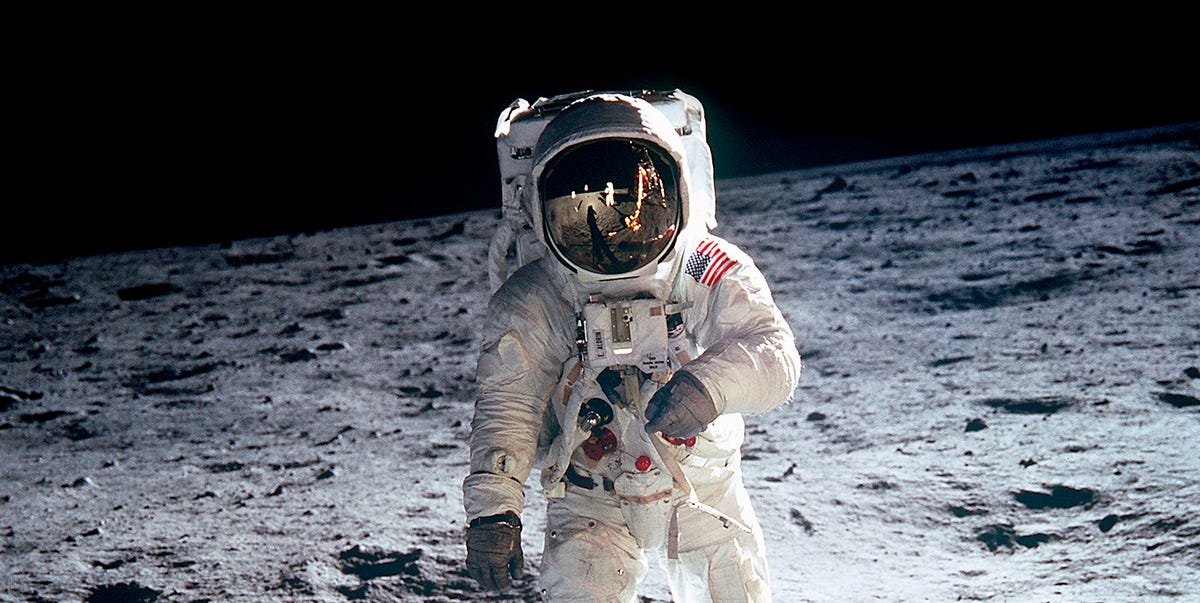
The Moon used to be the ultimate symbol of untouched beauty: silent, silver, distant, and apparently immune to human nonsense. Then humans arrived with rockets, flags, golf balls, rovers, crashed probes, scientific instruments, footprints, bags of waste, and the sort of “we’ll clean it up later” energy that has followed our species from college dorm rooms to low Earth orbit.
Now, a group of researchers argues that the Moon may have entered a new age: the Lunar Anthropocene. The phrase sounds like something a geology professor might whisper dramatically during a thunderstorm, but the idea is simple. Just as the Anthropocene on Earth describes the era in which human activity became a major force shaping the planet, the Lunar Anthropocene suggests that humans have become a meaningful force shaping the lunar surface.
This does not mean the Moon has suddenly grown traffic jams, convenience stores, or someone selling overpriced iced coffee in a crater. It means that our spacecraft, landings, crashes, tire tracks, bootprints, engine exhaust, and abandoned equipment have begun altering a landscape that had been shaped mostly by meteoroids, solar radiation, gravity, and time. The Moon is still quiet, but it is no longer untouched.
What Is the Lunar Anthropocene?
The term Lunar Anthropocene refers to a proposed new chapter in the Moon’s history in which human activity becomes an important geological, environmental, and archaeological force. Scientists Justin Holcomb, Rolfe Mandel, and Karl Wegmann made the case that the Moon’s surface has already been changed enough by human actions to deserve serious discussion as a new epoch.
The concept borrows from the Earth-based Anthropocene debate. On our planet, scientists have discussed whether industrialization, nuclear testing, fossil fuel use, plastic pollution, agriculture, and urbanization mark a new geological era driven by humans. The Lunar Anthropocene applies a similar lens to the Moon, though the details are different. The Moon has no forests to cut down, oceans to acidify, or pigeons to aggressively judge tourists in public squares. But it does have regolith, fragile ice deposits, a delicate exosphere, historical landing sites, and scientific records preserved in its ancient surface.
In this view, the Moon is not merely a giant rock waiting for more heroic selfies. It is a scientific archive, a cultural landscape, and a place where human fingerprints can last for an extraordinarily long time. Because there is no rain, wind, or active weather system to erase them, astronaut footprints and rover tracks may remain visible for millions of years unless disturbed by impacts or future missions.
When Did the Lunar Anthropocene Begin?
One proposed starting point is September 13, 1959, when the Soviet spacecraft Luna 2 became the first human-made object to reach the Moon’s surface. It was not a gentle houseguest. Luna 2 impacted the Moon, marking the first time humanity physically disturbed lunar soil.
From there, the list grew quickly. Robotic probes crashed or landed. NASA’s Apollo missions placed astronauts, instruments, lunar modules, flags, and rovers on the surface. Later missions from multiple nations added orbiters, landers, impact sites, rover tracks, and more hardware. Some spacecraft landed successfully. Others arrived with the grace of a dropped refrigerator.
The Apollo missions remain the most famous examples. Between 1969 and 1972, twelve astronauts walked on the Moon. They collected samples, conducted experiments, drove lunar rovers, planted flags, and left behind equipment that was too heavy or unnecessary to bring back. Those objects are not “trash” in the ordinary sense. They are part of humanity’s first archaeological record beyond Earth.
Why Scientists Say the Moon Is Not Static
For many people, the Moon feels permanent and unchanging. It rises, sets, waxes, wanes, and quietly minds its own business while Earth continues its daily group project of chaos. But scientists emphasize that the Moon is not frozen in time. Natural processes still shape it. Micrometeorites strike the surface. Temperature swings fracture rocks. Gravity moves material on slopes. Solar wind interacts with surface particles.
Human activity adds a new layer to those processes. Landers blast regolith with exhaust. Rovers leave tracks. Astronauts compress and scatter soil. Impacting spacecraft create craters. Rocket stages strike the surface. Future missions may drill, excavate, build roads, extract ice, deploy habitats, and establish power systems.
That is why the Lunar Anthropocene idea matters. It asks us to stop treating the Moon as an empty stage and start seeing it as an environment with history, scientific value, and limited zones of special importance. The Moon may be vast, but the most useful areas are not evenly spread. The lunar south pole, for example, is especially attractive because permanently shadowed craters may contain water ice. Those regions could support future astronauts, fuel production, and scientific research, but they are also vulnerable to contamination.
Human Footprints, Rover Tracks, and Space Archaeology
One of the most fascinating parts of the Lunar Anthropocene is that it turns space exploration into archaeology. The Apollo landing sites are not just patriotic landmarks. They are archaeological sites containing tools, experiments, vehicle parts, footprints, tracks, and evidence of how humans first learned to work on another world.
Think of Tranquility Base, where Neil Armstrong and Buzz Aldrin walked in 1969. The site includes the descent stage of the lunar module, scientific instruments, bootprints, and small objects left behind. On Earth, a place like that would be protected, studied, mapped, and treated with ceremony. On the Moon, it is protected mostly by distance, goodwill, and the hope that future visitors do not drive over it like someone cutting across a lawn.
Space archaeologists argue that these sites matter because they document a turning point in human history. The first footprints on the Moon are not only NASA history; they are species history. They show the moment when humans extended their physical presence beyond Earth. That is a pretty big deal, even by the standards of a species that also invented both vaccines and glitter.
What Have Humans Left on the Moon?
The list is longer and stranger than many people expect. Humans have left spacecraft parts, lunar modules, scientific instruments, cameras, tools, rovers, flags, cables, sample containers, personal items, and mission hardware. Apollo astronauts also left items they no longer needed because bringing Moon rocks home mattered more than bringing every piece of equipment back.
There are also impact sites from probes and rocket stages. Some objects were intentionally crashed for scientific reasons, such as creating seismic signals. Others crashed because spaceflight is difficult and the Moon, while beautiful, is not forgiving. Even a “soft landing” can become a very expensive sideways nap if a lander tips over.
From a Lunar Anthropocene perspective, all of this material tells a story. It shows where humans went, what they valued, what they measured, what failed, and what they abandoned. It also raises a question: at what point does exploration become disturbance?
Why Future Moon Missions Make This Urgent
The Lunar Anthropocene is not only about the past. It is mostly a warning about the future. NASA’s Artemis program, commercial lunar landers, international missions, and private space companies are all part of a new wave of lunar activity. The goal is no longer just to visit, plant a flag, and go home. The goal is to stay longer, build infrastructure, test technologies, extract resources, and prepare for missions to Mars.
That shift changes everything. A few scattered landing sites are one kind of footprint. Semi-permanent bases, mining operations, roads, power stations, landing pads, storage areas, and repeated traffic are another. If humans establish a long-term presence on the Moon, the lunar surface could change more in the next fifty years than it has since the first spacecraft arrived.
The lunar south pole is the main prize. Its permanently shadowed regions may preserve ice and other volatile compounds. These materials could help future astronauts produce drinking water, oxygen, and rocket fuel. But they are also scientifically precious because they may contain records of ancient solar system chemistry. Contaminating them with exhaust or disturbing them through careless activity would be like spilling soda on a rare manuscript, except the manuscript is billions of years old and located in a freezer at the edge of sunlight.
The Moon’s Delicate Environment
People often assume the Moon is too harsh to be fragile. After all, it has no breathable atmosphere, no oceans, no plants, and no adorable woodland creatures wearing suspiciously tiny hats. But “harsh” and “fragile” can exist together. The Moon’s surface preserves information precisely because it is not constantly recycled by weather and plate tectonics.
The lunar regolith records impacts, solar wind, volcanic history, and cosmic processes. Permanently shadowed craters may store ancient ice. The thin exosphere can be affected by gases released during landings. Dust can travel, settle on equipment, alter measurements, and potentially contaminate sensitive areas.
In other words, the Moon is not alive in the biological sense, but it is scientifically alive with information. Disturbing it without planning could erase clues we have not yet learned how to read.
Is the Lunar Anthropocene Official?
No, the Lunar Anthropocene is not an officially ratified geological epoch. It is a proposed framework, not a formal label approved by a planetary geology committee with matching badges and very serious coffee mugs.
That matters. Scientists are not saying everyone must immediately update textbooks and start arguing about lunar epoch boundaries at dinner. They are saying the concept is useful because it helps us recognize that human actions are already part of the Moon’s physical record.
The power of the term is not bureaucratic; it is practical. It gives scientists, policymakers, mission planners, archaeologists, and the public a shared language for discussing lunar impacts before those impacts become too large to ignore.
How Lunar Heritage Could Be Protected
NASA has already issued recommendations for protecting historic lunar sites, including guidance on approach paths, exclusion zones, artifact boundaries, and ways to avoid contaminating or physically disturbing Apollo-era hardware. The United States has also taken policy steps requiring certain licensed lunar activities to follow NASA recommendations related to preserving U.S. government artifacts.
The Artemis Accords include principles related to preserving outer space heritage, sharing scientific data, registering space objects, using resources responsibly, and avoiding harmful interference. These principles are important, but they are not a complete global legal system for the Moon. Many questions remain unresolved, especially as more nations and private companies become active there.
Protection does not mean locking the Moon away forever. It means planning intelligently. Future explorers can still study Apollo sites, visit historic areas from a respectful distance, and use new technology to document artifacts. The goal is not “keep out of space.” The goal is “please do not accidentally sandblast the most famous footprint in human history.”
What the Lunar Anthropocene Teaches Us About Earth
The Lunar Anthropocene also reflects something uncomfortable about humanity. We are very good at reaching new places, and not always as good at deciding what we should do once we get there. On Earth, environmental damage often became obvious only after it was widespread. Rivers burned, species vanished, plastics spread, and climate systems shifted before societies fully understood the scale of the problem.
The Moon gives us a chance to behave differently. We can recognize human impact early. We can map sensitive regions before disturbing them. We can protect heritage sites before they are damaged. We can design landers that reduce dust and exhaust contamination. We can treat lunar ice as both a resource and a scientific archive.
That may be the most hopeful part of the Lunar Anthropocene. It is not just a gloomy label. It is an invitation to act like adults before the cosmic living room is covered in bootprints, lander soot, and someone’s misplaced wrench.
Examples of Human Impact on the Moon
1. Spacecraft Impacts
From Luna 2 onward, many spacecraft and rocket stages have struck the Moon. Some impacts were mission failures, while others were intentional scientific experiments. Each impact creates a physical mark and adds human-made material to the lunar surface.
2. Apollo Landing Sites
The Apollo sites contain some of the most important human artifacts beyond Earth. They include footprints, equipment, lunar module descent stages, experiment packages, and rover tracks. These sites are vulnerable because even nearby landings could disturb dust and damage preserved features.
3. Rover Tracks
Lunar rovers from the Apollo missions and robotic missions left trails in the regolith. These tracks are both scientific evidence and cultural records. They show how machines and humans moved across another world.
4. Exhaust and Dust
Landing engines can blast dust across the surface at high speeds. That dust may abrade hardware, cover instruments, contaminate samples, or disturb historic sites. Lunar dust is not fluffy beach sand; it is sharp, clingy, and impressively rude.
5. Resource Exploration
Future missions may extract water ice, oxygen, metals, or other materials. Resource use could make long-term space exploration possible, but it must be managed carefully to avoid damaging scientifically valuable areas.
Why the Public Should Care
It is tempting to think lunar preservation is a niche issue for space lawyers, geologists, and people who own more telescope accessories than casual shoes. But the Moon belongs to humanity’s shared imagination. It shapes calendars, tides, poetry, religion, navigation, science, and late-night feelings we pretend are not dramatic.
When humans alter the Moon, we are changing one of the most universal landmarks in human culture. Most people will never visit Tranquility Base, but many understand why the first footprints should not be casually destroyed. The Moon is not just a destination. It is a mirror. How we treat it says something about how much we learned from Earth.
Experiences and Reflections: Living in the Age of the Lunar Anthropocene
One way to understand the Lunar Anthropocene is to imagine standing in a museum where the exhibits are not behind glass. The Apollo sites, rover tracks, crashed probes, and abandoned instruments are all sitting in the open, exposed to micrometeorites, radiation, time, and future visitors. There is no guard at the entrance saying, “Please do not touch the lunar module.” There is no velvet rope around the first bootprint. There is only distance and responsibility.
For many people, the Moon first becomes real through childhood experiences: looking through a small telescope, watching a documentary, seeing a Moon rock in a museum, or hearing the story of Apollo 11. The Moon feels close enough to recognize but far enough to remain magical. Learning that humans have already altered it can produce a strange feeling. It is awe mixed with guilt, pride mixed with concern. We went there, which is astonishing. We left stuff there, which is also very human.
The Lunar Anthropocene also changes how we think about exploration. For a long time, exploration stories were told as heroic journeys into empty places. But few places are truly empty. They have geology, history, meaning, and value before humans arrive. The Moon may not have cities or ecosystems, but it has ancient records preserved in rock, dust, and ice. Treating it as empty simply because it has no people is a mistake.
There is also a practical lesson here for future generations. Students growing up today may become engineers, scientists, mission designers, lawyers, writers, or voters who influence lunar policy. They may live through the first permanent human outpost on the Moon. They may see commercial lunar mining, tourism, radio astronomy from the far side, or international debates over safety zones and resource rights. The Lunar Anthropocene gives them a useful question to ask: how do we explore without repeating the worst habits of Earth?
That question does not require anti-space cynicism. Space exploration is one of humanity’s most inspiring achievements. It drives technology, expands knowledge, and reminds us that our daily arguments are happening on a tiny blue planet in a very large universe. But inspiration is not an excuse for carelessness. The same mission can be bold and responsible. The same astronaut bootprint can be a symbol of progress and a reason to slow down near historic sites.
In everyday terms, the Lunar Anthropocene is a lesson in cleaning up after ourselves before the mess becomes normal. On Earth, people often notice environmental damage only when it reaches the “uh-oh” stage. The Moon gives us a rare chance to notice at the beginning. We can set standards early. We can decide that lunar heritage matters. We can build landing systems that reduce dust hazards. We can protect cold traps before exhaust chemistry complicates the science. We can document every human-made object as part of a growing archaeological map.
There is something almost poetic about that. The Moon, which has watched humanity for as long as humanity has existed, is now being changed by us. The question is not whether humans will leave marks. We already have. The question is whether those marks will show curiosity, wisdom, and restraintor whether future archaeologists will look at our lunar leftovers and say, “Well, they were ambitious, but apparently nobody packed a broom.”
Conclusion: A New Moon Age Needs New Moon Manners
The idea that we have entered the Lunar Anthropocene epoch is not just a catchy scientific phrase. It is a warning, a framework, and a chance to think more carefully about the future of lunar exploration. Humans have already changed the Moon through impacts, landings, footprints, rover tracks, artifacts, and contamination risks. Future missions will multiply those changes.
The Moon is not a blank slate. It is an ancient scientific archive and a cultural landmark shared by all humanity. If we are entering a new lunar age, then the challenge is not to stop exploring. The challenge is to explore with memory, humility, and better manners than a toddler with a marker near a white couch.
The Lunar Anthropocene asks us to recognize our power before it becomes damage. That may be one of the most important lessons space can teach us: reaching another world is impressive, but learning how to care for it is what makes us worthy of staying.