

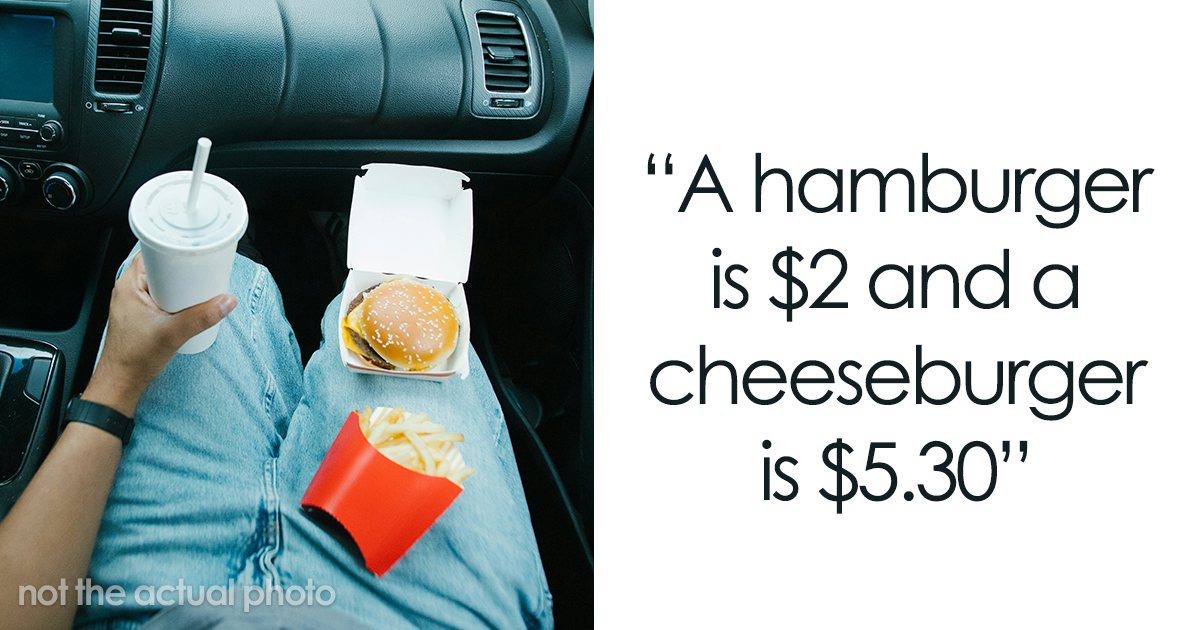
Some friendships end with a dramatic airport goodbye. Some fade quietly after too many unanswered texts. And some, apparently, hit the wall at a McDonald’s drive-thru because one person brought their own cheese slices.
Yes, cheese. Not a betrayal, not a stolen boyfriend, not a secret group chat named “Operation Avoid Her.” Just a few humble slices of processed dairy, tucked away like contraband cheddar. The story, which made waves online, follows a person who brought their own cheese to add to a fast-food burger instead of paying extra. Their friend found the move so embarrassing that she allegedly threatened to walk ahead of them in public if they ever did something that “cheap” again.
At first glance, it sounds ridiculous enough to be served with fries. But once the internet stopped laughing, many readers noticed a deeper issue bubbling under the melted cheese: money shame, social pressure, judgment, and the uncomfortable truth that friendships often reveal themselves in small moments.
When A Burger Becomes A Friendship Test
The argument started with a simple money-saving choice. The person wanted a burger without paying extra for cheese, so they brought their own slices. To them, it was practical. To their friend, it was humiliating. That gap in perception is where the whole emotional cheeseburger collapsed.
One person saw resourcefulness. The other saw social embarrassment. One thought, “Why pay more for something I already own?” The other seemed to think, “Please do not turn this vehicle into a portable deli.”
The internet, naturally, had opinions. Many sided with the cheese-bringer, arguing that a real friend should not shame someone for saving money. Others admitted that bringing outside food into a restaurant setting can feel awkward, even if the logic is understandable. But the strongest reaction came from people who felt the friend’s response was harsher than the act itself.
After all, embarrassment is one thing. Threatening to distance yourself physically from a friend in public because of a cheese slice is another. That is not etiquette. That is dairy-based class warfare.
The Real Issue Wasn’t CheeseIt Was Judgment
Money habits are personal. Some people buy coffee every morning and call it “self-care.” Others reuse sandwich bags like they are family heirlooms. Neither approach automatically makes someone better, smarter, classier, or more lovable.
But friendships can become tense when people attach moral value to spending habits. Being frugal may be interpreted as “cheap.” Enjoying luxuries may be labeled “irresponsible.” Ordering water at dinner can suddenly feel like a political statement. A simple meal becomes a courtroom, and everyone’s debit card is on trial.
That is why the cheese story resonated. It was funny, but it also touched a nerve. Many people have felt judged for how they spendor do not spendmoney. Maybe they skipped a birthday dinner because the restaurant was too expensive. Maybe they asked for a separate check and got side-eyed. Maybe they brought coupons on a date and watched romance leave the table like it had another appointment.
Why Friends Fight Over Small Money Moments
Small spending choices often represent bigger values. For one person, saving a few dollars may feel responsible, especially during a tight month. For another, paying extra may feel worth it to avoid awkwardness. Neither is automatically wrong. The problem begins when one person decides their preference should become the friendship rulebook.
Friendships work best when there is room for difference. Your friend can be the person who buys name-brand cereal, while you are emotionally committed to the giant discount bag with a suspicious cartoon tiger. Harmony does not require identical budgets. It requires respect.
In the cheese incident, the disagreement escalated because the friend did not simply say, “That makes me uncomfortable.” She reportedly framed the behavior as embarrassing and threatened social distance. That changed the conflict from a difference in etiquette to a question of loyalty.
Food Etiquette Can Be Tricky, But Kindness Is Not
To be fair, bringing outside food into a restaurant can be complicated. Restaurants make money by selling food, and many places discourage outside items for business, cleanliness, and policy reasons. Fast-food drive-thru situations may feel more casual than a sit-down restaurant, but the social weirdness can still exist.
That said, etiquette is not a license to humiliate people. A good friend could say, “I get why you do it, but I’d feel awkward if we ate inside,” or “Maybe add it after we leave the drive-thru.” That is a conversation. What happened here sounded more like a public-relations crisis starring American cheese.
Good manners are supposed to reduce embarrassment, not weaponize it. If your etiquette makes another person feel small, it is not etiquette anymore. It is just snobbery wearing a napkin on its lap.
The Cost Of Looking “Normal” Around Friends
One of the most relatable parts of this story is the pressure to look normal, effortless, and financially comfortable around friends. Nobody wants to be the person who says, “Actually, I can’t afford that.” So people overspend, pretend, dodge invitations, or quietly resent the group.
Social life can be expensive. Brunch, birthdays, rideshares, coffee runs, concerts, group trips, “quick drinks” that somehow cost $94friendship often comes with a receipt. The pressure gets heavier when people in the same friend group have different incomes, family responsibilities, debts, or savings goals.
That is why the cheese slice became symbolic. It was not just about a burger. It was about whether someone is allowed to be openly frugal without being treated like a walking coupon insert.
When Frugality Becomes A Social Boundary
There is nothing wrong with saving money. There is also nothing wrong with caring about social norms. The mature answer lives somewhere in the middle: be considerate, be honest, and do not make your financial choices someone else’s performance review.
If you are the frugal friend, it helps to read the room. Bringing your own cheese to a drive-thru may be harmless, but bringing a whole lunchbox into a white-tablecloth restaurant is not the same thing. Context matters. So does discretion.
If you are the friend who feels embarrassed, ask yourself why. Are you worried about breaking a rule? Are you worried staff will react? Or are you worried strangers will think you are associated with someone who saves money in a way you consider beneath you? That last one deserves some self-reflection, preferably with fries.
What The Internet Got Right
Many commenters focused less on the cheese and more on the friend’s reaction. That is probably the correct reading. A friendship should be a soft place to land, not a luxury-brand inspection checkpoint.
People do quirky things to save money. They bring snacks to movie nights, reuse jars, compare gas prices, freeze leftovers, and keep emergency granola bars in bags like responsible squirrels. Some habits are funny. Some are odd. Some are brilliant. But unless a friend is hurting someone, breaking serious rules, or creating real problems, the response should be proportionate.
A few slices of cheese did not require a character assassination. At most, it required a laugh, a raised eyebrow, or a private conversation that began, “Okay, I need to understand your cheese strategy.”
How To Handle Money Differences Without Losing Friends
Talk Before The Awkward Moment
Money conversations are easier before the bill arrives, before the trip is booked, and before someone is assembling a burger like a field surgeon in the passenger seat. If plans involve spending, be clear early. Say, “I’m keeping it budget-friendly this week,” or “Can we pick somewhere casual?”
Do Not Shame People For Having A Budget
A budget is not a personality defect. It is a plan. Friends should be able to say no to expensive outings or choose cheaper options without being mocked. The goal is spending time together, not proving who can bleed the most money into a group dinner.
Separate Preference From Principle
You may personally dislike bringing outside food to a restaurant. That is fair. But it does not automatically make someone else immoral, embarrassing, or unworthy of being seen with you. A preference says, “I would not do that.” Judgment says, “You are lesser because you did.” Good friends avoid the second one.
Use Humor Without Cruelty
There was a version of this moment where both friends laughed. “You brought cheese? In this economy, honestly, respect.” Humor can soften awkwardness. Cruelty hardens it. The difference is whether both people are laughing.
Was Ending The Friendship Too Extreme?
Maybe. Maybe not. Online stories rarely include every detail, and no outsider can fully judge a friendship from one fast-food episode. But small incidents can reveal patterns. If the cheese argument was one of many moments where one friend looked down on the other, cutting contact may have felt less like an overreaction and more like finally reading the label.
Friendships usually do not break over one tiny thing. They break when the tiny thing confirms a bigger suspicion: this person does not respect me. The cheese was not the earthquake. It was the crack in the wall that made someone realize the house was not as sturdy as they thought.
Experiences And Takeaways: What A Few Slices Of Cheese Can Teach Us
Most people have lived through their own version of the cheese-slice friendship test. Maybe it was not cheese. Maybe it was a coupon, a discount code, a split check, a shared ride, or the friend who always says, “Let’s just divide it evenly,” after ordering two cocktails, calamari, steak, dessert, and apparently a small yacht.
One common experience is the awkward restaurant bill. Imagine four friends go out. One person orders a salad and water because rent is due. Another orders wine, an appetizer, the market-price seafood special, and dessert “for the table” that only they eat. Then the bill comes and someone cheerfully says, “Let’s split it evenly!” Suddenly the salad person is funding a lifestyle brand they never subscribed to. This is how resentment is born: not loudly, but under a pile of receipts.
Another relatable situation is the budget-friendly friend who feels forced to pretend. They say they are “busy” instead of admitting they cannot afford the concert. They skip trips because the Airbnb math looks like a mortgage payment. They agree to brunch and quietly panic when the menu has no price under $18. Over time, hiding financial stress becomes exhausting. Real friends should make honesty easier, not harder.
Then there is the friend who confuses frugality with lack of class. They wrinkle their nose at coupons, mock thrift stores, or act like bringing snacks on a road trip is a scandal. But practical habits often come from experience. Some people grew up watching every dollar. Some are paying loans. Some are helping family. Some simply prefer not to waste money. A person’s budget may tell a story you do not know.
The cheese story also reminds us that embarrassment is contagious only if we let it be. If your friend does something harmless but unusual, you have a choice. You can make it a crisis, or you can make it a story. The second option is usually better. Life is too short to lose decent people over tiny quirks, especially when those quirks come individually wrapped.
Of course, boundaries matter too. If a friend’s behavior repeatedly puts you in uncomfortable situations, you are allowed to speak up. The key is to criticize the situation, not the person. “I feel awkward when we bring outside food inside a restaurant” lands very differently from “You are embarrassing and cheap.” One opens a door. The other slams it and locks the cheese outside.
The healthiest friendships leave space for honesty. They allow someone to say, “I’m saving money,” “That place is too expensive,” “Can we do something free?” or “Please do not assemble a dairy station in my car again.” These conversations may feel awkward at first, but they prevent bigger blowups later.
In the end, the viral cheese dispute is funny because it is absurd. But it is memorable because it is familiar. We all want friends who accept our weird little survival strategies, whether that means carrying backup cheese, ordering the cheapest item, or choosing a walk in the park over a $70 dinner. The best friendships are not built on matching spending habits. They are built on respect, flexibility, and the ability to laugh when life gets a little cheesy.
Conclusion
The friendship that broke over a few slices of cheese was never really about cheese. It was about respect, judgment, money pressure, and whether friends can disagree without making each other feel small. A person saving a few dollars may look odd to someone else, but kindness should never be more expensive than a cheeseburger.
Good friends do not have to share every habit, budget, or social rule. They simply need to handle differences with humor and basic dignity. If a friendship cannot survive a slice of cheese, maybe it was already full of holes.
Note: This article is an original, fully rewritten web-ready piece based on public discussion of the viral cheese-slices friendship story and broader real-world research about money tension, dining etiquette, friendship health, and conflict communication.