

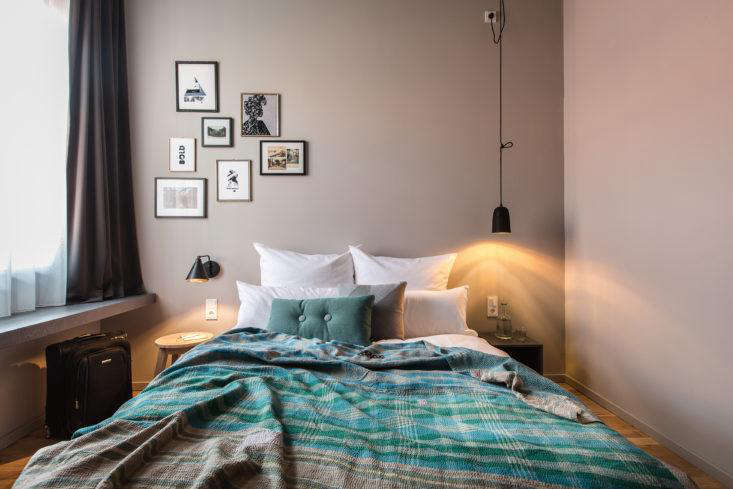
Small bedrooms have a reputation problem. People treat them like design punishment: one bed, one sad lamp, one pile of clothes pretending to be “the chair.” But a compact bedroom can be the most charming room in the home when it is planned with precision, personality, and a little bit of German-level practicality. Think warm textiles, clever wall storage, a slim clothing rail, sculptural lighting, framed art, and furniture that earns its rent.
The look we are stealing today is inspired by a creative and compact bedroom in Germany: simple, efficient, slightly artistic, and refreshingly unfussy. It has the soul of a boutique hotel room and the brain of a well-organized studio apartment. Nothing screams for attention, yet every piece does something useful. The bed feels cozy, the walls work hard, the lighting adds mood, and the storage does not look like storage had a panic attack.
This guide breaks down how to recreate the look in your own bedroom, whether you live in a city apartment, a small guest room, a dorm-style rental, or a bedroom so tiny your nightstand has commitment issues. The goal is not to copy every object exactly. The goal is to understand the design formula: compact layout, warm minimalism, layered texture, flexible storage, and personal details that keep the room from feeling like a furniture showroom with Wi-Fi.
Why This Compact German Bedroom Look Works
German design often balances usefulness with restraint. It does not waste space, but it also does not confuse “functional” with “boring.” The best compact bedroom ideas follow the same principle: every item should have a purpose, but the room should still feel human. In a small bedroom, you are not decorating endless square footage. You are editing a tiny stage where sleep, dressing, reading, relaxing, and occasionally hiding from your responsibilities all happen in the same few feet.
The magic of this look comes from contrast. A simple bed is paired with tactile bedding. Clean walls are warmed with framed art. Practical lighting becomes decorative. A clothing rail replaces a bulky wardrobe. A chair becomes both seating and a styling moment. Instead of filling the room with more furniture, the design uses the walls, corners, textiles, and lighting to create depth.
The Core Design Formula
To steal this look successfully, remember five rules: keep furniture slim, lift storage off the floor when possible, layer texture instead of clutter, choose lighting with character, and repeat materials so the room feels intentional. A brass rail, linen shade, wood chair, woven blanket, and neutral curtains can speak the same visual language without being identical. That is how a small bedroom feels designed rather than merely “assembled at midnight with free shipping.”
Step 1: Start With a Low-Profile, Space-Smart Bed
The bed is the main character in any bedroom, but in a compact room it can easily become a diva. Choose a bed frame that feels light, low, and practical. A platform bed, simple wood frame, or upholstered base with hidden storage can work beautifully. Avoid oversized headboards that swallow the wall unless the rest of the room is extremely minimal.
If storage is limited, an under-bed system is your secret weapon. Use matching bins, rolling drawers, or vacuum storage bags for off-season clothing, extra bedding, and the mysterious objects you are not ready to emotionally process. The key is consistency. Random plastic tubs peeking out from under the bed can make the room feel messy, while matching containers make it look intentional.
For a German-inspired compact bedroom, keep the bed styling relaxed but not sloppy. A neutral fitted sheet, a duvet, a woven bedspread, and one or two accent pillows are enough. You do not need seventeen decorative pillows unless you enjoy performing a nightly pillow evacuation drill.
Step 2: Use Textiles to Add Warmth and Personality
Small bedrooms often suffer from flatness. Because there is less furniture, every surface matters more. Textiles are the easiest way to make the room feel warm, layered, and lived-in without taking up precious floor space.
Start with bedding in natural materials such as cotton, linen, wool, or cotton-linen blends. A woven throw at the foot of the bed instantly adds texture. Choose muted colors like oatmeal, clay, charcoal, moss, ivory, rust, or faded blue. These shades feel calm but not sterile. They also work well with wood, brass, black metal, and white walls.
Curtains are another major opportunity. In a compact bedroom, hang them higher and wider than the window frame to create the illusion of height. Linen or linen-look curtains soften the room, filter light, and add a hotel-like polish. If privacy is an issue, layer sheer curtains with blackout panels. That way, you can enjoy soft daylight without giving the neighbors a documentary about your morning routine.
Step 3: Replace Bulky Storage With a Slim Clothing Rail
One of the most recognizable elements of this compact bedroom look is the clothing rail. Instead of forcing a large wardrobe into a small footprint, a slim rail keeps clothing accessible and visually light. A brass, black metal, or powder-coated white rail can look elegant when styled carefully.
The trick is discipline. A clothing rail should display your best daily pieces, not every sweater you have owned since high school. Keep the palette tight, use matching hangers, and leave breathing room between garments. Add a narrow shelf above or below for shoes, baskets, or folded knits. If your wardrobe is more “laundry avalanche” than “capsule collection,” use the rail for jackets, tomorrow’s outfit, or favorite pieces, and keep the rest behind closed storage.
This idea works especially well in rental bedrooms because it requires less construction than built-ins. It also makes the room feel creative, like a tiny designer studio. Add a small mirror nearby, and suddenly the dressing area becomes a feature rather than an apology.
Step 4: Choose Lighting That Saves Space and Sets the Mood
Lighting is where many small bedrooms go from “fine” to “fantastic.” A single overhead bulb can make even the prettiest room feel like an interrogation chamber. Layered lighting solves that problem.
Use at least two types of light: general lighting and task lighting. A simple ceiling pendant or fabric shade can provide soft overhead glow, while a wall sconce, clip lamp, or compact bedside lamp gives focused light for reading. Wall-mounted fixtures are especially useful because they free up bedside surfaces. In a tiny bedroom, a clear nightstand is basically emotional support furniture.
For this German-inspired look, consider warm bulbs, linen shades, brass details, or matte black fixtures. The lighting should feel calm, not flashy. Think “cozy Munich guesthouse,” not “airport runway.” If your room has no hardwired sconces, plug-in wall lamps are renter-friendly and surprisingly stylish.
Step 5: Make the Walls Do Real Work
In a compact bedroom, the walls are not just for paint and regret. They are prime real estate. Floating shelves, narrow ledges, hooks, peg rails, and wall-mounted cabinets can replace bulky furniture while keeping essentials within reach.
A picture ledge above the bed or along one wall can hold framed art, small books, a tiny vase, or a candle. A peg rail can store hats, bags, scarves, or tomorrow’s outfit. A narrow shelf beside the bed can replace a nightstand if there is no room for one. Wall-mounted cubes or slim cabinets add storage without demanding door-swing clearance.
Keep wall storage edited. Open storage looks best when it has a rhythm: a stack of books, one framed print, one small object, a plant, and negative space. Negative space is not wasted space. It is the quiet friend who keeps the group chat from becoming chaos.
Step 6: Add Art Without Overcrowding the Room
A compact bedroom should still have personality. Framed prints, sketches, vintage photographs, postcards, or small paintings can make the room feel collected. The German bedroom inspiration uses art as character, not clutter.
Try a small gallery grouping above the bed, a single oversized print on one wall, or a few framed pieces resting on a ledge. If the room is very narrow, smaller artwork can help preserve visual breathing room. If the room has high ceilings, use vertical art to draw the eye upward.
The best art for this look feels personal and slightly understated. Black-and-white photography, abstract line drawings, architectural sketches, botanical prints, or travel photographs work well. You do not need expensive art. You need intention. Even a framed museum postcard can look chic when it is not taped to the wall like a college dorm crime scene.
Step 7: Bring in One Beautiful Chair
A chair in a small bedroom is risky. It can become a design moment, or it can become Mount Laundry. Choose wisely. A lightweight wood chair, woven seat chair, or slim vintage-inspired piece can add warmth without making the room feel crowded.
The chair should have a clear purpose. It can sit beside the clothing rail as a dressing perch, hold a book and throw, or tuck under a small wall-mounted desk. Avoid oversized upholstered chairs unless your bedroom has enough clearance. In this look, the chair is simple, sculptural, and practical. It says, “I have taste,” not “I bought a recliner and now the door only opens halfway.”
Step 8: Use a Tight Color Palette
Small bedrooms feel calmer when the color palette is focused. That does not mean everything must be white. In fact, compact rooms can handle rich colors beautifully when they are used intentionally. Warm neutrals, muted greens, clay tones, dusty blues, soft black, natural wood, and brushed brass all work well in this style.
A safe formula is three main tones: one light base, one warm natural material, and one accent. For example, ivory walls, oak furniture, and brass lighting. Or pale gray walls, black metal accents, and rust-colored textiles. Or warm white paint, walnut wood, and olive green bedding.
If you want more drama, try painting the walls and trim in the same color. This creates visual continuity and can make a small room feel cocoon-like rather than chopped up. The key is to avoid too many competing colors. A compact bedroom is not the place to test every paint sample you emotionally bonded with at the hardware store.
Step 9: Keep Surfaces Clear and Useful
Small bedrooms become messy quickly because there are fewer places to hide things. That is why surfaces matter. A nightstand, dresser top, windowsill, or shelf should hold only what you actually use or truly love.
For a bedside area, keep it simple: a lamp or sconce, a book, a glass of water, and maybe a small tray for jewelry or lip balm. If you need more storage, choose a nightstand with a drawer. Drawers are tiny miracles. They hide chargers, receipts, earplugs, and all the other small objects that gather like a committee.
If the room has a windowsill, use it carefully. A narrow tray, small plant, or stack of books can look charming. Too much clutter will block light and make the room feel smaller. The goal is not emptiness. The goal is calm usefulness.
Step 10: Mix New, Vintage, and Budget Pieces
The most interesting compact bedrooms rarely look like they were purchased in one click. Mix affordable basics with one or two special pieces. An inexpensive bed frame can look elevated with quality bedding. A simple clothing rail can feel custom with brass hooks. A vintage chair can add soul beside modern shelves. A basic pendant light can become charming with the right shade.
German-inspired design often appreciates durability and restraint, so prioritize pieces with clean lines and honest materials. Wood, metal, linen, wool, ceramic, glass, and woven fibers age better than overly trendy finishes. You can still have fun, of course. A small bedroom should not feel like it was designed by a very serious calculator.
Compact Bedroom Shopping Checklist
Furniture
Choose a low-profile bed, a slim chair, a narrow nightstand, and a compact dresser only if you truly need one. If closet space is limited, add a clothing rail or wall-mounted wardrobe system. For tiny rooms, consider floating shelves instead of freestanding bookcases.
Storage
Use under-bed bins, lidded boxes, hooks, peg rails, over-door organizers, and drawer dividers. Keep storage containers coordinated so the room feels styled. Label hidden storage if you are the kind of person who forgets where you put winter socks until July.
Lighting
Layer one overhead fixture with one or two task lights. Choose warm bulbs, soft shades, and wall-mounted options when possible. Lighting should support reading, dressing, relaxing, and pretending you are in a boutique hotel instead of answering emails in bed.
Decor
Add framed art, a woven throw, linen curtains, one small plant, and perhaps a handmade ceramic cup or tray. Keep accessories personal but limited. The room should feel creative, not crowded.
Layout Ideas for Different Small Bedrooms
For a Narrow Bedroom
Place the bed along the longest wall if centering it blocks circulation. Use a wall sconce instead of a table lamp. Add a slim shelf above the bed or along the side wall. Keep the floor as open as possible.
For a Square Bedroom
Center the bed if there is enough room to walk on both sides. Use matching wall-mounted lights for symmetry. Add a small chair in one corner and a clothing rail or tall narrow dresser on the opposite wall.
For a Rental Bedroom
Use freestanding rails, plug-in sconces, removable hooks, tension rods, and lightweight shelves where allowed. Lean art instead of drilling too many holes. Upgrade textiles first because bedding, curtains, and rugs make the biggest visual difference without angering the lease agreement.
Common Mistakes to Avoid
The first mistake is buying furniture that is too bulky. Measure everything, including door swings and walking paths. A beautiful dresser is less beautiful when you have to climb over the bed to open it.
The second mistake is using too many tiny objects. Many people assume small rooms need small decor, but too many miniature pieces can make the space feel nervous. Choose fewer, better-scaled items.
The third mistake is ignoring vertical space. Walls can hold lights, shelves, hooks, mirrors, and art. When the floor is full, look up.
The fourth mistake is choosing cold minimalism. A compact bedroom still needs softness. Bedding, curtains, rugs, and warm light make a small space feel welcoming instead of temporary.
of Real-Life Experience: Living With a Creative Compact Bedroom
Designing a compact bedroom sounds romantic until you are actually standing in one with a tape measure, a half-assembled bed frame, and the sudden realization that “standard size” furniture was apparently designed for castles. The first lesson is simple: measure twice, buy once, and do not trust your eyes in a furniture showroom. A nightstand that looks petite under warehouse lighting can become a refrigerator when it enters a small bedroom.
The most successful compact bedroom I have lived with was not the most expensive one. It was the one where every object had a job. The bed had drawers underneath. The bedside light was mounted to the wall. A narrow rail held the clothes I wore most often. A small chair sat by the window, but I made a rule: if laundry stayed on it longer than one day, the chair was no longer a chair; it was a cry for help. Rules like that matter in small rooms because clutter multiplies faster than houseplants on a sunny sill.
Another lesson is that texture can do what square footage cannot. A woven blanket, linen curtains, a wool rug, and a wood chair made the room feel layered even though it was physically small. Before adding those details, the space felt plain and slightly unfinished. Afterward, it felt intentional. Not large, exactly, but complete. That is the real goal. A compact bedroom does not need to fool anyone into thinking it is a ballroom. It needs to feel like every inch is confident.
Lighting also changed everything. At first, the room had one overhead fixture that made the bed look like it was waiting for dental surgery. Swapping in a softer shade and adding a plug-in wall lamp made the bedroom feel warmer immediately. Small rooms benefit from pools of light. A reading corner, a softly lit bed, and a gentle glow near the clothing rail can make the room feel deeper and more flexible.
The biggest surprise was how useful open storage became when it was edited. I used to think a clothing rail would look messy. It didwhen I overloaded it. Once I limited it to favorite jackets, neutral shirts, and matching hangers, it looked stylish and made getting dressed easier. The rail forced me to be honest about what I actually wore. A compact bedroom has a funny way of becoming a life coach with better lighting.
Finally, personal details matter. A small framed print from a trip, a ceramic cup for rings, a vintage chair, or a postcard tucked into a mirror can make the room feel yours. Compact design is not about removing personality. It is about editing until personality has room to breathe. That is the spirit of this creative German bedroom look: practical, warm, clever, and charming without trying too hard.
Conclusion
To steal this creative and compact bedroom look from Germany, focus on intention. Choose slim furniture, warm textiles, wall-mounted lighting, useful storage, edited art, and a tight color palette. Let the bed feel cozy, let the walls work hard, and let every object earn its place. A small bedroom is not a design limitation. It is an invitation to be clever.
The best compact bedroom ideas do not require a giant budget or a complete renovation. Start with the easiest upgrades: better bedding, warmer lighting, under-bed storage, a clothing rail, and a few framed pieces of art. Then edit ruthlessly. Keep what is useful, beautiful, or meaningful. Remove what only exists because you did not know where else to put it.
In the end, a compact bedroom should feel like a retreat, not a storage unit with a pillow. With the right balance of German-inspired practicality and creative styling, even the smallest bedroom can become smart, cozy, and quietly impressive.
SEO Tags
Note: This article is an original, web-ready guide synthesized from real small-space bedroom design, storage, lighting, and home-organization principles from reputable U.S. shelter and lifestyle publications. No copied source text or content reference tags are included.