

Some designers make objects. Tapio Wirkkala made encounters. Pick up an Ultima Thule glass and the first thing you notice is not a logo, a trend, or a clever marketing slogan. You notice texture: icy ridges, little frozen feet, a surface that seems to have escaped from a Lapland river and wandered onto your dinner table. That was Wirkkala’s superpower. He could turn glass, plywood, silver, porcelain, and even paper money into something that felt touched by weather, landscape, and human patience.
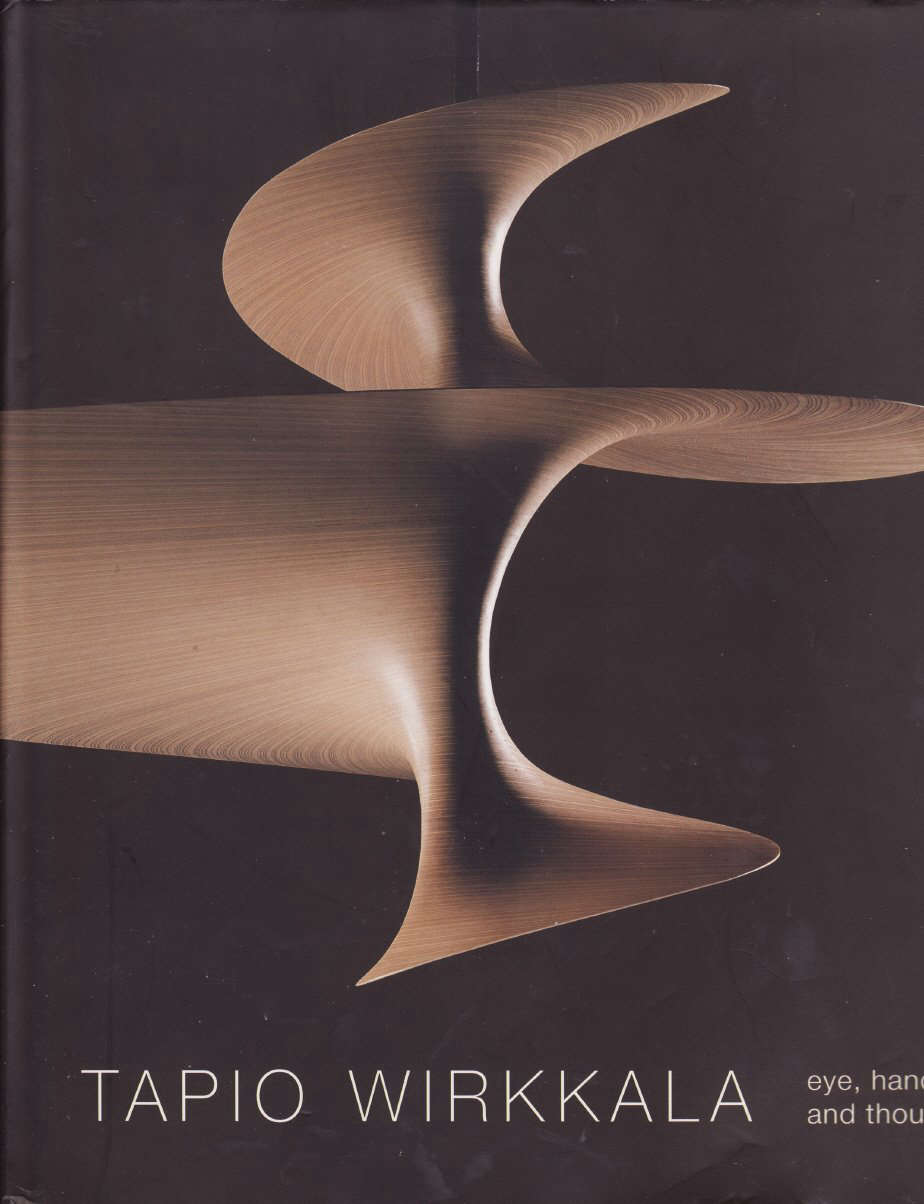
The phrase “Tapio Wirkkala: Eye, Hand and Thought” is more than a handsome title for a design essay. It captures the engine of his entire career. The eye observed nature. The hand tested material. The thought refined the idea until a useful object became quietly unforgettable. In an age when design often screams for attention, Wirkkala’s work still whispersand somehow gets the whole room to listen.
Who Was Tapio Wirkkala?
Tapio Veli Ilmari Wirkkala was born in Hanko, Finland, in 1915 and became one of the defining figures of postwar Finnish design. Trained as a sculptor at the Central School of Arts and Crafts in Helsinki, he brought a sculptor’s sensitivity to nearly everything he touched. His career stretched across glassware, furniture, lighting, cutlery, jewelry, ceramics, graphic design, exhibition design, and public art. If there had been a Finnish national contest for “Most Likely to Redesign the Spoon, the Vase, and Possibly the Moon,” Wirkkala would have been a serious finalist.
His breakthrough came after World War II, when he entered a design competition organized by Iittala, the Finnish glassworks that would become deeply linked with his name. From that point forward, glass became one of his most important languages. Yet Wirkkala was never only a glass designer. He was a restless material thinker. He designed for Iittala, Rosenthal, Venini, Kultakeskus, Tane, Asko, Idman, and other manufacturers, moving between art objects and everyday goods with unusual ease.
What made him special was not simply productivity, although he was extremely productive. It was the unity of his method. A Wirkkala object rarely looks as if it began as a market category. It looks as if it began with a walk in the woods, a piece of ice, a leaf, a shell, a bird bone, or a ripple in water. Then came the hard work: drawing, carving, testing, revising, and collaborating with craftspeople until the final form felt inevitable.
The Meaning of “Eye, Hand and Thought”
“Eye, Hand and Thought” is a perfect doorway into Wirkkala’s design philosophy because it refuses to separate seeing, making, and thinking. For him, design was not a neat office process where an idea was typed into existence and passed along like a memo. It was physical, experimental, and sometimes gloriously messy. The studio, the factory, and the forest were all part of the same classroom.
The Eye: Learning From Nature Without Copying It
Wirkkala’s eye was trained on Finnish nature, especially the rough beauty of Lapland. But he did not merely copy natural forms. His best pieces do not say, “Hello, I am a leaf.” They say, “Remember the feeling of holding a leaf when you were ten and pretending to be a scientist?” That difference matters. He translated nature rather than imitated it.
Look at his glass forms inspired by mushrooms, ice, water, and organic growth. The Kanttarelli vase, associated with the chanterelle mushroom, rises with a flared, living rhythm. The form is recognizable without becoming cartoonish. It belongs to the forest, but it also belongs on a museum pedestal. Wirkkala understood that nature’s real lesson was not decoration. It was structure, movement, balance, and surprise.
The Hand: Craft as Intelligence
Wirkkala’s hand was not just a tool for executing ideas; it was a way of thinking. Photographs and accounts of his working process often emphasize carving, drawing, and shaping. He carved molds. He made prototypes. He handled materials directly. This hands-on approach gave his work a rare intimacy, even when the final object was industrially produced.
In modern design history, the relationship between handcraft and mass production is often treated like a family argument at Thanksgiving: everybody has opinions, and someone is bound to overcook the turkey. Wirkkala found a more elegant solution. He used craft to humanize industry. His objects could be produced for wider use, but they retained the evidence of touch, experiment, and material resistance.
The Thought: Function With Poetry
The “thought” in Wirkkala’s work is easy to underestimate because his designs are so visually seductive. But behind the beauty is discipline. He cared about how objects worked. A glass had to be held. A knife had to cut. A lamp had to light. A bowl had to occupy space gracefully without acting like it owned the room.
His thinking joined utility and emotion. He did not treat function as the enemy of imagination. Instead, function was the frame that allowed imagination to become useful. This is one reason his work has aged so well. It is not trapped in a mid-century costume. It still feels alive because it solves practical problems while offering sensory pleasure.
Major Works and Design Achievements
Tapio Wirkkala’s career is too broad to fit neatly into one category, which is inconvenient for librarians but excellent for design lovers. His output ranged from small domestic items to ambitious exhibition environments. Several works, however, stand out as essential examples of his eye-hand-thought approach.
Ultima Thule: Ice Captured in Glass
Ultima Thule, designed for Iittala in the late 1960s, is probably Wirkkala’s most famous glassware series. Inspired by melting ice in northern landscapes, the collection has a textured surface that looks both rugged and delicate. The technique required intensive experimentation with molds and glassblowing. The result is not a smooth, polite drinking glass. It is a tiny frozen landscape that also happens to hold your whiskey, water, or celebratory sparkling beverage of choice.
The genius of Ultima Thule is that it makes nature functional without making it cute. The icy texture provides visual drama, but the object remains usable. It is bold enough for a collector’s shelf and practical enough for a dinner table. That balance explains why the series remains one of the icons of Finnish modern design.
Kanttarelli: The Mushroom Becomes Modern
The Kanttarelli vase, first designed in the late 1940s, shows Wirkkala’s early mastery of organic form. Named after the chanterelle mushroom, it has a flaring profile that feels botanical without becoming literal. The vase helped establish his reputation and demonstrated his ability to transform natural inspiration into sophisticated art glass.
Unlike many decorative objects, Kanttarelli does not need flowers to justify its existence. Flowers are welcome, of course, but the vase already has presence. It is a sculptural object, a vessel, and a little design-history lesson standing quietly on one foot.
Plywood Sculptures and Wooden Forms
Wirkkala’s laminated plywood works reveal another side of his talent. These pieces often resemble leaves, shells, or abstracted natural bodies. Plywood, a material often associated with practical construction, becomes fluid and refined in his hands. He treated wood as something with rhythm, grain, and memory.
His plywood dishes and sculptures are especially important because they show how consistently he thought across materials. The same organic intelligence found in his glass appears in wood. He did not impose one style on every medium; instead, he listened to each material and adjusted his language accordingly.
Rosenthal, Venini, and International Collaborations
Wirkkala’s work with Rosenthal expanded his influence in porcelain and tableware. His designs for Rosenthal Studio Line combined Scandinavian clarity with technical precision, proving that porcelain could be both refined and quietly experimental. He also worked with Venini in Murano, where glass traditions opened another field of possibility. These collaborations show that Wirkkala was not simply a national figure. He was an international designer whose ideas traveled well because they were rooted in material truth rather than passing fashion.
Why Wirkkala Matters in Finnish Modern Design
Finnish modern design is often associated with restraint, honesty, natural materials, and democratic usefulness. Wirkkala belongs firmly in that tradition, but he also complicates it in interesting ways. His work is restrained, yes, but never boring. It is useful, yes, but often sculptural. It is modern, yes, but it seems to remember older relationships between humans, tools, and landscapes.
Postwar Finland used design as a way to express cultural identity on the international stage. Exhibitions, triennials, and design fairs helped introduce Finnish designers to global audiences. Wirkkala’s success at the Milan Triennale and his presence in major museum collections contributed to the reputation of Finland as a design nation. He made Finnish modernism visible, tactile, and memorable.
His work also matters because it challenges the lazy idea that modern design must be cold. Wirkkala’s objects are modern, but they have warmth. Even the icy glass does not feel sterile. It feels alive. That is a rare achievement: making modernism breathe without making it sentimental.
The Designer as a Bridge Between Art and Industry
Wirkkala’s career sits beautifully between art and industry. He created one-of-a-kind and limited art objects, but he also designed items meant for everyday use. This dual role is central to understanding his importance. He did not see a strict wall between the museum and the kitchen cabinet. A glass could be a designed product, a craft achievement, and a poetic object all at once.
This bridge-building is one reason collectors, museums, and everyday users continue to care about him. His work rewards different levels of attention. A casual user may simply enjoy the feel of an Ultima Thule tumbler. A collector may study the production history. A curator may place the object within postwar design, Nordic modernism, and industrial craft. Wirkkala designed for all of them without pandering to any of them.
How to Recognize Tapio Wirkkala’s Design Language
Wirkkala’s design language is diverse, but several qualities appear again and again. First, there is a strong connection to natural form. His objects often evoke ice, leaves, birds, mushrooms, shells, rivers, and stones. Second, there is a sculptural sense of volume. Even functional items feel shaped from the inside out.
Third, texture matters. Wirkkala understood that the eye is not the only judge of an object. The hand wants a vote, too. His surfaces invite touch, whether through the frosty relief of glass or the smooth curve of laminated wood. Finally, there is a disciplined elegance. His designs can be dramatic, but they rarely become fussy. They have just enough mystery to keep you looking.
Lessons Modern Designers Can Learn From Wirkkala
Contemporary designers still have much to learn from Tapio Wirkkala. His first lesson is simple: spend time with materials. Software can model a curve, but it cannot fully explain how glass cools, how wood resists, or how a hand understands weight. Wirkkala’s work reminds us that design intelligence is partly physical.
His second lesson is to look carefully at nature without turning it into a cliché. Nature-inspired design can easily become predictable: add a leaf, choose green, call it “organic,” and hope nobody asks follow-up questions. Wirkkala went deeper. He studied natural processes, not just natural appearances. Melting, flowing, branching, wearing, growingthese actions shaped his forms.
His third lesson is that beauty and usefulness do not need separate mailing addresses. The best everyday objects can be emotionally rich. A drinking glass can change the mood of a table. A bowl can make fruit look like it has achieved a small personal victory. A lamp can become a quiet sculpture after dark.
Experience Section: Living With the Spirit of Tapio Wirkkala
To understand “Tapio Wirkkala: Eye Hand and Thought” as more than a design-history phrase, imagine living with one object that follows his philosophy. It does not have to be a rare museum piece or a collector-grade treasure guarded like a dragon’s egg. It might be a textured glass, a wooden bowl, a clean-lined lamp, or even a well-made everyday tool. The point is the experience: the way an object changes your attention.
The first experience is visual. A Wirkkala-inspired object asks you to slow down. In a room full of flat screens and smooth plastics, texture becomes almost shocking. The eye follows ridges, curves, shadows, and reflections. Light behaves differently. Morning sun through an icy glass can scatter across a table like a tiny weather report. Suddenly breakfast feels less like a calendar obligation and more like a scene. Not a dramatic sceneno violins requiredbut a small improvement in awareness.
The second experience is tactile. When you hold an object with thoughtful texture, your hand becomes curious. It notices weight, balance, edges, and temperature. This is where Wirkkala’s legacy feels especially relevant today. Many modern products are designed to disappear into convenience. They are smooth, sealed, and anonymous. Wirkkala’s work does the opposite. It reminds you that use can be sensory. A glass can be more than a container. A bowl can be more than a fruit parking lot. A knife can be more than a sharp rectangle with responsibilities.
The third experience is emotional. Objects connected to nature can bring a room back into contact with the outside world. This does not mean turning your home into a forest-themed gift shop where every towel has a moose on it. It means choosing forms that carry the memory of landscape in a subtle way. Wirkkala’s best designs do this with unusual grace. They suggest water, ice, wood, and growth without shouting, “Behold, I am Scandinavian!”
The fourth experience is practical appreciation. Wirkkala teaches that durability is not only physical; it is aesthetic. An object lasts longer when people continue to enjoy using it. This is a useful lesson for anyone buying, collecting, or designing today. The most sustainable object is often the one you do not get tired of after three months. Wirkkala’s designs avoid the trap of trendiness because they are rooted in deeper sources: material, function, craft, and nature.
Finally, living with Wirkkala’s spirit means allowing ordinary rituals to become more attentive. Pouring water, setting a table, arranging flowers, turning on a lampthese daily actions can feel automatic. Good design gives them back a little ceremony. It does not make life perfect. It will not answer emails, fold laundry, or explain why there is always one missing sock. But it can make the small acts of living feel more considered. That is the quiet power of eye, hand, and thought.
Conclusion: The Lasting Power of Eye, Hand and Thought
Tapio Wirkkala remains important because his work proves that design can be intelligent without being cold, beautiful without being vain, and functional without being dull. He brought together the eye of an observer, the hand of a maker, and the thought of a disciplined modern designer. His objects remind us that materials have personalities, nature has structure, and everyday life deserves better companions than soulless stuff.
In the end, “Tapio Wirkkala: Eye Hand and Thought” is not only a way to describe one Finnish master. It is a design philosophy that still feels urgent. Look closely. Make carefully. Think deeply. Then create something useful enough to live with and beautiful enough to remember.
Note: This article is written from synthesized, real design-history information about Tapio Wirkkala, museum collection records, manufacturer histories, and reputable design references. Source links are intentionally omitted for publication-ready formatting.