

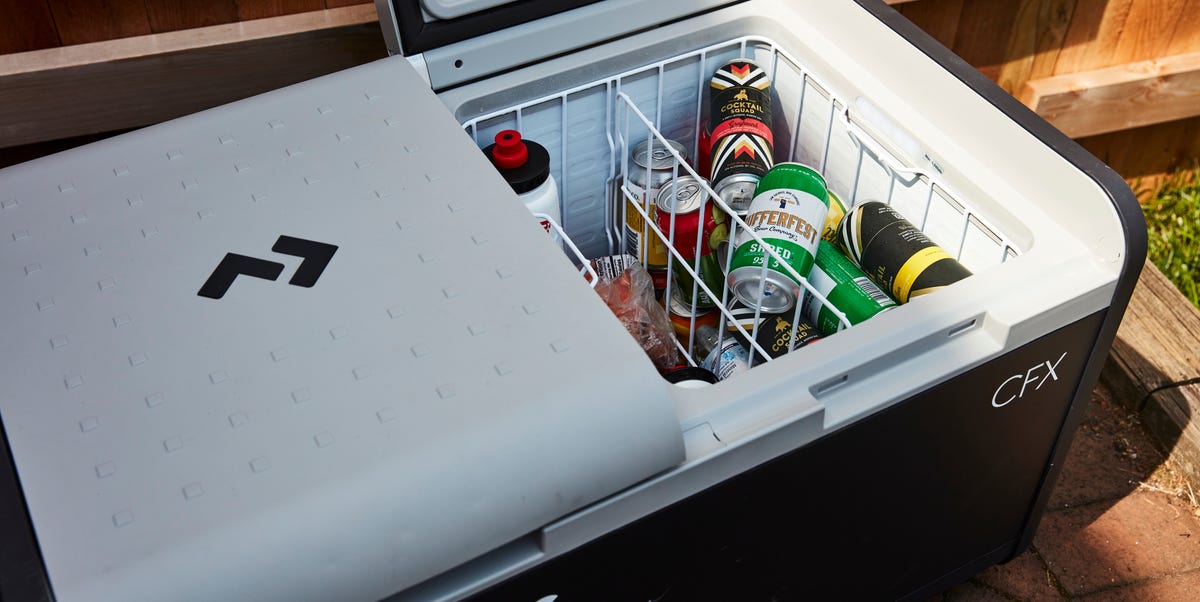
If you’ve ever opened a melted-ice cooler and found your “fresh” groceries swimming in a lukewarm soup of regret, welcome.
Portable refrigerators (aka car refrigerators, 12V fridges, and electric coolers) are the glow-up your road trips deserve.
They don’t need ice. They don’t turn your fruit into a soggy science experiment. And they can keep food at a real, controlled temperature
whether you’re commuting, camping, overlanding, tailgating, or living your best “I have snacks in the trunk” life.
In 2025, the category got meaningfully better: smarter power management, sturdier builds, more dual-zone options (fridge + freezer at the same time),
and batteries that let you stay cold when the engine is off. The flip side? There are now so many models that choosing one can feel like
shopping for a laptop… except the laptop won’t keep your ice cream from becoming a sad dairy latte.
Below are the standout portable refrigerators for 2025, organized by real-life use cases. I’ll also walk you through the “buying math” (capacity,
compressor vs. thermoelectric, battery draw, and vehicle fit) so you can pick the right unit the first timebecause returning a 50-pound fridge by mail
is a workout nobody asked for.
Quick Glossary: What You’re Actually Buying
Compressor portable refrigerator (the good stuff)
This is a true portable fridge/freezer. A compressor model can hold a steady temp regardless of outside heat and can often freeze below 32°F.
It’s the best choice for long drives, camping, vanlife, and anyone who doesn’t want their food’s mood to change with the weather.
Thermoelectric “electric cooler” (fine, but know the limits)
These usually cool relative to ambient temperature (think “keeps cold things cold” more than “makes warm things cold”).
They’re lighter and cheaper, and great for drinks on day tripsjust don’t expect freezer performance in a blazing hot car.
How These Picks Were Chosen
The recommendations below are based on a synthesis of testing notes and buyer-focused evaluations from a broad set of reputable U.S. publishers
that cover vehicles, outdoor gear, home gear, and consumer tech. I prioritized models that repeatedly show up as top performers for:
cooling stability, insulation, power efficiency, real vehicle usability
(size, handles, lids, baskets), and features that matter (battery protection, dual-zone control, app control when it’s actually useful).
The Best Portable Refrigerators of 2025
Best Overall Car Refrigerator: Dometic CFX5 (45-ish liter class)
If you want the “buy once, cry once” option, Dometic’s CFX line continues to be the benchmark. In 2025 coverage, the CFX5 family in particular is
praised for precise temperature control, strong insulation, and a polished day-to-day experience (internal light, clean controls, and app support that
doesn’t feel like a gimmick).
Why it wins: it’s the kind of fridge that just behaves. That matters when you’re 200 miles from the nearest grocery store and your travel buddy
packed salmon “for later.” The tradeoff is weight and pricethis is a serious piece of kit, not a plastic lunchbox with a fan.
- Best for: road trips, camping, vanlife, families, “I refuse to buy ice” people
- Look for if: you want stable temps and high-quality insulation more than ultra-light portability
Best Value Compressor Fridge: BougeRV 23-Quart (compact, legit fridge/freezer)
Not everyone needs a monster dual-zone unit. If your main goal is cold drinks, meal prep, and a couple days of groceries, a compact compressor fridge
is the sweet spotespecially if it fits on the floor behind the passenger seat or in a small trunk without turning your car into a Tetris documentary.
BougeRV’s smaller units keep popping up as value picks because you get true fridge/freezer capability in a manageable footprint.
Translation: it’s not just “cool-ish”it’s actually controlled, consistent cold. Expect fewer luxury touches than premium brands, but for the money,
this is one of the easiest ways to upgrade from ice.
- Best for: commuters, couples, day trips, compact cars, budget-focused buyers who still want a compressor
- Pro tip: pre-chill at home on AC power before you hit the road to reduce battery draw
Best Budget Dual-Zone: Alpicool CF45 (fridge + freezer without a second mortgage)
Dual-zone fridges are a game-changer if you want to keep meals cold while also freezing ice packs, meat, or (let’s be honest) emergency ice cream.
The Alpicool CF45 class is frequently recommended because it brings dual-zone flexibility to a price range normal humans can tolerate.
Is it as refined as the premium rigs? No. But it’s a lot of capability for the cost. If you’ve been trying to do “fridge in the cooler, freezer in the
other cooler” math, this is the model tier that simplifies your life.
- Best for: weekend camping, meal prepping on the road, families who want frozen + chilled at once
- Watch for: basket/organization qualitygood baskets make deep coolers way less annoying
Best “Compact and Simple” Electric Cooler: Igloo Versatemp (thermoelectric)
Sometimes the assignment is: “Keep drinks cold for a few hours, in a sedan, without spending fridge money.” That’s where a thermoelectric option shines.
The Igloo Versatemp-style coolers are lightweight, easy to stash, and perfect for road trips where everything starts cold and you just want it to
stay that way.
The reality check: thermoelectric models usually don’t offer precise temperature settings. They’re more like a “cooling assistant” than a “portable refrigerator.”
In mild temps, they’re great. In extreme heat, they’re not a freezerdon’t bully them.
- Best for: day trips, tailgates, “I need cold soda, not frozen steaks”
- Not ideal for: hot climates + long stops with the car off + anything that must stay under 40°F consistently
Best Mid-Priced “Real Fridge” Alternative: Igloo ICF 40 (strong performance for the cost)
If you like the idea of a compressor fridge but don’t want to go full premium, this is a compelling middle lane.
The ICF 40 class gets attention for durability, practical design, and solid cooling performance at a mid-range price point compared with flagship models.
It’s also a nice “first compressor fridge” because it tends to feel less intimidating: plug it in, set the temp, stop thinking about ice forever.
That’s the dream.
- Best for: first-time buyers moving from ice to compressor, weekend warriors, multi-use home + car
- Tip: choose capacity based on baskets + usable layout, not just “quart” numbers
Best for Off-Grid Convenience: Anker EverFrost / EverFrost 2 (battery-powered versatility)
Battery-powered coolers got more serious in 2025. The appeal is obvious: charge at home, roll it to the car, and keep things cold with the engine off.
The EverFrost family stands out for its integrated battery approach, rolling design (your back will send a thank-you note), and the overall “consumer-tech”
polishuseful app control, convenient ports, and smart charging options.
The honest tradeoff: big battery models can get heavy fast, especially when loaded. If you plan to move it a lot, wheels and a good handle aren’t optional.
Also, some larger high-feature units prioritize “do everything” over maximum insulation efficiency, so pay attention to real-world power draw if you’ll be off-grid
for days.
- Best for: tailgating, off-grid hangs, event days, car camping where you don’t want to idle the engine
- Ask yourself: do you need built-in battery, or will a power station + standard compressor fridge do the job cheaper?
Best for Vanlife Layouts: EcoFlow Glacier Classic (newer-school sizing and portability)
Vanlife fridges live in a harsh world: tight aisles, weird cabinet cutouts, and the constant risk of being sat on like a bench.
The Glacier Classic line draws attention in 2025 coverage because it focuses on practical capacity and off-grid runtime with a removable-battery strategy,
while aiming for a cleaner, more “modern system” vibe (app control, multiple charging paths, and travel-friendly design choices).
This is a strong pick if you want a fridge that feels like part of a portable power ecosystem. If you already own a compatible power setup or you’re building one,
it’s worth a close look.
- Best for: vanlife, RV trips, longer road travel, people already buying power gear
- Fit note: measure twicethese are boxy, and hinge/lid clearance matters in tight builds
Most Durable “Bring It On” Option: ARB Zero (premium rugged dual-zone)
ARB’s reputation lives in the land of dusty roads, bounced suspension, and someone saying, “It’ll be fine,” right before it’s not.
The ARB Zero category is popular among overlanders for a reason: rugged construction, practical baskets, and an overall design that’s meant to survive
abuse while keeping temps stable.
The cost is real. The weight is also real. But if your portable fridge is basically a piece of vehicle equipmentlike your recovery boards or your roof rack
then paying for durability makes sense.
- Best for: off-road travel, overlanding, long trips where failure is not cute
- Worth it if: your fridge will live in the vehicle and get used constantly
Buying Guide: How to Choose the Right Portable Refrigerator
1) Pick the right size (and don’t trust “quart math” blindly)
Capacity numbers are helpful, but layout matters just as much. A deep single compartment can turn into a snack archeology dig.
Baskets and dividers keep you from having to remove 19 items to reach the one thing you actually want.
- 20–30 qt: solo travelers, daily commuting, short trips, “cold drinks + a few meals”
- 35–45 qt: couples, weekend camping, moderate grocery loads
- 50–60+ qt: families, longer trips, dual-zone setups, “we packed the entire fridge” energy
2) Compressor vs. thermoelectric: decide what “cold” means to you
If you need food-safe temps (generally under 40°F) in warm conditions, or you want freezing capability, choose a compressor fridge.
If you mainly want to keep pre-chilled drinks cold during a drive, thermoelectric can be a budget-friendly win.
3) Power and battery protection: don’t flatten your car battery
Many compressor fridges include low-voltage cutoffs to help prevent draining a starter battery. Still, your safest strategies are:
pre-chill on wall power, avoid leaving the lid open, and consider a dedicated power station for overnight use.
If you’re building a solar setup, many reviewers treat ~100W solar as a common starting point for supporting fridge use in the field.
4) Noise and placement: yes, it matters
If you’ll sleep next to it (vanlife, tent platforms, SUV camping), pay attention to fan noise and compressor cycling.
And think about where it lives: behind a seat, in a trunk, on a slide, or in a cargo drawer. Measure for lid clearance and airflow around vents.
5) Dual-zone is awesome… if you’ll actually use it
Dual-zone costs more and can add complexity. It’s perfect if you truly need freezer + fridge at once.
If you don’t, a single-zone fridge with a colder setpoint (plus a few reusable ice packs) can often do the job more simply.
Bottom Line: The “Best” Depends on Your Driving Life
If you want the most consistently praised, no-drama performance, go premium with the Dometic CFX5 class.
If you want maximum value with real compressor cooling, a compact BougeRV-style fridge is hard to beat.
If you want budget dual-zone flexibility, Alpicool makes the idea realistic.
And if you want off-grid convenience without building a full power setup from scratch, battery-powered systems like Anker’s EverFrost line are genuinely tempting.
The best part? Once you go iceless, it’s tough to go back. You’ll start making wild statements like,
“We can bring shrimp!” and “Let’s buy ice cream on the way!” and “Yes, we can meal prep for the whole trip!”
You’ll feel powerful. Possibly too powerful.
Real-World Experiences: 10 Lessons You Learn After You Actually Own One (Extra 500-ish Words)
Portable refrigerators are amazingright up until you treat them like magic and they remind you that physics is still employed full-time.
Here are the most common “I learned this the hard way” moments that show up once you start road-tripping with a car fridge.
1) Pre-chilling isn’t optional; it’s the cheat code
If you plug a fridge into your car and load it with room-temp drinks, it will work… but it will also guzzle power like it’s being paid by the amp.
The move is to pre-chill at home on AC power, then transfer everything cold. Your battery (and your patience) will last longer.
2) Lid-open time is the silent budget killer
Every time you stand there with the lid open deciding between a sparkling water and the other sparkling water, you’re basically paying a “cold tax.”
Baskets help because you can grab what you need quickly. So does having a plan.
Pro-level behavior: organize by “frequent grab” items on top and “once per day” items underneath.
3) Deep bins are great… until you’re looking for one tiny thing
A tall, deep compartment sounds efficientuntil the ketchup migrates to the bottom like it’s on a quest.
This is why people get oddly passionate about baskets. The ability to lift a layer out and instantly see what’s below is not a luxury;
it’s the difference between “easy lunch” and “snack excavation.”
4) Your car’s 12V outlet may not be “always on”
Some vehicles shut off accessory power when the ignition is off. That can be a surprise if you thought you were set for overnight cooling.
If you’re doing any sleeping-in-the-car situation, a power station or a built-in battery fridge is usually the safer plan.
5) Thermoelectric coolers are happiest when you treat them like a chill babysitter
They’re awesome at keeping already-cold drinks cold on a drive. They’re less awesome at taking warm groceries down to fridge temps in a hot car.
If you’re using thermoelectric, start cold and keep expectations realistic. It’s not failing you; it’s just not a freezer.
6) The “I can freeze things now” era begins
The first time you pull out actual frozen items on a road tripice cream, frozen fruit, ice packs that stay solidyou’ll feel like you hacked reality.
Just remember: freezer mode usually means higher power draw. If you’re off-grid, you’ll want to plan your charging like an adult.
7) You will become the friend with the best snacks
This is not a prediction; it’s a transformation. People will “just happen” to stop by your campsite.
Strangers will suddenly be very interested in your opinions. You’ll offer cold fruit like a benevolent wizard.
8) A fridge slide sounds extra… until your back votes yes
If your fridge lives deep in the trunk, pulling it out for access can be annoying. Slides cost money, but they make daily use dramatically easier.
If you’ll access the fridge multiple times per day, convenience becomes a real quality-of-life upgrade.
9) Noise is personal
Some people can sleep next to a cycling compressor. Others will lie awake counting fan spins.
If you’re a light sleeper, prioritize quieter units and place the fridge as far from your sleeping area as you can.
10) Once you stop buying ice, you won’t miss it
The hidden win of a portable refrigerator isn’t just colder foodit’s fewer stops, less mess, and less “cooler management” on trips.
Your groceries stay dry. Your drinks stay consistent. And you stop paying for bags of ice that disappear faster than your willpower in a donut shop.