

Note: This article is original, publish-ready web content written in standard American English and synthesized from current home organizing, kitchen decluttering, food safety, donation, and waste-reduction guidance.
Introduction: My Kitchen Was Not “Cozy.” It Was a Museum of Bad Decisions.
There comes a moment in every kitchen’s life when “well-stocked” quietly becomes “why do I own four peelers?” For me, that moment arrived when I opened a drawer looking for a measuring spoon and was attacked by a whisk, three mismatched takeout chopsticks, and a silicone cupcake mold I had apparently been saving for my future life as a cheerful baking influencer.
My kitchen looked clean enough from a distance, which is how clutter gets away with its crimes. The counters were mostly clear. The sink was not dramatic. But inside the drawers, cabinets, pantry shelves, and “miscellaneous basket of doom,” there was a quiet storm of duplicates, guilt gifts, expired spices, mystery lids, and kitchen gadgets that had not seen daylight since the year everyone decided spiralized zucchini was a personality.
Then I tried the cobwebbing declutter method, a gentle decluttering approach built around identifying the emotional “cobwebs” attached to objects. Instead of asking only, “Do I use this?” the method asks, “What old feeling, obligation, fantasy, or memory is keeping this here?” In an hour, I let go of more kitchen clutter than I had in months of halfhearted tidying. More importantly, I did it without turning my kitchen into a disaster zone or my emotions into soup.
If your cabinets are crowded, your pantry is hiding ancient crackers, or your mug collection has started reproducing at night, this kitchen decluttering method may be exactly the kind, practical push you need.
What Is the Cobwebbing Declutter Method?
The cobwebbing declutter method treats clutter like emotional dust. Some items are not in your home because they are useful, beautiful, or meaningful in the present. They are there because they are tangled in an old connection. Maybe a gift from someone you love. Maybe a souvenir from a version of yourself who hosted dinner parties every weekend. Maybe a bread machine purchased during a burst of optimism and carbs.
The idea is simple: identify the invisible strands connecting you to objects and decide whether those strands still support you or just trap you. A healthy connection feels warm, useful, and alive. A cobweb feels stale, guilty, heavy, or outdated.
How Cobwebbing Is Different From Ordinary Decluttering
Traditional decluttering often focuses on categories: toss expired food, donate duplicates, organize by zone, and store everyday items within reach. Those are excellent principles. But they do not always solve the hardest part of kitchen clutter: the emotional negotiation.
Cobwebbing works because kitchens are weirdly sentimental. They hold family recipes, holiday dishes, gifted appliances, old hosting dreams, diet plans, “someday” tools, and enough mugs to hydrate a small marching band. The cobwebbing method gives you permission to admit that some items once meant something, but no longer need to occupy valuable cabinet space.
Why the Kitchen Is the Perfect Place to Try Cobwebbing
The kitchen is one of the most active rooms in the home. It is also one of the easiest places for clutter to disguise itself as preparedness. Extra containers? Practical. Backup mugs? Hospitable. Three sets of measuring cups? Surely useful. A novelty avocado slicer shaped like a tiny kayak? Fine, maybe less defensible.
Unlike a closet, where unused clothing is obvious, kitchen clutter often hides behind good intentions. We keep items because we cook, might cook, used to cook, want to cook, or want to become the kind of person who casually says, “I made my own gnocchi.” Cobwebbing cuts through the fantasy and brings the focus back to how you actually live.
The Kitchen Clutter Categories That Create the Most Cobwebs
During my one-hour declutter, I noticed that most of my kitchen clutter fell into a few emotional categories:
- Guilt gifts: items given by friends or relatives that I never used but felt bad donating.
- Aspirational clutter: tools for meals, hobbies, or routines I imagined but never practiced.
- Duplicate “just in case” items: extra spatulas, mugs, containers, and serving pieces.
- Expired pantry clutter: spices, sauces, and specialty ingredients bought for one ambitious recipe.
- Sentimental kitchenware: things connected to holidays, family meals, or past homes.
- Broken-but-fixable items: objects waiting for repairs that, let’s be honest, were not coming.
Once I saw the categories clearly, the kitchen stopped feeling like a personal failure and started feeling like a room full of old stories. Some stories deserved a place. Others were just taking up the good shelf.
My One-Hour Cobwebbing Declutter Plan
The biggest mistake people make when decluttering a kitchen is emptying every cabinet at once. That is not decluttering; that is summoning a domestic thunderstorm. For an hour-long session, the goal is focused progress, not a full archaeological excavation.
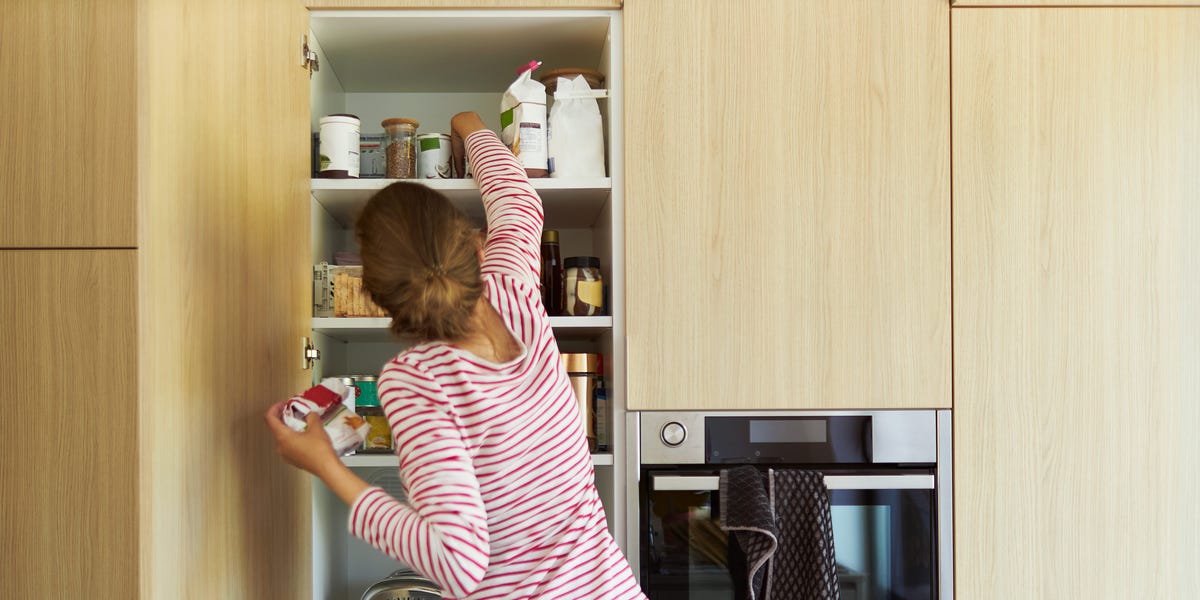
I set a timer for 60 minutes, grabbed three bags and one box, and labeled them mentally: trash, recycling, donate, and “think about it.” The last category is important. Cobwebbing is gentle, not reckless. If an item makes you pause, you can give it a short waiting period instead of forcing a dramatic goodbye over a mixing bowl.
Minute 0 to 10: I Started With the Easy Wins
First, I tackled the items with no emotional drama: expired coupons, stained paper napkins, cracked takeout containers, orphaned lids, duplicate sauce packets, and spices that smelled like beige air. This warmed up my decision-making muscles without requiring deep reflection.
Food safety guidance often reminds us that many date labels are about quality rather than automatic danger, but that does not mean every ancient pantry item deserves immortality. If something looked bad, smelled off, had damaged packaging, or had become a fossilized version of its former self, it left. The pantry immediately felt less like a storage area and more like a place where actual edible food might live.
Minute 10 to 25: I Looked for Duplicates
Next came duplicates. I found five wooden spoons. I use two. I found three vegetable peelers. I apparently trust none of them. I found enough water bottles to support a youth soccer team through extra time.
This is where cobwebbing helped. Instead of asking, “Could I possibly use this one day?” I asked, “What is the cobweb?” Often the answer was fear: fear of not having enough, fear of wasting money, fear of needing the item the day after I donated it. But most duplicate kitchen tools are not rare artifacts. If I would not buy the item again today, and I had another one that worked better, it was clutter.
Minute 25 to 40: I Faced the Guilt Gifts
This was the emotional center of the project. I had a decorative serving bowl from a family member, a novelty mug from a friend, and a tiny specialty pan that had been given to me with the confidence of someone who believed I make tiny specialty foods.
None of these items were bad. That made them harder. Cobwebbing reminded me that a gift is not a life sentence. The love was in the giving, not in my obligation to store the object forever. If the item was useful or genuinely joyful, it stayed. If it made me feel guilty every time I moved it out of the way, it went into the donation box.
Minute 40 to 50: I Questioned My Fantasy Kitchen Life
Every kitchen contains evidence of imaginary lifestyles. Mine included a pasta attachment, a melon baller, a juicer part with no juicer in sight, and a stack of entertaining dishes for parties I do not host. These items were not connected to my real routines. They belonged to a cinematic version of me who wears linen, has fresh herbs in matching pots, and says things like, “Let’s do a casual brunch.”
The cobweb question here was powerful: “Am I keeping this for my life, or for a performance of my life?” That one sentence cleared an entire cabinet shelf.
Minute 50 to 60: I Reset the Kitchen Around Real Use
In the final ten minutes, I did not try to create a magazine-perfect kitchen. I simply put the remaining items where they made sense. Everyday plates stayed easy to reach. Cooking tools moved near the stove. Food storage containers were matched with lids. Baking items went together. The donation box went straight by the door, because a donation box that lingers becomes a new piece of furniture.
By the end of the hour, the kitchen was not minimalist. It still looked like a human lived there, ate there, dropped crumbs there, and occasionally believed in pancakes. But it felt lighter, faster, and less emotionally noisy.
How to Use the Cobwebbing Method in Your Own Kitchen
You do not need a free weekend, matching bins, or the personality of a professional organizer to try cobwebbing. You need one focused hour and a willingness to tell the truth about your stuff.
Step 1: Choose One Kitchen Zone
Pick one drawer, one cabinet, one pantry shelf, or one category such as mugs, containers, gadgets, or spices. Do not start with the entire kitchen unless you enjoy chaos as a lifestyle brand.
A small zone creates momentum. It also prevents the classic decluttering spiral where everything is on the counter, you get hungry, and suddenly you are eating crackers beside a mountain of measuring cups.
Step 2: Pull Everything OutBut Only From That Zone
Seeing everything together reveals the truth. One travel mug looks reasonable. Twelve travel mugs look like you are preparing to open a commuter beverage service.
Group similar items together. Put lids with containers, utensils with utensils, spices with spices, and sentimental items in a small pile. This makes duplicate clutter obvious and reduces decision fatigue.
Step 3: Ask the Cobweb Questions
For each item that gives you pause, ask:
- What memory, guilt, fear, or fantasy is attached to this?
- Does this item support my current life?
- Would I buy this again today?
- Have I used it in the last year?
- Is it worth the space it occupies?
- Could someone else use it more than I do?
These questions shift the decision from panic to clarity. You are not rejecting your past. You are choosing what belongs in your present.
Step 4: Make Four Simple Piles
Keep the system boring. Boring works. Use four categories:
- Keep: useful, loved, or genuinely needed items.
- Donate: clean, working items someone else can use.
- Recycle or trash: broken, unsafe, stained, expired, or unusable items.
- Maybe: emotionally sticky items that need a short decision window.
The “maybe” box should not become a retirement village for indecision. Put a date on it. If you do not reach for those items within 30 to 60 days, let them go.
Step 5: Reset for Access, Not Aesthetics
A kitchen should work harder than it poses. Put daily-use items in the easiest spots. Store occasional items higher or farther back. Keep heavy appliances low enough to lift safely. Group food by category so you stop buying the same can of beans because the old one was hiding behind decorative vinegar.
Clear bins, drawer dividers, lazy Susans, and shelf risers can help, but only after you declutter. Buying organizers before removing clutter is how you end up with beautifully contained chaos.
What I Let Go of Without Regret
By the time the timer rang, my donation box contained a respectable collection of kitchen items that were not serving me: extra mugs, duplicate utensils, a serving platter I never used, a small appliance accessory, several food storage containers, and a decorative bowl that deserved a home where it might actually see snacks.
The trash and recycling pile held the less glamorous casualties: stained lids, expired packets, broken clips, old paper menus, and a suspicious jar of something that had gone from “sauce” to “science project.”
The most surprising part was that I did not miss any of it. I thought letting go would feel like loss. Instead, it felt like opening a window.
Why Cobwebbing Works So Well for Emotional Kitchen Clutter
Kitchen clutter is rarely just about volume. It is about identity. A stocked kitchen can make us feel capable, generous, healthy, creative, prepared, and connected to family. That is why letting go of kitchen items can feel oddly personal.
The cobwebbing method respects that. It does not shame you for keeping sentimental objects. It simply asks whether those objects still carry good energy or whether they have become dusty obligations.
It Turns Guilt Into Gratitude
Instead of thinking, “I am terrible for donating this gift,” cobwebbing lets you think, “This item was part of a kind moment, and now it can be useful somewhere else.” That small reframe makes letting go less harsh.
It Separates Memory From Object
You can keep the memory without keeping the bulky casserole dish. Take a photo. Write down the recipe. Save one representative item instead of a full set. The story does not disappear just because the object leaves your cabinet.
It Makes Space for Real Life
When unused items leave, everyday life gets easier. You can reach the pan you use. You can see what food you own. You can open a drawer without performing a tiny metal percussion concert. A decluttered kitchen is not just prettier; it is calmer and more efficient.
Kitchen Items to Review During a Cobwebbing Declutter
If you want a quick checklist, start here. These are common clutter magnets in many kitchens:
- Mismatched food storage containers and orphaned lids
- Duplicate mugs, water bottles, and travel cups
- Specialty gadgets used once or never
- Expired spices, oils, sauces, and baking ingredients
- Chipped dishes or cracked glasses
- Takeout packets, plastic utensils, and old menus
- Serving dishes for events you no longer host
- Small appliances that are difficult to clean or rarely used
- Reusable bags beyond a reasonable number
- Cookbooks you never open because you search recipes online
You do not have to remove everything on this list. The point is to review each item honestly. Keep what works. Release what nags, crowds, or quietly judges you from the back of the cabinet.
How to Avoid Re-Cluttering the Kitchen After One Good Session
The real test of any decluttering method is not how your kitchen looks at the end of the hour. It is how it functions two weeks later when life gets busy, groceries arrive, and someone places one random receipt on the counter like a tiny flag of surrender.
Use the One-In, One-Out Rule
When a new mug, gadget, or storage container comes in, one similar item should leave. This keeps categories from expanding quietly.
Create a Donation Landing Spot
Keep a small bag or bin in a closet for items you are ready to donate. When it fills, schedule the drop-off. Do not let donations live in your trunk long enough to qualify for residency.
Do a Monthly Ten-Minute Pantry Scan
Look for expired foods, duplicates, and ingredients you forgot you owned. Plan a meal around usable items before buying more. This saves space and money.
Stop Buying for Your Fantasy Self
Before buying a kitchen item, ask, “Will I use this in my actual Tuesday-night life?” If the answer depends on a total personality transformation, leave it at the store.
My Personal Experience: What Cobwebbing Taught Me About Kitchen Clutter
The biggest surprise was not how much I removed. It was how emotional ordinary kitchen items became once I slowed down long enough to notice them. A mug was not just a mug. It was a trip. A platter was not just a platter. It was the idea that I should host more. A stack of unused baking tools was not just clutter. It was a quiet accusation that I had failed to become the kind of person who makes perfect holiday cookies while wearing a clean apron.
The cobwebbing declutter method helped me untangle those feelings without making fun of them. I could admit that some objects represented good intentions. I could also admit that good intentions are not a storage plan. My kitchen cabinets had become a physical calendar of postponed selves: future baker, future entertainer, future meal-prep queen, future person who knows what to do with a mandoline without fearing for her fingertips.
One of the hardest items to release was a serving bowl I never used. It was pretty, sturdy, and connected to someone I care about. For years, I moved it from shelf to shelf, always thinking, “I should keep this.” But when I asked the cobweb question, the truth came quickly: I was not keeping it because I loved it. I was keeping it because donating it felt rude. That realization changed everything. The bowl had become a guilt container, and honestly, my cabinets were already full.
I also learned that clutter can make you distrust your own home. Before decluttering, I bought duplicates because I could not see what I had. I bought spices because I forgot the old ones. I avoided cooking certain meals because finding the right pan felt annoying. The kitchen was not lacking space as much as it was lacking honesty.
After the hour, cooking felt easier in small but noticeable ways. I could grab a container and a lid in the same century. I could see the pantry shelves. The utensil drawer opened without resistance, which felt like emotional support from furniture. Even cleaning became faster because fewer things had to be moved, stacked, or negotiated with.
Most importantly, I stopped treating every item as a permanent record of who I had been. People change. Routines change. Diets, hobbies, family rhythms, budgets, homes, and energy levels change. A kitchen should be allowed to change too. Keeping items that match an old chapter does not honor that chapter more deeply; sometimes it just makes breakfast harder.
Now, when I open a cabinet, I want to feel invited into my actual life. I want the things I use to be easy to reach. I want the special items I keep to feel special, not buried under clutter. I want my kitchen to support weeknight dinners, lazy coffee, simple lunches, and the occasional ambitious recipenot a fantasy version of domestic perfection that requires seven serving trays and emotional debt.
The cobwebbing method gave me a kind way to let go. It did not demand that I become a minimalist or toss every sentimental object. It simply helped me see which objects were loved and which were merely lingering. That distinction made the whole process feel less like loss and more like relief.
Conclusion: A Lighter Kitchen Starts With One Honest Hour
The cobwebbing declutter method worked because it addressed the real reason kitchen clutter sticks around: emotion. We do not keep every extra mug, gadget, dish, or expired pantry item because we truly need it. Sometimes we keep things because of guilt, fear, nostalgia, optimism, or the belief that our future self will suddenly become a person who uses a citrus zester every Wednesday.
In one hour, I did not create a perfect kitchen. I created a more honest one. The items that stayed were useful, loved, or genuinely worth the space. The items that left were not failures; they were released from a room where they no longer belonged.
If your kitchen feels crowded, start small. Choose one drawer or cabinet. Set a timer. Ask what cobweb is attached to each item. Then let your kitchen become less of a storage unit for old obligations and more of a working space for the life you actually live.