

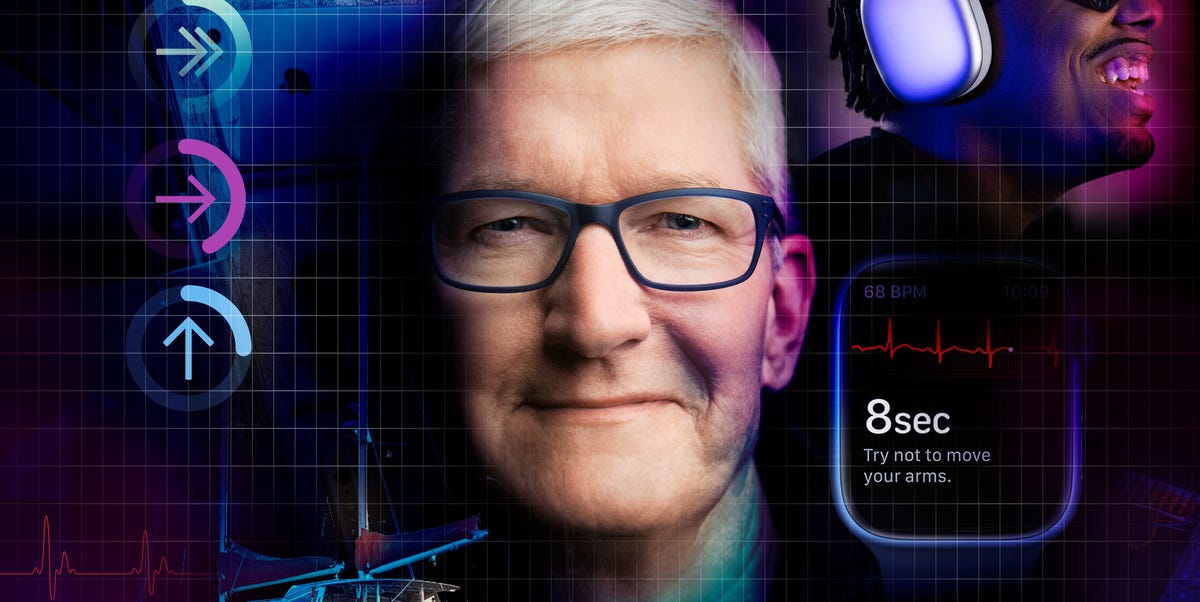
Note: This article is written for web publication and synthesizes publicly available information from reputable U.S. technology, business, policy, and company sources, including reporting and official materials related to Tim Cook, Apple, privacy, accessibility, AI, environmental progress, supply chain responsibility, and responsible innovation.
Introduction: Innovation Is Growing Up, and It Brought a Clipboard
For years, the technology industry treated innovation like a race car with no brakes: faster chips, thinner devices, smarter software, bigger screens, louder launches, and the occasional keynote phrase that sounded suspiciously like it had been polished by twelve committees and a barista. But the next era of technology is asking a tougher question: not simply “Can we build it?” but “Should we build it this way?”
That is the heart of responsible innovation, a phrase that becomes especially interesting when paired with Tim Cook, Apple’s CEO and the guest editor associated with the Popular Mechanics theme, “The Future Is Responsible Innovation.” Cook’s leadership style has long emphasized privacy, accessibility, environmental responsibility, supply chain accountability, and the idea that technology should serve people rather than quietly turn them into data piñatas.
Responsible innovation does not mean boring innovation. It does not mean replacing moonshots with beige spreadsheets. It means building technology that is useful, safe, inclusive, sustainable, and trustworthy. In other words, it is innovation with a seatbelt, a conscience, and maybe a reusable water bottle.
What “Responsible Innovation” Really Means
Responsible innovation is the practice of designing new products, systems, and services while actively considering their social, ethical, environmental, and human consequences. It asks companies to think beyond launch day applause and quarterly earnings. A responsible innovator studies how technology affects privacy, security, mental health, accessibility, climate impact, labor conditions, competition, and democratic trust.
In the age of artificial intelligence, connected devices, biometric sensors, augmented reality, and always-on digital assistants, this approach is no longer optional. A badly designed app can leak sensitive data. A biased AI system can amplify discrimination. A shiny new gadget can become electronic waste faster than someone can say, “I just bought the previous model.” Responsible innovation is the difference between progress that improves lives and progress that merely updates the user agreement nobody reads.
From “Move Fast” to “Move Wisely”
The tech world once celebrated speed above almost everything else. Build first, apologize later, patch the bug, rebrand the scandal, repeat. But consumers, regulators, researchers, and employees have become less enchanted by that model. People now want devices that protect their data, platforms that reduce harm, AI tools that explain themselves, and companies that do not treat the planet like an external hard drive marked “someone else’s problem.”
Tim Cook’s public philosophy fits neatly into this shift. Under his leadership, Apple has often framed privacy as a fundamental human right, accessibility as a design requirement, and environmental progress as part of product development rather than a decorative footnote. Apple is not perfectno global technology giant isbut its approach offers a useful case study in how responsibility can become part of a company’s brand, engineering culture, and long-term strategy.
Tim Cook’s Innovation Philosophy: Tinkering With Guardrails
When Tim Cook appeared as a guest editor around the theme of responsible innovation, the focus was not simply on Apple’s products. It was also on a larger idea: the future belongs to people who build thoughtfully. Tinkering, experimenting, repairing, learning, and inventing are all part of progress. But Cook’s version of progress also emphasizes values.
That matters because Cook inherited Apple after Steve Jobs, one of the most famous product visionaries in modern business history. Jobs was associated with taste, intensity, and category-defining products. Cook brought a different but equally important strength: operational discipline. He scaled Apple into one of the most valuable companies in the world while placing public emphasis on privacy, sustainability, services, accessibility, and supply chain standards.
In practical terms, Cook’s message is simple: technology should be powerful, but power needs principles. A smartphone is not just glass and metal. It is a camera, wallet, health monitor, location tracker, communication hub, work device, entertainment machine, and emotional support rectangle. That kind of intimacy demands responsibility.
Privacy: The Front Door of Responsible Technology
If responsible innovation were a house, privacy would be the front door, the lock, the alarm system, and the neighbor who notices suspicious vans. Apple’s privacy messaging has become one of its strongest brand pillars because people increasingly understand that personal data is not just “information.” It is identity, behavior, location, health, finances, relationships, and habits.
Apple has built many privacy features into its ecosystem, including app privacy labels, tracking transparency controls, on-device processing, encrypted health data, and privacy-focused design choices in services such as Maps, Wallet, Safari, and Apple Pay. These features are not merely technical decorations. They shape the user experience by limiting how much data is collected, shared, or linked to a person.
Privacy in the Age of AI
Artificial intelligence makes privacy more urgent. AI assistants can become useful only when they understand context. But context often includes sensitive information: messages, photos, calendars, locations, contacts, documents, and habits. That creates a difficult balancing act. Users want smarter tools, but they do not want their lives vacuumed into a mysterious server farm where personal data goes to become “model improvement.”
Apple’s answer has been a privacy-first AI architecture built around on-device processing whenever possible and Private Cloud Compute for more complex tasks. The idea is to bring larger AI capabilities to users without turning personal requests into long-term stored data. This is one of the clearest examples of responsible innovation: instead of asking users to choose between intelligence and privacy, the company tries to engineer a third option.
The broader lesson is bigger than Apple. AI companies need to prove that their systems are not only impressive in demos but also safe in daily life. A chatbot that writes a poem about pizza is cute. A chatbot that mishandles medical, legal, financial, or personal data is less cutemore “boardroom emergency with cold coffee.”
Security by Design: Responsibility Before the Breach
Responsible innovation also means building secure products from the start. Security cannot be a sticker slapped on the box after launch. It must be part of architecture, hardware, software, testing, updates, and corporate accountability.
This is where the technology industry is moving toward the idea of “secure by design.” Instead of placing the burden entirely on userswho are already juggling passwords, two-factor codes, suspicious emails, and the eternal question of whether “Your Package Is Waiting” is realmanufacturers are expected to take more responsibility for customer security outcomes.
Apple’s ecosystem illustrates this philosophy through features such as hardware-based security, biometric authentication, encryption, rapid software updates, app review policies, and privacy controls. Again, the point is not that any company has achieved perfect security. Perfect security belongs in the same mythical category as inbox zero and a printer that never causes emotional distress. The point is that responsible innovation treats security as a design obligation, not a customer hobby.
Accessibility: Innovation That Includes More People
One of the strongest arguments for responsible innovation is accessibility. A product is not truly advanced if millions of people cannot use it. Apple has long invested in accessibility features across vision, hearing, mobility, speech, and cognitive needs. Tools such as VoiceOver, Magnifier, Voice Control, Live Captions, Personal Voice, AssistiveTouch, and accessibility settings across iPhone, iPad, Mac, Apple Watch, and Vision Pro show how inclusive design can become mainstream design.
Accessibility is not charity. It is good design. Curb cuts help wheelchair users, parents with strollers, travelers with luggage, and delivery workers. Captions help deaf users, language learners, commuters in noisy spaces, and anyone watching a video while pretending not to be watching a video. The same principle applies to technology. When products are built for a wider range of human needs, everyone benefits.
AI and the Next Accessibility Leap
AI could become a major accessibility breakthrough when used responsibly. Better image descriptions, natural language navigation, real-time captions, smarter reading tools, and adaptive interfaces can help people interact with technology in more personal ways. The challenge is making these tools accurate, private, affordable, and available without creating new barriers.
Responsible innovation asks developers to include disabled users early in design, testing, and feedback. It also asks companies to avoid treating accessibility as a “nice extra” that arrives after the main product is done. The future should not require people to hack their way into participation. It should welcome them at the login screen.
Environmental Responsibility: The Planet Is Also a Stakeholder
No discussion of responsible innovation is complete without the environment. Modern devices rely on mining, manufacturing, packaging, transportation, electricity, and recycling systems. Every product has a footprint, even when the marketing photos show it floating peacefully on a white background like a Zen monk with Bluetooth.
Apple has made environmental responsibility a central part of its public strategy. Its Apple 2030 plan aims to reduce emissions through recycled materials, renewable energy, lower-carbon transportation, energy efficiency, and remaining carbon removal or offsets. The company has also reported progress in increasing recycled materials across its product lines, including recycled cobalt, rare earth elements, aluminum, gold, tin, and other materials used in devices.
This matters because responsible innovation must consider the full life cycle of a product. A device should be designed not only to look beautiful on launch day but also to last longer, use cleaner materials, consume less energy, and be easier to recover or recycle at the end of its life.
The Repair and Longevity Question
One tension in responsible technology is repairability. Consumers want products that are thin, powerful, water resistant, and durable. They also want products that can be repaired without requiring a treasure map, a tiny screwdriver, and the emotional resilience of a submarine captain. The right-to-repair movement has pushed major technology companies to provide more parts, manuals, tools, and repair options.
Responsible innovation should not treat repair as an enemy of design. Longevity is a form of sustainability. A product that lasts longer, receives software updates, and can be repaired responsibly creates less waste and more trust. The future of premium technology may depend less on how often people replace devices and more on how confidently they can keep using them.
Supply Chains: The Hidden Side of Shiny Products
Every beautiful device has a backstage. Behind the polished glass and aluminum are miners, factory workers, logistics teams, engineers, auditors, suppliers, and communities affected by manufacturing. Responsible innovation must include those people too.
Apple publishes supplier responsibility standards and progress reports that address labor rights, workplace safety, education, environmental performance, and supplier accountability. The company has also reported engagement with hundreds of thousands of supplier employees and thousands of workplace improvements based on feedback. These efforts are important because innovation cannot be called responsible if it ignores the people who make it possible.
At the same time, global supply chains are complicated and imperfect. Reports of labor concerns, environmental disputes, and supplier controversies show why accountability must be continuous rather than ceremonial. A glossy annual report is useful, but the real test is whether standards are enforced consistently across countries, contractors, and production pressures.
Responsible AI: The Industry’s Biggest Homework Assignment
Artificial intelligence is now the centerpiece of nearly every future-of-technology conversation. It can summarize documents, generate images, write code, assist doctors, improve accessibility, support research, and help people find information faster. It can also hallucinate, mislead, automate bias, invade privacy, produce convincing scams, and confidently give wrong answers with the energy of a man explaining Wi-Fi to a router technician.
Responsible AI requires more than excitement. It needs testing, transparency, governance, security, human oversight, privacy protection, and clear limits. U.S. institutions such as NIST have developed frameworks for managing AI risk, while regulators such as the FTC have warned companies against deceptive AI claims and unfair data practices. Stanford’s AI Index has also highlighted the rapid growth of AI capability and the continuing gaps in responsible AI measurement.
For Apple, responsible AI is closely tied to privacy and device integration. The company’s approach is not simply to make a chatbot that lives in a separate box. It is to weave AI into everyday tools while trying to keep personal context protected. That is both promising and difficult. The more useful AI becomes, the more sensitive the surrounding data becomes. Responsible innovation means admitting that tradeoff and designing around it, not pretending it does not exist.
Business Strategy: Trust Is the New Feature
Responsible innovation is not only an ethical idea. It is also a business strategy. Consumers increasingly choose products based on trust. They want to know whether a company protects their privacy, supports updates, honors accessibility, reduces environmental harm, and communicates honestly. Trust can become a competitive advantage, especially when technology becomes more personal and more invisible.
Tim Cook’s Apple shows how values can function as product strategy. Privacy is not merely a legal department issue; it is a selling point. Accessibility is not merely compliance; it is part of user experience. Sustainability is not merely public relations; it influences materials, packaging, transportation, and design. Security is not merely damage control; it is a foundation for services, payments, health features, and AI.
Responsible Innovation Still Needs Scrutiny
Of course, responsible innovation should not become a magic phrase companies use to make everything sound noble. The phrase can become corporate perfume if it is not backed by measurable action. Apple and other technology giants deserve credit where they make progress, but they also deserve scrutiny where claims are incomplete, tradeoffs are hidden, or power becomes too concentrated.
The responsible future requires a healthy mix of company leadership, independent researchers, journalism, regulation, consumer awareness, and user choice. In other words, trust is not built by asking people to trust. Trust is built by making systems that can be inspected, challenged, improved, and held accountable.
Specific Examples of Responsible Innovation in Action
1. Privacy Labels and App Tracking Controls
App privacy labels and tracking transparency controls help users understand and limit data collection. These tools are imperfect, but they shift power toward users by making privacy more visible before download and during everyday use.
2. Private Cloud Compute for AI
Private Cloud Compute attempts to solve one of AI’s biggest problems: how to process complex personal requests without exposing sensitive user data. The model shows how architecture can reflect values when privacy is treated as a design requirement.
3. Accessibility Built Into Operating Systems
Apple’s accessibility tools demonstrate that inclusive design can be integrated into mainstream products. Features such as VoiceOver, Magnifier, captions, and voice control help millions of users while also improving usability for many others.
4. Recycled Materials and Lower-Carbon Design
Environmental progress in device manufacturing shows that innovation is not limited to processors and displays. Materials, packaging, energy efficiency, shipping, and recycling are all areas where better design can reduce harm.
5. Supplier Standards and Worker Feedback
Supply chain responsibility highlights the human side of innovation. Worker engagement, safety improvements, rights training, and environmental standards are essential if a company wants its products to reflect more than surface-level excellence.
Why Tim Cook’s Message Matters Now
The phrase “The Future Is Responsible Innovation” feels more relevant today than it did even a few years ago. AI has accelerated. Devices are more personal. Regulators are paying closer attention. Climate pressure is increasing. Consumers are more aware of privacy and security risks. Young workers often want their employers to act with purpose, not just market share.
Tim Cook’s guest editor theme works because it captures a broader transition in technology. The next great companies will not only ask how to create new capabilities. They will ask how those capabilities affect human dignity, freedom, safety, creativity, and opportunity.
That does not mean innovation must become slow, cautious, or dull. Responsible innovation can still be bold. It can still produce astonishing products. It can still make people say, “Wait, my phone can do that?” The difference is that the best future technologies will be impressive not only because they are powerful, but because they are worthy of trust.
Practical Experiences: What Responsible Innovation Feels Like in Real Life
In real-world product teams, responsible innovation often begins with small decisions that seem ordinary at first. A designer asks whether a button is readable for someone with low vision. An engineer questions whether a feature truly needs location data. A product manager challenges a growth tactic that may increase engagement but also encourage unhealthy use. A security lead refuses to ship until a vulnerability is fixed. None of these moments looks like a movie scene. There is no dramatic soundtrack, unless someone in the office is reheating fish in the microwave. But these are the moments where responsible innovation becomes real.
One common experience in responsible technology development is the tension between convenience and protection. Users love seamless products. They want fast setup, instant personalization, fewer passwords, smarter recommendations, and magical automation. But every layer of convenience can create risk if it requires too much data, too little consent, or unclear control. The responsible path is rarely the easiest path. It may require extra engineering, clearer language, better defaults, and more testing. It may also require saying no to a feature that looks great in a demo but feels invasive in daily life.
Another practical lesson is that accessibility improves the entire product. Teams that test with people who have different abilities often discover design flaws that affect everyone. A confusing interface is not only difficult for users with cognitive disabilities; it is difficult for tired parents, busy workers, older adults, students, travelers, and anyone trying to use a phone with one hand while carrying groceries. Responsible innovation forces teams to design for human reality rather than the imaginary “average user,” who apparently has perfect eyesight, unlimited patience, and never drops a device on their face in bed.
Responsible innovation also changes how companies measure success. Traditional metrics focus on adoption, revenue, retention, speed, and performance. Those still matter. But mature teams add questions about privacy risk, security incidents, accessibility coverage, energy usage, repairability, user trust, customer complaints, and long-term impact. The best teams do not treat these questions as obstacles. They treat them as product quality.
There is also a cultural experience that matters: people need permission to raise concerns. If employees feel that questioning a product decision will make them seem negative, responsibility disappears. Strong innovation cultures encourage constructive friction. Someone should be able to say, “This is clever, but could it harm users?” without being treated like the office thundercloud. Tim Cook’s responsible innovation message is powerful because it suggests that values are not separate from invention. They are part of the invention.
For users, responsible innovation feels like technology that respects boundaries. It feels like an app that explains what data it needs. A device that receives updates for years. A screen reader that works smoothly. A battery that lasts. A repair option that does not feel like a quest from a fantasy novel. A digital assistant that helps without quietly storing your life story in a basement server. When technology respects people, people noticeeven if they cannot always name the engineering choices behind it.
The future of responsible innovation will belong to builders who can combine imagination with restraint. The winners will not be the companies that merely shout “AI” the loudest. They will be the ones that create useful, secure, inclusive, sustainable tools and earn the right to be part of people’s lives. That is the deeper meaning behind “The Future Is Responsible Innovation With Guest Editor Tim Cook.” The future is not just about what technology can do. It is about what technology should do, who it serves, and whether we can trust it when it gets there.
Conclusion: The Best Future Is Built With Both Genius and Judgment
Responsible innovation is not a slogan for cautious people who dislike progress. It is a blueprint for better progress. It recognizes that technology now sits at the center of private life, public debate, business, education, health, entertainment, creativity, and identity. When technology becomes that powerful, responsibility is not optional. It is the price of admission.
Tim Cook’s association with responsible innovation highlights a crucial lesson for the next era of technology: the most important inventions will not be judged only by speed, elegance, or market share. They will be judged by whether they protect privacy, expand access, reduce harm, respect workers, support sustainability, and help people live better lives.
The future will still be filled with dazzling devices, smarter software, and AI systems that make today’s tools look like stone tablets with push notifications. But the companies that matter most will be those that combine creativity with accountability. The real breakthrough is not simply building technology that amazes us. It is building technology that deserves us.