

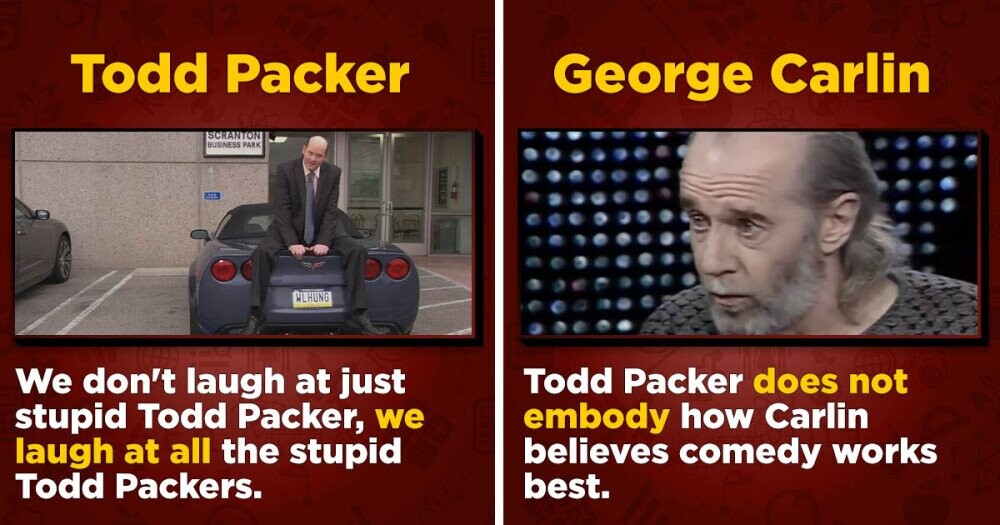
Every great workplace comedy needs a chaos agent. In The Office, that role often belongs to Michael Scott, Dwight Schrute, Creed Bratton, or whoever decided a paper company needed that many meetings. But then there is Todd Packer, the human equivalent of a stained break-room microwave: loud, unpleasant, mysteriously still around, and somehow connected to everyone’s worst office memory.
Played by David Koechner, Todd Packer is one of the most divisive recurring characters in the American version of The Office. Some fans think he is hilarious precisely because he is so terrible. Others hit the “next episode” button the moment his name appears, treating him less like a character and more like a software update nobody asked for. So the question is fair: is Todd Packer even funny?
The answer is complicated. Todd Packer is rarely funny in the way Jim’s pranks, Michael’s misunderstandings, or Dwight’s beet-powered intensity are funny. He is not designed to be charming. He is designed to be the kind of guy who mistakes volume for personality, offense for humor, and being invited once in 1998 for a lifetime friendship contract. His comedy comes less from what he says and more from what he reveals about the people around himespecially Michael Scott.
Who Is Todd Packer in The Office?
Todd Packer is a traveling salesman for Dunder Mifflin and one of Michael Scott’s oldest friends. That detail matters, because Packer is not simply a random rude guy who wanders into the Scranton branch. He is part of Michael’s emotional history. To Michael, Packer represents a version of popularity, masculinity, and “coolness” that Michael desperately wants to claim for himself.
To nearly everyone else in the office, Packer is a walking HR emergency. He shows up, insults people, makes inappropriate comments, laughs at his own jokes, and leaves behind the social equivalent of a carpet stain. He is not subtle. He is not layered in the traditional sitcom sense. He is a blunt instrument, which is why he works best in small doses.
David Koechner plays him with a dangerous confidence. Packer never looks embarrassed. He never checks the room. He never wonders, “Was that too much?” In his own mind, he is the funniest man alive, a road warrior of comedy bringing premium-grade nonsense to the poor, humor-starved people of northeastern Pennsylvania. That commitment is what makes the performance effective, even when the character himself is intentionally unbearable.
Why Todd Packer Makes Viewers So Uncomfortable
The humor of The Office often depends on discomfort. Michael says the wrong thing. Dwight misunderstands normal human behavior. Angela judges everyone from a moral mountaintop made of cat hair. But those characters usually have vulnerability underneath. Michael wants to be loved. Dwight wants to be respected. Angela wants control. Even Creed, who may or may not know what year it is, has a strange internal logic.
Packer is different. He is not awkward because he lacks social skills. He is awkward because he enjoys forcing other people into uncomfortable situations. That distinction changes the viewing experience. With Michael, we often laugh because he does not fully understand the damage he is causing. With Packer, we know he understands enough; he simply does not care.
That is why many fans do not find Todd Packer funny in the traditional sense. He can feel less like a comic character and more like a memory of someone you avoided at work, school, a family barbecue, or an elevator ride that suddenly felt forty-six minutes long. He is familiar in the wrong way.
The Joke Is Not Always Packer
Here is the important trick: Todd Packer is often not the joke. The joke is Michael’s admiration of him. Michael sees Packer as a legend. The office sees him as a disaster with car keys. That gap is where the comedy lives.
Michael’s loyalty to Packer exposes his insecurity. He wants to be the kind of person who has wild stories, cool friends, and a reputation outside the office. Packer gives him that illusion. Unfortunately, the illusion comes packaged with terrible behavior and the emotional maturity of a vending machine that only sells regret.
When Michael laughs at Packer, the audience is not necessarily invited to laugh with Packer. We are invited to study Michael. Why does he accept this? Why does he confuse cruelty with charisma? Why is he so eager to be validated by someone who treats everyone around him badly? Suddenly, Packer becomes less of a punchline machine and more of a mirror pointed at Michael’s worst instincts.
Todd Packer and the “Comedy That Aged Badly” Debate
One reason Todd Packer remains controversial is that his style of humor belongs to a specific kind of early-2000s sitcom discomfort. The Office often used inappropriate workplace behavior as a way to satirize corporate culture, bad management, and clueless masculinity. The show was not usually endorsing the behavior; it was making viewers squirm at how obviously wrong it was.
Still, there is a difference between satire and endurance. A joke can be written to make a character look bad and still feel unpleasant to sit through. That is the problem Packer creates. He is supposed to be obnoxious, but some viewers feel the show occasionally asks them to spend too much time with the obnoxiousness before giving them the payoff.
In episodes where Packer briefly appears, he can be effective. He storms in, detonates the mood, and disappears. In longer appearances, especially when the plot centers on whether he might become a permanent part of the office, the character becomes harder to tolerate. The comedy starts to feel like being trapped beside a loud passenger on a long flight, except the plane is also selling paper.
David Koechner’s Performance: The Real Reason Packer Works
If Todd Packer works at all, it is because David Koechner commits completely. Koechner has built a career playing loud, overconfident, socially reckless characters, and Packer fits that skill set perfectly. He gives the character a salesman’s energy: all grin, all volume, all momentum. Packer does not enter a room; he invades it.
The performance is funny because it is so shameless. Packer believes every comment is a gift. He has the confidence of a man who has never once replayed a conversation in his head and thought, “Maybe I should apologize.” That kind of comic certainty can be hilarious when used sparingly. It creates a pressure system around the other characters. Jim stiffens. Pam recoils. Dwight calculates. Michael beams like a golden retriever who has found a second, worse golden retriever.
Koechner also understands that Packer should not be secretly sweet. Some sitcom jerks are eventually softened into lovable troublemakers. Packer resists that. Even when the show gives him moments of return, apology, or attempted reintegration, the audience never fully trusts him. That is smart. A cuddly Packer would be dishonest. This man should not be handed emotional redemption and a muffin basket.
Is Todd Packer Funnyor Is He Useful?
The best way to understand Todd Packer is to separate “funny” from “useful.” Is he funny line by line? Not always. Sometimes the humor is intentionally ugly. Sometimes it feels repetitive. Sometimes the best joke in a Packer scene is simply the look on everyone else’s face.
But is he useful to The Office? Absolutely. Packer helps define the boundaries of the show’s moral universe. Michael may be inappropriate, needy, and wildly unprofessional, but Packer reminds us that Michael is not the worst possible version of himself. In fact, Packer often makes Michael look more human by comparison.
That contrast is especially important as Michael grows over the series. Early Michael wants Packer’s approval. Later Michael becomes more capable of recognizing the damage Packer causes. That shift tells us something about Michael’s development without requiring a speech, a therapy session, or Dwight releasing a ceremonial beet dove.
Packer as the Ghost of Michael’s Past
One of the most interesting ways to read Todd Packer is as the ghost of Michael Scott’s past. He represents the guy Michael once thought he needed to impress. He is the salesman version of a yearbook quote that should have been edited by an adult. Every time Packer appears, Michael has to decide whether he still wants that old approval.
This is why Packer’s dynamic with Holly matters. Holly sees through him faster than Michael does. Her reaction forces Michael to confront the difference between being funny and being cruel. Holly likes Michael’s silliness, but she does not excuse Packer’s behavior. That contrast helps Michael understand something viewers have known for years: a joke is not automatically funny just because someone says it loudly and then laughs first.
The Fan Divide: Love-to-Hate or Just Hate?
Few The Office characters divide fans like Todd Packer. Some viewers appreciate him as a perfectly written workplace villain: not evil in a dramatic way, but awful in the painfully realistic way of someone who thinks boundaries are for other people. These fans argue that Packer is funny because he is so clearly not supposed to be admired.
Other viewers disagree. For them, Packer scenes are not enjoyably uncomfortable; they are simply uncomfortable. That reaction is valid. Comedy is not a math problem. You cannot prove a character is funny by pointing to structure, performance, or thematic function. If a viewer’s main reaction is “please make him leave,” then the joke may have done its job too wellor not well enough.
In that sense, Todd Packer is a stress test for the audience. How much cringe is too much? When does satire become exhausting? Can a character be successful if viewers dislike watching him? The Office asks these questions often, but Packer asks them while wearing the emotional cologne of a guy who still brags about high school.
Specific Examples: When Packer Works Best
Packer works best when his presence changes the behavior of the regular cast. In the Season 7 episode named after him, the office reacts to the possibility of him taking a permanent desk job. That premise is strong because it turns Packer from a passing storm into a potential climate. Suddenly, the employees must imagine daily life with him. The horror is not that Packer exists; it is that he might get a chair.
Jim and Dwight teaming up against him is a great example of Packer’s usefulness. Jim and Dwight are usually rivals, but Packer is so uniquely unpleasant that he creates temporary unity. That is funny. Not because Packer tells a brilliant joke, but because his awfulness bends the office ecosystem. In nature documentaries, this is what happens when a predator enters the watering hole. In Scranton, it happens when Todd Packer wants a desk.
Another effective use of Packer comes when Michael must choose between his old loyalty and his newer emotional growth. Packer’s insult toward Holly becomes a turning point. Michael may tolerate a lot when the target is vague or when he can pretend it is harmless. But when Packer crosses a line involving someone Michael truly loves and respects, Michael’s admiration cracks. That is not just a joke; it is character development wearing a bad shirt.
Why Todd Packer Could Not Be a Main Character
Some characters are seasonings, not meals. Creed is best in small, strange bursts. Mose works because he appears like a rural myth and then vanishes. Todd Packer belongs in that category. A little Packer creates tension. Too much Packer turns the episode into a hostage situation with sales reports.
The main cast of The Office succeeds because even the most ridiculous characters have rhythms, contradictions, and soft spots. Dwight is intense but loyal. Angela is severe but vulnerable. Stanley is grumpy but deeply relatable to anyone who has attended a meeting that should have been an email. Packer does not have that range. He is a wrecking ball, and wrecking balls are useful only when something needs wrecking.
That limitation is not necessarily a flaw. It may be the point. Todd Packer is not meant to grow into the heart of the show. He is meant to test the heart of the show. He arrives, disrupts, reveals, and exits. The best Packer episodes understand that formula. The weaker ones overestimate how long viewers want to sit in the blast radius.
So, Is Todd Packer Even Funny?
Yesbut with a giant asterisk the size of Dunder Mifflin’s warehouse. Todd Packer is funny as a device, a contrast, and a social grenade. He is less funny as a person we are expected to enjoy. His best scenes are not funny because he is clever. They are funny because everyone else is forced to respond to his complete lack of self-awareness.
In other words, Packer is not the comedian of the scene. He is the problem the scene has to solve. That makes him different from Michael, Dwight, Jim, Pam, or Kevin. He is closer to a weather event. You do not invite a thunderstorm to dinner, but you may admit it made the evening memorable.
The real genius of Todd Packer is that he makes viewers ask what kind of laughter the show is chasing. Are we laughing at the rude joke? Usually no. Are we laughing at Michael’s misplaced admiration? Yes. Are we laughing at Jim and Dwight forming an emergency alliance? Definitely. Are we laughing with relief when Packer leaves? Absolutely, and that may be his most reliable punchline.
Experience Section: Watching Todd Packer Today
Watching Todd Packer today can feel like opening an old office fridge and discovering a container nobody has claimed since 2007. You recognize it. You understand how it got there. You may even appreciate its role in the ecosystem. But you do not necessarily want to get too close.
For many modern viewers, Packer triggers a very specific memory: the person who thought every group needed an “edgy” commentator. Maybe it was a coworker who turned every meeting into a roast. Maybe it was a classmate who confused attention with approval. Maybe it was a distant relative who treated holiday dinner like an open-mic night at a sports bar. The details change, but the pattern is familiar. Todd Packer is funny because he is recognizableand unpleasant because he is recognizable.
That recognition is why the character can still create strong reactions. When you watch Michael Scott embarrass himself, you may cringe, but you also sense the lonely person underneath. When you watch Todd Packer, the cringe has fewer cushions. He does not seem lonely in a sweet way. He seems like a man who would interrupt your story, mispronounce your name, and then call it bonding.
Rewatching his episodes also changes depending on your age and work experience. A younger viewer may see Packer as an exaggerated sitcom jerk. Someone who has spent years in offices may watch him and think, “Oh no, I know that guy.” Not the exact guy, hopefully, but the type: the employee who survives because he sells well, knows the boss, or has been around long enough that everyone treats his behavior like bad wallpaper. It should be replaced, but somehow people just keep scheduling meetings around it.
That is where The Office still feels sharp. Packer is not just offensive for shock value. He reflects a workplace problem: the charming troublemaker who is excused because he is entertaining to one powerful person. Michael likes him, so everyone else has to endure him. That dynamic is painfully realistic. Many workplaces have had a Todd Packer figurenot always as extreme, but close enough to make people stare into the camera like Jim.
At the same time, it is understandable when viewers skip his scenes. Comedy should not feel like punishment. If Packer’s jokes make an episode less enjoyable, no one needs to pretend otherwise. The beauty of streaming is that the skip button exists, and unlike Toby, it is actually appreciated.
Personally, the most interesting experience of watching Todd Packer is realizing that he becomes funnier after he leaves the room. His presence creates tension, but the release is the payoff. The office relaxes. Michael learns something. Jim and Dwight find common ground. Holly sees the truth. The story improves because Packer made it worse first.
That may be the final verdict on Todd Packer: he is not always funny to watch, but he often makes The Office funnier around him. He is not the party. He is the guy who ruins the party so everyone else can bond over how badly the party was ruined. In real life, that person is exhausting. On television, in carefully controlled doses, he can be comedy fuel. Just please, for the sake of everyone in the conference room, do not give him a permanent desk.
Conclusion
Todd Packer is one of The Office characters who proves that being “funny” is not always the same as being likable. He is crude, disruptive, and often exhausting, but he also serves a clear purpose. He exposes Michael Scott’s insecurities, tests the patience of the Scranton branch, and gives the show a way to examine the difference between harmless silliness and behavior that poisons a room.
So, is Todd Packer even funny? Sometimes. But more importantly, he is effective. His comedy is not built on lovable charm. It is built on contrast, discomfort, and the joy of watching better characters survive him. He may never be the funniest person at Dunder Mifflin, but he is one of the clearest reminders that The Office was never just about jokes. It was about people, power, awkwardness, and the strange little social disasters that happen under fluorescent lights.
Note: This article is an original commentary piece based on real information about The Office, Todd Packer, David Koechner’s performance, episode context, and long-running fan and critical discussion. It does not reproduce copyrighted scripts or source text.