

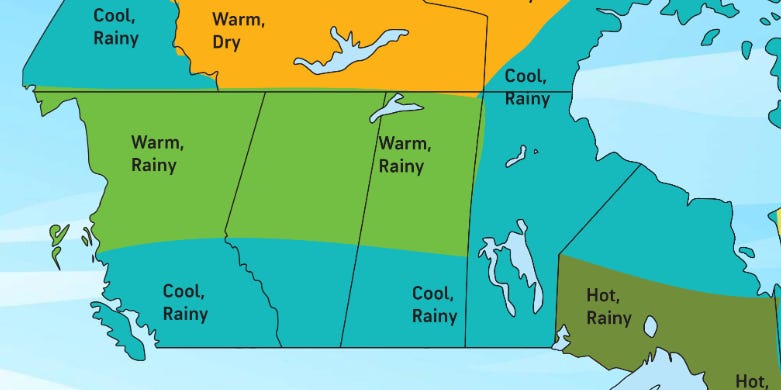
Canada’s summer weather forecast for 2026 is not delivering one tidy national storyline. According to The Old Farmer’s Almanac, warmth will dominate several western, central, and northern regions, but rain, cooler spells, and sharp regional differences will keep Canadians from experiencing the same season from coast to coast.
Southern British Columbia and the Prairies are expected to be warmer and wetter than usual. Yukon leans warmer and drier. Atlantic Canada trends cooler and wetter, while Southern Ontario sits awkwardly between cooler conditions in the east and warmer weather in the west. In other words, summer has packed both sunscreen and an umbrella, then forgotten where it put either one.
The outlook is useful for planning gardens, cottage trips, outdoor events, farm work, and vacations, but it should be read as a seasonal guide rather than a promise about a particular weekend. Here is what The Old Farmer’s Almanac’s summer weather predictions for Canada indicate, how the forecast compares with broader climate signals, and what Canadians can do to prepare.
The Main Takeaway From Canada’s Summer 2026 Forecast
The broad message is that much of southern Canada should experience a warmer-than-normal summer, with the most widespread heat generally expected as the season matures. However, “warmer than normal” does not mean every day will be hot, sunny, or suitable for attempting to fry breakfast on the driveway.
A seasonal temperature forecast describes the average across several months. A region can finish warmer than normal after experiencing cool June weekends, stormy interruptions, and several intense heat waves in July or August. Similarly, above-normal rainfall does not necessarily mean constant drizzle. A handful of thunderstorms can deliver a large percentage of a month’s rain in only a few hours.
The 2026 Canadian outlook contains three especially important themes:
- Western and northern warmth: Southern British Columbia, the Prairies, Yukon, and the Northwest Territories generally lean warmer.
- More moisture in several populated regions: Southern Ontario, the Prairies, southern British Columbia, and Atlantic Canada are expected to receive above-normal precipitation.
- Large regional contrasts: Eastern and western portions of the same forecast region may experience noticeably different temperature or rainfall patterns.
Region-by-Region Summer Weather Predictions for Canada
“`
Atlantic Canada: Cooler, Wetter, and Not Entirely Sunless
The Almanac predicts a cooler- and wetter-than-normal summer for Atlantic Canada. This region includes New Brunswick, Nova Scotia, Prince Edward Island, and Newfoundland and Labrador within the publication’s broad forecasting boundaries.
The warmest periods are expected around late June and late July. Between those warmer windows, residents may experience more frequent cloudy days, showers, marine air, and cool interruptions. That does not equal a ruined summer. It simply means beach plans may require flexibility and a sweater that earns far more travel points than expected.
For travelers, the outlook favors building extra indoor options into coastal itineraries. Museums, seafood stops, historic sites, and scenic drives can rescue a day when a planned picnic meets horizontal rain. Campers should pay particular attention to drainage when choosing a site and keep sleeping gear in waterproof storage.
Southern Quebec: Warmer Overall With an East-West Rainfall Split
Southern Quebec is forecast to have a warmer-than-usual summer, but precipitation may vary significantly across the region. The Almanac expects below-normal rainfall in eastern sections and above-normal rainfall farther west.
That contrast matters. Montreal and western parts of southern Quebec could experience humid stretches interrupted by showers and thunderstorms, while communities farther east may face longer dry intervals. Gardeners should therefore avoid treating a province-wide forecast as a local watering schedule.
Warm weather combined with uneven rainfall can also produce fast-changing conditions. A week of showers may be followed by enough heat to dry shallow soil surprisingly quickly. Checking the soil itself is more useful than watering automatically because the calendar says Tuesday.
Southern Ontario: Cooler East, Warmer West, Wetter Overall
Southern Ontario receives one of the most divided forecasts. Eastern parts of the region are expected to be cooler than normal, while western sections lean warmer. Precipitation is forecast to be above normal across the broader region, with the hottest periods expected in late June and early July.
For Toronto and surrounding areas, this could translate into warm or hot spells mixed with more frequent rain interruptions. Above-normal precipitation does not guarantee a complete washout, but it raises the odds that patios, festivals, baseball games, and cottage weekends will occasionally receive an uninvited atmospheric guest.
The Great Lakes add another layer of local complexity. Early in summer, relatively cool lake water can suppress temperatures near the shoreline even when inland communities are much warmer. A forecast high for the region may therefore feel very different at a downtown waterfront, a suburban backyard, and a cottage several hours away.
The Prairies: Warmer and Wetter, but Rain Timing Is Crucial
Alberta, Saskatchewan, and Manitoba are forecast to have a warmer- and wetter-than-usual summer. On paper, that combination may sound favorable for agriculture and wildfire risk. In practice, the timing and character of the rain are more important than the seasonal total.
Repeated moderate rainfall can restore soil moisture and support crops. The same amount falling during a few violent thunderstorms may cause runoff, hail damage, localized flooding, and long dry gaps between storms. Prairie weather has never been famous for subtlety.
Warmth also increases evaporation. Even with above-normal rainfall, exposed soil and shallow-rooted plants can lose moisture quickly during windy, hot periods. Farmers and gardeners should continue monitoring local soil moisture rather than assuming the “wetter” label removes drought concerns.
Severe thunderstorms remain a seasonal hazard. Anyone planning festivals, camping trips, construction work, or field operations should have a reliable way to receive local warnings and a plan for reaching substantial shelter when lightning approaches.
Southern British Columbia: Warmer, Rainier, and Hottest in Early August
Southern British Columbia is expected to have a warmer-than-usual summer with above-normal rainfall. The warmest period is forecast around early August.
This may produce a season that alternates between pleasant warmth, brief hot spells, and wetter interruptions. Coastal communities, interior valleys, and mountain locations can still experience dramatically different conditions within the same regional outlook. Vancouver rain is not the same event as an Okanagan thunderstorm, and neither resembles a cool mountain shower at elevation.
Above-normal seasonal rainfall should not be interpreted as immunity from wildfire. Vegetation can dry quickly after several warm, windy weeks, especially in the interior. Lightning can also ignite fires even during a summer that ultimately finishes wetter than average.
Travelers heading into the mountains should prepare for changing weather, cooler nights, and possible smoke. A blue sky at breakfast is not a legally binding agreement with the atmosphere.
Yukon: Warmer and Drier Than Usual
Yukon receives one of the clearest warm-and-dry signals in the Almanac’s Canada summer weather forecast. The warmest periods are expected in early to mid-July and during portions of August.
This outlook increases concern about drying vegetation, wildfire development, smoke, and pressure on local water resources. Long daylight hours can intensify the practical effects of warm weather because surfaces and vegetation have more time to absorb solar energy.
Residents and visitors should monitor fire restrictions, trail closures, air-quality reports, and evacuation information. Remote travel requires extra caution because a changing fire situation can affect roads and services with limited alternatives.
Northwest Territories: Warmth Through Several Parts of Summer
The Northwest Territories are expected to finish warmer than normal, with notable warmth during much of June, early July, and mid-August. Precipitation patterns vary within the enormous region, making local forecasts especially important.
Warm conditions can accelerate snowmelt, dry surface vegetation, and increase wildfire potential in susceptible areas. Smoke may travel far from an active fire, so air quality can deteriorate even when flames are nowhere near a community.
Northern Canada is far too large and geographically complex to summarize with a single temperature icon. Communities separated by hundreds of miles may experience completely different wind, rain, fire, and temperature conditions during the same week.
“`
How The Old Farmer’s Almanac Produces Its Long-Range Forecasts
The Old Farmer’s Almanac says its forecasting method combines solar science, climatology, and meteorology. Its forecasters examine historical weather patterns, current atmospheric information, and patterns in solar activity to estimate broad temperature and precipitation trends months in advance.
The publication reports that its forecasts average about 80 percent accuracy. That figure is the Almanac’s own assessment and should not be treated as a guarantee that every regional or monthly detail will occur exactly as written.
Long-range forecasting is difficult because the atmosphere is chaotic. Small changes in ocean temperatures, jet-stream position, soil moisture, tropical systems, snow cover, and storm development can alter the outcome. Forecast confidence also tends to be higher for broad seasonal tendencies than for precipitation in one city on one weekend.
“`
A Seasonal Outlook Is Not a Daily Forecast
The best way to use the Almanac is as an early planning tool. It can help identify whether a region may lean hotter, cooler, wetter, or drier over an extended period. It cannot replace a seven-day forecast, severe-weather warning, air-quality alert, or emergency notice.
For a wedding six weeks away, the seasonal outlook might suggest reserving a tent or indoor backup space. For deciding whether the ceremony should begin at 3:00 or 4:00 tomorrow, use an updated local forecast. The atmosphere appreciates specificity, even if it does not always reward it.
“`
The El Niño Factor in Summer 2026
NOAA declared that El Niño conditions were present by June 2026 and expected them to strengthen later in the year. El Niño refers to unusually warm ocean conditions in the central and eastern tropical Pacific accompanied by changes in the atmosphere.
Its influence on Canadian summer weather is not automatic or identical from one event to another. However, a developing El Niño can affect the jet stream and encourage a more progressive, changeable pattern across North America.
That broader signal supports the possibility of a summer with bursts of heat rather than one uninterrupted nationwide heat dome. Western Canada may still experience significant hot periods, while central and eastern regions could receive more frequent cool fronts, showers, and storm systems.
El Niño is only one ingredient. Great Lakes temperatures, Atlantic Ocean warmth, soil moisture, wildfire conditions, tropical activity, and temporary blocking patterns can all influence how the season actually unfolds.
What the Forecast Means for Wildfire and Smoke Risk
Warm or dry conditions do not cause every wildfire, but heat, drought, low humidity, dry vegetation, and wind can create an environment in which fires ignite and spread more easily. The Yukon outlook deserves particular attention because it combines above-normal warmth with below-normal moisture.
Southern British Columbia and the Prairies are forecast to be wetter overall, but these areas can still experience dangerous fire periods. Seasonal rainfall totals may conceal two or three weeks of hot, dry, windy weather. Lightning from thunderstorms can also start fires in remote terrain.
Smoke can travel hundreds or even thousands of miles. Canadians should check local air-quality information before exercising outdoors, especially children, older adults, pregnant people, and anyone with heart or lung disease.
When smoke is heavy, keep indoor air as clean as possible, close windows when advised, limit strenuous outdoor activity, and use an appropriate air cleaner when available. A well-fitting N95 respirator can reduce exposure to smoke particles outdoors; cloth face coverings do not provide the same protection.
How to Prepare for Canada’s Predicted Summer Weather
“`
Prepare for Heat Before the Hottest Day Arrives
Check fans, air conditioners, window coverings, and ventilation before a heat wave begins. Identify a public cooling location in case your home becomes dangerously warm. During hot weather, drink water regularly, reduce strenuous activity during the hottest part of the day, and check on relatives or neighbors who live alone.
Never leave children or pets in a parked vehicle. Indoor temperatures can rise rapidly even when the outdoor weather does not seem extreme.
Give Outdoor Plans a Backup Option
Above-normal rainfall in several regions makes flexibility valuable. Reserve covered picnic areas, use waterproof storage while camping, and establish clear postponement rules for outdoor events. Thunderstorms require substantial shelter; tents, gazebos, and isolated trees are not safe lightning shelters.
Water Gardens According to Soil Conditions
Water early in the morning so roots can absorb moisture before afternoon heat increases evaporation. Direct water toward the soil rather than spraying leaves. Mulch can slow moisture loss, moderate soil temperature, and reduce weed competition.
Check the soil several inches below the surface before watering. A quick shower may wet the leaves while leaving the root zone surprisingly dry. Conversely, automatic watering after heavy rain can encourage root disease and turn a vegetable bed into a small but ambitious swamp.
Plan Travel Around Conditions, Not Just Calendar Dates
Check short-range forecasts, road conditions, fire restrictions, park alerts, and air quality immediately before traveling. Pack layers even during a warm summer, particularly near oceans, lakes, and mountains. Include sun protection, insect repellent, rain gear, drinking water, and a backup charging source.
“`
Experiencing an Almanac-Predicted Canadian Summer
The practical experience of a seasonal forecast rarely resembles a smooth three-month trend. It arrives as a collection of ordinary moments: moving dinner indoors, watering tomatoes before work, checking the air-quality reading before a run, or discovering that a “warm summer” can still produce a cottage morning requiring two sweaters.
Consider a family planning a July trip from Toronto to a lakeside rental in eastern Ontario. The seasonal outlook suggests wetter conditions and a cooler tendency farther east, but the reservation was made months earlier. Instead of cancelling, the family packs quick-drying clothes, waterproof shoes, card games, and a portable weather radio. The first afternoon is sunny and warm. The second brings thunderstorms and a sharp drop in temperature. By the third day, the sky clears, the lake is calm, and everyone agrees the rainy afternoon was tolerable because nobody had expected seven consecutive postcard days.
On the Prairies, the experience may revolve less around vacation photographs and more around rainfall timing. A farmer can watch dark clouds build on the horizon while knowing that “wetter than normal” says nothing about whether the field will receive a gentle soaking, damaging hail, or only a dramatic light show. One farm may collect substantial rain while another a short drive away remains dusty. The useful habit is not trusting the seasonal label blindly but combining it with soil measurements, radar, local forecasts, and field observations.
In southern British Columbia, an August traveler may encounter the warmest period anticipated by the Almanac. Morning hiking begins under clear skies, but the backpack still contains a rain shell, extra water, and a respirator. By afternoon, clouds build over the mountains. A brief shower cools the trail, while distant wildfire smoke creates haze in another valley. The day technically fits a “warmer and wetter” summer, although neither phrase captures the full experience.
Atlantic Canada offers another lesson. A cooler, wetter outlook might sound disappointing to someone planning coastal drives and beach visits. Yet cooler weather can make hiking more comfortable, reduce oppressive heat, and create dramatic skies over the ocean. The inconvenience is unpredictability. Fog may delay a morning view, then lift suddenly and reveal a brilliant coastline. Rain may cancel a picnic but improve waterfall flows and make forest landscapes look freshly polished.
Yukon’s warmer, drier forecast creates a different mood. Residents may welcome comfortable outdoor temperatures while remaining alert to smoke and fire danger. A clear morning can change by evening if winds transport smoke from a distant fire. People learn to check air quality as routinely as temperature, keeping windows closed during smoky periods and moving strenuous activities to cleaner hours.
The most valuable experience-based lesson is that seasonal forecasts work best as prompts. A warm outlook prompts heat preparation. A wet outlook prompts drainage checks and backup plans. A dry outlook prompts water conservation and wildfire awareness. None of these preparations are wasted when the forecast is imperfect.
Canadians are already skilled at respecting weather’s talent for improvisation. The Almanac can provide the opening script, but local forecasts, radar, warnings, and direct observation reveal what the atmosphere has decided to perform that day.
Final Outlook: A Warm Summer With Plenty of Plot Twists
The Old Farmer’s Almanac’s summer weather predictions for Canada point toward widespread warmth, particularly across southern British Columbia, the Prairies, southern Quebec, Yukon, and the Northwest Territories. Atlantic Canada should lean cooler and wetter, while Southern Ontario faces a temperature split and above-normal precipitation.
The forecast does not suggest three uninterrupted months of identical weather. Canadians should expect regional contrasts, sudden transitions, thunderstorms, brief hot spells, and rain that may arrive unevenly. A developing El Niño adds another reason to anticipate a more changeable atmospheric pattern rather than one coast-to-coast weather regime.
Use the outlook to guide early planning, but rely on updated local forecasts for daily decisions. Keep an umbrella near the sunscreen, prepare for heat and smoke, and remember that Canadian summer weather always reserves the right to revise the itinerary.