

Humans like to think of evolution as something that happens slowly, somewhere far away, preferably with dramatic background music and a fossilized jawbone. But evolution is not waiting politely in a museum display. It is happening right nowin polluted harbors, city sidewalks, hospital rooms, crop fields, subway tunnels, and even under highway bridges.
The uncomfortable truth is that people have become one of the most powerful evolutionary forces on Earth. We build cities, dump chemicals, spray pesticides, prescribe antibiotics, overfish oceans, poach animals, heat the planet, fragment habitats, and then act surprised when nature responds with the biological equivalent of, “Fine, I’ll adapt.”
This is called human-driven evolution or anthropogenic evolution: genetic or inherited changes in species caused by human activity. Sometimes it looks impressive. Sometimes it looks terrifying. Often, it looks like a species desperately trying to survive the mess we made. Below are ten species humans have pushed to evolveproof that nature is flexible, stubborn, and occasionally better at problem-solving than our city planning departments.
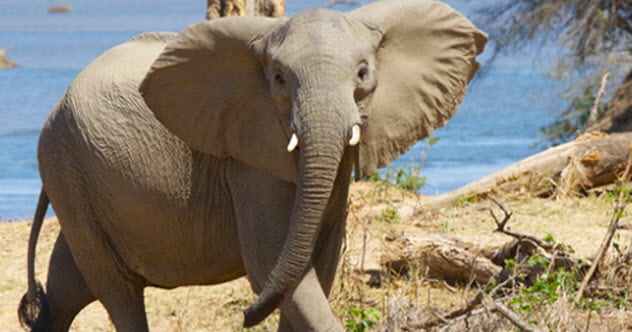
1. African Savanna Elephants: Evolving Without Tusks
Elephants did not wake up one morning and decide tusks were out of fashion. Tusks are useful tools for digging, stripping bark, fighting, and impressing other elephants. Unfortunately, humans decided ivory was valuable, and that changed the evolutionary math.
In areas hit hard by poaching, especially parts of Mozambique, tusked elephants were more likely to be killed. Tuskless females had a better chance of surviving and reproducing. Over time, the percentage of tuskless female elephants rose sharply. This is natural selection, but with humans acting as the grim selector.
How humans forced the change
Ivory poaching removed many tusked elephants from the breeding population. The survivors were more likely to carry traits associated with tusklessness, so those traits became more common. The result is not a “better” elephant. It is an elephant shaped by violence.
The evolutionary twist is painful: the trait that helps elephants survive poachers may also limit behaviors that depend on tusks. A tuskless elephant can live, but it may dig differently, feed differently, and interact with the ecosystem differently. When humans change one trait, the ripple effects rarely stay in one lane.
2. Atlantic Killifish: Tiny Fish Built for Toxic Water
The Atlantic killifish is not glamorous. It is small, silvery, and unlikely to appear on motivational posters. But this little fish deserves a cape. In heavily polluted estuaries along the U.S. East Coast, some killifish populations evolved resistance to industrial contaminants that would normally kill fish embryos.
In places contaminated with PCBs, dioxins, and other toxic compounds, most fish would be in serious trouble. Killifish, however, have evolved changes involving the aryl hydrocarbon receptor pathway, which helps determine how their bodies respond to certain pollutants.
How humans forced the change
Industrial pollution created a brutal filter. Sensitive fish died or failed to reproduce, while individuals with genetic variants that reduced toxic effects survived. Over generations, resistant populations emerged.
This sounds like a victory until you remember the water is still polluted. Killifish are not proof that contamination is harmless. They are proof that when humans poison a habitat, some species may survive by paying an evolutionary priceand many others will not survive at all.
3. Peppered Moths: The Classic Case of Industrial Evolution
The peppered moth is the celebrity guest star of evolution textbooks. Before heavy industrial pollution, pale moths blended well with lichen-covered trees. Then factories coated trees with soot, lichens declined, and suddenly pale moths looked like tiny flying snacks.
Darker moths, once rare, became better camouflaged in polluted areas. Birds had a harder time spotting them, so dark moths survived and reproduced more successfully. Later, when air quality improved, lighter moths became common again in many places. Evolution, apparently, also appreciates clean air.
How humans forced the change
Coal smoke and industrial soot changed the moth’s background environment. Predators did the selecting, but human pollution set the stage. This made the peppered moth one of the clearest examples of rapid evolutionary change driven by human activity.
The lesson is simple: even a color pattern can become a survival tool when humans repaint the environment with soot.
4. Puerto Rican Crested Anoles: Lizards Learning City Life
City living is not easy when you are a lizard designed for trees. Smooth walls, glass windows, metal fences, concrete, cars, pets, and people all create new survival challenges. The Puerto Rican crested anole has responded like a tiny reptilian parkour athlete.
Urban populations of these lizards have evolved traits such as larger toe pads, more specialized scales for gripping smooth surfaces, and longer limbs that help them move through open, artificial environments. In other words, the city has been giving them an intense fitness test, and the lizards have been studying.
How humans forced the change
Urbanization replaced forests and rough bark with walls, sidewalks, fences, and buildings. Lizards that could cling, sprint, and maneuver better in this new habitat had a survival advantage. Over generations, city lizards began to differ from their forest relatives.
These anoles are a reminder that cities are not outside nature. Cities are nature with extra concrete, worse parking, and unusually strong evolutionary pressure.
5. White Clover: A Plant Rewriting Its Chemistry in Cities
White clover looks innocent enough. It sits in lawns, parks, sidewalks, and fields, quietly minding its chlorophyll. But this common plant is part of a global urban evolution story.
White clover can produce hydrogen cyanide, a chemical defense that helps protect it from herbivores and stress. Researchers studying clover across cities found that urban populations often differ from rural populations in this chemical trait. In many cities, clover plants produce less cyanide than nearby rural clover.
How humans forced the change
Cities change temperature, snow cover, water availability, herbivore pressure, soil conditions, and disturbance patterns. Those changes alter which clover traits are useful. A chemical defense that helps in one environment may become less advantageous in another.
This is not just “plants adapting.” It is urbanization acting like a worldwide evolutionary experiment, except nobody asked the clover to sign a consent form.
6. Cliff Swallows: Shorter Wings for Dodging Traffic
Cliff swallows often build nests under bridges and overpasses. Unfortunately, bridges and overpasses tend to come with cars, trucks, and drivers who are not scanning for aerodynamic bird evolution at 65 miles per hour.
In Nebraska, researchers observed that road-killed cliff swallows declined over time, while the birds found dead on roads tended to have longer wings than the living population. Shorter wings may help swallows take off more quickly and maneuver more sharply near traffic.
How humans forced the change
Roads and vehicles created a new hazard. Birds better able to avoid cars survived more often. Over time, that pressure favored wing shapes that improved agility near human infrastructure.
It is evolution by bumper. Not exactly nature’s most poetic chapter, but certainly one of its clearest warnings: even our roads can become selective forces.
7. Bed Bugs: The Unwanted Champions of Insecticide Resistance
Few creatures inspire panic like bed bugs. They hide in mattresses, snack on sleeping humans, and make everyone suddenly suspicious of hotel headboards. To make matters worse, many bed bug populations have evolved resistance to common insecticides.
Modern bed bugs may carry genetic mutations that reduce the effectiveness of pyrethroids, a major class of insecticides. Some populations also show metabolic resistance, meaning their bodies can detoxify chemicals more effectively. Basically, we sprayed them, and the survivors took notes.
How humans forced the change
Repeated insecticide use killed susceptible bed bugs while resistant individuals survived and reproduced. Over time, resistance spread. This is why pest control now often requires integrated methods such as heat, vacuuming, sealing, monitoring, and targeted chemical use.
Bed bugs are not smarter than us. But evolution does not require intelligence. It only requires variation, pressure, and reproduction. Annoyingly, bed bugs have all three.
8. Palmer Amaranth: The Superweed That Outsmarted Herbicides
Palmer amaranth is a fast-growing weed that can tower over crops, produce huge numbers of seeds, and ruin a farmer’s day before breakfast. It has evolved resistance to multiple herbicide modes of action, including glyphosate in many areas.
This plant is often called a “superweed,” which sounds like a comic-book villain and, from a farming perspective, is not far off. It competes aggressively with crops such as cotton, soybeans, and corn, forcing farmers to use more complicated and expensive control strategies.
How humans forced the change
Heavy reliance on the same herbicides created repeated selection pressure. Plants with resistance traits survived spraying and produced seeds. Their descendants spread through fields, equipment, roadsides, and sometimes contaminated seed lots.
Palmer amaranth shows why one-tool agriculture is risky. When humans use the same weapon again and again, evolution eventually starts wearing armor.
9. Staphylococcus aureus: MRSA and the Antibiotic Arms Race
Not all human-forced evolution involves animals with faces. Some of the most consequential examples are microscopic. Staphylococcus aureus is a common bacterium that can live on skin or in the nose. Some strains, known as MRSA, have evolved resistance to methicillin and several other antibiotics.
Antibiotics save lives. Let’s be very clear about that. But overuse, misuse, incomplete treatment, crowded health-care environments, and agricultural antibiotic use can all increase selection pressure for resistant bacteria. When susceptible bacteria die and resistant ones survive, the population changes.
How humans forced the change
Antibiotic exposure acts like a filter. Bacteria with resistance genes or mutations survive better, multiply quickly, and can share resistance traits with other bacteria. Because bacteria reproduce rapidly, evolution can move at terrifying speed.
MRSA is not just a medical problem; it is evolution in action inside hospitals, gyms, locker rooms, homes, and communities. It reminds us that every unnecessary antibiotic prescription is not just a treatment decision. It is also a tiny vote in an evolutionary election.
10. House Mice: Poison Resistance in the Pantry War
House mice have lived alongside humans for thousands of years, which means they know our weaknesses: crumbs, wall gaps, warm basements, and the human tendency to underestimate small mammals. In response to rodenticides such as warfarin, some house mouse populations evolved resistance.
One especially fascinating pathway involves changes connected to the Vkorc1 gene, which affects sensitivity to anticoagulant poisons. In some cases, house mice gained resistance-related genetic material through hybridization with related mouse species. That is right: mice did not just evolve; they borrowed useful genetic tools from relatives. Family networking, but make it rodent.
How humans forced the change
Rodenticides killed susceptible mice. Mice with resistance traits survived poison exposure and reproduced. Over time, resistant populations became harder to control.
This example shows that human pest control can create an evolutionary treadmill. We invent a poison, pests evolve resistance, we invent a stronger poison, and then wonder why nature keeps replying, “Challenge accepted.”
Bonus Case: Cod and the Pressure of Fishing
Commercial fishing can also reshape evolution. When humans consistently remove the largest fish, smaller or slower-growing individuals may have a better chance of surviving long enough to reproduce. In some heavily exploited fish populations, scientists have found evidence consistent with fisheries-induced evolution, including shifts toward smaller size or earlier maturity.
Cod is one of the most discussed examples, though not every cod population tells the same story. Some research suggests strong human-driven genetic change in certain heavily fished populations, while other studies caution that environment, food supply, and population collapse can complicate the picture. That nuance matters. Evolution is powerful, but it is not a cartoon lever labeled “make fish smaller.”
What These Species Teach Us About Human-Driven Evolution
The examples above are different, but the pattern is the same. Humans change the environment. Species with useful inherited traits survive better. Those traits become more common. That is evolution.
But survival does not always mean success. A fish resistant to pollution still lives in polluted water. A tuskless elephant may survive poachers but lose an important tool. A pesticide-resistant insect may trigger more chemical use. A drug-resistant bacterium may turn routine infections into medical emergencies.
Human-driven evolution is not nature “healing itself.” It is nature negotiating under pressure. Sometimes the negotiation works. Sometimes the species disappears. Sometimes the survivor becomes our next problem.
Why Rapid Evolution Matters for Conservation
Conservation is often framed as protecting habitats and preventing extinction. That is essential, but we also need to think about evolutionary health. A species can survive numerically while losing genetic diversity, useful traits, or ecological roles.
For example, if poaching favors tuskless elephants, the population may persist, but the ecosystem may change because elephants use tusks to dig for water and modify vegetation. If fishing favors smaller fish, the stock may reproduce differently and recover more slowly. If pollutants favor resistant fish, predators may still accumulate toxins by eating them.
In other words, evolution can help species hang on, but it cannot magically erase the costs of human pressure. Adaptation is not a free upgrade. It is often a survival compromise.
Human Activity as the New Natural Selection
For most of Earth’s history, selection pressures came from predators, climate, disease, competition, and geological change. Today, humans have added a long list of new pressures: antibiotics, plastics, artificial light, noise, roads, buildings, pesticides, herbicides, mines, dams, industrial waste, and global trade.
Some species are adapting quickly. Others cannot keep pace. Large animals with slow reproduction, specialized diets, or limited habitats are especially vulnerable. Bacteria, insects, weeds, and small fish often evolve faster because they reproduce quickly and have large populations.
This is why bed bugs, bacteria, and weeds seem to “win” so often. They are not morally superior. They are just biologically well suited to rapid evolutionary poker, and humans keep raising the stakes.
Experience Section: What These Survival Stories Feel Like in Real Life
It is easy to read about human-forced evolution as if it were a list of strange science facts. Tuskless elephants. Toxic fish. Superweeds. Bed bugs in tiny armor. Interesting, right? But when you look closer, these stories feel less like trivia and more like a mirror.
Anyone who has dealt with resistant pests understands this personally. You spray once, and the problem seems solved. Then it returns. You spray again. The survivors are not random anymore; they are the tougher ones. After a while, the solution becomes part of the problem. The same pattern appears in hospitals when antibiotics are used carelessly. The first treatment may work beautifully, but repeated misuse gives resistant bacteria more opportunities to thrive.
Farmers experience this evolutionary pressure in a very practical way. A herbicide that once controlled weeds can become less reliable after years of repeated use. Suddenly, a field that looked manageable becomes a battlefield of resistant Palmer amaranth. The farmer is not just fighting weeds; the farmer is fighting generations of selection pressure created by previous decisions.
City dwellers see the same theme without always naming it. Pigeons, rats, roaches, mosquitoes, weeds, and street trees all respond to urban life. Some avoid us. Some exploit us. Some evolve around us. A sidewalk crack becomes habitat. A subway tunnel becomes shelter. A warm city block becomes a climate experiment. A bridge becomes a swallow nesting site with traffic as the predator.
The emotional lesson is humbling. Humans often act as though nature is passive scenery. We build, spray, extract, discard, and expand as if other species will simply move aside. But living things do not merely receive pressure. They respond. They adapt, migrate, decline, hybridize, resist, or vanish. Evolution is not a background process; it is a conversation. Unfortunately, humans have been doing most of the shouting.
These examples also show why “survival” is not always a happy ending. A killifish that can survive toxic sediment is remarkable, but the polluted harbor is still polluted. A tuskless elephant is extraordinary, but the reason tusklessness became advantageous is heartbreaking. A bed bug resistant to insecticide is biologically impressive and personally horrifying, especially at 2 a.m. in a hotel room.
The better experience to take from these stories is not fear, but responsibility. If human pressure can drive evolution, human restraint can change the pressure. Cleaner water, smarter antibiotic use, integrated pest management, sustainable fishing, wildlife protection, and better urban design can all reduce the need for species to adapt under emergency conditions. Nature is resilient, but resilience is not permission to keep punching.
In the end, the top species humans have forced to evolve are not just examples of adaptation. They are receipts. They show that our choices leave biological signaturesin genes, bodies, behaviors, and ecosystems. The next chapter of evolution is already being written, and whether it reads like recovery or damage control depends largely on us.
Conclusion
Human-forced evolution is one of the clearest signs that people are reshaping life on Earth. From African elephants losing tusks to killifish surviving toxic harbors, from city lizards gripping concrete walls to bacteria dodging antibiotics, species are adapting to pressures we created.
These changes are fascinating, but they are also warnings. Evolution can be fast, creative, and tough, but it is not a safety net for every species. Many organisms cannot adapt quickly enough, and even successful adaptation may come with ecological costs.
The good news is that humans can also change the direction of selection. Cleaner industries, better farming, responsible medicine, sustainable fishing, habitat protection, and smarter cities can reduce harmful pressures. If we are powerful enough to force evolution, we should be wise enough to stop treating the planet like a stress test.