

The Milky Way may be our cosmic home, but astronomers are still discovering rooms nobody knew existed, ancient foundations hidden beneath the floorboards, and at least one enormous black hole apparently napping in the attic.
Thanks to observatories such as Gaia, the Event Horizon Telescope, IceCube, eROSITA, Chandra, and powerful ground-based survey instruments, researchers have transformed our picture of the galaxy. The Milky Way is no longer viewed as a tidy spiral disk filled with familiar stars. It is a restless, layered structure shaped by ancient collisions, wandering planets, gigantic gas waves, invisible particles, and energetic eruptions from its center.
For this list, “recently discovered” refers primarily to discoveries and major first-time reveals announced between 2020 and 2024. Some objects were suspected earlier, but new observations exposed their true scale, motion, composition, or appearance for the first time.
Sources:
10. A Crowd of Planets Wandering Without Stars
More than 70 lonely worlds were found drifting freely
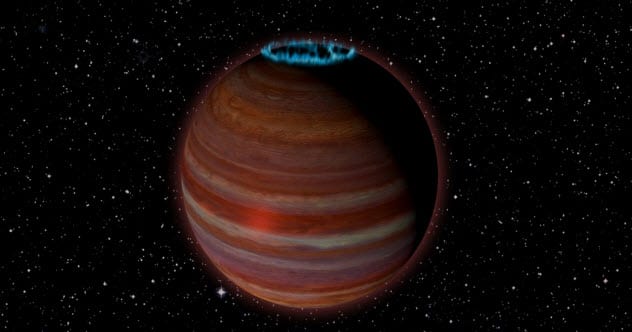
Planets are normally introduced with their stars: Earth has the Sun, Jupiter has the Sun, and countless exoplanets have distant suns of their own. Astronomers therefore caused quite a stir in 2021 when they identified at least 70 new free-floating planets in a nearby region of the Milky Way.
These objects are roughly comparable to Jupiter in mass but do not orbit any known parent star. They travel independently through interstellar space, like cosmic tourists who missed the last bus back to their solar systems.
Depending on the criteria used to classify the candidates, the true number in the observed region could be as high as 170. Some may have formed alone when clouds of gas collapsed. Others may have been violently ejected from young planetary systems after gravitational encounters with larger planets or passing stars.
The discovery suggests that rogue planets may be extremely common. If similar populations exist throughout the galaxy, the Milky Way could contain billions of worlds traveling through the dark without ever experiencing a sunrise.
Sources:
9. Maggie, a 3,900-Light-Year River of Hydrogen
Raw material for future stars stretches across the galaxy
In late 2021, astronomers announced the identification of one of the longest coherent structures known in the Milky Way: a colossal filament of atomic hydrogen nicknamed Maggie.
Maggie stretches approximately 3,900 light-years from end to end. For comparison, a beam of light leaving one end when the ancient Egyptian pyramids were relatively new would still have centuries of traveling ahead before reaching the other end.
The structure lies about 1,600 light-years below the Milky Way’s main disk. That unusual position helped its radio signal stand out from the cluttered background of hydrogen elsewhere in the galaxy. Observations also showed that portions of Maggie’s atomic gas may be combining into molecular hydrogen, the colder and denser material from which stars eventually form.
Maggie is therefore more than an oversized space noodle. It may offer astronomers a rare opportunity to study the transition between diffuse atomic gas and the molecular clouds that become stellar nurseries.
Sources:
8. The Milky Way’s “Poor Old Heart”
Ancient stars reveal the galaxy’s earliest surviving core
Galactic archaeology does not involve tiny brushes or dramatic arguments over dinosaur bones. Instead, astronomers examine the motion and chemical composition of stars to determine which populations formed first.
In 2022, researchers analyzing data from the Gaia mission identified a concentrated population of extremely old, metal-poor stars in the inner Milky Way. They called this population the galaxy’s “poor old heart.” In astronomy, “metal-poor” means the stars contain relatively small amounts of elements heavier than hydrogen and heliuma clue that they formed before generations of stars had enriched the galaxy with heavier material.
The team used a neural network to estimate the chemical compositions of roughly two million bright giant stars. The ancient population they uncovered appears to be the remains of the Milky Way’s earliest core, present before the galaxy grew into its modern spiral form.
These stars are essentially living fossils. They carry chemical records of an era more than 12 billion years in the past, when the Milky Way was less of a majestic spiral and more of a chaotic construction site with no safety inspector.
Sources:
7. The Giant eROSITA Bubbles
An enormous X-ray hourglass towers over the galactic center
During its first all-sky survey, the eROSITA X-ray telescope revealed a vast hourglass-shaped structure extending above and below the Milky Way’s central region. Announced in 2020, the two lobes became known as the eROSITA bubbles.
They surround the previously discovered Fermi bubbles, which glow in gamma rays. The eROSITA structures are even larger, stretching tens of thousands of light-years through the galaxy’s halo. Their relatively sharp boundaries indicate that powerful shock waves may have swept through extremely hot gas.
The source of the required energy remains under investigation. One possibility is an ancient episode of intense star formation near the galactic center. Another is a period when Sagittarius A*, the Milky Way’s central black hole, consumed more material and blasted energy into the surrounding galaxy.
Whatever happened, it was not subtle. The bubbles suggest that the center of the Milky Way experienced a colossal outburst in the geological recent past. Our galaxy may look calm in vacation photos, but it apparently has a history of throwing energetic tantrums.
Sources:
6. A Newly Identified Exhaust Vent Near the Galactic Center
Hot gas appears to be escaping through a cosmic chimney
In 2024, observations from NASA’s Chandra X-ray Observatory and the MeerKAT radio telescope revealed evidence of an “exhaust vent” connected to a chimney of hot gas near the center of the Milky Way.
The newly identified vent is located about 700 light-years from the galactic center. Researchers believe hot gas traveling through the chimney struck a cooler cloud in its path. The collision generated shock waves that made the walls of a tunnel-like structure shine brightly in X-rays.
The central black hole, nearby supernova explosions, and winds from massive stars may all help heat and propel gas through this system. The vent could therefore be one visible component of a much larger process that transports energy away from the crowded galactic core.
It is a remarkable piece of cosmic plumbing: Sagittarius A* and its surroundings produce hot gas, the gas rises through a chimney, and a vent releases it farther out. Somewhere, an interstellar building inspector is quietly updating the galaxy’s ventilation code.
Sources:
5. The Radcliffe Wave That Really Moves Like a Wave
A 9,000-light-year chain of star-forming clouds is oscillating
The Radcliffe Wave was first reported in 2020 after three-dimensional maps revealed a long, undulating chain of nearby molecular clouds. It stretches roughly 9,000 light-years and passes within about 500 light-years of the Sun.
Its shape alone was astonishing. The structure connects several familiar stellar nurseries and appears to form part of the backbone of our local spiral-arm environment. However, researchers still needed to determine whether it merely looked wavy or actually behaved like a wave.
In 2024, measurements of young star clusters associated with the structure provided the answer: the Radcliffe Wave is moving. Its clusters oscillate above and below the Milky Way’s disk, producing a traveling pattern comparable to spectators performing “the wave” around a stadium.
The motion can be explained largely by the gravity of ordinary matter, without requiring a major contribution from dark matter. Scientists still do not know what created the structure. Possibilities include supernova explosions or disturbances caused by an encounter with a smaller galaxy.
The Sun is not riding directly on the wave, which is fortunate. Humanity already has enough trouble handling mild turbulence on commercial flights.
Sources:
4. The First Neutrino Map of the Milky Way
“Ghost particles” produced an entirely new view of our galaxy
Humans have mapped the Milky Way using visible light, radio waves, infrared radiation, X-rays, and gamma rays. In 2023, the IceCube Neutrino Observatory added an extraordinary new option: neutrinos.
Neutrinos are nearly massless subatomic particles that rarely interact with ordinary matter. Vast numbers pass through your body every second without introducing themselves, paying rent, or even leaving a polite note.
IceCube detects rare neutrino interactions beneath the ice at the South Pole. Researchers applied machine-learning methods to more than 60,000 recorded particle events gathered over approximately a decade. The resulting analysis produced the first evidence-based image of high-energy neutrino emission from the plane of the Milky Way.
This was the first galactic image created using particles of matter rather than electromagnetic radiation. It opens a new way to investigate cosmic-ray accelerators, supernova remnants, pulsars, and other violent objects that may produce extremely energetic particles.
Visible light shows where stars shine. Neutrinos may reveal where the galaxy is quietly operating some of its most powerful natural particle accelerators.
Sources:
3. Shakti and Shiva, Ancient Building Blocks of the Galaxy
Two stellar streams may predate the Milky Way’s disk
In 2024, astronomers using Gaia data identified two ancient groups of stars named Shakti and Shiva. Their orbital movements and chemical compositions indicate that they may be the remains of separate proto-galactic fragments that merged with the young Milky Way between 12 and 13 billion years ago.
Unlike more obvious stellar streams created by relatively recent mergers, Shakti and Shiva are located closer to the central regions of the galaxy. Their stars occupy similar families of orbits and contain comparatively few heavy elements, indicating great age.
The discovery helps astronomers reconstruct a period when the Milky Way had not yet developed its familiar disk and spiral arms. At that time, smaller collections of stars and gas were colliding and combining to build a larger galaxy.
Finding Shakti and Shiva is comparable to discovering recognizable foundations beneath a modern cityexcept the city contains hundreds of billions of stars, the foundations are moving at extraordinary speeds, and the property records disappeared sometime around the dawn of the universe.
Sources:
2. Gaia BH3, the Milky Way’s Sleeping Giant
A dormant black hole weighs nearly 33 times as much as the Sun
Most known stellar-mass black holes were discovered because they actively pulled gas from companion stars, producing bright X-rays. Gaia BH3 was far quieter. It revealed itself through the subtle wobbling motion of a companion star.
Announced in 2024, Gaia BH3 has a mass close to 33 times that of the Sun. At the time of the announcement, it was the most massive known stellar-origin black hole in the Milky Way. It lies less than 2,000 light-years away in the constellation Aquila, making it remarkably close by galactic standards.
The black hole is considered dormant because it is not actively consuming large amounts of material from its companion. That explains why conventional X-ray searches did not identify it earlier.
Its companion is an old star with a very low abundance of heavy elements. This supports models suggesting that metal-poor massive stars can retain more of their material before collapsing, allowing them to create unusually heavy black holes.
Gaia BH3 is unsettling mainly because of how calmly it hid. It was not blasting jets or ripping apart a neighboring star. It was simply sitting nearby, being 33 Suns’ worth of invisible, until astronomers noticed its gravitational fingerprints.
Sources:
1. The First Image of Sagittarius A*
Humanity finally saw the shadow of the Milky Way’s central black hole
Astronomers had accumulated overwhelming evidence that a supermassive black hole occupied the center of the Milky Way. They had tracked stars whipping around an invisible object with a mass of roughly four million Suns. What they lacked was an event-horizon-scale image.
That changed in May 2022 when the Event Horizon Telescope Collaboration released the first image of Sagittarius A*, commonly shortened to Sgr A*. The black hole lies approximately 27,000 light-years from Earth.
The image does not show the black hole itself, because light cannot escape from inside its event horizon. Instead, it shows a glowing ring of superheated material surrounding a dark central shadow created by the black hole’s extreme gravity.
Producing the picture required linking radio observatories around the planet into a virtual Earth-sized telescope. The task was especially difficult because gas near Sagittarius A* changes rapidly. During a single night of observation, the material can shift significantly, rather like trying to photograph an excited puppy using a camera assembled from telescopes on several continents.
The result confirmed predictions based on general relativity and connected decades of stellar-orbit measurements with observations made close to the event horizon. It gave humanity its first direct visual-scale evidence of the gravitational monster anchoring our home galaxy.
Sources:
What These Milky Way Discoveries Tell Us
Together, these discoveries replace the old picture of the Milky Way as a stable pinwheel with something far more dynamic. Our galaxy contains moving gas waves, remnants of swallowed galaxies, ancient stellar fossils, wandering planets, particle accelerators, enormous high-energy bubbles, and black holes that can remain hidden almost in our cosmic neighborhood.
They also demonstrate why modern astronomy depends on multiple kinds of observation. Optical telescopes alone cannot reveal atomic hydrogen filaments, dormant black holes, X-ray vents, or neutrino emission. Each instrument provides a different layer of information, and those layers combine into a more complete galactic map.
The discoveries are not merely exotic additions to an astronomical catalog. They help scientists investigate how galaxies form, how stars acquire their raw materials, how black holes influence their surroundings, and how energetic particles travel through space.
Experiencing the Milky Way’s Newly Discovered Wonders
Most people cannot book a weekend tour of Gaia BH3, and approaching Sagittarius A* would make even a poorly reviewed budget airline look attractive. Fortunately, there are meaningful ways to experience these discoveries without leaving Earth.
Begin With a Truly Dark Sky
The simplest experience is also the most powerful: observe the Milky Way away from city lights. Under a genuinely dark sky, its hazy band becomes a textured river containing bright knots, dark dust lanes, and crowded star fields. The Sagittarius region is especially rich because it points toward the galactic center, although the best viewing season depends on latitude and time of year.
You will not see the black hole or its X-ray chimney directly. What you will see is the crowded stellar landscape surrounding that hidden center. Knowing that a four-million-solar-mass black hole sits behind the glowing dust changes the experience considerably. The view stops being decorative and becomes geographic: you are looking across the disk toward the downtown district of the galaxy.
Use Several Maps Instead of One
Next, compare visible-light photographs with infrared, radio, X-ray, gamma-ray, and neutrino maps. Each version appears radically different. Dust that blocks visible light becomes transparent in infrared. Radio surveys reveal cold gas and magnetic structures. X-rays highlight violent collisions and extremely hot plasma. Neutrinos trace high-energy processes through particles that cross enormous quantities of matter almost undisturbed.
This comparison recreates one of the most important experiences in modern astronomy: realizing that the night sky visible to human eyes represents only a narrow slice of reality. The galaxy does not have one appearance. It has many, depending on which cosmic messenger is used to observe it.
Explore the Galaxy in Three Dimensions
Interactive planetarium software and three-dimensional stellar maps make discoveries such as the Radcliffe Wave easier to understand. From Earth, molecular clouds can appear scattered across unrelated parts of the sky. In a 3D model, they become sections of a connected, undulating structure.
Rotate the view, move outward from the Sun, and examine how the wave crosses our galactic neighborhood. The experience is similar to unfolding a flat subway map into a model of the actual tunnels. Relationships that were invisible suddenly become obvious.
Try Basic Astrophotography
A camera with manual controls, a sturdy tripod, and a wide-angle lens can record far more Milky Way detail than the unaided eye. Longer exposures collect faint starlight, while multiple images can be stacked to reduce noise. Even a modest setup can reveal dark dust lanes and dense stellar regions toward Sagittarius.
The goal is not to compete with billion-dollar observatories. It is to experience the same basic principle: patient collection of faint signals can reveal structures that initially appear invisible.
Join a Citizen-Science Project
Several astronomical projects invite volunteers to classify telescope images, inspect light curves, identify unusual objects, or search large datasets for patterns. Participants do not need advanced degrees. Careful human attention remains useful because people can notice visual oddities that automated systems may misunderstand.
Citizen scientists have contributed to discoveries involving brown dwarfs, variable stars, disks, and unusual galaxies. The next strange object in the Milky Way may already exist in an archive, waiting for someone curious enough to notice that it does not behave like its neighbors.
Visit an Observatory or Planetarium
Public observatory nights and high-quality planetarium programs can place these discoveries in a scale that ordinary screens rarely communicate. A dome presentation can move from Earth to the galactic center, rise above the disk to show the eROSITA bubbles, and then zoom outward until the entire Milky Way becomes one galaxy among billions.
The lasting experience is not simply amazement at size. It is the realization that our galaxy remains partly unexplored even though humanity has lived inside it for its entire existence. We are not viewing the Milky Way from a convenient distance. We are attempting to map a gigantic forest while standing behind one of its trees.
Sources:
Conclusion
The most astonishing feature of the Milky Way may be how much of it remains unknown. Within just a few years, astronomers revealed a dormant 33-solar-mass black hole, ancient galactic building blocks, a moving 9,000-light-year wave, an X-ray exhaust system, a particle-based image of the galactic plane, and the shadow of the black hole at the galaxy’s center.
Future surveys will map billions of additional stars and monitor the changing sky with unprecedented speed. More rogue planets, hidden black holes, stellar streams, gas structures, and energetic phenomena are almost certainly waiting to be recognized.
The Milky Way has been above humanity every night since the beginning of our species. Apparently, it was keeping most of the interesting details to itself.