

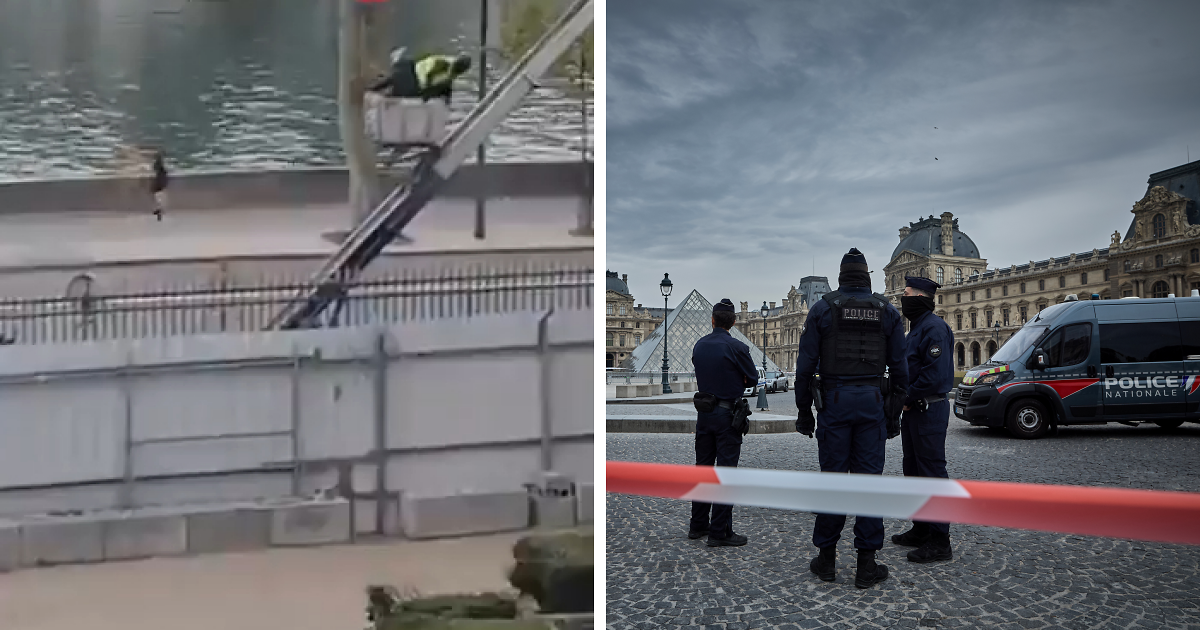
It sounds like the opening scene of a slick Netflix crime thriller: a world-famous museum, priceless royal jewels, a daylight break-in, a getaway by scooter, and one suspect allegedly trying to leave the country through Charles de Gaulle Airport. Unfortunately for the Louvre, this was not prestige television. It was a very real heist that stunned France, embarrassed one of the most visited museums on Earth, and turned a glittering gallery into a global crime scene.
The Louvre jewel heist, carried out on October 19, 2025, targeted the museum’s Apollo Gallery, home to some of France’s most historically significant crown jewels. The stolen pieces were valued at about 88 million euros, or roughly $102 million, but officials and historians made clear that the price tag barely scratches the surface. These were not luxury accessories waiting for a red carpet. They were national heritage objects tied to queens, empresses, dynasties, revolutions, and the long, dramatic soap opera of French power.
The first major break in the investigation came when two men were arrested in connection with the theft. One was detained at Paris Charles de Gaulle Airport while reportedly preparing to board a flight to Algeria. The other was arrested in the Paris suburb of Aubervilliers. The airport detail gave the story its cinematic punch, but investigators had been following a trail that was less glamorous and more forensic: DNA traces, scooter evidence, abandoned tools, surveillance footage, and the kind of operational mistakes that tend to ruin a criminal résumé.
A Seven-Minute Heist That Humiliated A Cultural Giant
The robbery unfolded shortly after the Louvre opened to visitors. According to official accounts and multiple news reports, the thieves used a freight lift or basket lift to reach a window near the Apollo Gallery. Disguised as workers, they blended into a setting where construction equipment did not immediately scream “international incident.” That, in hindsight, is the problem with good disguises: the best ones are boring.
Once at the window, the thieves forced their way inside, smashed or cut into display cases, grabbed eight historic jewelry pieces, and fled. The entire operation took less than eight minutes. Some accounts described the time inside the museum as even shorter. In other words, visitors may have spent longer deciding whether to take a blurry photo of the Mona Lisa than the thieves spent stealing jewels once worn by French royalty.
The thieves escaped on scooters or motorbikes, leaving behind tools and other evidence. One famous item, the crown of Empress Eugénie, was found damaged outside the museum after apparently being dropped during the getaway. That crown, made with diamonds and emeralds, became a painful symbol of the heist: beautiful, historic, battered, and suddenly proof that even national treasures can be vulnerable when security gaps line up in exactly the wrong way.
What Was Stolen From The Louvre?
The stolen Louvre jewels were not random sparkly things. They were pieces connected to 19th-century French royal and imperial women, including Queen Marie-Amélie, Queen Hortense, Empress Marie-Louise, and Empress Eugénie. The list included tiaras, necklaces, earrings, brooches, and a large corsage bow. These objects helped tell the story of France after the Revolution, through the Napoleonic era, the Restoration, and the Second Empire.
Jewels With More Than Monetary Value
The estimated value of about $102 million made headlines, but the real loss was cultural. A diamond can be priced. A sapphire can be measured. An emerald can be appraised. But a jewel connected to Napoleon’s court, Queen Hortense, or the last empress of France carries a kind of historical gravity that no insurance spreadsheet can fully capture.
That is why officials warned that dismantling the pieces would be disastrous. On the black market, the jewels would be difficult to sell intact because they are too recognizable. If broken apart, they might lose much of their identity as historical artifacts. The diamonds and gemstones could still have value, but the story would be damaged forever. It is the difference between owning a page of history and owning a suspicious bag of very expensive rocks.
The Airport Arrest: A Bad Time To Book A One-Way Escape
The most dramatic twist came when one suspect was arrested at Charles de Gaulle Airport. Authorities said he was about to fly to Algeria and had no return ticket. That detail instantly became one of the most repeated facts in coverage of the case because it seemed to confirm what everyone already suspected: someone wanted out, and quickly.
Prosecutors later said the arrested man was a 34-year-old who had been living in France for years. Investigators linked him to the case through DNA found on a scooter used in the escape. The second suspect, age 39, was arrested at home in Aubervilliers. His DNA was reportedly found on a display case and on items left at the scene. Both men were later handed preliminary charges related to organized theft and criminal conspiracy, and officials said they had partially acknowledged involvement.
Still, the arrests did not solve the central mystery: where were the jewels? At the time of the first arrests, the stolen objects had not been recovered. Later updates continued to focus on that same painful question. Arrests are important, but in a cultural heritage case, the real victory is getting the objects back intact.
Why The Louvre Heist Shocked The World
The Louvre is not a small-town antique shop with a sleepy cat in the window. It is one of the most famous cultural institutions in existence. It houses the Mona Lisa, the Venus de Milo, the Winged Victory of Samothrace, and hundreds of thousands of objects from across human civilization. Millions of people visit every year. The museum is not merely a building; it is a global symbol of art, history, tourism, and French identity.
That is why the heist landed with such force. The thieves did not break into a remote storage unit at midnight. They struck in daylight, at a museum that represents France’s cultural prestige. The robbery raised uncomfortable questions about how a team with a lift, tools, and scooters could penetrate one of the world’s most famous museums so quickly.
Security Questions Came Fast
After the theft, French officials faced intense pressure. The museum’s alarm reportedly sounded when the window was forced, and police arrived within minutes after being alerted. But the thieves were already moving fast. The speed of the operation exposed a hard truth about museum security: response time matters, but prevention matters more.
Subsequent reporting and official comments pointed to broader concerns, including surveillance gaps, outdated systems, infrastructure problems, and the practical challenge of securing a historic building that was not originally designed for modern crime prevention. The Louvre began reinforcing vulnerable points, including installing metal bars on the window used in the break-in. It was not exactly subtle, but after a $100 million heist, subtlety had already left the building.
Were The Thieves Criminal Masterminds?
At first glance, the heist looked like a masterclass in precision. In and out in minutes. Daylight operation. Disguises. Escape vehicles. A target selection that seemed carefully planned. It had all the ingredients of a criminal operation with a high degree of organization.
Yet later comments from investigators suggested the picture may have been less glamorous. The suspects were described as known to police, with criminal records or prior offenses, but not necessarily as elite international art-crime masterminds. That contrast made the case even more troubling. If the theft was pulled off by people who were not world-class specialists, what did that say about the vulnerabilities they exploited?
This is one of the stranger lessons of the Louvre jewel heist: sometimes a spectacular crime does not require spectacular genius. It requires timing, nerve, tools, weak points, and a willingness to do something wildly illegal in a place where everyone assumes the security must be better than it is.
The Missing Jewels And The Race Against Time
For investigators, the clock started ticking the moment the thieves disappeared. In major art and jewelry thefts, the first days and weeks are crucial. The stolen objects may be hidden, passed to intermediaries, moved abroad, dismantled, or held while criminals decide whether the heat is too intense.
The Louvre jewels are difficult to sell as recognizable objects. A buyer would know exactly what they were purchasing, and that would create enormous legal risk. This is why officials urged anyone holding or handling the jewels to return them. The more time passes, the greater the fear that pieces may be altered or broken apart.
That fear is not theoretical. Historic jewels can be physically transformed. Stones can be removed. Settings can be melted. Smaller gems can be recut. A necklace that once belonged to an empress can be reduced to anonymous materials. That possibility is what makes cultural theft so devastating. It is not only property crime. It is memory crime.
How The Case Changed The Conversation About Museum Security
The heist forced museums, governments, insurers, and visitors to revisit an awkward topic: the balance between public access and protection. Museums are meant to be open, welcoming, and educational. If they become fortresses, they lose some of their purpose. But if they are too exposed, they become targets.
The Louvre’s challenge is especially complex because it is both a historic palace and a modern museum. Protecting its collections requires cameras, alarms, trained staff, controlled access, emergency plans, and constant maintenance. It also requires recognizing that criminals study routines. They look for construction zones, blind spots, shift changes, open roads, and assumptions.
After the heist, France faced pressure to modernize security not only at the Louvre but across major cultural sites. The incident became part of a larger debate about funding, staffing, technology, and responsibility. Nobody wants to learn that the world’s most famous museum needed a security wake-up call delivered by thieves on scooters.
Why This Story Fascinates Readers
People are drawn to jewel heist stories because they combine beauty, danger, wealth, history, and bad decisions in one glittering package. There is also a built-in puzzle: How did they do it? Who planned it? Where did the jewels go? Were they hidden in a basement, smuggled across borders, or sitting somewhere absurdly ordinary, like a storage unit next to old camping gear?
The Louvre case adds another layer because it involves objects that belong, emotionally if not literally, to a nation’s shared heritage. The victims are not just insurers or museum administrators. They are the public, historians, students, art lovers, and future visitors who may never see those jewels again unless they are recovered.
And then there is the airport scene. One suspect allegedly trying to leave France gave the case a final flourish of drama. If the heist itself was fast, the escape plan apparently had a weak spot: airports are not exactly relaxed places for people under investigation. They are full of cameras, identity checks, border controls, and officers whose job is to notice when someone should not be leaving.
Conclusion: A Heist That Sparkled, Then Exposed The Cracks
The $100 million Louvre jewel heist was shocking because it combined speed, audacity, and cultural damage. The arrest of two suspects, including one at Charles de Gaulle Airport, gave investigators an early breakthrough. But the greater story remains larger than the arrests. It is about the missing jewels, the damaged crown, the pressure on museum leadership, and the uncomfortable realization that even the most famous cultural institutions can have vulnerabilities hiding in plain sight.
The heist will likely be studied for years by security experts, museum professionals, crime writers, and anyone who enjoys a story where history, diamonds, and extremely poor life choices collide. The Louvre may recover, reinforce, and modernize. But the theft left a permanent mark: a reminder that cultural treasures need more than admiration. They need protection that is as serious as their history is priceless.
Experience Notes: What This Louvre Jewel Heist Teaches Visitors, Museums, And Anyone Who Owns Something Valuable
Anyone who has visited a famous museum knows the strange feeling of standing inches from an object that has survived centuries. A painting, crown, sword, manuscript, or necklace can feel almost unreal behind glass. Visitors shuffle past with phones raised, children whisper too loudly, and guards watch the room with the patience of people who have seen every possible way a tourist can ignore a sign. The Louvre heist changes how we think about that experience. It reminds us that museums are not just places of beauty. They are places of risk.
For everyday visitors, the lesson is not to become paranoid. It is to become more aware. When a museum asks people not to lean on cases, block exits, use flash, carry oversized bags, or cross barriers, those rules are not decorative. They are part of a larger system that protects fragile and valuable objects. Most visitors are harmless, but museums must plan for the rare person who is not. Security can feel invisible when it works, which is exactly why people forget how important it is.
For museums, the experience is more sobering. A grand reputation does not stop a determined thief. Historic architecture does not automatically create modern security. A beautiful gallery can also have a vulnerable window. A construction lift can look ordinary until it becomes the tool of a major crime. The Louvre case shows why security audits cannot be treated like paperwork that lives in a drawer. They need funding, urgency, and follow-through.
There is also a lesson for anyone who owns valuable items, even if those items are less dramatic than French crown jewels. Most thefts happen because someone notices a routine, a weak lock, a blind spot, or an assumption. Homeowners, collectors, galleries, churches, libraries, and small museums can all learn from this case. Inventory matters. Photos matter. Insurance matters. Cameras should cover actual entry points, not just the places that look good on a diagram. Valuables should not be easy to remove quickly. If something matters, it deserves a plan.
The airport arrest adds another practical lesson: escape is often where criminals get caught. A crime may be planned carefully, but the aftermath is messy. People panic. They travel. They call the wrong person. They carry the wrong phone. They leave DNA on the wrong surface. They underestimate investigators. In the Louvre case, the alleged attempt to board an international flight became a defining detail because it looked like the moment the movie version would slow down, zoom in, and cue tense music.
Finally, the heist teaches that heritage is not abstract. People cared because the stolen jewels carried stories. They belonged to queens and empresses, survived political upheaval, and became public treasures. When such objects disappear, the loss is shared. The best outcome is not just arrests or headlines. It is recovery, restoration, and a stronger commitment to protecting the fragile, glittering evidence of the past.
Note: This article is an original synthesis based on publicly reported information from reputable news, museum, culture, and investigative sources. Source links are intentionally not included in the article body per publishing requirements.