

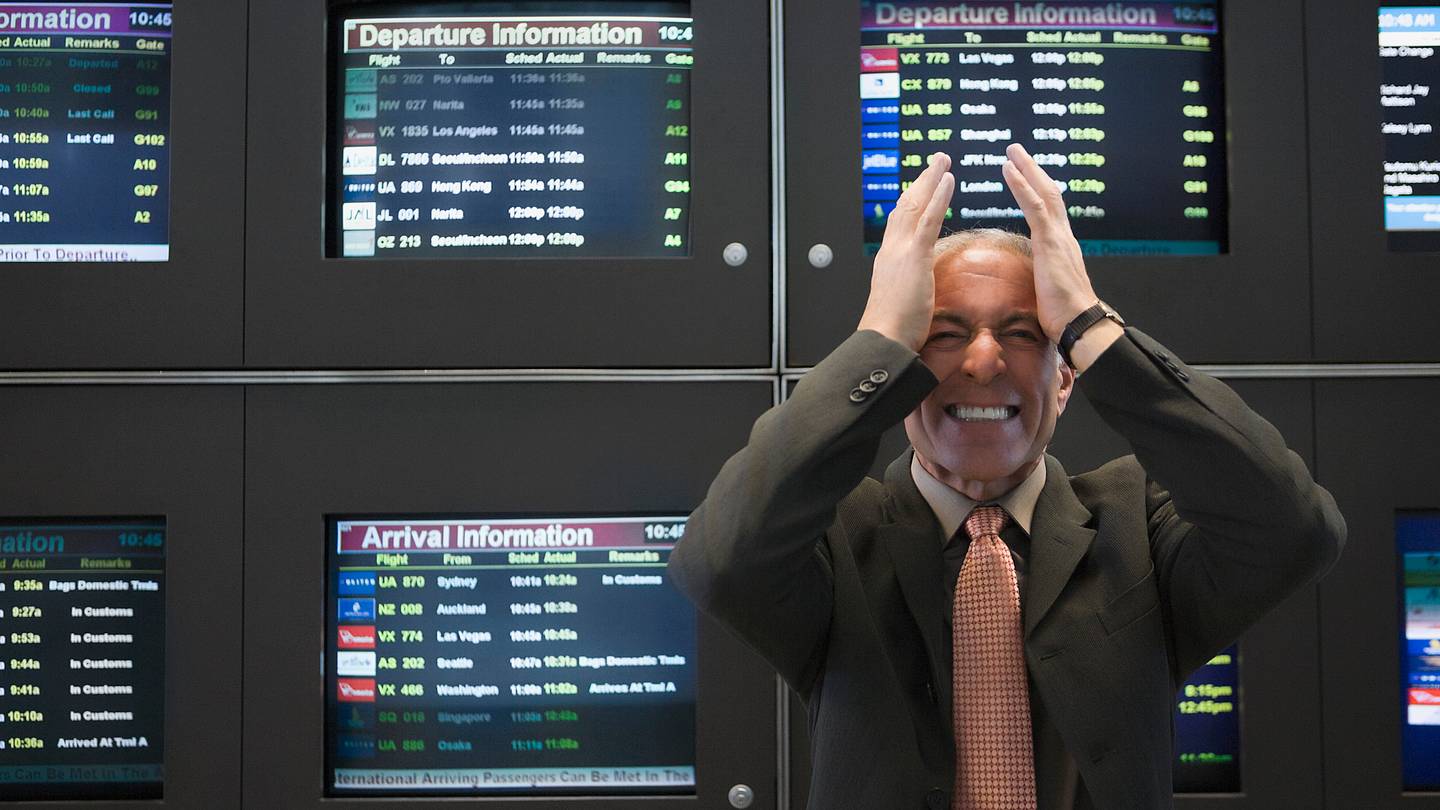
Airports are where vacation dreams meet belt-removing reality. One minute you are imagining palm trees, city lights, or a quiet hotel robe. The next, you are standing in a security line behind a family unpacking enough snacks to survive a moon landing. No wonder travelers occasionally turn into philosophers with roller bags: “Why is my flight delayed?” “Where is my luggage?” “Why does this sandwich cost more than my first car payment?”
The phrase “angriest airports in America” does not necessarily mean the worst airports in America. It means the airports that inspired the highest share of angry social media posts in a well-known sentiment analysis of traveler tweets aimed at the 60 busiest U.S. airports. In other words, this is not a list of cursed buildings with runways. It is a snapshot of passenger frustration: delays, TSA lines, baggage waits, traffic, parking, staff interactions, noise, crowding, construction, and the tiny emotional earthquake caused by hearing, “We are just waiting on a crew.”
Interestingly, some airports on this list also perform well in formal satisfaction studies. That is the beautiful contradiction of modern travel: an airport can have good facilities and still make passengers type in all caps when the rental car line wraps around the known universe. Below, we break down the top 10 angriest airports in America, why travelers may get annoyed there, and what the ranking really tells us about airport stress in the United States.
How Were the Angriest Airports Ranked?
The ranking was based on an analysis of more than 37,000 tweets directed at official airport accounts over a 12-month period. A machine-learning sentiment tool categorized posts by emotion, including anger. The airports with the highest percentage of angry tweets rose to the top. The most common complaint themes were familiar to anyone who has ever sprinted through a terminal holding a cinnamon roll like a relay baton: delays, security, hours, lines, staff, traffic, baggage, parking, and cancellations.
That methodology matters. Social media is not a perfect measurement of airport quality. Happy travelers rarely tweet, “My gate had adequate seating and nobody yelled.” People post when something goes wrong. So this list is best read as a “passenger pressure index,” not a final verdict on whether an airport is good, bad, or secretly built on a volcano.
The 10 Angriest Airports in America
1. John Wayne Airport (SNA) Orange County, California
Angry tweet share: 65%
John Wayne Airport landed at the top of the angriest airports in America list, which is both surprising and not surprising. Surprising because SNA is often praised for being clean, convenient, and easier to navigate than giant Southern California alternatives. Not surprising because Orange County travel brings its own special cocktail of pressure: vacation crowds, business travelers, rental car lines, tight schedules, premium prices, and local noise restrictions that shape flight operations.
Many traveler complaints focused on delays, security, hours, staff, and noise. SNA is smaller than Los Angeles International Airport, but that smaller footprint can feel less charming when the terminal is packed and everyone is trying to escape to or from a beach weekend at the same time. A compact airport is wonderful when everything works. When something stalls, it can feel like the whole building is breathing into a paper bag.
The twist? John Wayne Airport also ranks highly in formal passenger satisfaction research. That contradiction shows the difference between general satisfaction and emotional flashpoints. A traveler may like the airport overall but still rage-post after a delayed departure, a long TSA wait, or a baggage carousel that appears to be powered by vibes.
2. Jacksonville International Airport (JAX) Jacksonville, Florida
Angry tweet share: 60%
Jacksonville International Airport took second place, proving that smaller and calmer-looking airports are not immune to traveler fury. JAX serves a growing region with a mix of leisure travelers, military families, business passengers, and Florida visitors who may already be operating at maximum humidity tolerance.
Passenger frustration at airports like JAX often comes from expectation mismatch. Travelers may arrive assuming a smaller airport will mean quick parking, fast check-in, and easy security. When a delay, staffing issue, or baggage problem appears, annoyance rises faster because people feel the airport should be simpler. It is the “I came here for convenience, not a side quest” effect.
JAX is not a mega-hub, but it still faces the same national problems as bigger airports: weather disruption, airline scheduling issues, security bottlenecks, and customer service strain. In the social media age, one bad morning can generate a digital thunderstorm.
3. Eppley Airfield (OMA) Omaha, Nebraska
Angry tweet share: 59%
Eppley Airfield may not be the first airport people imagine when discussing travel drama, but Omaha’s airport reached third place in the anger ranking. Part of the issue is that regional airports often have fewer backup options when things go wrong. A canceled flight at a huge hub may be painful, but there may be another departure later. At a smaller airport, a disruption can feel like the airline just handed you a hotel voucher and a character-building exercise.
OMA is also in the middle of major modernization. Construction is usually a sign of good things to come, but during the work itself, passengers may deal with changed entrances, split terminal areas, temporary routes, and general “where did they move everything?” confusion. Airport construction is like renovating a kitchen while still trying to cook Thanksgiving dinner. Necessary? Yes. Peaceful? Absolutely not.
The airport’s long-term improvements should eventually help passenger flow, concessions, baggage, and gate areas. But while construction is active, travelers should build in extra time and verify airline locations before arriving.
4. Tampa International Airport (TPA) Tampa, Florida
Angry tweet share: 57%
Tampa International Airport is a fascinating case because it is widely admired for its design, convenience, and passenger-friendly layout. It has also ranked near the top in customer satisfaction. Yet it placed fourth in angry tweets, which tells us something important: even good airports can become frustration factories when traffic, growth, weather, and vacation crowds collide.
TPA serves a booming region and handles heavy leisure travel, including families, cruise passengers, snowbirds, convention crowds, and beach-bound travelers who have already emotionally checked out of normal society. When lines grow, parking fills, or flights are delayed by Florida weather, patience can evaporate like rain on hot pavement.
The airport is preparing for future demand with a major Airside D expansion planned as a new 16-gate international facility. That long-term investment should help capacity, but growth itself can create short-term strain. Tampa is not angry because it is failing; in many ways, it is angry because people keep using it.
5. San Antonio International Airport (SAT) San Antonio, Texas
Angry tweet share: 57%
San Antonio International Airport ranked fifth, with traveler complaints often tied to TSA, security, facilities, and operational hiccups. SAT has long faced a challenge common to fast-growing cities: the airport must serve today’s demand while preparing for tomorrow’s larger crowds.
San Antonio is investing in a major terminal development program, including up to 18 new domestic and international gates, more than 850,000 square feet of new terminal space, expanded concessions, larger hold rooms, and roadway improvements. That is exactly the kind of upgrade passengers wanteventually. During the years before new infrastructure opens, however, frustration can build because the airport feels like it is trying to wear shoes it outgrew three years ago.
For travelers, SAT’s anger ranking is a reminder to treat medium-size airports seriously. Do not assume you can arrive 45 minutes before boarding, glide through security like a movie spy, and still have time for breakfast tacos. The tacos may be worth it, but missing your flight is a bold seasoning choice.
6. Hartsfield-Jackson Atlanta International Airport (ATL) Atlanta, Georgia
Angry tweet share: 56%
Hartsfield-Jackson Atlanta International Airport is one of the busiest airports in the world, so its appearance on this list feels almost inevitable. ATL is not just an airport; it is a small city with jet bridges. Millions of travelers connect through Atlanta each year, and a disruption there can ripple across the national flight system like someone dropped a bowling ball into a kiddie pool.
Common complaints about mega-hubs include long walks, crowded Plane Train platforms, gate changes, weather delays, security lines, and the existential dread of landing in Concourse T when your connection boards in Concourse E. ATL is efficient for its size, but size itself creates stress. Even a well-run giant airport can feel overwhelming to a passenger with 34 minutes to connect and a backpack slowly unzipping itself.
Atlanta’s ranking reflects the emotional intensity of hub travel. Many passengers are not starting or ending their trip there; they are connecting. That means their mood depends on timing, signage, walking speed, and whether their inbound aircraft arrived with enough minutes to spare.
7. San Diego International Airport (SAN) San Diego, California
Angry tweet share: 56%
San Diego International Airport has one of the most dramatic approaches in the country, with aircraft descending close to downtown. The views can be spectacular. The airport footprint, however, is famously tight. SAN serves a major metro area from a constrained urban location, which can make traffic, parking, curbside pickup, and terminal crowding feel more intense.
The airport has been working through a major New Terminal 1 project designed to expand gate capacity, improve security, add dining and retail, and modernize the passenger experience. That is good news for the future, but construction-era travel can test even the sunniest San Diego personality. Detours, changing traffic patterns, and busy pickup zones can transform “laid-back California travel” into “why is everyone merging like this?”
San Diego’s anger ranking is less about the city’s charm and more about capacity pressure. When demand is high and space is limited, tiny problems become loud problems.
8. Nashville International Airport (BNA) Nashville, Tennessee
Angry tweet share: 56%
Nashville International Airport ranked eighth, and anyone who has watched Nashville’s explosive tourism growth can understand why. The city has become a magnet for weekend trips, concerts, conferences, bachelor and bachelorette parties, and visitors who believe cowboy boots are required by municipal law.
BNA has been expanding and renovating to keep up with growth. The airport’s New Horizon plan builds on earlier improvements and aims to meet rising passenger demand. Still, growth brings friction: traffic congestion, parking pressure, longer lines, and crowded terminal areas. When thousands of visitors arrive ready for live music and hot chicken, the airport has to process both luggage and enthusiasm.
Traveler complaints about BNA have included traffic, waiting, passengers, police, and security. That combination paints a familiar picture: curbside backups, busy checkpoints, and people navigating a changing airport while trying to make flights. Nashville may sing, but passengers stuck in a long security line rarely harmonize.
9. Phoenix Sky Harbor International Airport (PHX) Phoenix, Arizona
Angry tweet share: 56%
Phoenix Sky Harbor calls itself “America’s Friendliest Airport,” which makes its appearance on the angriest airports list especially spicy. PHX is a major Southwest and American Airlines hub, a gateway to Arizona tourism, and a high-volume airport that served more than 51 million passengers in 2025.
Yet Sky Harbor also performs well in more formal airport satisfaction and on-time performance measures. That means the angry tweets may reflect specific pain points rather than a broken overall experience. Summer heat, crowded terminals, rental car logistics, busy holiday travel, and hub-related delays can all spark online complaints. Also, when it is 111 degrees outside, the average traveler’s emotional support iced coffee is doing very heavy work.
PHX shows why “angry” does not equal “bad.” A busy, mostly efficient airport can still generate frustration because it handles huge passenger volume. The more people pass through, the more chances there are for someone to have a bad day and share it with the internet.
10. San José Mineta International Airport (SJC) San Jose, California
Angry tweet share: 56%
San José Mineta International Airport completes the top 10. SJC is often appreciated as a more manageable Bay Area alternative to San Francisco International, especially for Silicon Valley travelers. But “manageable” does not mean immune to delays, staffing challenges, parking complaints, airline disruptions, and security frustrations.
SJC’s passenger base includes business travelers who tend to have tight schedules and low tolerance for uncertainty. A leisure traveler may grumble about a delay; a business traveler may calculate how many minutes remain before a meeting, then begin silently negotiating with the universe. That intensity can show up in complaint data.
San Jose’s ranking also reminds us that airport anger is not always proportional to airport size. Smaller airports can frustrate passengers when expectations are high and alternatives are limited. A delayed flight from a smaller airport may not offer many easy backup routes, and that helpless feeling is a reliable anger generator.
What These Airports Have in Common
1. Growth Is Stressful Before It Is Helpful
Several airports on this list are expanding, modernizing, or adapting to surging passenger demand. New terminals, added gates, improved concessions, and better security checkpoints are great long-term solutions. But during construction, travelers face detours, temporary signage, relocated services, traffic changes, and fewer familiar routines. Airports are judged by today’s experience, not tomorrow’s rendering.
2. Social Media Captures Pain, Not the Whole Picture
People post when they are mad. They rarely post, “I found a clean restroom and my boarding group was called in a reasonable tone.” That is why the angriest airports list should be read alongside customer satisfaction studies, federal delay data, airport traffic statistics, and official development plans. A tweet-based ranking is useful because it captures raw passenger emotion. It is incomplete because emotion is loudest during disruption.
3. Delays Are the Universal Villain
Whether the airport is a compact regional field or a massive global hub, delays remain the fastest way to turn travelers into amateur courtroom attorneys. Weather, staffing, maintenance, air traffic control, late-arriving aircraft, and crew timing all play roles. Unfortunately, passengers often experience those separate causes as one simple sentence: “My flight is late.”
4. Security Lines Still Shape Airport Mood
TSA wait times are one of the most emotionally powerful parts of airport travel because they are visible, physical, and unpredictable. A long line creates instant anxiety. A short line creates suspicious joy. Add families, laptops, shoes, belts, bins, strollers, and someone asking whether peanut butter counts as a liquid, and you have the perfect recipe for airport irritation.
Is the “Angriest Airport” Label Fair?
Fair? Partly. Complete? Not even close.
The label is useful because it shows where travelers are most likely to voice frustration. It highlights airports where passengers may feel pressure from lines, delays, congestion, baggage waits, traffic, construction, or service issues. For airport managers, that kind of sentiment can be valuable. It shows not only what is broken, but what feels broken to the public.
But the label can also be misleading. Some airports on this list are praised in other rankings. John Wayne, Tampa, and Phoenix, for example, have all performed well in broader satisfaction measures. That does not erase angry tweets; it simply adds context. An airport can be clean, efficient, and well-designed while still producing frustration during peak periods or disruptions.
The better question is not “Which airport is the worst?” It is “What causes passengers to feel powerless?” In air travel, anger often comes from uncertainty. Travelers can handle bad news better when they receive clear updates, realistic timelines, visible staffing, good signage, and practical options. Silence is what makes people furious. Silence plus a gate change is how villains are born.
How to Survive an Angry Airport Without Becoming the Main Character
First, book earlier flights when possible. Morning departures are less likely to be affected by cascading delays from earlier problems. Second, avoid tight connections at major hubs, especially during storm seasons or holiday peaks. Third, check airport construction updates before leaving home. This is not glamorous travel advice, but neither is dragging your suitcase across three parking zones because the old entrance moved.
Fourth, use airline apps and airport apps. They often update gate changes faster than terminal screens. Fifth, build in food and restroom time before boarding. Hunger turns minor inconvenience into Shakespearean tragedy. Finally, keep your expectations realistic. Airports are shared spaces where weather, technology, humans, machinery, and government security all have to cooperate. That is basically a group project with jet fuel.
Traveler Experiences: What It Feels Like Inside America’s Angriest Airports
The most common experience at an “angry” airport is not dramatic chaos. It is the slow accumulation of tiny annoyances. You leave home early, but traffic near the terminal is backed up. The economy garage sign says “open,” but the good spaces are apparently hiding under an invisibility cloak. At the airline counter, the self-service kiosk prints one bag tag beautifully and then refuses to acknowledge your second suitcase, as if it has moral objections to checked luggage.
Then comes security. One line is moving quickly. Naturally, it is not yours. In your lane, someone has packed full-size shampoo, a laptop under three sweaters, and a water bottle that has somehow become a constitutional issue. You finally reach the scanner, retrieve your shoes, and perform the ancient airport ritual of hopping on one foot while reassembling your dignity.
At the gate, the boarding screen says “on time,” but the aircraft is nowhere to be seen. This is when travelers begin studying airport operations like graduate students. Someone announces, “The plane is coming from Denver.” Another person checks a flight tracker. A third claims the crew timed out. Nobody officially knows anything, but everyone has become an expert. Ten minutes later, the airline announces a delay. The crowd releases a synchronized sigh powerful enough to move weather systems.
Baggage claim can be its own emotional sport. The carousel starts with confidence, delivers three bags, then stops as if reflecting on its life choices. Passengers stare into the rubber flaps like ancient villagers waiting for an oracle. A suitcase appears. It belongs to nobody. Another appears. Also nobody. Finally, after twenty minutes, your bag emerges with one handle slightly bent and the expression of a suitcase that has seen things.
Traffic at arrivals may be the final boss. Your ride says, “I’m at Door 3,” but there are several Door 3s, all surrounded by honking cars, confused families, rideshare signs, and one person loading six suitcases into a compact sedan like a geometry experiment. By the time you sit down, the airport has not ruined your trip, exactly, but it has added a chapter.
Still, the experience is not all bad. Many of these airports have genuinely good food, improving terminals, helpful employees, better signage, modernized gates, and ambitious expansion plans. The anger usually comes from friction: too many people, not enough space, unclear communication, and delays outside any one person’s control. A traveler may swear never to return while standing in line, then later admit the terminal was clean and the tacos were excellent. Humans are complicated. Travelers are humans with boarding passes, so they are even more complicated.
The best strategy is to travel like something will go slightly wrong. Pack patience the way you pack chargers: bring more than you think you need. Choose flights with breathing room. Keep snacks handy. Download entertainment. Watch airport signs like a hawk, but do not become emotionally attached to one gate. Most importantly, remember that the gate agent did not personally create thunderstorms, air traffic congestion, or the concept of basic economy.
America’s angriest airports are not necessarily places to avoid. They are places to approach with a plan. Some are growing too fast. Some are squeezed by geography. Some are under construction. Some are massive hubs where one delay can become everyone’s problem. And some are actually pretty good airports that happened to make people very, very mad online. Welcome to modern flying: the miracle of crossing a continent in hours, followed immediately by complaining that the pretzel line was too long.
Conclusion
The 10 angriest airports in America reveal more than a list of places where travelers complain. They reveal the pressure points of modern U.S. air travel: delay anxiety, security bottlenecks, construction confusion, baggage waits, traffic congestion, and the emotional weirdness of being trapped between “vacation mode” and “public transportation survival mode.”
John Wayne Airport topped the list, followed by Jacksonville International, Eppley Airfield, Tampa International, San Antonio International, Hartsfield-Jackson Atlanta, San Diego International, Nashville International, Phoenix Sky Harbor, and San José Mineta. But the deeper lesson is that anger does not always equal poor quality. Some of these airports are actively improving. Some rank well in satisfaction studies. Some are victims of their own popularity. Others simply need clearer communication and smoother passenger flow.
So before you judge an airport by one angry tweet, remember: travel frustration is often about moments, not entire places. The same airport that makes one passenger furious at 6:15 a.m. may deliver another traveler a smooth, pleasant trip by noon. That is the airport lottery. May your line be short, your gate unchanged, and your suitcase arrive before you have time to question your life choices.