

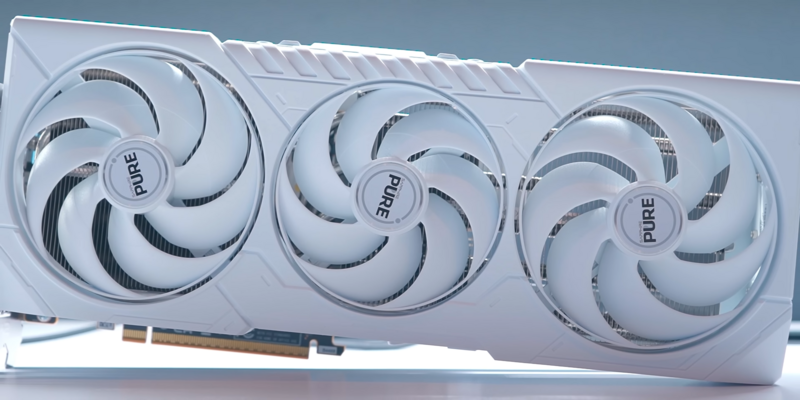
If you have ever stared at a PS5 and thought, “Okay, but what is that in PC language?” welcome to the club. It is one of the most common gaming hardware questions on the internet, and it is also one of the messiest. Console hardware is custom, tightly optimized, and designed around a shared pool of memory. PC hardware is modular, less predictable, and usually comes with a side dish of “it depends.” In other words, comparing the PS5 to a desktop graphics card is a little like comparing a food truck to a restaurant kitchen. Both can serve great burgers, but the setup is very different.
Still, gamers want a real answer, not philosophy class. So here it is: the closest spec-for-spec AMD GPU to the PS5 is the Radeon RX 6700, while the closest practical gaming-tier match is usually the Radeon RX 6700 XT. If you prefer Nvidia, the GeForce RTX 3060 Ti is the nearest mainstream comparison, with the RTX 3070 being a modest step above what most people would call “PS5-class” performance.
That is the short version. Now let’s do the fun part and unpack why this answer is both simple and annoyingly complicated at the same time.
The Quick Answer
For a 2024 buyer, the best answer depends on what you mean by “equivalent.” If you mean closest on paper, the RX 6700 is the cleanest match. If you mean closest in real-world gaming expectations, especially at 1080p to 1440p, the RX 6700 XT is the safer recommendation. If you are shopping Nvidia, the RTX 3060 Ti is the closest conversation starter, while the RTX 3070 usually lands a little ahead of the base PS5 overall.
So no, there is not one magical GPU that is exactly the PS5 in a PCIe slot. Sorry. The hardware universe refused to be that polite.
Why an Exact PS5 GPU Match Does Not Really Exist
The first thing to understand is that the PS5 does not use an off-the-shelf desktop graphics card. It uses a custom AMD RDNA 2-based graphics engine built into a console APU. That means the CPU, GPU, memory design, storage pipeline, and software stack were designed to work together from day one. On a PC, your graphics card is only one piece of the puzzle, and it has to live with whatever CPU, RAM, motherboard, SSD, drivers, and operating system you pair with it.
This matters because raw GPU numbers can be misleading. Teraflops sound impressive, but they are not a full performance story. Think of teraflops like calories on a restaurant menu: useful, yes, but they do not tell you whether the burger is good. The PS5’s custom setup, shared memory, fixed hardware target, low-level optimization, and storage architecture all help it punch differently than a desktop card with similar paper specs.
That is why some people compare the PS5 to an RX 6600 XT, some say RX 6700, others argue for an RX 6700 XT, and Nvidia fans show up waving the RTX 3060 Ti like a medieval banner. Everyone is seeing part of the truth.
What the PS5 GPU Actually Looks Like on Paper
The PS5 GPU is based on AMD’s RDNA 2 architecture and features 36 compute units running at up to 2.23 GHz, delivering about 10.3 teraflops of compute performance. It also shares the system’s 16GB of GDDR6 memory, with 448 GB/s of memory bandwidth. That last part is important: the PS5’s memory is unified, which means the CPU and GPU share the same pool instead of using separate system RAM and dedicated VRAM.
On a desktop PC, you do not recreate that design exactly. You imitate the overall gaming class. That is why the PS5 sits in a weird but interesting middle zone: it is stronger than a basic “entry-level current-gen” feel, but it does not line up perfectly with a higher-end desktop card either.
The Closest AMD Match: Radeon RX 6700
If you want the cleanest technical match, the Radeon RX 6700 is the answer that makes the most nerds nod in approval. Why? Because it also has 36 compute units, which immediately makes it look like the PS5’s long-lost desktop cousin. Its compute output also lands very close in spirit, though slightly higher on paper, and it belongs to the same broader RDNA 2 family.
That does not make it identical to the PS5. The RX 6700 has its own dedicated 10GB of GDDR6 VRAM, different memory behavior, different clocks, and a completely different platform around it. But if you are asking, “Which PC card looks the most like the PS5 if I compare architecture and CU count first?” this is the cleanest answer.
There is just one catch: the RX 6700 is not always the easiest card to find compared with more commonly discussed options. In 2024, plenty of shoppers were more likely to run into the RX 6700 XT, RX 6600 XT, or Nvidia alternatives first. So while the RX 6700 may be the best spec-sheet answer, it is not always the most practical shopping answer.
The Closest Practical Match: Radeon RX 6700 XT
If you care more about the gaming experience than the cleanest spreadsheet symmetry, the Radeon RX 6700 XT is often the best practical PS5 equivalent. This card sits in the same broad 1440p-minded performance bracket and usually feels like the kind of hardware tier people imagine when they say they want “PS5-ish” performance on PC.
The 6700 XT has 40 compute units, 12GB of VRAM, and more headroom than the PS5 on paper. In traditional rasterized gaming, it is frequently described as faster than the RTX 3060 Ti or at least trading blows with it, and in some workloads it gets close to the RTX 3070. That is exactly why so many builders pick it as the practical answer: it gives you a little extra cushion instead of trying to land on the console target with surgical precision.
In plain English, the RX 6700 XT is what you buy when you want a PC that feels confidently “around PS5 level” without constantly wondering whether you undershot the mark.
Why Not Just Say RX 6600 XT?
Because that answer is only half wrong, which is what makes it dangerous.
The RX 6600 XT is also based on RDNA 2 and has often been used in PS5 comparison builds. It makes sense at a glance. It is efficient, console-adjacent in spirit, and clearly in the same family. Some gaming writers have called it a card aimed at roughly matching the PS5 tier, and Sony’s own PC-facing recommendations for PS VR2 and some PlayStation-published PC settings place the RX 6600 XT in a relevant performance neighborhood.
But the 6600 XT only has 32 compute units, 8GB of VRAM, and a narrower memory setup. In raw desktop terms, it feels more like the lower edge of the conversation than the center of it. It is not a ridiculous comparison, but it is usually the budget approximation, not the closest equivalent.
The Closest Nvidia Alternative: RTX 3060 Ti
If you prefer team green, the GeForce RTX 3060 Ti is probably the closest Nvidia answer for most readers. It lives in roughly the same mainstream performance class that overlaps with how people discuss the PS5. It also has stronger ray tracing support and Nvidia’s software stack, which can make it more attractive if your favorite games lean on features like DLSS.
That said, the 3060 Ti is not a perfect PS5 clone either. It typically comes with 8GB of VRAM, and while Nvidia’s feature set is excellent, VRAM capacity can matter more as games get heavier. The PS5’s shared memory design is not the same thing as 8GB of PC VRAM, but it does remind you that you should not compare memory figures too casually. Numbers on a box can be sneaky little goblins.
If you want an Nvidia card that feels a little more comfortable and less borderline, the RTX 3070 is a fair step-up option. But once you reach RTX 3070 territory, you are generally moving beyond what most people mean by “closest” and into “slightly better than base PS5.”
PS5 Equivalent Performance Is Not Just About the GPU
This is the part many people skip, and then they wonder why their “PS5-equivalent” build does not feel very PS5-like.
A console experience is not just a GPU benchmark. The PS5 also benefits from a fast custom SSD, direct-to-hardware optimization, and a standardized CPU target. If you want a PC that actually feels similar in everyday use, you should think in terms of a balanced platform. That means a capable 6-core or 8-core CPU, at least 16GB of system RAM, and an NVMe SSD that does not behave like it was found in a cereal box.
In other words, pairing a decent GPU with an old bargain-bin processor and a slow drive is like buying racing tires for a shopping cart. Technically, you installed something performance-related. Emotionally, the PS5 is still laughing at you.
What You Should Buy in 2024
If your goal is the closest spec match, buy the RX 6700.
If your goal is the best practical PS5-style gaming target, buy the RX 6700 XT.
If your goal is the closest Nvidia equivalent, buy the RTX 3060 Ti.
If you want something a bit stronger than a base PS5, look toward the RTX 3070 or the stronger side of the RX 6700 XT conversation.
For most people, the smartest recommendation is the RX 6700 XT because it gives you breathing room. The RX 6700 is the more precise “spec answer,” but the RX 6700 XT is often the better “I just want this to feel right in modern games” answer.
Final Verdict
So, what is the closest PS5 GPU equivalent for PC?
The Radeon RX 6700 is the closest technical match.
The Radeon RX 6700 XT is the closest practical gaming match for most PC builders.
The GeForce RTX 3060 Ti is the nearest Nvidia alternative, with the RTX 3070 sitting a little above base PS5 territory.
That is the real answer, and yes, it is slightly annoying that there are three versions of “closest.” But that is how console-versus-PC comparisons work. The PS5 is not a desktop card in disguise. It is a custom machine with custom trade-offs, and the best PC equivalent depends on whether you care most about architecture, performance, or buying advice you will not regret three weeks later.
If you want the cleanest takeaway, use this one: in a 2024 PC build, the RX 6700 XT is usually the safest recommendation for someone trying to recreate or slightly exceed the base PS5 experience.
Hands-On Experience: What Living With a “PS5-Equivalent” PC Actually Feels Like
After spending time around both console and PC setups in this performance class, the biggest surprise is not the frame rates. It is the feel. A PS5 has that easy, appliance-like rhythm. You turn it on, launch a game, and the whole machine acts like it has one job and takes that job personally. A PS5-equivalent PC can absolutely match the visual quality and often beat the flexibility, but the experience is a little different. It is more like owning a sports sedan instead of taking the train. You gain control, but you also inherit responsibility.
With a desktop built around an RX 6700, RX 6700 XT, or RTX 3060 Ti, most modern cross-platform games feel immediately familiar. At 1080p and 1440p, you can tune settings to land very close to the visual trade-offs console players see every day. Sometimes you even get the better end of the deal. Texture quality can look sharper, frame pacing can feel cleaner, and if you are willing to spend a few minutes in the settings menu, the result can look fantastic. The PC version often gives you more knobs to turn, which is wonderful once you know what those knobs do and mildly absurd when you do not.
The funniest part is how quickly you learn that “equivalent” does not mean “identical.” On console, developers target a fixed platform. On PC, one game may love your hardware while another behaves like it has unresolved emotional issues. You might boot one title and find that your so-called PS5-equivalent machine is clearly ahead. Then you launch another game with heavier ray tracing or poor optimization and suddenly the console version looks suspiciously well-behaved. That is not because the math was wrong. It is because the PC ecosystem is gloriously messy.
Storage also changes the mood more than many people expect. A PC with a solid NVMe SSD feels snappy and modern, but the PS5’s storage architecture still deserves respect. If your desktop has a slow SSD or an overstuffed drive, it can undermine the whole premium experience. The same goes for CPU pairing. A balanced midrange processor makes a PS5-class GPU feel smooth and sensible. A weak CPU, on the other hand, can turn your “console killer” into a troubleshooting hobby.
There is also the matter of convenience. The PS5 wins the “sit down and play in ten seconds” contest with alarming consistency. A PC wins the “do almost anything you want once it is set up” contest just as easily. Want mods, ultrawide support, custom frame caps, keyboard and mouse options, emulator flexibility, or a game store library that looks like a digital yard sale? PC starts grinning immediately. Want a frictionless couch experience with fewer variables and less fiddling? The PS5 remains very hard to beat.
That is why the best “PS5 GPU equivalent” advice is not only about matching teraflops or compute units. It is about matching expectations. If you want a PC that gives you PS5-like visual performance with more freedom, the RX 6700 XT is a terrific sweet spot. If you want the nerd-approved spec answer, the RX 6700 is the cleaner twin. If you want Nvidia features and decent overlap with the same class, the RTX 3060 Ti makes sense. In real use, all of them can deliver a gaming experience that feels comfortably in the PS5 neighborhood. The difference is that on PC, the neighborhood is larger, noisier, and full of settings menus. Some people love that. Some people would rather just press X and move on. Honestly, both approaches are valid.