

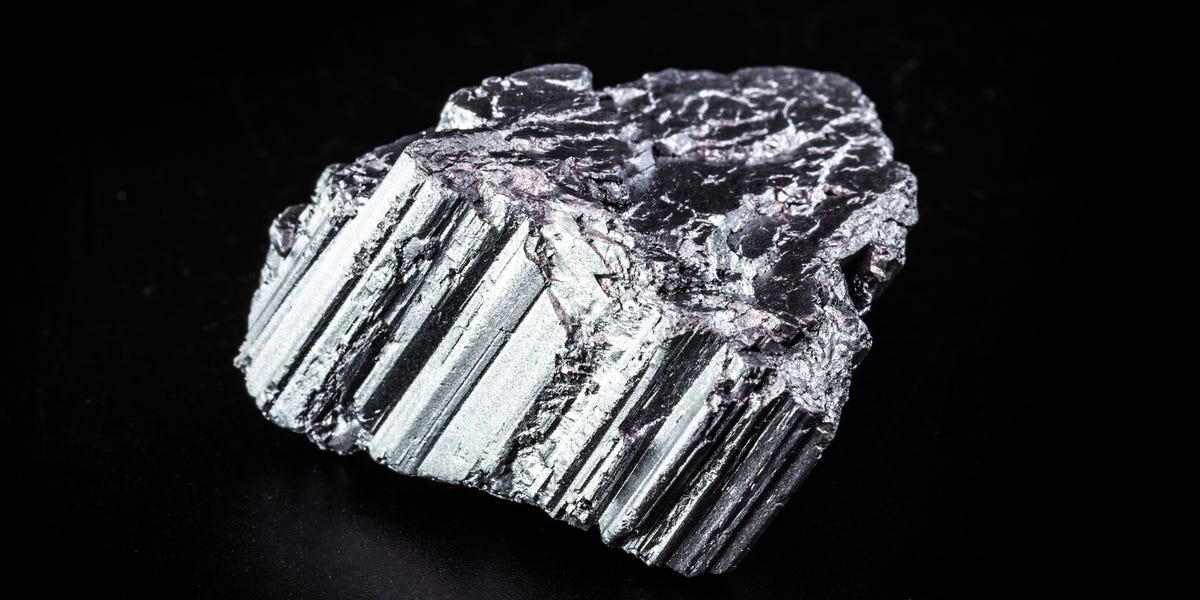
Rare earth metals sound like something a dragon hoards under a mountain, but they are actually hiding in plain sight inside electric vehicles, wind turbines, smartphones, precision-guided weapons, hard drives, medical equipment, and factory robots. So when China tightens rare earth metal exports, the world does not simply shrug and move on. Automakers panic. Defense contractors check inventories. Semiconductor companies call suppliers. Investors suddenly learn how to pronounce “dysprosium” at parties.
The big question is simple: Why is China banning rare earth metal exports? The more accurate answer is slightly less dramatic but much more important. China is not always announcing a total, permanent ban on every rare earth shipment. Instead, it is using export controls, licensing requirements, end-use reviews, technology restrictions, and occasional shipment slowdowns to control who gets rare earth materials, how much they receive, and what they can use them for.
That distinction matters. A formal ban is a locked door. Export controls are more like a door with a guard, a clipboard, a security camera, and a long lunch break. The result can feel nearly the same for companies waiting on critical materials: delays, uncertainty, higher prices, and a sudden reminder that modern technology depends on some very unglamorous rocks.
What Are Rare Earth Metals?
Rare earth metals are a group of 17 elements, including neodymium, dysprosium, terbium, yttrium, samarium, gadolinium, scandium, and others. Despite the name, many rare earth elements are not especially rare in the Earth’s crust. The problem is that they are rarely found in concentrated deposits that are easy, cheap, and environmentally safe to mine and process.
The real bottleneck is not just mining. It is refining, separating, processing, alloying, and turning these elements into high-performance materials such as permanent magnets. These magnets are tiny but mighty. They help power electric motors, missile guidance systems, wind turbine generators, drones, headphones, satellites, and countless industrial machines.
Among the most strategically important rare earths are neodymium and praseodymium, which are used in powerful magnets, and dysprosium and terbium, which help magnets perform under high temperatures. That high-temperature performance matters in electric vehicles, fighter jets, robotics, and defense systems. In other words, these materials are not just “nice to have.” They are the quiet backstage crew of the modern economy.
Is China Really Banning Rare Earth Metal Exports?
The word “banning” is popular because it is simple, punchy, and search-friendly. But the real policy is more complicated. China has repeatedly expanded export controls on rare earth elements, rare earth magnets, related compounds, processing technology, recycling equipment, and products containing Chinese-origin rare earth materials.
Under these rules, exporters often need government licenses before shipping controlled rare earth materials abroad. Chinese officials may ask about the buyer, the final user, the product being made, and whether the material could support military, semiconductor, or other sensitive applications. In some cases, licenses may be denied. In other cases, they may be delayed long enough to disrupt production schedules.
For manufacturers, the practical difference between a formal export ban and a slow licensing process can be small. If a factory cannot get rare earth magnets on time, an electric vehicle motor does not care whether the cause was a ban, a permit delay, or a bureaucratic traffic jam. Production still slows.
Why China Has So Much Power Over Rare Earths
China’s influence comes from decades of investment across the rare earth supply chain. The country does not merely mine rare earths. It dominates the more valuable and technically difficult middle stages: separation, refining, metal-making, alloy production, and magnet manufacturing.
This is the part many people miss. A country may have rare earth deposits in the ground, but that does not automatically make it independent. Ore must be processed into usable materials. That requires specialized facilities, chemical expertise, environmental controls, skilled labor, customer qualification, and years of trial and error. Rare earth supply chains are not built overnight, even with a patriotic construction helmet and an aggressive PowerPoint deck.
The United States has the Mountain Pass mine in California, one of the most important non-Chinese rare earth mining assets. But for years, much of the global refining and magnet-making capacity remained concentrated in China. That means the West can mine some rare earths, but still struggle to process them into the exact materials required by automakers, defense contractors, and electronics manufacturers.
The Main Reasons China Is Restricting Rare Earth Exports
1. Trade Leverage in the U.S.-China Technology War
The biggest reason is leverage. The United States and its allies have restricted China’s access to advanced semiconductors, chipmaking equipment, artificial intelligence hardware, and other sensitive technologies. China has responded by using its own strongest cards: critical minerals and rare earth supply chains.
Rare earth export controls give Beijing a powerful bargaining tool. Instead of matching chip restrictions with chip restrictions, China can pressure industries that depend on rare earth magnets and materials. This reaches far beyond one sector. It affects electric vehicles, defense systems, renewable energy, robotics, aerospace, and consumer electronics.
In plain English, China is saying: “If you control the chips, we can control the materials that help make the machines.” It is geopolitical chess, except every piece is also a supply-chain invoice.
2. National Security Concerns
China frames many of its export controls as national security measures. Rare earths are dual-use materials, meaning they can be used in both civilian and military technologies. A magnet that helps run an electric vehicle motor may also resemble technology used in drones, missiles, radar systems, naval equipment, or aircraft components.
From Beijing’s perspective, restricting exports to foreign defense users is a way to prevent Chinese-origin materials from strengthening rival militaries. From Washington’s perspective, the same restrictions look like economic coercion and supply-chain weaponization. Both interpretations can be true at the same time, which is why this issue is so difficult to resolve.
3. Retaliation Against Tariffs and Export Controls
China’s rare earth restrictions have often appeared during periods of rising trade tension. When the United States increases tariffs, expands technology controls, or pressures allies to limit China’s access to advanced equipment, Beijing has incentives to respond with tools that impose real costs without firing a shot.
Rare earth controls are useful because they are targeted, strategic, and disruptive. They also allow China to apply pressure while claiming that the measures are legal, administrative, and security-based. It is not a random temper tantrum. It is a calculated policy move with economic and diplomatic weight.
4. Control Over High-Value Manufacturing
China does not want to remain just a supplier of raw materials. It wants to dominate higher-value parts of the industrial chain, including rare earth magnets, batteries, electric vehicles, advanced electronics, and clean energy equipment. By restricting exports of raw or semi-processed materials, China can encourage foreign companies to source finished products from Chinese manufacturers or keep more production inside China.
This is a classic industrial strategy. If a country controls the ingredient, it can influence where the final product is made. Rare earths are not just minerals; they are tickets into the next generation of manufacturing.
5. Environmental and Resource Management
Rare earth mining and processing can be messy. It often involves chemical solvents, waste streams, radioactive byproducts, and large environmental footprints. China has spent years trying to consolidate its rare earth industry, reduce illegal mining, enforce quotas, and bring production under tighter central control.
Export restrictions can support that goal by limiting uncontrolled flows and strengthening the government’s ability to track production. Of course, environmental management is only one part of the story. It sits beside national security, trade leverage, and industrial policy. Still, it should not be ignored.
Which Rare Earths Are Most Affected?
Recent controls have focused heavily on heavy rare earth elements, including dysprosium, terbium, yttrium, samarium, gadolinium, scandium, and others. These materials are especially important because they are harder to replace and often more concentrated in Chinese-controlled supply chains.
Dysprosium and terbium are particularly sensitive because they help high-performance magnets withstand heat. Without them, some magnets lose strength in demanding environments. That is a problem for electric vehicle motors, wind turbines, aircraft systems, robotics, and military equipment.
Yttrium and scandium also matter in advanced ceramics, alloys, lasers, electronics, aerospace applications, and defense technologies. Even small shortages can create big headaches because these materials are often used in specialized components with strict qualification standards. Manufacturers cannot simply grab a substitute from the shelf and hope the airplane, missile, or EV motor feels forgiving.
How the Export Controls Affect the United States
The United States is especially vulnerable because its rare earth supply chain has gaps. The country has mining capacity, technical expertise, and growing investment, but it still lacks enough domestic refining, separation, and magnet manufacturing capacity to fully replace Chinese supply.
That means Chinese export controls can hit several U.S. industries at once. Automakers may struggle to secure magnets for electric motors. Defense contractors may face delays for specialized components. Semiconductor companies may worry about rare earth-related materials used in production equipment and advanced electronics. Renewable energy developers may face higher costs for wind turbine components.
The problem is not always immediate shutdown. It is uncertainty. Modern manufacturers operate on carefully timed supply chains. When a licensing system becomes unpredictable, companies build larger inventories, pay higher prices, search for alternative suppliers, and redesign products. All of that costs money. Eventually, some of those costs can reach consumers.
Why Rare Earth Magnets Are the Real Prize
When people hear “rare earth exports,” they often imagine sacks of minerals. But rare earth magnets are the more strategic product. Neodymium-iron-boron magnets are among the strongest permanent magnets in the world. Add certain heavy rare earths, and they can perform reliably under intense heat and stress.
These magnets are essential in electric vehicles because they help motors become smaller, lighter, and more efficient. They are also important in wind turbines, where strong magnets improve generator performance. In defense, rare earth magnets appear in guidance systems, actuators, sensors, radar, and other advanced equipment.
China’s control over magnet manufacturing gives it influence over industries that are central to the future economy. Oil shaped the 20th century. Magnets, chips, batteries, and critical minerals are shaping the 21st. The rare earth magnet is not glamorous, but neither is the foundation of a skyscraper.
Global Reactions: Building Supply Chains Outside China
China’s export restrictions have pushed the United States, Japan, Europe, Australia, Canada, and other partners to accelerate rare earth diversification. Governments are funding mines, processing plants, recycling projects, magnet factories, and strategic stockpiles. Companies are signing long-term supply agreements with producers outside China.
Australia’s rare earth sector has become especially important because it offers mining and processing options aligned with U.S. and allied supply-chain goals. Japan has also spent years reducing its vulnerability after earlier rare earth tensions with China. The United States is backing domestic companies and exploring partnerships to increase refining and magnet production.
Still, building a reliable rare earth supply chain is difficult. New mines can take years to permit and develop. Processing facilities require technical skill and environmental approval. Magnet factories need qualified customers and stable demand. Recycling helps, but it cannot yet meet total demand. Diversification is necessary, but it is not instant coffee.
Will China’s Strategy Backfire?
China’s export controls create short-term leverage, but they also create long-term risk for Beijing. Every time China restricts exports, foreign governments and companies become more determined to reduce dependence. That means more subsidies, more alternative projects, more recycling research, and more pressure to build non-Chinese supply chains.
This is the classic dilemma of supply-chain power. If a country never uses its leverage, others may remain dependent. If it uses that leverage too often, others may spend whatever it takes to escape. China’s rare earth controls may win negotiating advantages today while encouraging competitors to build alternatives tomorrow.
However, the transition away from China will likely take years. China’s expertise, scale, infrastructure, and pricing power are hard to match. Even with strong political will, the United States and its allies face high costs, environmental challenges, skilled labor shortages, and uncertain market economics. The world wants rare earth independence, but it also wants cheap magnets. Those two goals are not always best friends.
What This Means for Consumers
Most consumers will not wake up to find “rare earth surcharge” printed on a toaster receipt. The effects are usually indirect. Export controls can raise costs for electric vehicles, electronics, renewable energy systems, defense procurement, and industrial equipment. They can also delay product launches or complicate manufacturing plans.
For consumers, the rare earth story is a reminder that technology is physical. Cloud computing still needs data centers. Electric vehicles still need motors. Smartphones still need materials mined, refined, shipped, and assembled by real companies in real countries. The digital world has a very mineral-heavy skeleton.
Practical Experiences and Lessons From Rare Earth Export Tensions
The experience of recent rare earth export tensions offers several lessons for businesses, policymakers, investors, and everyday technology users. The first lesson is that supply chains are only invisible when they work. For years, many companies treated rare earth sourcing as a technical procurement issue handled quietly by specialists. Then export controls arrived, licenses slowed, prices moved, and suddenly rare earths became a boardroom topic. Nothing says “executive attention” like a factory line waiting for a magnet the size of a cookie.
Manufacturers have learned that dependence is not just about where a mineral is mined. A company may proudly announce that it sources ore outside China, only to discover that refining, alloying, or magnet production still runs through Chinese facilities. That is like saying you cooked dinner yourself because you bought the carrots, while someone else handled the stove, the recipe, and the fire extinguisher. True resilience requires visibility across the entire chain: mining, separation, refining, metal-making, magnet manufacturing, quality testing, and final assembly.
Another experience is that qualification takes time. Defense, aerospace, automotive, and semiconductor supply chains cannot switch suppliers overnight. A new magnet producer must meet strict performance, safety, durability, and documentation standards. Even if an alternative supplier exists, customers may need months or years to approve it. This is why rare earth shortages can be so disruptive. The issue is not merely finding another seller; it is proving that the replacement works flawlessly in demanding systems.
Companies have also learned the value of inventory strategy. Just-in-time manufacturing is efficient when borders are calm and paperwork moves quickly. But when export licenses become unpredictable, firms may need larger safety stocks for critical inputs. That ties up capital, increases storage costs, and complicates planning. Still, for high-value industries, holding extra rare earth materials may be cheaper than stopping a production line.
Policymakers have gained a different lesson: market forces alone may not build secure supply chains. Rare earth processing can be expensive, environmentally difficult, and less profitable than downstream manufacturing. Chinese producers benefit from scale, experience, and integrated industrial ecosystems. Competing with that may require public funding, tax incentives, loan guarantees, faster permitting, strategic stockpiles, and long-term purchase agreements. The challenge is to support new capacity without creating wasteful oversupply or politically favored projects that cannot survive commercially.
Investors have learned to be careful with hype. Rare earth stocks can surge whenever China tightens controls, but not every company with “rare earth” in its name owns a mine, has permits, can process heavy rare earths, or can make qualified magnets. The sector is strategic, but strategy does not automatically equal profit. Smart analysis looks at geology, processing capability, customer contracts, financing, environmental approvals, and realistic timelines.
The final experience is perhaps the simplest: resilience is boring until it is priceless. Rare earth supply chains do not make dramatic headlines every day, but they sit beneath electric mobility, clean energy, national defense, and advanced computing. China’s export controls have forced the world to relearn an old truth: whoever controls critical inputs can influence entire industries. The next decade will not be about eliminating China from rare earth supply chains completely. It will be about creating enough alternatives so that one licensing office cannot make the global economy hold its breath.
Conclusion
China is restricting rare earth metal exports because rare earths give it strategic power in a world increasingly defined by electric vehicles, renewable energy, semiconductors, defense technology, and U.S.-China rivalry. The policy is not always a simple blanket ban. It is a sophisticated mix of export controls, license reviews, end-use restrictions, and technology limits designed to protect national security, preserve industrial advantage, and gain leverage in trade negotiations.
The rare earth dispute shows that the future of technology depends not only on software, patents, and glossy product launches, but also on mining, chemistry, processing plants, and supply-chain trust. For the United States and its allies, the message is clear: diversification is no longer optional. It is industrial insurance. And in a world where tiny magnets can move giant markets, rare earth metals are anything but rare in importance.