

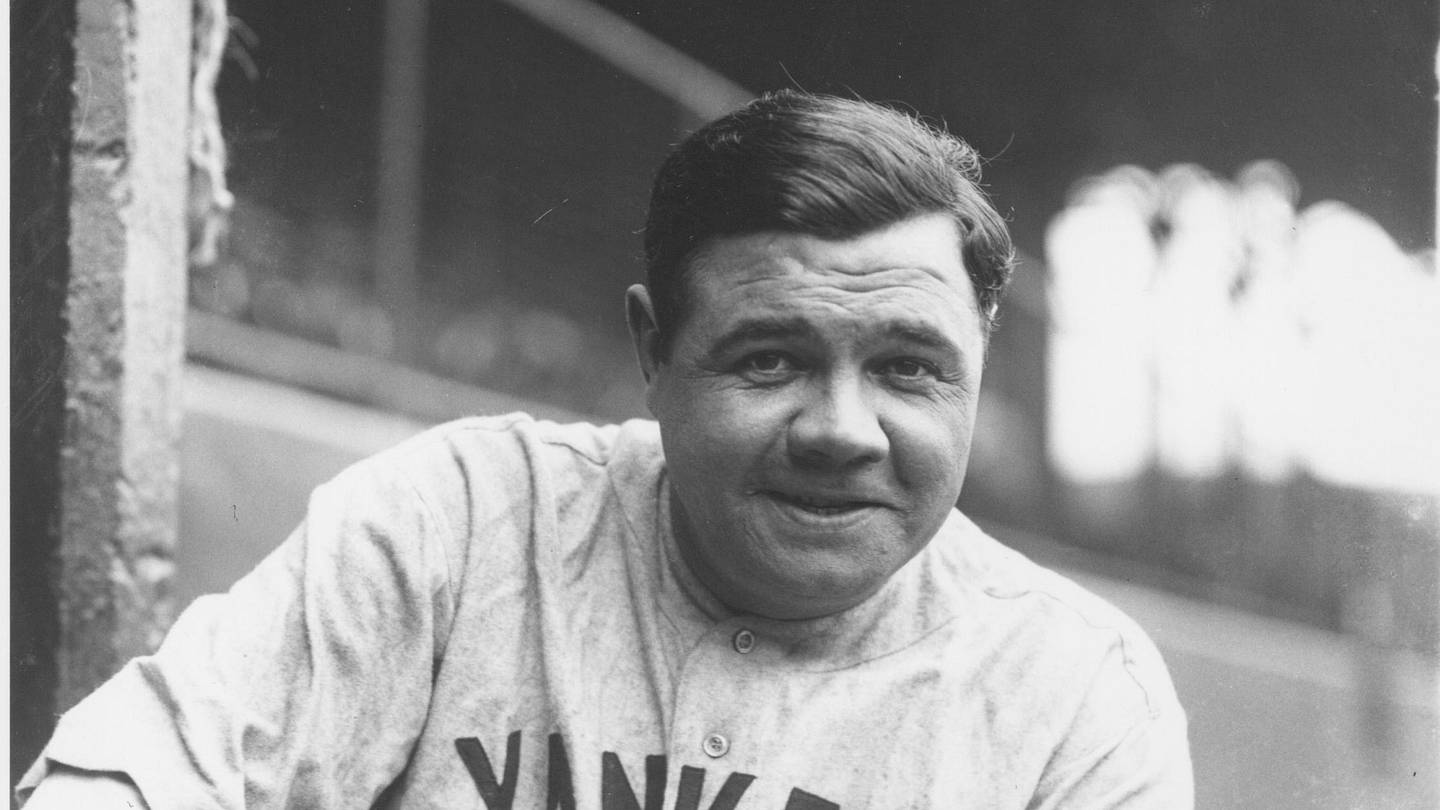
Babe Ruth was not just a baseball player. He was a walking headline, a home-run machine, a larger-than-life celebrity, and, somehow, a man who made pinstripes feel like royal robes. Born George Herman Ruth Jr. in Baltimore in 1895, he became one of the most famous athletes in American history and helped turn baseball from a low-scoring, strategy-heavy game into a spectacle built around power, personality, and the delicious possibility that the next pitch might disappear into the bleachers.
Even people who have never kept a scorecard know the name Babe Ruth. They may know him as “The Bambino,” “The Sultan of Swat,” or the guy connected to the famous “Curse of the Bambino.” But Ruth’s story is much richer than one nickname or one towering home run. He was a dominant left-handed pitcher before he became the most feared hitter in baseball. He rewrote record books, changed the business of sports, became an early celebrity brand, and left behind stories that still sound almost too dramatic to be real.
Here are 11 fascinating facts about Babe Ruth, explained with context, examples, and a little dugout dust for flavor.
1. Babe Ruth’s Real Name Was George Herman Ruth Jr.
Before the world knew him as Babe Ruth, he was George Herman Ruth Jr., born on February 6, 1895, in Baltimore, Maryland. The nickname “Babe” reportedly began during his early professional days with the minor league Baltimore Orioles. Because he was young and under the guidance of team owner and manager Jack Dunn, teammates called him “Dunn’s baby,” which eventually became “Babe.”
The nickname stuck so perfectly that “George Ruth” now sounds almost like someone describing Babe Ruth in disguise. His other nicknames arrived later, after his fame exploded: “The Bambino,” “The Sultan of Swat,” and “The Great Bambino.” They were theatrical, slightly ridiculous, and absolutely appropriate for a player whose swing could make a stadium sound like a thunderstorm.
2. He Spent Part of His Childhood at St. Mary’s Industrial School
Ruth’s early life was not polished or easy. At age seven, he was sent to St. Mary’s Industrial School for Boys in Baltimore, a Catholic-run reform school and orphanage-style institution. It was there that he learned discipline, structure, and baseball. Brother Matthias Boutlier, a large and athletic mentor at the school, became one of the most important figures in Ruth’s life.
Brother Matthias helped Ruth develop both his baseball skills and his confidence. Ruth later credited him with teaching him how to play the game. In a strange twist of history, one of baseball’s wildest personalities was shaped in a highly disciplined environment. The result was a player who could be rebellious off the field but remarkably focused when the ball was in play.
3. Babe Ruth Began His MLB Career as a Pitcher
Many casual fans remember Ruth only as a home-run hitter, but he began his Major League Baseball career as a star left-handed pitcher for the Boston Red Sox. He made his big-league debut in 1914 and quickly proved he was more than a curiosity. Ruth could pitch with power, poise, and competitive fire.
In 1916, he won 23 games and posted a league-leading earned run average. He was also outstanding in the World Series, where he delivered clutch performances from the mound. Before he became the face of the home run, Ruth was one of the best pitchers in the American League. In modern terms, imagine a player being part Clayton Kershaw and part Aaron Judge. That sounds like a video game cheat code, but Ruth actually lived it.
4. His World Series Pitching Record Was One of His Proudest Achievements
Babe Ruth loved hitting home runs, but he reportedly took special pride in his World Series pitching success. During his Red Sox years, he pitched brilliantly on baseball’s biggest stage. He once held a record for consecutive scoreless innings in World Series play, a mark that stood for decades.
This matters because Ruth’s greatness was not one-dimensional. He was not merely a slugger who happened to pitch a little. He was a legitimate ace before his bat became too valuable to leave in the lineup only once every few days. His pitching success also makes his career one of the most unusual in sports history. Baseball has had great pitchers and great hitters, but very few players have dominated both sides of the game at Ruth’s level.
5. The Red Sox Sold Him to the Yankees After the 1919 Season
One of the most famous transactions in sports history happened when the Boston Red Sox sold Babe Ruth to the New York Yankees after the 1919 season. Red Sox owner Harry Frazee made the deal, and Boston fans spent the next several generations wondering whether someone had misplaced the receipt.
The sale became tied to the “Curse of the Bambino,” a popular explanation for the Red Sox’s long championship drought after Ruth left. Boston had won World Series titles with Ruth, but after the deal, the team did not win another World Series until 2004. Of course, baseball history is more complicated than one transaction, but the symbolism was irresistible: Boston sold a legend, and New York built an empire.
6. Ruth Helped Turn the Yankees Into a Baseball Dynasty
Before Babe Ruth joined the Yankees, they were not the towering franchise we think of today. Ruth’s arrival changed everything. His power hitting attracted huge crowds, generated national attention, and helped the Yankees become the most famous team in baseball.
With Ruth, the Yankees won multiple American League pennants and World Series titles. He gave the team an identity: bold, powerful, glamorous, and slightly intimidating. Yankee Stadium, which opened in 1923, was quickly nicknamed “The House That Ruth Built” because his drawing power helped justify the team’s move into its own grand ballpark. That nickname remains one of the greatest compliments ever given to an athlete’s box-office appeal.
7. He Hit 60 Home Runs in 1927
In 1927, Babe Ruth hit 60 home runs, setting a single-season record that became one of the most iconic numbers in American sports. The achievement was especially stunning because teams played fewer games than they do today, and home-run hitting was still evolving from novelty to central strategy.
Ruth’s 1927 season came as part of the legendary Yankees lineup known as “Murderers’ Row,” which also featured Lou Gehrig. While Gehrig was brilliant in his own right, Ruth’s 60 home runs became the headline number. It stood as the major league record until Roger Maris hit 61 in 1961. For more than three decades, 60 was not just a statistic. It was a monument.
8. Babe Ruth Finished His Career With 714 Home Runs
Ruth ended his career with 714 home runs, a total that remained the most in Major League Baseball history until Hank Aaron surpassed it in 1974. That number still carries enormous weight because Ruth reached it during an era when training, travel, equipment, and medical care were nothing like today’s standards.
His career statistics remain jaw-dropping: a .342 batting average, an extraordinary slugging percentage, and more than 2,200 runs batted in. Ruth was not simply a big swinger who occasionally connected. He was a complete offensive force who hit for average, got on base, drove in runs, and changed how pitchers approached an entire lineup.
9. He Helped Launch Baseball’s Live-Ball Era
Before Ruth, baseball was often dominated by pitching, bunts, stolen bases, and small-ball tactics. Home runs existed, but they were not the engine of the sport. Ruth changed that. His uppercut swing, towering drives, and fearless approach helped usher in the live-ball era, when power became one of baseball’s defining attractions.
Fans loved the drama. A stolen base is exciting, but a ball flying over the fence has a way of making people leap out of their seats before they fully understand what happened. Ruth’s home runs gave baseball a new kind of entertainment value. He made the long ball fashionable, profitable, and central to the sport’s imagination.
10. The “Called Shot” Is Still One of Baseball’s Great Mysteries
During the 1932 World Series against the Chicago Cubs, Ruth supposedly pointed toward center field before hitting a home run at Wrigley Field. This moment became known as the “called shot.” Did he really call his home run? Was he pointing at the Cubs dugout? Was he gesturing at the pitcher? Was he just being Babe Ruth, which is to say, creating maximum chaos with minimum effort?
The truth is still debated. What is certain is that Ruth hit the home run, and the legend grew until it became part of baseball mythology. The called shot survives because it captures the essence of Ruth’s public image: confident, dramatic, bold, and just believable enough to keep people arguing nearly a century later.
11. Babe Ruth Was One of America’s First Modern Sports Celebrities
Ruth became famous at the perfect historical moment. Newspapers, radio, photography, newsreels, and mass advertising were expanding rapidly. He was not just watched by fans in stadiums; he was followed by the entire country. His face appeared in advertisements, his name sold products, and his personality made sports feel like entertainment beyond the scoreboard.
He was charming, imperfect, generous, excessive, and unforgettable. Children adored him. Reporters followed him. Opposing pitchers feared him. Businesspeople understood his value. Ruth helped create the template for the modern superstar athlete: part competitor, part celebrity, part brand, and part national folk hero.
Why Babe Ruth Still Matters Today
Babe Ruth’s legacy lasts because he represents more than numbers. Yes, the statistics are spectacular, but his importance goes beyond record books. He changed how baseball was played, watched, marketed, and remembered. He made the home run the sport’s grandest gesture. He gave the Yankees their first true superstar identity. He helped baseball recover public excitement after difficult years. He made athletes into entertainers and entertainers into cultural symbols.
There is also something wonderfully human about Ruth’s story. He was not perfect. He lived loudly, made mistakes, enjoyed attention, and sometimes seemed allergic to moderation. Yet that humanity is part of why people remain fascinated by him. Ruth was not a statue pretending to be a person. He was a person who became a statue.
Experiences and Reflections Related to Babe Ruth’s Story
Learning about Babe Ruth can feel like opening an old wooden trunk in baseball’s attic. At first, you expect dusty statistics and black-and-white photographs. Then suddenly the whole thing comes alive: noisy ballparks, newspaper boys shouting headlines, fans in suits and hats, and a baseball sailing into the afternoon sky while everyone forgets how to breathe for two seconds.
One of the best experiences connected to Ruth’s story is realizing how different baseball was before he transformed it. Watching modern baseball, it is easy to assume home runs have always been the main attraction. But Ruth made power hitting feel like theater. He turned every at-bat into an event. Even when he struck out, people watched because something enormous might happen. That is a lesson beyond baseball: sometimes changing the game means doing something others think is too risky, too strange, or too dramatic.
Another meaningful part of Ruth’s legacy is the reminder that people can grow from difficult beginnings. Ruth’s childhood at St. Mary’s was not easy, but it gave him structure, mentorship, and a path. Brother Matthias did not simply teach him baseball; he helped him see what disciplined talent could become. Many great stories include a mentor who spots potential before the world does. Ruth’s story is a powerful example of how guidance at the right time can redirect a life.
For baseball fans, visiting places connected to Ruth can be surprisingly emotional. A trip to Yankee Stadium, the Babe Ruth Birthplace and Museum in Baltimore, or the Baseball Hall of Fame in Cooperstown is not only about memorabilia. It is about standing near the echoes of a person who helped shape American sports culture. Seeing an old bat, glove, jersey, or photograph can make history feel less like a chapter in a book and more like a conversation across generations.
Ruth’s career also offers a useful lesson about reinvention. He could have remained a great pitcher and still been remembered. Instead, his rare hitting ability pushed him into a new role, and that shift changed everything. Reinvention can be uncomfortable, especially when you are already good at something. But Ruth’s move from mound to outfield shows that the biggest version of your talent may not appear in the role where you started.
There is also a marketing lesson hidden in the pinstripes. Ruth understood, or at least naturally embodied, the power of personality. He was not blandly excellent. He was memorable. He smiled, waved, joked, swung big, missed big, and lived in a way that made people talk. Modern athletes, creators, and public figures still follow a version of that formula. Skill gets attention, but personality creates attachment.
Finally, Babe Ruth’s story is a reminder that legends survive because they are easy to retell. The called shot, the 60 home runs, the sale to the Yankees, the House That Ruth Builtthese are not just facts. They are scenes. They have conflict, drama, humor, mystery, and unforgettable imagery. That is why Ruth remains alive in American memory. His life gave baseball some of its best stories, and stories are what keep history from falling asleep.
Conclusion
Babe Ruth was a pitcher, slugger, showman, record-breaker, celebrity, and cultural force. He began as George Herman Ruth Jr. from Baltimore and became the most recognizable name in baseball history. From his early days at St. Mary’s to his dominance with the Red Sox, his legendary Yankees years, his 60-home-run season, and the mystery of the called shot, Ruth’s life reads like a sports movie that forgot to be modest.
The most important fact about Babe Ruth may be this: he changed what fans expected baseball to feel like. Before Ruth, a game could be won one careful step at a time. After Ruth, everyone waited for the sky to open and the ball to vanish. That is a rare kind of influence. Records can be broken, but changing the imagination of a sport is much harder. Babe Ruth did both.
Note: This article synthesizes established historical information from reputable baseball, history, statistics, museum, and encyclopedia sources. It is written in original language for web publication and does not include source links by request.