

The snack aisle is a weird place. One shelf screams protein!, another promises energy!, and somewhere in the middle a neon bag insists it will change your life with the power of “crunch.” Meanwhile, your gut would like to file a calmer request: more fiber, please.
If you want snacks that actually support digestive health, regularity, fullness, and a happier gut environment, high-fiber choices deserve VIP status. Fiber helps keep things moving, supports beneficial gut microbes, and can make a snack feel like a real bridge between meals instead of a 20-minute detour into Hungerville. The trick is choosing snacks that deliver meaningful fiber without turning your shopping cart into a rolling dessert tray.
This guide breaks down the best high-fiber snacks to buy for a healthy gut, plus what to look for on labels so you can shop smarter. Because “healthy snack” should mean more than a bag wearing earth-tone packaging and emotional manipulation.
Why High-Fiber Snacks Matter for Gut Health
Fiber is one of the most useful nutrients most people still do not get enough of. It comes from plant foods like beans, oats, fruit, vegetables, nuts, seeds, and whole grains. Some types of fiber help add bulk and support regular bowel movements. Others help slow digestion and can support steadier blood sugar and better fullness after eating. And some fibers are fermented by gut microbes, which is a fancy way of saying your gut bacteria enjoy a solid plant-based meal too.
That does not mean every snack needs to taste like cardboard with a wellness podcast. It just means the best snacks for gut health usually have one thing in common: they are built from real plant foods, not just marketing adjectives.
How to Shop for a Gut-Friendly High-Fiber Snack
Use these five simple rules
- Aim for at least 3 grams of fiber per serving. That is a practical baseline for a snack worth your grocery money.
- Five grams or more is even better. That puts a snack in more serious fiber territory.
- Check added sugar. A high-fiber snack should not moonlight as candy.
- Look at the ingredient list. Oats, chickpeas, beans, seeds, nuts, fruit, and whole grains should appear before mystery powders with superhero names.
- Go slowly if your gut is sensitive. Jumping from very little fiber to “I now eat half a farm a day” can backfire. Increase gradually and drink enough water.
Also, if you have IBS or a very sensitive stomach, remember that “healthy” and “well tolerated” are not always twins. Some bars and cereals with added inulin or chicory root fiber can be helpful for some people and a social disaster for others.
15 High-Fiber Snacks to Buy for a Healthy Gut
1. Roasted Chickpeas
Roasted chickpeas are one of the easiest gut-friendly snacks to buy because they check several boxes at once: fiber, crunch, and actual staying power. They are made from legumes, which are naturally rich in fiber, and they feel much more substantial than airy chips that vanish emotionally and nutritionally in three handfuls. Choose versions with simple ingredients and moderate sodium. They are especially great when you want a savory snack that does not leave you hunting for a second snack ten minutes later.
2. Air-Popped or Lightly Seasoned Popcorn
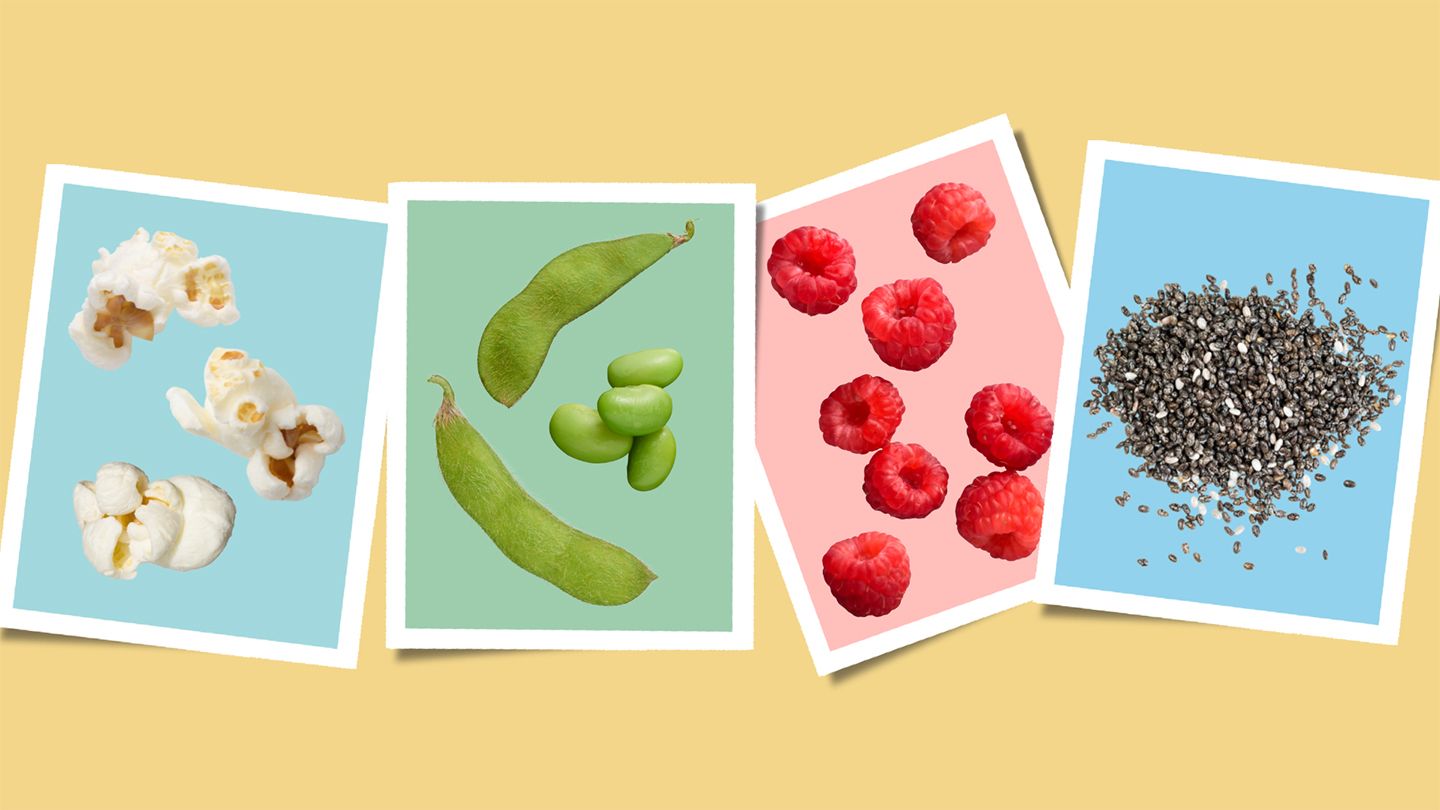
Popcorn is the overachiever of the snack world. It is a whole grain, naturally offers fiber, and can be a smart pick when it is not drenched in butter-flavored drama. Look for plain, air-popped, or lightly seasoned versions with reasonable sodium. It gives you volume and crunch, which makes it satisfying for people who like to snack with commitment. It is one of the easiest grocery-store upgrades if you usually reach for crackers or chips by default.
3. Whole-Grain Crackers with Hummus Cups
This combo works because it layers fiber from whole grains with fiber from chickpeas. Whole-grain crackers on their own can be fine, but paired with hummus they become a far better snack for fullness and gut support. Look for crackers that list a whole grain first and hummus cups with simple ingredients. This is a desk-drawer hero, a lunchbox MVP, and a solid answer to the age-old question: “What can I eat that is not candy and also not sadness?”
4. High-Fiber Breakfast Cereal You Can Eat Dry
Dry cereal as a snack does not get enough credit. A good high-fiber cereal can be portable, crunchy, and surprisingly useful when you need a quick bite. Look for cereals made with oats, bran, or other whole grains, and compare labels for fiber and added sugar. Some cereals are basically dessert in grain cosplay, so do not assume every box with leaves on it is your friend. Pick one that brings real fiber to the table and keep a portion in a container for easy snacking.
5. Chia Pudding Cups
Chia seeds are tiny, but they do not believe in small ambitions. Chia pudding cups can be a smart store-bought snack because chia seeds naturally provide fiber and absorb liquid into a pudding-like texture. They can feel more substantial than yogurt alone and often work well for people who want a spoonable snack that is not just sweet fluff. Choose versions without lots of added sugar, or buy plain chia seeds and ready-to-drink milk alternatives to make your own easy version at home.
6. Trail Mix with Nuts, Seeds, and Unsweetened Dried Fruit
A good trail mix can be a portable fiber win. Nuts and seeds bring fiber and healthy fats, while unsweetened dried fruit adds chewiness and extra plant goodness. The catch is that some trail mixes are mostly candy in hiking boots. Look for blends built around almonds, walnuts, pumpkin seeds, sunflower seeds, raisins, apricots, or dried cherries without a lot of chocolate coatings and sugary extras. A small portion goes a long way, which is convenient for both your stomach and your budget.
7. Apples with Nut Butter Packs
Sometimes the best snack is not a “snack food” at all. Buying apples and pairing them with single-serve peanut or almond butter packs is one of the easiest ways to get fiber from whole food with almost zero effort. Apples bring fiber and crunch, while nut butter adds richness and makes the snack more filling. It travels well, requires no culinary degree, and feels like a real human choice instead of a desperate vending-machine negotiation.
8. Pears
Pears deserve more applause in the fiber conversation. They are sweet, portable, and naturally high in fiber, especially when you eat the skin. If your usual fruit purchase is bananas plus good intentions, add pears to the rotation. They work beautifully as a stand-alone snack or sliced with cheese, nuts, or yogurt. For people trying to improve gut health without buying a dozen specialty products, pears are proof that simple grocery choices can do real work.
9. Edamame Snack Packs
Edamame is one of the best refrigerated or frozen snacks to buy if you want something fiber-rich that also feels hearty. Because soybeans are legumes, they bring fiber along with protein, which makes them especially useful for the long stretch between lunch and dinner. Look for lightly salted versions or plain shelled edamame that you can portion out yourself. Sprinkle with a little sea salt or chili flakes, and suddenly your snack has range.
10. Bean Dip or Black Bean Salsa with Veggie Packs
Bean-based dips are a smart upgrade from creamy dips that taste good but bring almost no fiber to the party. Black bean dip, white bean dip, or bean-forward salsa can help you snack on legumes without committing to an entire bowl of chili at 3 p.m. Pair them with baby carrots, cucumber rounds, bell pepper strips, or snap peas. It is colorful, crunchy, and much kinder to your gut goals than a cheese-only situation pretending to be balance.
11. Instant Oatmeal Cups with Low Added Sugar
Oats are a great choice for people who want a gentle, gut-friendly source of fiber. Keep an eye out for oatmeal cups made with whole oats and reasonable sweetness. Many are marketed as breakfast, but they make an excellent afternoon snack, especially on colder days when a crunchy snack feels emotionally inadequate. Add nuts, berries, or chia seeds if you want to boost the fiber even more. Think of it as comfort food with actual credentials.
12. Seed Crackers or Flax Crackers
Seed-based crackers can be a fantastic option if you want something crisp and savory with more fiber than standard crackers. Flax, chia, sesame, and sunflower seeds all help raise the nutrition profile. Pair them with hummus, avocado mash, or tuna salad if you want a more filling snack. Just read the label carefully, because some “artisan” crackers are mostly refined starch dressed up in expensive packaging and confidence.
13. Berry-and-Yogurt Snack Packs
Berries are one of the easiest fruits to recommend for fiber, and when paired with plain or lightly sweetened yogurt they make a convenient snack that feels balanced and fresh. The fiber comes mostly from the berries, while the yogurt adds creaminess and protein. Buy pre-portioned berry packs or frozen berries for convenience. This is a great snack for people who want something cool and sweet without drifting into dessert mode before dinner.
14. Prune Packs or Dried Figs
Dried fruit can be a very practical high-fiber snack, especially when you choose varieties without added sugar. Prunes have a strong reputation for supporting regularity, and dried figs are also naturally fiber-rich and easy to carry. The key is portion size. Dried fruit is concentrated, so a little goes a long way. Think of it as a smart supporting actor, not the entire cast. Pair with nuts for a more balanced and satisfying snack.
15. Fiber-Forward Snack Bars
Yes, some snack bars can absolutely earn a spot on this list. The best ones combine real ingredients like oats, nuts, seeds, or dates with meaningful fiber and modest added sugar. The less-great ones are basically cookie bars with a wellness rebrand. Compare labels carefully. A genuinely helpful bar can be a lifesaver for commuting, travel, or chaotic days. Just be cautious with bars packed with added fibers like inulin or chicory root if your stomach tends to protest loudly.
Common Mistakes People Make When Buying High-Fiber Snacks
Thinking “multigrain” means “whole grain”
It does not. Multigrain can simply mean more than one type of grain, including refined grains. Check the ingredient list for whole oats, whole wheat, brown rice, or other whole grains near the top.
Ignoring added sugar
Some bars, granolas, and dried fruit snacks offer decent fiber but come with enough added sugar to make your snack feel like dessert in a trench coat. Fiber is great, but it should not have to rescue a sugar overload all by itself.
Overdoing fiber overnight
If you go from low-fiber snacking to giant bowls of bran cereal, bean chips, and three prune packs in one day, your gut may stage a protest. Add fiber gradually and drink water consistently. Your digestive system likes progress, not panic.
How to Build a Better Snack Routine
The smartest high-fiber snack routine is not about chasing one magic food. It is about variety. Rotate legumes, fruit, whole grains, nuts, seeds, and vegetables through the week. That gives you different types of fiber and keeps snacking from becoming boring. A good rule of thumb is to keep at least one crunchy option, one sweet option, and one filling option on hand. For example:
- Crunchy: popcorn, seed crackers, roasted chickpeas
- Sweet: pears, berries with yogurt, dried figs
- Filling: oatmeal cups, edamame, hummus with whole-grain crackers
When your kitchen is stocked this way, you are much less likely to end up stress-eating a sleeve of low-fiber crackers while calling it lunch-adjacent behavior.
Real-World Experiences With High-Fiber Snacks and Gut Health
What does it actually feel like to add more high-fiber snacks to your routine? For many people, the first difference is not glamorous. It is practical. You notice that you are less ravenous at 4 p.m. The usual crash does not hit as hard. You are not opening the pantry every 11 minutes like it owes you money. A snack with real fiber tends to stay with you longer, which changes the rhythm of the day in a surprisingly useful way.
Another common experience is that the “healthy snack” starts to feel more satisfying than the old standby snacks ever did. A bag of chips may deliver immediate crunch, but it often disappears without much staying power. Compare that with roasted chickpeas, popcorn, a pear with nut butter, or whole-grain crackers with hummus. Those snacks feel more grounded. They have texture, volume, and enough substance to make you feel like you actually ate something, not just had a brief encounter with salt.
That said, the transition is not always smooth on day one. Some people notice extra gas or bloating when they suddenly double their fiber intake, especially if they start with bars packed with added fibers or large portions of beans and dried fruit. This is where many people assume fiber is the problem, when really the problem is speed. The better experience usually comes from increasing fiber little by little and drinking enough water. In real life, that looks like swapping one daily snack first, not redesigning your entire pantry in a burst of nutritional ambition.
People also tend to discover that different high-fiber snacks feel different in the body. Oatmeal and chia pudding may feel gentle and steady. Popcorn feels light but satisfying. Edamame and hummus feel more filling, almost mini-meal territory. Dried fruit can be helpful, but some people do better with a smaller portion paired with nuts. In other words, gut-friendly snacking is personal. The best snack is not the one with the trendiest label. It is the one your body handles well and that you will actually keep buying.
There is also a mindset shift that happens when high-fiber snacks become normal. You start reading labels differently. Instead of being impressed by vague claims like “wholesome” or “natural,” you look at fiber grams, added sugar, sodium, and ingredients. You become harder to fool, which is honestly one of the healthiest grocery skills a person can develop. Suddenly a plain popcorn bag or a tub of hummus looks more appealing than a snack bar with seven syrups and a philosophical backstory.
Over time, people often report that the biggest win is consistency. Better snack choices do not usually transform your life by Tuesday. But they can make digestion feel more predictable, meals feel easier to manage, and energy feel steadier across the week. That is the quiet power of a high-fiber routine. It is not flashy. It is not dramatic. It is just the kind of habit that makes your gut, your grocery cart, and your future self a little less chaotic.
Conclusion
The best high-fiber snacks to buy for a healthy gut are not necessarily the trendiest or most expensive ones. They are the snacks made from real plant foods that help you build fiber naturally and consistently: roasted chickpeas, popcorn, whole-grain crackers, hummus, oats, berries, pears, edamame, nuts, seeds, and well-chosen bars. If you focus on fiber, keep added sugar in check, and choose snacks your body actually tolerates, your gut will probably thank you in the least dramatic but most meaningful way possible: by doing its job better.
Start with one or two swaps this week. Your digestive system does not need perfection. It just needs fewer fake-health snacks and more real-fiber ones.