

Note: This article is for educational purposes only. Electrical work can be dangerous, so always follow local codes and hire a licensed electrician for installation, troubleshooting, or repairs.
Electricity is one of those everyday miracles we barely notice until the lights go out, the breaker trips, or the toaster decides to become a tiny drama queen. Most of us use electrical devices all day long, but the language behind them can feel like a secret handshake between electricians, engineers, and that one neighbor who owns seven multimeters.
The good news? You do not need an electrical engineering degree to understand the basics. Learning a handful of basic electrical terms can help you read appliance labels, understand your utility bill, communicate better with an electrician, and make safer decisions around your home. It can also save you from saying things like, “I think the electrical juice pipe is angry,” which, while creative, will not help much at the hardware store.
This guide breaks down 18 basic electrical terms you should know in plain American English. We will cover voltage, current, resistance, watts, circuits, grounding, GFCI outlets, breakers, and more. Each term includes simple examples so the ideas stick, not zap your brain.
Why Basic Electrical Terms Matter
Understanding common electrical vocabulary is not just for professionals. Homeowners, renters, DIY fans, students, and curious humans all benefit from knowing the difference between a watt and an amp, or a breaker and a fuse. These terms show up on light bulbs, power strips, appliance labels, utility bills, electrical panels, and safety instructions.
Electrical knowledge also supports safety. Electricity can cause shock, burns, fires, and equipment damage when handled incorrectly. Knowing the meaning of terms like ground fault, short circuit, and overload helps you recognize when something is normal, when something is suspicious, and when it is time to stop touching things and call a professional.
18 Basic Electrical Terms You Should Know
1. Electricity
Electricity is the movement or presence of electrical charge. In daily life, we usually talk about electricity as the energy that powers lights, refrigerators, phones, computers, fans, and practically every gadget that makes modern life feel less like camping.
Electricity can appear in different forms. Static electricity makes your hair stand up after rubbing a balloon. Household electricity flows through wires to power outlets and appliances. Lightning is electricity doing its dramatic sky performance.
In simple terms, electricity is what happens when charged particles, often electrons, move through a material or create an electric effect. Your home electrical system is designed to move that energy safely from the utility grid to the devices you use.
2. Circuit
A circuit is a complete path that electricity follows. For electricity to do useful work, it needs a route to travel from a power source, through a device, and back again. Think of it like a racetrack for electrons, except the cars are invisible and nobody is selling nachos.
A simple circuit may include a battery, a wire, a switch, and a light bulb. When the switch is closed, the path is complete and the bulb turns on. When the switch is open, the path is broken and the bulb turns off.
In a home, circuits begin at the electrical panel and travel through wires to outlets, lights, and appliances. Each circuit is typically protected by a circuit breaker or fuse to reduce the risk of overheating and fire.
3. Voltage
Voltage is electrical pressure. It is the force that pushes electric charge through a circuit. Voltage is measured in volts, often shown as V.
A common comparison is water pressure in a pipe. Higher water pressure pushes water harder. Higher voltage pushes electrical current harder. In many U.S. homes, standard outlets provide about 120 volts, while large appliances such as dryers or ranges may use 240 volts.
Voltage by itself does not tell the whole safety story, but it matters a lot. Higher voltage can push more current through the body or equipment under the wrong conditions. That is why electrical panels, high-voltage equipment, and exposed wiring deserve serious respect.
4. Current
Current is the flow of electric charge through a circuit. Current is measured in amperes, commonly called amps and written as A.
If voltage is pressure, current is the amount of electrical flow. A tiny phone charger uses a relatively small amount of current. A space heater, air conditioner, or power tool may need much more current to operate.
Current is extremely important for safety. Electrical shock injuries are caused by current passing through the body. Even small amounts of current can be dangerous depending on the path, duration, and conditions. Wet skin, damaged cords, and faulty grounding can increase risk.
5. Ampere or Amp
An ampere, or amp, is the unit used to measure current. When you see a 15-amp or 20-amp circuit in a home, that number describes how much current the circuit is designed to carry before protection should kick in.
For example, many household branch circuits are rated at 15 or 20 amps. A large appliance may require a dedicated circuit with a higher amp rating. The amp rating helps determine what wires, breakers, outlets, and devices are appropriate for that circuit.
Here is the practical takeaway: never assume a circuit can safely handle “just one more thing.” Plugging too many high-current devices into one outlet or power strip can create an overload. The power strip may look calm, but inside it may be sweating like it just ran a marathon.
6. Resistance
Resistance is the opposition to the flow of electrical current. Resistance is measured in ohms, shown with the symbol Ω.
Materials with low resistance allow electricity to flow easily. Copper wire, for instance, is widely used in electrical wiring because it conducts electricity well. Materials with high resistance slow or limit current flow. Rubber, plastic, glass, and dry wood are examples of materials often used as insulators.
Resistance is not always bad. In a toaster, resistance in the heating element turns electrical energy into heat, giving you toast instead of cold bread sadness. In wiring, however, unwanted resistance can produce heat and waste energy. Loose connections, damaged wires, or corroded terminals may create dangerous resistance.
7. Ohm
An ohm is the unit of electrical resistance. If resistance describes how strongly a material or component resists current, ohms tell you how much resistance is present.
For beginners, it helps to remember that more ohms mean more opposition to current. Fewer ohms mean current can flow more easily. This matters when selecting electrical components, testing circuits, or diagnosing why something is not working correctly.
Electricians and technicians often use a multimeter to measure resistance. For homeowners, the important idea is simple: resistance affects current, heat, and performance. A poor connection can act like a tiny unwanted heater, and tiny unwanted heaters hidden in walls are not anyone’s idea of home improvement.
8. Ohm’s Law
Ohm’s Law explains the relationship between voltage, current, and resistance. The formula is:
Voltage = Current × Resistance
It is often written as V = I × R, where V means voltage, I means current, and R means resistance. The formula may look like something escaped from algebra class, but the concept is straightforward.
If voltage increases and resistance stays the same, current increases. If resistance increases and voltage stays the same, current decreases. Ohm’s Law helps explain why a damaged cord, wet conditions, or the wrong component can change how current behaves in a circuit.
For example, if a circuit has 120 volts and 10 ohms of resistance, the current would be 12 amps. That simple relationship is one of the foundations of electrical theory.
9. Power
Power is the rate at which electrical energy is used or produced. Electrical power is measured in watts. The formula is:
Power = Voltage × Current
That means a device using more voltage or more current generally uses more power. A small LED bulb may use 9 watts. A hair dryer may use 1,500 watts. A refrigerator, microwave, heater, or air conditioner can draw significant power depending on size and design.
Power helps you compare devices. A 100-watt bulb uses more power than a 10-watt bulb. A 1,500-watt space heater uses a lot more power than a phone charger. This is why high-wattage appliances should be used carefully and usually not stacked onto one cheap extension cord like electrical Jenga.
10. Watt
A watt is the unit of electrical power. When you look at a light bulb, appliance, power supply, or device label, the watt rating tells you how quickly it uses electrical energy.
Watts are especially useful for understanding energy consumption. If two lamps provide similar brightness but one uses fewer watts, the lower-watt lamp is more energy efficient. That is why LED bulbs became so popular: they can produce useful light with much lower wattage than old incandescent bulbs.
Watts also matter for safety. Power strips, extension cords, generators, and inverters have watt limits. Exceeding those limits can cause overheating, tripped breakers, damaged equipment, or fire hazards. The label is not decoration; it is the device politely begging you not to abuse it.
11. Kilowatt-Hour
A kilowatt-hour, abbreviated kWh, measures electrical energy used over time. One kilowatt-hour equals 1,000 watts used for one hour.
Your electric bill is usually based on kilowatt-hours. If a 1,000-watt device runs for one hour, it uses 1 kWh. If a 100-watt device runs for 10 hours, it also uses 1 kWh. This is why both power rating and usage time affect your bill.
Understanding kWh helps you estimate costs. A device with a high watt rating is not always expensive if you use it briefly. A lower-watt device can still add up if it runs all day. The refrigerator quietly working 24/7 may use more monthly energy than the microwave that only gets called in for leftover pizza duty.
12. Alternating Current
Alternating current, or AC, is electric current that repeatedly changes direction. Most household electricity in the United States is AC.
AC is used for power grids because it can be transmitted and transformed efficiently over long distances. The electricity delivered to most wall outlets is alternating current, which makes it the type of current used by many lights, appliances, and household systems.
When you plug in a vacuum cleaner, lamp, refrigerator, or television, you are usually using AC power. Some devices convert that AC power into DC internally because electronics such as laptops and phone chargers often need direct current to operate.
13. Direct Current
Direct current, or DC, flows in one direction. Batteries produce DC power, and many electronic devices use DC internally.
Your phone, laptop, flashlight, electric vehicle battery, and many solar power systems involve DC electricity. A phone charger plugs into an AC outlet, then converts that power into the DC power your phone battery needs.
The easiest way to remember the difference is this: AC changes direction; DC goes one way. AC is like a crowd doing the wave back and forth. DC is like a determined person walking straight toward the snack table.
14. Conductor
A conductor is a material that allows electricity to flow easily. Copper and aluminum are common electrical conductors because they have low resistance.
Wires are made from conductors so they can carry current from one part of a circuit to another. In household wiring, copper conductors are often covered with insulation to keep the current where it belongs.
Conductors are useful, but they must be handled safely. Metal tools, jewelry, ladders, and water can conduct electricity under certain conditions. That is why electricians use insulated tools, turn off power before work, and test circuits before touching wires.
15. Insulator
An insulator is a material that resists the flow of electricity. Plastic, rubber, glass, ceramic, and dry wood can act as insulators in many situations.
Insulation around wires helps prevent accidental contact, short circuits, and shock. The plastic coating on a cord is not just there to look tidy; it helps keep electricity from escaping into your hand, your pet, your table leg, or whatever else is nearby.
However, insulation can wear out, crack, melt, or become damaged. A cord with exposed wire should not be used. Taping it and whispering “good luck” is not a repair strategy. Replace damaged cords or have equipment professionally serviced.
16. Ground or Grounding
Grounding provides a safer path for electricity to follow if something goes wrong. A grounded electrical system helps direct fault current away from people and toward a path that can trip a breaker or activate another protective device.
Many modern outlets have three holes: two vertical slots and one round grounding hole. That round hole connects to the grounding system. Three-prong plugs are designed to use that grounding connection for safety.
Never remove the grounding pin from a plug to make it fit a two-slot outlet. That little round pin may not look heroic, but it plays an important safety role. If an older home lacks grounded outlets, a licensed electrician can evaluate safe upgrade options.
17. Circuit Breaker
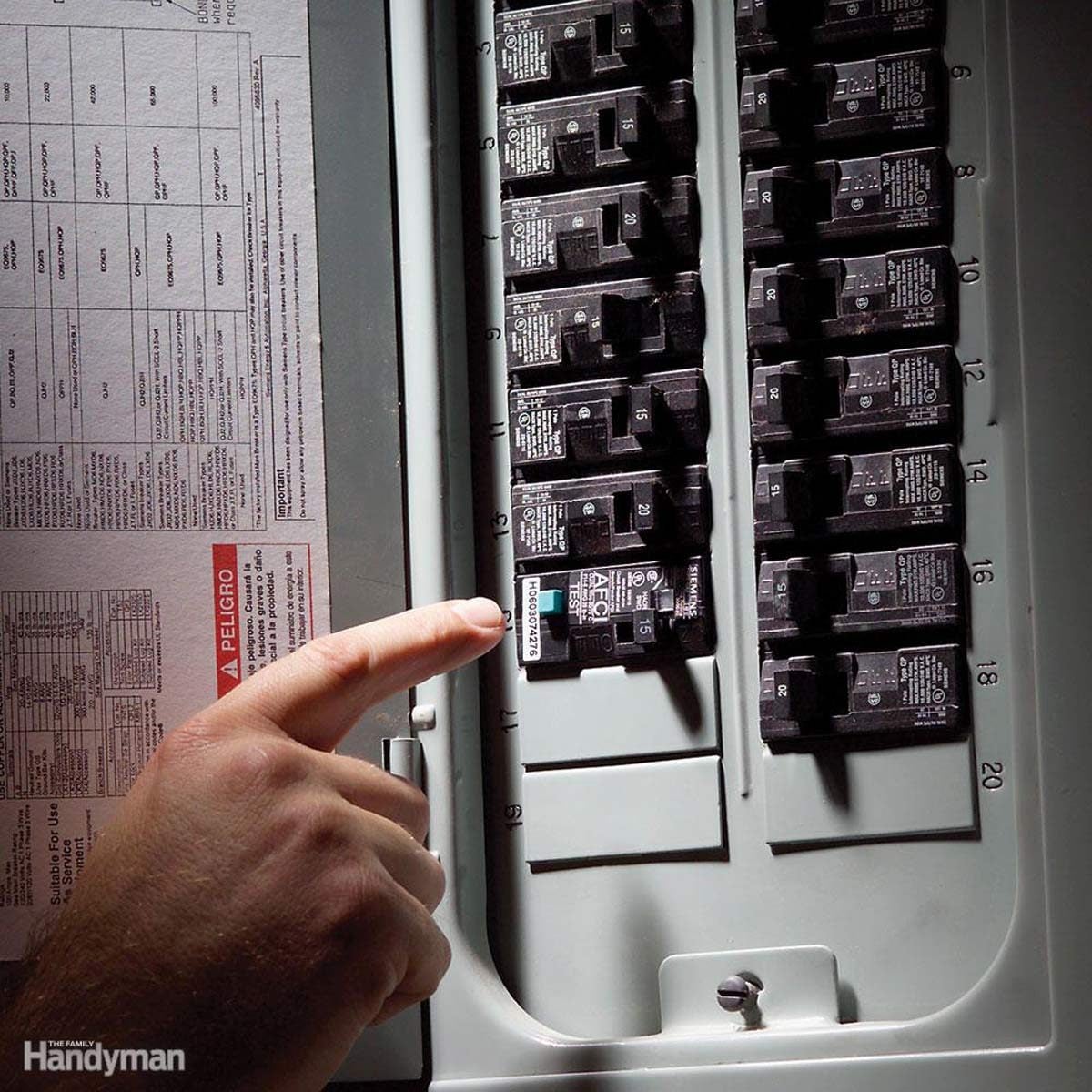
A circuit breaker is a protective device that automatically stops current flow when a circuit is overloaded or experiences certain faults. Breakers are located in the electrical panel, often called the breaker box.
If too many devices draw power from one circuit, the breaker may trip. This shuts off the circuit to help prevent overheating. Once the problem is corrected, the breaker can usually be reset.
A breaker that trips once may simply be telling you the toaster, microwave, and space heater should not all party on the same circuit. A breaker that trips repeatedly needs attention. Do not keep resetting it without finding the cause. That is like turning off a smoke alarm because it is “being negative.”
18. GFCI
GFCI stands for Ground-Fault Circuit Interrupter. A GFCI is a safety device designed to shut off power quickly when it detects current leaking from its intended path.
GFCI protection is commonly used in areas where water and electricity may be close together, such as bathrooms, kitchens, garages, laundry areas, basements, and outdoor outlets. You have probably seen outlets with “Test” and “Reset” buttons. Those are often GFCI receptacles.
A GFCI does not prevent every electrical hazard, but it can reduce the risk of severe shock in certain ground-fault situations. Test GFCI outlets regularly according to manufacturer instructions. If the device does not trip or reset correctly, have it replaced.
How These Electrical Terms Work Together
Electrical terms become easier when you see them as a connected system. Voltage pushes current through a circuit. Resistance controls how easily current flows. Power tells you how fast energy is being used. Watts measure power, while kilowatt-hours measure energy over time. Conductors carry electricity, insulators contain it, grounding helps protect people, and breakers or GFCIs respond when conditions become unsafe.
Imagine plugging in a 1,500-watt space heater. The outlet provides voltage, the heater draws current, the circuit carries that current through conductors, insulation keeps it contained, and the breaker watches for overloads. If there is a dangerous ground fault, GFCI protection may shut power off quickly. Your utility bill later records the energy used in kilowatt-hours. Electricity may be invisible, but the vocabulary helps you see the system working.
Common Electrical Mistakes Beginners Should Avoid
Overloading Outlets
One of the most common mistakes is plugging too many high-wattage devices into one outlet or power strip. Space heaters, hair dryers, microwaves, and air conditioners can draw substantial current. When too many heavy loads share one circuit, the circuit may overload.
Using Extension Cords as Permanent Wiring
Extension cords are for temporary use. They should not replace permanent wiring, run under rugs, pass through walls, or carry loads beyond their rating. Covered cords can trap heat, and damaged cords can create shock or fire hazards.
Ignoring Tripped Breakers
A breaker trips for a reason. Resetting it repeatedly without understanding the cause can be dangerous. If a breaker trips often, buzzes, feels hot, smells odd, or will not reset properly, stop using that circuit and call a licensed electrician.
Removing Ground Pins
Cutting off or removing a three-prong plug’s grounding pin defeats an important safety feature. Use properly grounded outlets and approved adapters only when allowed and appropriate. When in doubt, ask a professional.
Real-Life Experiences: What These Electrical Terms Teach You Around the House
The first time many people learn electrical terms is not from a textbook. It is from a small household mystery. Maybe the bathroom outlet stops working, the kitchen breaker trips during breakfast, or a lamp flickers like it is auditioning for a haunted house movie. Suddenly, words like circuit, GFCI, load, and breaker become very relevant.
A common experience happens in kitchens. Someone plugs in a toaster, starts the microwave, and turns on a coffee maker. Then everything shuts off. At first, it feels like the house has taken a personal stand against breakfast. But once you understand current, watts, and overloads, the situation makes sense. Each appliance draws power. Put too many high-wattage appliances on the same circuit, and the breaker trips to protect the wiring. The solution may be as simple as moving one appliance to another circuit, but if the issue continues, an electrician should inspect it.
Another memorable lesson often comes from GFCI outlets. A hair dryer suddenly stops working in the bathroom, but the breaker panel looks normal. After some confusion and possibly mild accusations against the hair dryer, someone notices the “Reset” button on the outlet. Pressing it restores power. That small button teaches a big idea: GFCIs are designed to shut power off quickly when they detect current going where it should not go. In wet areas, that protection matters.
Extension cords provide another practical education. Many people learn the hard way that not all cords are created equal. A thin indoor extension cord may work for a lamp, but it is not appropriate for a heavy-duty power tool or outdoor equipment. Terms like amp rating, wattage, insulation, and grounding suddenly become useful. The right cord depends on the load, the environment, and the cord’s rating. A cord that feels hot is not “working hard”; it is warning you.
Electrical labels also become less mysterious once you know the basics. A vacuum label might show 120V and 10A. Using the power formula, you can estimate that it draws about 1,200 watts. A small LED bulb might use only 9 watts. A window air conditioner may use much more. These numbers help you understand why some devices barely affect your electric bill while others make the meter spin like it has weekend plans.
Home improvement projects also reveal the importance of vocabulary. Suppose you want to replace a light fixture. Instructions may mention hot wire, neutral wire, ground wire, circuit breaker, and voltage tester. These are not decorative words. They describe safety-critical parts of the system. Even if you hire an electrician, knowing the terms helps you explain the problem: “The breaker trips when the outdoor outlet gets wet” is much more useful than “the backyard electricity is acting spicy.”
The biggest experience-based lesson is humility. Electricity is useful, powerful, and unforgiving. Understanding basic electrical terms does not make anyone a licensed electrician. It makes you a better homeowner, renter, shopper, student, and communicator. You can read labels, spot warning signs, ask smarter questions, and avoid obvious mistakes. That is valuable. The goal is not to become fearless around electricity. The goal is to become informed enough to respect it.
Conclusion
Learning these 18 basic electrical terms gives you a practical foundation for understanding how electricity works in everyday life. You now know that voltage pushes, current flows, resistance slows, watts measure power, and kilowatt-hours show energy use over time. You also know why circuits, conductors, insulators, grounding, circuit breakers, and GFCI devices matter for safety.
Electricity does not have to feel like a mysterious force hiding behind your outlets. With the right vocabulary, you can make better decisions, understand appliance ratings, manage energy use, and communicate clearly with professionals. Just remember: knowledge is powerful, but electricity is powerful too. Use both wisely.