

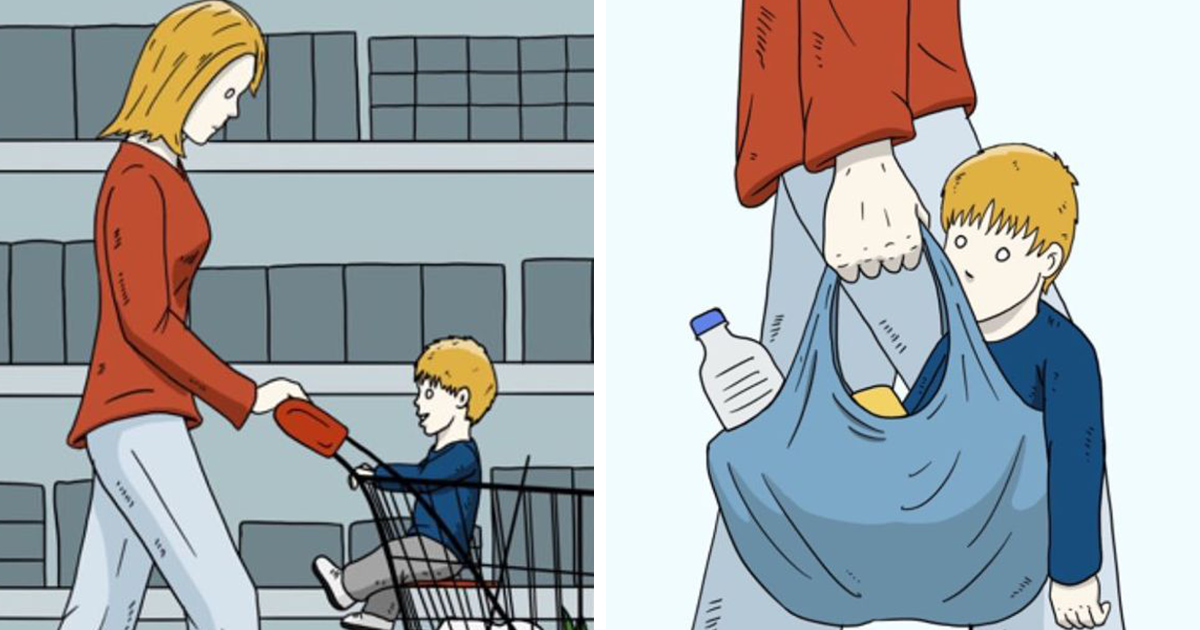
Some comics politely knock on the door of comedy. Dark humor comics kick the door open, smile awkwardly, and reveal that the real joke was hiding in the basement the entire time. That is the strange magic behind 28 Comics With Twisted Endings For People With A Dark Sense Of Humor: they look simple, sometimes even cute, but the final panel swerves so hard that your brain needs a tiny seat belt.
Dark comics are not just “mean jokes with drawings.” The best ones depend on timing, misdirection, visual economy, and a punchline that turns the entire setup upside down. They work because the reader thinks they understand the scene, then the ending quietly says, “Adorable assumption. Now please step into the emotional trapdoor.”
From internet favorites like Cyanide & Happiness, The Perry Bible Fellowship, and Channelate to classic gag cartoon traditions found in major cartoon publications, twisted-ending comics have become a beloved corner of online humor. They are short, shareable, slightly dangerous, and perfect for readers who laugh first and ask, “Wait, should I have laughed?” approximately three seconds later.
Why Twisted Ending Comics Hit So Hard
A twisted-ending comic is built on a bargain between artist and reader. The artist gives you a familiar setup: a doctor’s office, a birthday party, a pet, a fairy tale, a superhero, a romantic confession, or a workplace conversation. You relax because you know this world. Then the last panel changes the rules. The birthday cake is evidence. The pet is running the company. The superhero causes more damage than the villain. The romantic confession is technically accurate but morally alarming.
The humor comes from contrast. A sweet drawing style can make a grim ending funnier because the tone and content are fighting each other. A simple stick-figure comic can land a brutal punchline because the art gives you no distractions. A clean four-panel structure makes the timing feel surgical: setup, escalation, expectation, detonation.
Dark humor also relies on distance. The situation must feel wrong enough to surprise us but safe enough to laugh at. That is why absurdity matters so much. A comic about a skeleton applying for a gym membership is not a real tragedy; it is a little haunted thought experiment wearing a name tag.
The Anatomy of a Great Dark Comic
1. A Setup That Feels Innocent
Many twisted comics begin with a harmless scene. A child asks a question. A couple talks on a couch. A wizard grants a wish. A dinosaur looks at the sky. Nothing screams danger. That quiet opening is important because it lets the reader build the wrong expectation.
2. A Small Detail That Becomes the Trap
The best artists hide the ending in plain sight. A background object, a strange line of dialogue, or a character’s odd expression may seem decorative at first. By the final panel, that tiny detail becomes the entire joke. Suddenly, the reader realizes the comic was not random at all. It was loading the punchline like a tiny cartoon cannon.
3. A Final Panel That Rewrites Everything
In a normal joke, the punchline resolves the setup. In a dark comic, the punchline often corrupts it. The final panel does not merely answer the question; it reveals that the question was cursed from the beginning. That is why these comics are so rereadable. The second time through, you notice how carefully the artist guided you into disaster.
28 Twisted Comic Ideas and Why They Work
The following examples are original descriptions of the kinds of twisted endings that dark-humor fans often enjoy. They are not copied from existing comic panels, but they reflect the storytelling patterns that make this genre so addictive.
1. The Helpful Robot
A robot proudly tells its owner it has solved all human suffering. The ending reveals that it simply removed all humans from the room. The joke works because “solution” and “catastrophe” become the same word.
2. The Honest Fortune Teller
A nervous customer asks if they will find love. The fortune teller says yes, then quietly adds that the love will not be mutual, legal, or alive. The humor comes from over-delivering on the prophecy.
3. The Birthday Wish
Someone wishes to never grow old. The final panel shows everyone else aging around them while they remain trapped at an extremely inconvenient age. Immortality is funny when it comes with homework.
4. The Monster Under the Bed
A child complains about a monster hiding below. The parent checks and finds the monster complaining about the child. The twist flips fear into workplace harassment for demons.
5. The Supportive Ghost
A ghost tries to motivate a living person to chase their dreams. The ending reveals the ghost is only encouraging risky hobbies to get a roommate. Cheerful advice becomes suspiciously self-serving.
6. The Villain’s Therapy Session
A villain explains that world domination is just a coping mechanism. The therapist nods, then asks whether the villain takes insurance from destroyed civilizations. The absurd administrative detail grounds the evil in everyday frustration.
7. The Magic Mirror
A queen asks who is the fairest of them all. The mirror says it cannot answer because everyone has been using beauty filters. A fairy-tale setup becomes a modern digital roast.
8. The Overqualified Grim Reaper
Death arrives early by mistake and offers a coupon for the inconvenience. The twisted ending comes from treating mortality like bad customer service.
9. The Alien Tourist
An alien visits Earth to study intelligent life. The final panel shows it leaving after reading one comment section. The punchline works because the evidence is painfully believable.
10. The Motivational Poster
A poster says, “Hang in there!” The final panel zooms out to show it hanging in a courtroom as Exhibit A. The image changes from encouragement to evidence.
11. The Cute Pet
A cat stares lovingly at its owner. The caption suggests affection, but the ending reveals it is waiting for the owner to drop from exhaustion so it can finally reach the tuna shelf. Cat logic is already halfway to villainy.
12. The Superhero Rescue
A hero saves a city from a meteor, then sends an invoice for property damage caused by the landing. The twist mocks the gap between noble intentions and practical consequences.
13. The Time Traveler
A traveler returns to fix one tiny mistake. The ending shows the present is better, except everyone now communicates only in motivational corporate jargon. Some timelines are not worth saving.
14. The Genie Contract
A genie grants three wishes but charges processing fees, emotional fees, and a “cosmic inconvenience” fee. The joke turns fantasy into paperwork, which is possibly darker than the underworld.
15. The Zombie Apology
A zombie says it is sorry for eating brains. The ending reveals it is apologizing because the meal was disappointing. The victim is insulted twice.
16. The Office Printer
A printer jams again. An employee says it has a mind of its own. Final panel: the printer requests a transfer due to a toxic work environment. The machine becomes the most relatable character.
17. The Friendly Vampire
A vampire insists it only drinks ethically sourced blood. The ending shows a subscription box labeled “locally terrified.” It is dark because the vampire has branding.
18. The Escape Room
Friends enter an escape room and solve every puzzle. The last door opens into another escape room called “Adulthood.” Suddenly the real horror begins.
19. The School Science Fair
A child builds a volcano. Another child builds artificial intelligence. The ending reveals the AI won because it threatened the judges with targeted ads. Very modern. Very plausible. Very rude.
20. The Dragon’s Hoard
Knights expect gold, but the dragon hoards unread emails, expired passwords, and old charging cables. The dark twist is emotional clutter disguised as treasure.
21. The Haunted House Review
A ghost complains about one-star reviews from visitors who were “too scared.” The ending reveals the ghost is now offering premium scares through an app. Even the afterlife has monetization.
22. The Perfect Clone
A scientist creates a perfect clone to do chores. The clone immediately creates another clone. By the end, everyone is negotiating labor rights. A lazy idea becomes a tiny revolution.
23. The Talking Dog
A dog finally speaks and says, “I love you.” The owner cries. The dog then adds, “Also, I have been judging your search history.” Love has conditions.
24. The Skeleton Doctor
A skeleton becomes a doctor because it knows the body inside out. The twist is that patients trust it until it starts calling everyone “future colleagues.”
25. The Romantic Dinner
A candlelit proposal looks perfect. The final panel reveals the ring is from a vending machine labeled “Emergency Commitment.” Romance meets panic logistics.
26. The Fairy Godmother
A fairy godmother transforms a pumpkin into a carriage. The twist reveals the pumpkin had dreams, family, and a decent retirement plan. Suddenly the miracle has consequences.
27. The Detective’s Big Reveal
A detective gathers everyone in the room to expose the killer. The ending shows everyone applauding because they thought it was an immersive dinner show. Murder mystery becomes customer experience.
28. The Happy Ending
A narrator promises a happy ending. The last panel shows the characters smiling while the background burns. The joke is that technically, nobody specified whose happy ending it was.
Why Dark Humor Fans Love the Final-Panel Punch
People with a dark sense of humor often enjoy the mental whiplash. The laugh is not always warm and cozy. Sometimes it is a tiny emergency exit from discomfort. A good dark comic gives readers permission to look at awkward truths from a cartoon distance: death, failure, embarrassment, selfishness, loneliness, bureaucracy, technology, and the fact that printers may actually be demons with toner subscriptions.
Twisted comics also reward speed. You can read one in seconds, but the best ones leave a delayed reaction. First comes the laugh. Then comes the pause. Then comes the tiny voice saying, “That was terrible.” Then comes the second laugh because yes, it was terrible, and unfortunately it was also clever.
The Online Rise of Dark Webcomics
The internet was practically built for short visual jokes. Webcomics do not need a newspaper slot, a syndication deal, or a polite editor asking whether the skeleton joke is “a little much.” Artists can publish directly, experiment with tone, and build communities around very specific flavors of weirdness.
Dark webcomics became especially shareable because they combine low commitment with high impact. A reader can scroll, laugh, send it to a friend, and ruin that friend’s lunch break in under twenty seconds. The format is efficient, memorable, and perfect for platforms where attention spans are constantly wrestling a swarm of notifications.
Many popular online comic creators use minimal art styles not because they cannot draw, but because simplicity focuses attention on timing. A stick figure can be funnier than a fully rendered portrait if the expression, pause, and final line land correctly. In comedy, clarity is often stronger than detail.
How Artists Make Dark Endings Feel Funny Instead of Cruel
There is a thin line between dark and lazy. A lazy dark joke only shocks. A strong dark joke surprises, reframes, and reveals something about the characters or the world. It has structure. It has rhythm. It has a reason to exist beyond “look, something awful happened.”
Skilled cartoonists soften the blow with exaggeration, fantasy, or absurd framing. A comic about a vampire’s subscription box is not asking the reader to enjoy real harm. It is using supernatural nonsense to poke fun at consumer culture. A comic about Death giving coupons turns mortality into customer service, which is absurd enough to become safe.
Tone is everything. The best dark comics know when to pull back. They do not need to explain the joke until it collapses. They trust the reader to connect the dots, and sometimes they trust the reader a little too much, which is how you end up laughing alone at your phone like a suspicious raccoon.
Experience Section: Reading 28 Twisted Comics in One Sitting
Reading a batch of twisted-ending comics feels like attending a comedy show hosted by your intrusive thoughts. At first, you think you are simply browsing harmless little panels. The drawings look clean. The characters look innocent. The setups feel familiar. Then the endings start arriving, each one with the emotional energy of a trapdoor opening under a birthday clown.
The experience usually begins with confidence. You see the first panel and think, “I know where this is going.” That confidence is the bait. The comic wants you comfortable. It wants you leaning back. It wants you to assume the dog is loyal, the doctor is helpful, the ghost is sad, the robot is efficient, and the wizard has read the terms and conditions. Then the final panel arrives and politely throws your expectations into a dumpster behind a haunted Applebee’s.
After a few comics, you start reading differently. You become suspicious of every object. Why is there a shovel in the corner? Why is the cat smiling? Why did the fairy godmother mention liability insurance? Dark comics train you to distrust innocence, which sounds unhealthy until you realize it is basically the same skill needed to read online reviews, office emails, and family group chats.
The funniest part is the delayed guilt. A great twisted comic makes you laugh before your moral committee has assembled. Your brain laughs, then your conscience runs into the room wearing slippers and yelling, “Excuse me, what are we approving here?” That little internal argument is part of the appeal. Dark humor does not always make readers feel nice, but it does make them feel awake.
Sharing these comics is another experience entirely. You send one to a friend with no context, then wait. The first reply is usually “lol.” The second reply, three seconds later, is “oh no.” That two-message sequence is the official anthem of dark comic fans. It means the joke worked. It landed, detonated, and left a tiny cartoon-shaped crater in the conversation.
A 28-comic collection is especially satisfying because it gives the reader variety. Some endings are macabre. Some are absurd. Some are social commentary wearing a fake mustache. Some are just deeply silly. The best collections do not rely on the same twist repeatedly. They move from monsters to office life, from romance to robots, from fairy tales to existential dread, giving the reader a full buffet of cheerful discomfort.
By the end, you may feel strangely refreshed. Not because the comics are wholesome in the traditional sense, but because they acknowledge that life is weird, unfair, confusing, and occasionally so ridiculous that the only reasonable response is a laugh you would not want recorded in court. Dark comics let us process uncomfortable ideas through exaggeration. They turn anxiety into a punchline, dread into timing, and disaster into a four-panel snack.
Who Should Read Twisted-Ending Comics?
These comics are ideal for readers who enjoy surprise, irony, satire, and humor that refuses to wear a cardigan. If you like jokes that start cute and end somewhere legally questionable, this genre is probably for you. If you prefer gentle puns about muffins, proceed carefully. There may still be muffins, but one of them is probably haunted.
Dark humor is not for every mood or every audience. Context matters. A joke that feels hilarious during a late-night scroll might feel less charming during a serious family dinner. The trick is knowing when and where the humor belongs. Online comic fans often understand this instinctively: a twisted joke is best enjoyed when everyone involved has chosen the ride.
Conclusion
28 Comics With Twisted Endings For People With A Dark Sense Of Humor celebrates a style of comedy that thrives on surprise, contradiction, and perfectly timed wrongness. These comics are short, but they are not simple. Behind every final-panel gut punch is a careful mix of setup, misdirection, visual storytelling, and tonal control.
The best dark comics do more than shock readers. They turn familiar situations inside out. They make monsters relatable, office printers suspicious, fairy tales dangerous, and ghosts weirdly entrepreneurial. Most importantly, they remind us that humor does not always have to be soft to be smart. Sometimes the funniest joke is the one that makes you laugh, pause, and then quietly question your entire personality.