

Note: This article is written for web publication and synthesizes peer-reviewed research, university reports, animal welfare information, and reputable science coverage into original, publication-ready content.
Introduction: The “Mutant Dog” Story Is More Complicated Than It Sounds
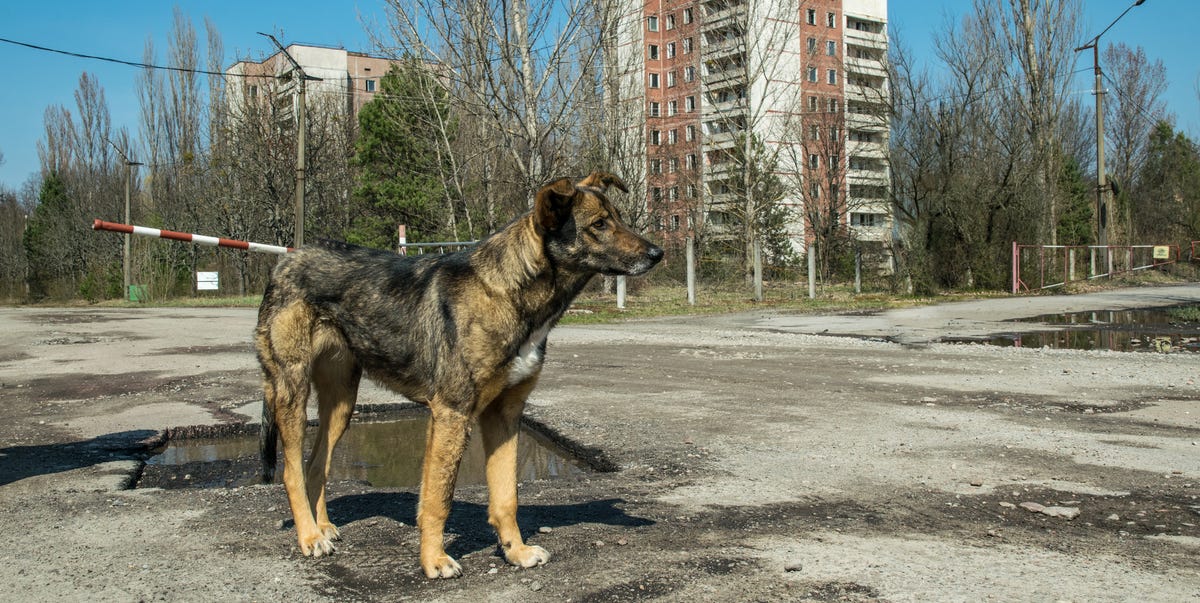
The dogs of Chernobyl have become internet royalty in the strangest possible way. They live in one of the most famous disaster zones on Earth, trot around abandoned buildings like post-apocalyptic tour guides, and somehow still manage to look like they would happily steal your sandwich. For years, people have wondered whether these dogs are mutating because of long-term exposure to radiation. It is an irresistible headline: radioactive ruins, mysterious animals, and science wearing a lab coat while saying, “Actually, it’s complicated.”
A recent study, however, suggests that the story may not be as simple as “radiation created mutant dogs.” Researchers studying free-breeding dogs in the Chornobyl Exclusion Zone found that some groups are genetically different from nearby dogs, but the newest analysis did not find evidence that increased mutation rates are driving those differences. In plain English: the dogs are unusual, but not necessarily because they are rapidly mutating from radiation like characters in a comic book.
This matters because the dogs of Chernobyl are more than a viral curiosity. They are living, breathing clues to how animals survive in contaminated environments. Their DNA may help scientists understand long-term exposure to radiation, heavy metals, toxic chemicals, harsh winters, limited food, isolation, and the ever-important question of whether a dog can adapt to almost anything as long as someone occasionally feeds it.
Who Are the Dogs of Chernobyl?
The Chernobyl nuclear disaster occurred in April 1986 at Reactor 4 of the Chernobyl Nuclear Power Plant in what is now Ukraine. After the explosion and fire released radioactive material into the environment, nearby communities were evacuated. Many residents had to leave quickly and were not allowed to bring their pets. Some of those abandoned animals survived, reproduced, and became the ancestors of today’s dogs living in and around the Chernobyl Exclusion Zone.
The Chornobyl Exclusion Zone was originally created as a restricted area around the disaster site. Over time, it became both a symbol of human error and an accidental wildlife refuge. With fewer people living there permanently, animals such as wolves, foxes, boars, birds, and stray dogs moved through the landscape. The scene sounds like nature taking back the world, but it is not a fairy tale. The environment still contains hazards, and the dogs face hunger, disease risks, cold weather, predators, and exposure to contaminated soil and structures.
Animal welfare groups, including the Dogs of Chernobyl program associated with Clean Futures Fund, have provided food, veterinary care, vaccination, and spay-neuter services for these animals. Their work has also made scientific research possible, because veterinary clinics can collect samples ethically while treating the dogs. In other words, the dogs get care, and science gets data. That is a better deal than most reality TV contracts.
Why Scientists Thought the Dogs Might Be Genetically Different
Earlier genetic research found that dogs living close to the nuclear power plant were genetically distinct from dogs living in Chernobyl City, which is only about 10 miles away. That is a surprisingly small distance for such noticeable genetic separation. If two neighborhoods in the same city had dog populations that different, scientists would also raise an eyebrow, possibly both.
One major study examined hundreds of dogs from the region and showed that different dog groups in the zone had distinct genetic structures. Another study identified hundreds of genomic regions that differed between dogs near the power plant and dogs in Chernobyl City. Some of these regions were near genes associated with DNA repair, cell cycle regulation, and other biological processes that sound exactly like the kind of thing one would investigate in a contaminated environment.
That earlier work did not prove radiation had caused mutations. It showed that the dogs were genetically different and that some differences might be connected to environmental pressures. That is a key distinction. Genetics is not a gossip column; it does not let us jump straight from “different” to “radiation did it.” Scientists have to test possible explanations one by one.
What the New Study Claims
The newer study, published in PLOS ONE by researchers connected with North Carolina State University and Columbia University Mailman School of Public Health, took a deeper look at whether increased mutation rates could explain the genetic differences between the dogs near the nuclear power plant and those in Chernobyl City.
The researchers examined several possible signs of mutation. They looked at chromosomal structure, short tandem repeats, microsatellite diversity, and derived allelestechnical tools that help scientists detect whether one population appears to have accumulated more genetic changes than another. If radiation were causing a high rate of new mutations across generations, the power plant dogs might be expected to show stronger signals of mutation accumulation.
But that is not what the study found. The research did not detect evidence of increased mutation rates in the dogs living near the nuclear power plant compared with the dogs from Chernobyl City. The authors concluded that mutation does not appear to be the cause of the previously observed genetic differentiation between these two nearby populations.
That does not mean radiation is harmless. It does not mean Chernobyl is safe. It does not mean the dogs are genetically identical to dogs elsewhere. It means the most dramatic explanationradiation-driven mutation as the main cause of their genetic differencesdid not hold up under this specific analysis.
Mutation vs. Selection: The Science Plot Twist
To understand why this study matters, it helps to separate mutation from selection. Mutation is a change in DNA. Some mutations are harmless, some are harmful, and a few may be useful. Selection, on the other hand, is the process by which certain traits become more common because they help organisms survive and reproduce in a particular environment.
Imagine two groups of dogs living in different parts of the same harsh region. One group faces more industrial contamination, less food, colder shelter conditions, or different human contact. Over generations, dogs with traits that help them survive those local conditions may leave more offspring. The population can become genetically distinct even without a higher mutation rate. Nature does not always need a superhero origin story. Sometimes it just needs pressure, time, and a very stubborn dog.
The new study leaves open the possibility that selection, genetic drift, limited interbreeding, founder effects, inbreeding, or other environmental stressors could explain why the power plant dogs differ from the city dogs. The dogs near the nuclear plant may have become more isolated, producing less gene flow with other groups. Smaller, isolated populations can develop genetic differences simply because of who survives and reproduces.
Radiation Is Only One Part of the Chernobyl Environment
One of the most important points in the research is that Chernobyl is not just a radiation story. The disaster and its aftermath also involved heavy metals, fuel residues, abandoned industrial materials, pesticides, asbestos, and other pollutants. Cleanup and remediation work continued for years, adding layers of environmental complexity.
That matters because animals do not experience one hazard at a time. A dog living near the old power plant is not politely exposed to “radiation only” on Monday, “lead” on Tuesday, and “cold weather” on Wednesday. It experiences everything together: contaminated dust, limited nutrition, parasites, winter temperatures, disease risk, social competition, and human interaction. Biology is messy. Chernobyl biology is messier.
So when scientists see genetic differences, they must ask a careful question: are these differences caused by radiation, by other contaminants, by isolation, by selection, by random genetic drift, or by some combination of all of the above? The new study narrows the answer by saying increased mutation rate is unlikely to be the main driver. It does not slam the book shut. It simply turns the page.
Why the Dogs Are Valuable to Science
The dogs of Chernobyl are sometimes described as a sentinel population. A sentinel species can help scientists understand environmental risks that may also matter for humans. Dogs are especially useful because they live close to people, share some similar exposures, and have well-studied genetics. They are not tiny lab mice in controlled cages. They are real animals living in a complicated world, which makes them harder to study but potentially more informative.
For researchers, these dogs offer a rare opportunity to study multi-generational survival in a contaminated landscape. Many animals in Chernobyl are wild and hard to sample consistently. The dogs, however, often gather near workers, feeding stations, and veterinary clinics. This creates a practical bridge between animal care and scientific study.
The findings may eventually help scientists understand how chronic exposure affects mammals over time. That knowledge could be relevant not only to Chernobyl but also to other contaminated sites, industrial disaster zones, and communities affected by long-term pollution. The dogs are not just surviving in a famous location; they are helping researchers ask better questions about environmental health.
What About the Blue Dogs of Chernobyl?
In 2025, photos of dogs with blue-colored fur near Chernobyl spread online and caused a fresh wave of “mutant dog” speculation. The images looked bizarre enough to make social media do what social media does best: sprint directly past caution and into dramatic theories wearing roller skates.
Experts connected with the animal care work in the zone suggested a far less cinematic explanation. The blue coloring likely came from external contamination, such as contact with dye or chemicals, rather than a genetic mutation. Dogs roll in things. Terrible things. Things that make humans reconsider the entire concept of unconditional love. Blue fur may look like science fiction, but sometimes it is just dog behavior plus an unfortunate substance.
This episode is a useful reminder: not every strange-looking animal is evidence of mutation. Visual oddities can come from dirt, chemicals, illness, grooming, diet, injury, or simple contact with the environment. Real science moves slower than viral posts because it has to check whether the blue dog is genetically unusualor whether it just had a very questionable afternoon.
Common Misunderstandings About the Study
Misunderstanding 1: “The dogs are not different.”
They are different. Multiple studies have found genetic differentiation among dog populations in and around the Exclusion Zone. The newer claim is narrower: increased mutation rate does not appear to explain those differences.
Misunderstanding 2: “Radiation has no effect on animals.”
The study does not say that. Radiation remains a serious environmental hazard, and Chernobyl’s ecosystem has been shaped by radioactive contamination and other pollutants. The research simply did not find evidence that the power plant dogs have a higher mutation rate causing their genetic separation from nearby dogs.
Misunderstanding 3: “The dogs are evolving superpowers.”
No, they are not opening doors with telepathy. The dogs may show signs of adaptation or selection, but adaptation is not the same as becoming a superhero. More research is needed to understand which traits matter and why.
Misunderstanding 4: “One study proves the final answer.”
Science rarely works like a courtroom drama with one final hammer strike. This study adds strong evidence against one explanation, but it also points toward new questions about selection, isolation, contamination, and survival.
Why the Word “May” Is Doing Heavy Lifting
The headline says the dogs of Chernobyl may not be mutating after all, and that “may” deserves a little applause. It is small, but it is honest. The study does not declare that mutations never happened. All living populations have mutations. Every puppy is born with some new genetic variation. The real question is whether the dogs near the nuclear plant show an elevated mutation rate that explains their population-level genetic differences.
According to the study, the answer appears to be no. That is a significant conclusion because it pushes researchers away from the easiest popular explanation and toward more nuanced possibilities. Maybe these dogs are shaped by survival pressures. Maybe isolation and limited breeding between groups matter more than previously assumed. Maybe contaminants other than radiation are playing a role. Maybe the full answer is a scientific casserole, with several ingredients baked together until the kitchen gets confusing.
The Bigger Lesson: Nature Does Not Follow Our Headlines
The story of the Dogs of Chernobyl is powerful because it challenges expectations. Many people imagine the Exclusion Zone as a lifeless wasteland. Instead, it contains animals, plants, forests, ruins, scientists, workers, and hundreds of dogs doing dog things in a place humans still treat with extreme caution.
But the opposite mistake is also possible. Some people romanticize Chernobyl as proof that nature instantly heals everything once humans leave. That is too simple as well. Wildlife can return to dangerous places, but return does not equal safety. Survival does not equal health. A dog wagging its tail near an abandoned reactor is a symbol of resilience, yes, but also of abandonment, risk, and unfinished human responsibility.
The best reading of the new study is not “nothing happened.” It is “something happened, and we are learning how to describe it accurately.” That is less flashy than mutation myths, but much more useful.
What This Means for Future Research
Future studies will likely focus on whether natural selection is influencing specific genomic regions in these dogs. Researchers may also investigate health outcomes, fertility, immune function, lifespan, cancer risk, behavior, and exposure levels to different contaminants. The challenge is that Chernobyl is not a controlled laboratory. It is a real landscape affected by war, weather, wildlife, restricted access, and changing human activity.
Scientists also need long-term data. Genetic differences become more meaningful when paired with health records, environmental measurements, family histories, and repeated sampling over time. One snapshot can show that populations differ. A longer movie can help explain why.
The dogs themselves also need continued care. Research should never reduce them to walking DNA samples with paws. They are animals living difficult lives. Veterinary support, vaccination, sterilization, feeding programs, and humane monitoring remain essential. The most ethical science here is science that helps the animals while learning from them.
Experience Section: What This Story Feels Like Beyond the Lab
To understand why the Dogs of Chernobyl capture public attention, imagine standing near a quiet checkpoint on a gray morning. The air is cold. The buildings look tired, as if history leaned on them too heavily. Then a dog appears from behind a concrete barrier, tail moving carefully, eyes fixed on whether your hand contains food or betrayal. Suddenly the Exclusion Zone is not just a place on a map. It is alive, alert, hungry, and looking at you.
People who learn about these dogs often describe a strange emotional mix: curiosity, sadness, admiration, and guilt. The dogs are descendants of pets that people were forced to leave behind. That detail lands hard. It turns a nuclear disaster from an abstract event into a domestic tragedy. Someone once had a dog that slept by a stove, barked at strangers, chased a ball, or waited at a door. Then the evacuation came, and the door never opened again.
The modern dogs are not museum pieces, though. They are not frozen in 1986. They form packs, avoid threats, recognize workers, gather near food sources, and adapt to the rhythms of a restricted zone. Some may be shy. Some may be bold enough to approach humans. Some look like ordinary mixed-breed dogs you might see near a farm road or outside a repair shop. That ordinary appearance is part of what makes them so fascinating. They do not look like monsters from a radiation myth. They look like dogs.
For animal lovers, the experience of reading about them can be uncomfortable. It is easy to want a clean rescue story: bring them all out, give them baths, place them in homes, and let the credits roll. Reality is harder. Moving animals from a controlled radioactive zone involves safety questions, health screening, legal restrictions, disease prevention, and ethical concerns. Helping them means working carefully, not just emotionally. Compassion needs logistics, which is compassion’s less glamorous cousin but often the one that gets things done.
For science-minded readers, the story offers another experience: the pleasure of watching a dramatic assumption get tested. Popular imagination says radiation equals mutation equals strange animals. The new study says, “Hold on, let’s check.” That is science at its best. It does not ruin the mystery; it improves it. Instead of one cartoonish explanation, we get a richer puzzle involving genetics, selection, isolation, contamination, survival, and human history.
For writers, educators, and publishers, the lesson is equally valuable. The most clickable version of the story is not always the most accurate version. “Chernobyl dogs are mutating” is loud. “Chernobyl dogs are genetically distinct, but increased mutation may not explain it” is quieter, but it is smarter. And smart stories last longer than loud ones.
The Dogs of Chernobyl remind us that nature is resilient, but not magical. Science is cautious, but not boring. And dogs, even in one of the most studied disaster zones on Earth, remain wonderfully dog-like: surviving, sniffing, adapting, confusing researchers, and occasionally making humans rethink an entire theory because somebody rolled in something blue.
Conclusion: Not Mutant Monsters, but Scientific Messengers
The claim that the dogs of Chernobyl may not be mutating after all does not make their story less interesting. It makes it more honest. These dogs are genetically distinct, but current evidence suggests that increased radiation-driven mutation is unlikely to be the main reason why. Their differences may instead involve selection, isolation, genetic drift, environmental pressures, or a complex mixture of radiation and non-radiation hazards.
That conclusion is less dramatic than a mutant-dog headline, but it is far more valuable. The dogs of Chernobyl are not monsters. They are survivors, sentinels, and reminders that environmental disasters continue long after the world stops watching. Their DNA may help scientists understand how life responds to contamination across generations. Their daily lives remind the rest of us that behind every big disaster are small, breathing lives still waiting for care.