

People love a clean redemption story: one perfect conversation, one meaningful movie, onng credits. Real change is usually messier. It may begin with a friendship, a contradiction, a humiliating realization, or the slow discovery that an entire worldview was built on cherry-picked history and secondhand fear.
The experiences below explore 30 turning points repeatedly described by people who left racist beliefs, white nationalist circles, or other hate-based communities. Their paths were different, but the same themes appeared again and again: meaningful contact, patient challenges, personal consequences, better information, and the chance to build a new identity without hate.
Why Racist Beliefs Can Change
Large reviews of social-psychology research have found that positive contact between members of different groups generally reduces prejudice, especially when people meet as equals, cooperate, and share common goals. Research also suggests that perspective-taking conversations can produce durable attitude change, while exit studies emphasize family ties, stable work, emotional support, and relationships outside extremist networks. t does not mean a friendly lunch can magically dismantle racism. Negative contact can deepen prejudice, facts can bounce off identity-protective thinking, and polite inclusion without accountability can minimize the damage done. Effective change tends to join compassion with boundaries: the person is treated as capable of transformation, but the ideology is not treated as harmless. n>
30 Honest Turning Points That Helped People Leave Racism Behind
1. A Coworker Became a Real Friend
One common turning point was ordinary, repeated contact with a coworker from a group the person had stereotyped. Shared deadlines, bad vending-machine coffee, and mutual favors made the stereotype harder to maintain. The “enemy” became a specific human being with jokes, worries, skills, and a name.
2. Someone Challenged the Belief Without Performing a Public Execution
Public humiliation often pushed people deeper into defensive communities. A private conversation worked differently. A friend asked calm questions, refused racist claims, and left enough emotional space for reconsideration. The goal was not to win applause; it was to make the belief wobble.
3. College Broke the Information Bubble
For some former racists, college introduced unfamiliar histories, classmates, and arguments all at once. Their inherited beliefs had survived because everyone around them repeated the same assumptions. Exposure to stronger evidence did not change them overnight, but it made certainty increasingly expensive to maintain.
4. Weekly Meals Created Trust
The well-documented transformation of former white nationalist Adrianne Black illustrates the power of sustained relationships. Invitations to meals with Jewish classmates did not excuse the ideology. They created a setting where difficult questions, factual challenges, and genuine familiarity could accumulate over time. . A Child Asked an Uncomfortably Simple Question
Children have a talent for removing decorative language from ugly ideas. A parent who could repeat racist talking points among adults sometimes struggled to explain them to a child without sounding cruel. The question “Why?” exposed how little moral substance was hiding beneath the slogans.
6. Becoming a Parent Changed the Stakes
Some people began leaving when they imagined passing hatred to their children. Parenthood did not automatically create wisdom, but it introduced a new responsibility: What kind of emotional inheritance would the next generation receive? Suddenly, the ideology was not abstract. It was sitting at the dinner table.
7. The Group’s Hypocrisy Became Impossible to Ignore
Hate groups often advertise loyalty, honor, and brotherhood. Former members frequently describe discovering manipulation, abuse, infighting, or leaders who broke their own rules. The ideology promised heroic purpose but delivered petty power struggles. Even extremism, apparently, has office politics.
8. Violence Stopped Feeling Theoretical
A slur, meme, or conspiracy theory can feel distant until somebody gets hurt. Witnessing violence, fearing legal consequences, or recognizing that rhetoric was encouraging real attacks forced some people to confront the destination of their beliefs. The road signs had been visible; they finally looked ahead.
9. A Victim’s Story Made the Harm Personal
Statistics can be dismissed as propaganda. A detailed personal story is harder to flatten. Hearing how discrimination shaped someone’s safety, work, schooling, or family life helped some former racists understand that prejudice was not merely an opinion. It was a force acting on actual lives.
10. History Was Taught With Receipts
Serious study of slavery, segregation, discriminatory housing policy, immigration law, and racial violence challenged the claim that present inequality appeared from nowhere. Once history became a chain of documented choices rather than a collection of inspirational posters, “everyone started equal” no longer survived inspection.
11. Travel Made the World Larger
Travel disrupted caricatures for people whose beliefs had formed in racially isolated places. They met families, workers, students, and neighbors who did not resemble the threatening images they had consumed. The world became more complicated, which was inconvenient for prejudice and excellent for reality.
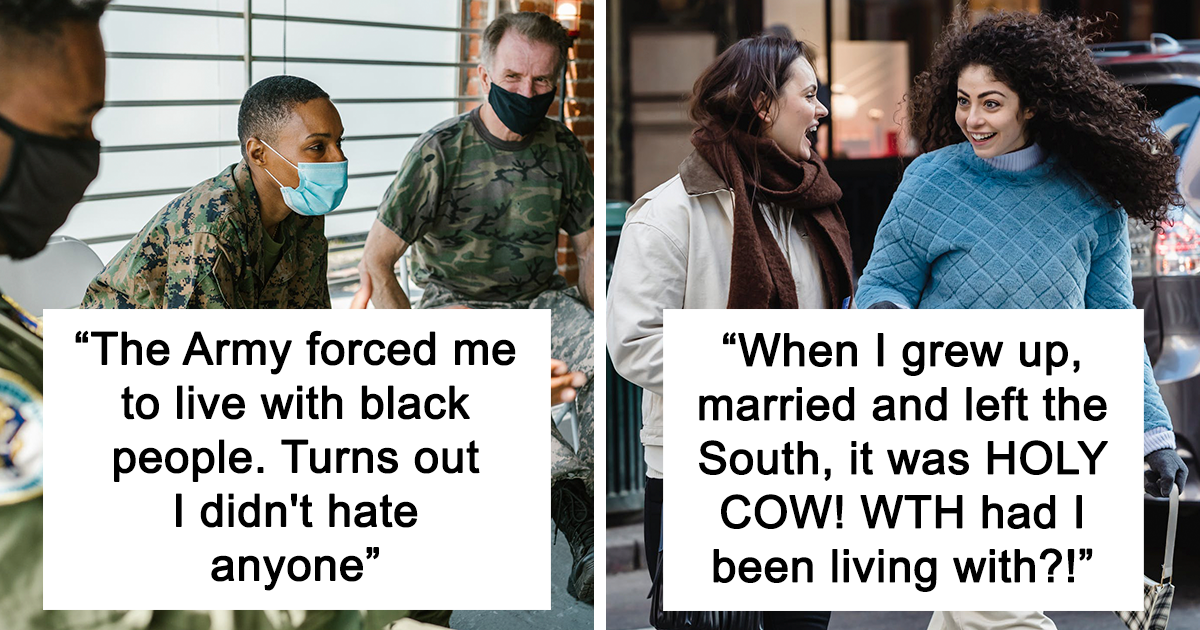
12. Military Service Required Cooperation
Some former racists described working closely with people from different racial and ethnic backgrounds in high-pressure settings. Competence, trust, and shared risk mattered more than stereotypes. Cooperation did not automatically erase bias, but it repeatedly contradicted the idea that character could be predicted by race.
13. A Romantic Relationship Exposed the Double Standard
Falling in love across a racial or cultural line forced some people to confront beliefs they had treated as intellectual. Suddenly, racist rules threatened someone they cared about. The contradiction became intimate: either the relationship was human and worthy, or the ideology was right. Both could not remain.
14. The Internet Bubble Finally Cracked
Online radicalization thrives on repetition, outrage, and communities that label outside evidence as deception. Some former believers changed after deliberately reading primary sources, following credible historians, or checking viral claims. The discovery was rarely glamorous: many “undeniable facts” had links leading to nowhere.
15. A Trusted Insider Admitted the Group Was Wrong
Former extremists can reach people who distrust teachers, journalists, and activists. They understand the language, emotional rewards, and exit fears of the movement. Programs staffed by “formers” use that credibility to show that leaving is possible and that doubt is not weakness. 6. Kindness Came From Someone They Had Dehumanized
Several public exit stories describe unexpected compassion from members of targeted communities. That kindness did not place responsibility on victims to reform aggressors. It simply created a contradiction the ideology could not explain: the supposedly inferior or dangerous person was behaving with greater dignity than the movement.
17. A Good Job Created a New Identity
Stable employment gave some people structure, non-extremist relationships, and a source of pride unrelated to racial grievance. Instead of being valued for anger or loyalty to a cause, they were valued for reliability and skill. A healthier identity began replacing the one built around resentment.
18. Therapy Addressed the Pain Under the Politics
Hate can provide a costume for shame, trauma, loneliness, or humiliation. Therapy helped some former believers separate genuine pain from the scapegoats they had been taught to blame. Emotional wounds did not justify racism, but treating them removed fuel that extremist recruiters had been happily pouring on the fire.
19. Sobriety Changed the Social Circle
For some, racist groups were entangled with addiction, violence, nightlife, or criminal networks. Recovery meant changing routines and relationships. Once sober, they could see how intoxication, chaos, and group pressure had protected beliefs that looked far less impressive in daylight.
20. Prison Contact Complicated the Stereotypes
Prison can intensify racial divisions, but some former racists reported the opposite experience. Working, talking, or sharing daily hardships with people they had been trained to hate introduced individual complexity. In at least one public story, an interracial friendship helped motivate the removal of neo-Nazi tattoos. 1. Religious Beliefs Were Reexamined
Some people had used religion to bless prejudice. Change began when clergy, scripture study, or members of their own faith challenged selective interpretations. They had to choose between universal human dignity and a theology edited to flatter their existing fears.
22. A Family Member Kept the Door Open With Boundaries
Families sometimes helped by preserving a relationship without pretending the ideology was acceptable. Exit specialists emphasize strengthening healthy bonds and involving relatives who have had a positive influence. The message is difficult but clear: “You are loved, and this behavior cannot continue.” 3. Losing Friends Revealed the Real Cost
Social consequences mattered. When decent friends withdrew, some people initially blamed “cancel culture.” Over time, they recognized a simpler explanation: others did not want to be demeaned or associated with demeaning behavior. The loneliness was painful, but it made the ideology’s cost visible.
24. A Diverse Neighborhood Replaced Imagined Threat With Familiarity
Living near people of different backgrounds created countless low-drama interactions: borrowing tools, discussing parking, watching children play, complaining about the same pothole. Prejudice prefers distant categories. Neighborhood life keeps introducing inconveniently normal human beings.
25. They Learned the Difference Between Guilt and Responsibility
Paralyzing shame can make people hide, deny, or demand reassurance. Responsibility asks different questions: What harm did I cause? What should I repair? What habits must change? Former extremists who moved forward often learned to tolerate discomfort without making targeted people manage their feelings.
26. Apologizing Made Self-Deception Harder
A sincere apology requires naming the behavior without excuses. Saying “I was wrong” out loud can weaken the elaborate story built to protect the ego. The apology did not guarantee forgiveness, but it converted private regret into a public obligation to behave differently.
27. They Met People Who Combined Compassion With Accountability
Pure condemnation can confirm an extremist’s persecution story; pure sympathy can excuse harm. Effective mentors often use both compassion and accountability. They recognize the person’s capacity to change while insisting that racist actions have consequences and that repair requires sustained work. 8. The Conspiracy Theory Failed a Basic Fact-Check
Some exits began with one narrow falsehood. A demographic claim, crime statistic, historical quotation, or fabricated news story collapsed under scrutiny. That discovery created permission to test the next claim. Eventually, the person realized the worldview was not a fortress; it was several browser tabs in a trench coat.
29. They Found Belonging Somewhere Healthier
Extremist groups recruit with community as much as ideology. Leaving can mean losing friends, status, routine, and purpose at once. Sports, work, recovery groups, faith communities, volunteering, or exit programs gave former members a social landing place. People need somewhere to go, not merely something to reject.
30. Change Became a Practice, Not a Dramatic Moment
The most honest accounts do not end with “I am cured.” Former racists describe monitoring assumptions, learning history, accepting correction, repairing relationships, and speaking against ideas they once spread. The breakthrough matters, but the daily maintenance is where transformation becomes credible.
What These Experiences Reveal About Unlearning Racism
Across these stories, the first lesson is that beliefs are rarely held for intellectual reasons alone. Racist ideology can provide belonging, certainty, status, rebellion, or an explanation for personal disappointment. That is why dropping a stack of facts on the table sometimes fails. The person is not only defending a claim; they may be defending friendships, family loyalty, identity, and the story that makes their life feel coherent.
The second lesson is that contact matters most when it becomes a relationship rather than a symbolic encounter. Brief exposure can be dismissed as an exception: “That person is different.” Repeated cooperation is harder to compartmentalize. A teammate, neighbor, classmate, or colleague keeps generating evidence. Shared goals reduce anxiety, and familiarity gives empathy somewhere concrete to land. Research on intergroup contact supports this general pattern while also warning that hostile or unequal encounters can reinforce prejudice. e third lesson is that exits need infrastructure. Telling someone to abandon a hateful network sounds simple until that network is also their housing, income, social life, and protection. Former extremists may fear retaliation, isolation, or permanent public rejection. Exit organizations therefore focus on practical stability as well as ideology: safe relationships, employment, counseling, family support, and peers who understand the process. The unglamorous details matter. A person with a safe couch, a job interview, and someone to call is better positioned to resist the pull of an old group.
The fourth lesson is that accountability cannot be skipped. A redemption story becomes self-centered when it focuses entirely on how brave the former racist was for changing. The people harmed by racism are not supporting characters in somebody else’s personal-growth montage. Real accountability may involve apologies, restitution, testimony against extremist organizing, education, or years of consistent conduct. It also includes accepting that some people will never offer forgiveness or trust.
A fifth lesson concerns institutions. Personal transformation is valuable, but racism is not only a private attitude tucked inside one person’s head. It can also persist through policies, routines, hiring networks, school boundaries, lending practices, and unequal access to authority. A former racist may genuinely change while still benefiting from systems they have never examined. Mature anti-racist growth therefore moves beyond “I am nicer now.” It asks who receives opportunities, whose concerns are believed, which rules produce unequal outcomes, and what concrete changes are needed. Individual empathy opens the conversation; institutional awareness keeps the conversation from shrinking into a story about personal virtue alone. nally, these experiences show that change is possible without pretending it is easy or guaranteed. Some people respond to compassion; others exploit it. Some reconsider after a friendship; others double down despite years of contact. There is no universal script. What helps is a combination of factual challenge, human connection, firm limits, and a realistic alternative identity.
That combination also explains why shouting matches on social media rarely produce cinematic conversions. The audience rewards certainty, humiliation, and speed, while genuine reconsideration requires privacy, time, and the ability to admit error without immediately inventing a new performance. Minds do change, but usually offstage, one contradiction and one choice at a time.