

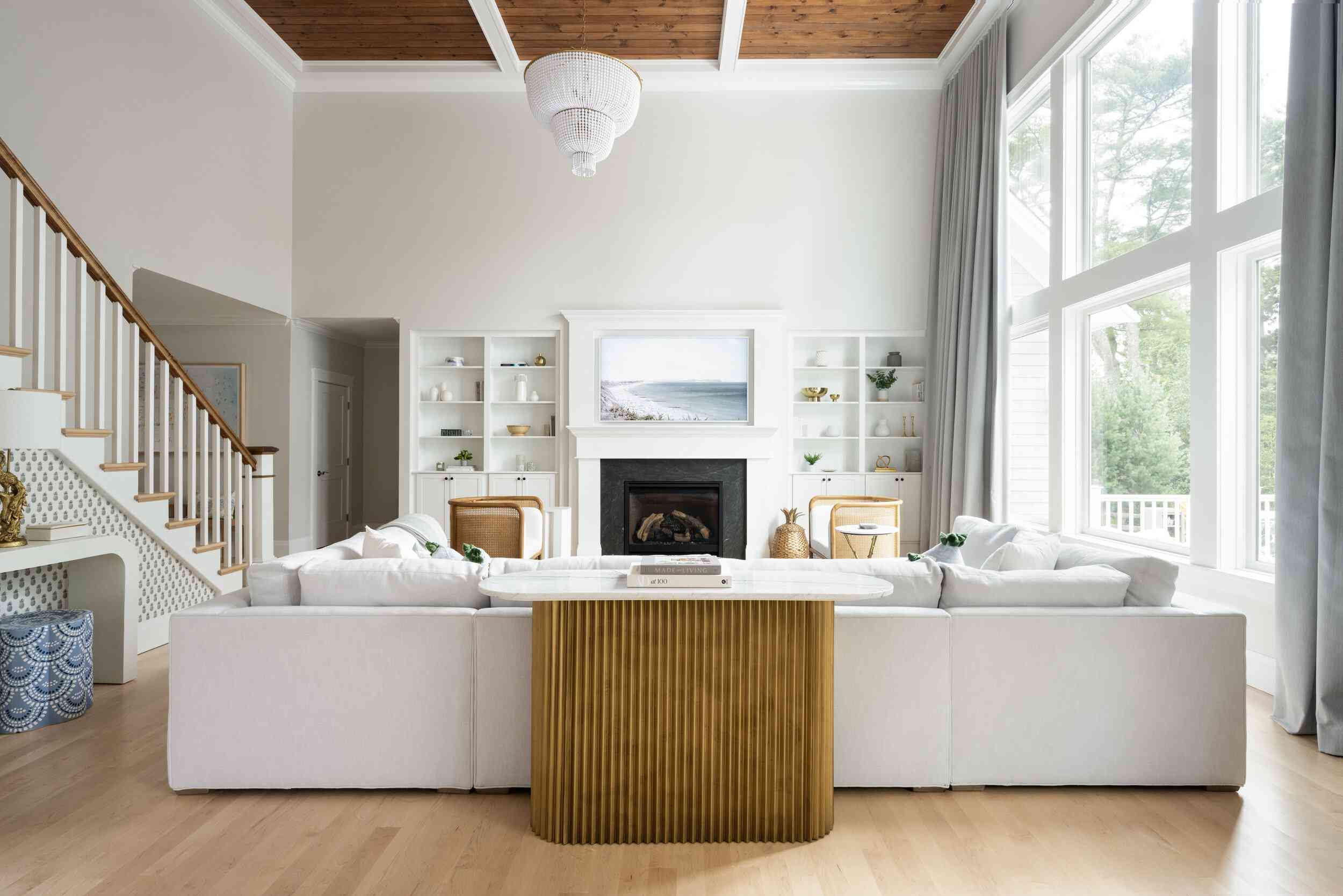
A large living room sounds like a dream until you actually have to decorate one. Then it becomes a wide-open mystery with excellent acoustics for losing your keys. Big rooms can feel luxurious, bright, and flexible, but they can also look cold, awkward, or unfinished when the layout is off. The good news is that the best large living room ideas are not about stuffing the room with more furniture. They are about scale, balance, comfort, and creating a space that feels intentional from every angle.
The most impressive oversized living rooms share a few things in common. They use furniture that is substantial enough to hold the space, create zones that make the room feel useful, layer lighting so the room feels warm at night, and mix textures so the entire space looks polished instead of cavernous. Whether your style leans modern, traditional, transitional, or somewhere between “designer showroom” and “we have kids and a dog,” these ideas can help you make a large living room feel inviting, elevated, and genuinely livable.
How to Make a Large Living Room Feel Well Designed
Before getting into the room-by-room inspiration, remember one thing: a big living room should not behave like one giant seating pit. The smartest designs break the space into clear functions while still keeping everything visually connected. That might mean a main conversation area, a secondary reading nook, a game table, or a window-side lounge. The goal is not to fill every inch. The goal is to make the room feel complete, balanced, and easy to use.
35 Large Living Room Ideas That Are Sure to Impress
1. Float your furniture away from the walls
One of the fastest ways to make a large living room feel better is to stop lining every piece around the perimeter. Floating the sofa, chairs, or sectional toward the center creates a real seating zone and makes the room feel designed rather than abandoned around the edges.
2. Create two conversation areas instead of one giant one
If the room is especially long or wide, split it into two distinct hangout areas. One zone can focus on the fireplace or TV, while the second can be designed for conversation, reading, or cocktails. Suddenly the room feels grand, not endless.
3. Use an oversized area rug
A tiny rug in a large living room is the decorating equivalent of wearing flip-flops to a gala. Choose a rug large enough for at least the front legs of all major seating pieces to sit on it. This anchors the arrangement and makes the room feel cohesive.
4. Choose a sectional with real presence
In a big room, a small sofa can look like it wandered in by accident. A generous sectional helps define the room, offers enough seating for actual humans, and adds the visual weight needed to balance a spacious floor plan.
5. Add a pair of matching sofas
Few things make a large living room look more polished than twin sofas facing each other. The setup feels classic, symmetrical, and party-ready. It is especially effective in formal living rooms or spaces built for entertaining.
6. Use swivel chairs for flexibility
Swivel chairs are secretly brilliant in large living rooms. They make it easy to turn toward the fireplace, TV, or conversation without dragging heavy furniture across the floor like you are starting a workout program.
7. Make the coffee table large enough to matter
A too-small coffee table gets swallowed by a large seating plan. Go bigger than you think, or use two tables side by side. Oversized ottomans, chunky wood tables, or a pair of round tables can fill the footprint beautifully.
8. Layer your lighting
A single overhead fixture will not do much for a large living room besides prove that electricity works. Use a mix of chandeliers, sconces, floor lamps, and table lamps to create warmth, depth, and usable light throughout the room.
9. Hang a statement chandelier
Large living rooms can handle bold lighting, so let the ceiling earn its keep. A sculptural chandelier or oversized pendant draws the eye upward, fills vertical space, and gives the room a focal point that feels intentional and dramatic.
10. Highlight high ceilings with tall drapery
Mount curtain rods close to the ceiling and let panels fall generously to the floor. In a large room, drapery adds softness, height, and movement. It also prevents all that open wall space from looking stark.
11. Embrace floor-to-ceiling windows
If your large living room has dramatic windows, make them part of the design story. Keep treatments elegant, frame the view, and position furniture to celebrate natural light instead of blocking it.
12. Build in storage for a custom look
Bookshelves, cabinetry, and media walls help a big room feel tailored. Built-ins also give the eye something to land on, which is helpful in large spaces where blank walls can feel too bare.
13. Add an accent wall with texture
Wall paneling, limewash, stone, plaster, or wood slats can make a large living room feel richer and more layered. Texture is especially useful when you want the room to feel sophisticated without relying on loud color.
14. Use color with confidence
Large living rooms can handle deeper paint colors, richer contrasts, and more saturated palettes than smaller spaces often can. Navy, olive, warm taupe, charcoal, rust, or moody blue can make a spacious room feel grounded and cozy.
15. Keep a neutral palette but add plenty of texture
If bold color is not your thing, that is fine. A neutral large living room can still feel impressive when you layer linen, velvet, boucle, leather, wood, marble, metal, and woven accents. Texture is what keeps a light palette from falling flat.
16. Carve out a reading nook
A lonely corner becomes useful fast with one great chair, a floor lamp, and a small side table. In a large living room, these secondary moments make the space feel thoughtful and personal.
17. Create a game table zone
If you have the square footage, use it. A round game table with four chairs can turn an oversized room into a social hub. It also gives the space purpose beyond just staring at the sofa from different angles.
18. Add a window bench or banquette
A large room often benefits from built-in or tucked-away seating around the perimeter. A window bench adds charm, creates another place to gather, and helps the architecture feel more integrated with the furniture.
19. Use benches for flexible seating
Benches are sleek, movable, and ideal for entertaining. Place one behind a sofa, under a window, or near a coffee table for extra seating that does not visually clutter the room.
20. Mix seating styles
The best large living room furniture layout usually includes more than a sofa set bought in one shot. Mix upholstered chairs, a bench, ottomans, a sectional, and accent stools for a layered look that feels collected rather than copied from a catalog.
21. Add sculptural side tables
Because large rooms need more visual interest, smaller accent pieces still matter. Sculptural side tables in stone, wood, metal, or mixed materials help break up all the upholstery and bring a designer touch to the space.
22. Layer rugs for depth
Layering a smaller patterned rug over a larger natural-fiber rug adds dimension and helps a big room feel less one-note. It is a particularly good trick in open-concept spaces that need a little softness and definition.
23. Use symmetry for instant elegance
Symmetry works beautifully in spacious rooms. Matching chairs, identical lamps, or twin sofas can make the room feel orderly and refined, especially when you are working with a fireplace, large windows, or a formal layout.
24. Break symmetry with one bold moment
That said, perfection can look stiff. If the room feels too formal, add one playful or unexpected element: a vintage chair, a curvy table, a dramatic art piece, or a bold patterned ottoman.
25. Go big with artwork
Small art on a huge wall tends to look apologetic. Choose oversized art, a triptych, or a gallery wall with enough scale to relate to the room. Large walls need confidence, not tiny frames having an identity crisis.
26. Style the ceiling, too
Coffered ceilings, beams, wood treatments, paint, or wallpaper can transform the top half of a large living room. When the ceiling has character, the room feels more complete and less like a blank white box.
27. Add a fireplace focal point
If your room includes a fireplace, use it as an anchor. Arrange seating around it, frame it with built-ins, or enhance it with stone, plaster, or a substantial mantel to give the entire room a strong center.
28. Let one piece be the star
Sometimes the most memorable rooms revolve around one major element: a massive sectional, a dramatic chandelier, a marble fireplace, or a vintage cabinet. A hero piece gives the room identity and makes decorating decisions easier.
29. Use curved furniture to soften the room
Large living rooms can sometimes feel a little boxy. Curved sofas, rounded chairs, circular tables, and soft silhouettes help reduce that rigid feel and make the room more welcoming.
30. Add greenery at a larger scale
A big room can handle large plants, indoor trees, or dramatic branches in oversized vases. These organic elements soften architecture, add height variation, and stop the room from feeling overly polished.
31. Include pieces with varied heights
When everything in a room sits at the same level, the space feels flat. Mix tall bookcases, medium-height lamps, low ottomans, and different furniture profiles to create visual rhythm from floor to ceiling.
32. Make the room indoor-outdoor friendly
If your large living room opens to a patio or terrace, lean into that connection. Repeat tones and textures from inside to outside so the room feels expansive in the best possible way.
33. Use a sofa table behind floating furniture
A console behind a floated sofa adds storage, surface space, and polish. It also helps furniture feel more intentionally placed, which matters in a large room where pieces can otherwise appear to drift.
34. Balance comfort with formality
The most impressive large living rooms are never all show and no soul. Blend tailored pieces with softer ones, choose durable fabrics, and add throws or pillows so the room feels just as good on a Tuesday night as it does when guests arrive.
35. Leave some breathing room
This may be the most important rule of all. A large living room does not need to be packed to feel finished. Negative space helps the room feel luxurious, easier to navigate, and far more elegant than a layout that tries to fill every inch.
Final Thoughts
The best large living room ideas combine beauty with structure. When a spacious room is designed around real-life use, it instantly feels more welcoming and much more impressive. Start with the layout, choose furniture that suits the scale of the room, build in layered lighting, and create smaller destinations within the larger footprint. That is how you turn a big room into a memorable one.
Most of all, resist the temptation to decorate a large living room timidly. Big rooms need confidence. They need rugs that fit, lighting that shows up, art that speaks clearly, and furniture that can hold its own. Once you embrace scale and create zones with purpose, the room stops feeling intimidating and starts feeling exceptional.
More Real-Life Experience With Large Living Room Design
Living with a large living room teaches you things that no floor plan ever warns you about. At first, the space feels exciting because there is so much possibility. You imagine elegant parties, cozy movie nights, maybe a holiday tree that deserves its own zip code. Then you move in a sofa and realize the room still looks about 84 percent empty. That is usually the moment people panic and start buying random furniture, which is how great rooms become expensive waiting areas.
In real homes, the most successful large living rooms usually come together in stages. The first big improvement often happens when the furniture gets pulled away from the walls. Suddenly, people can talk without shouting across a rug the size of a parking spot. The room begins to feel human. Then comes lighting. Many oversized spaces look perfectly fine during the day and strangely gloomy after sunset, which is why floor lamps, table lamps, and dimmable sconces make such a dramatic difference. They create pockets of warmth that make a large room feel intimate.
Another common experience is realizing that one function is never enough. In a spacious living room, a single sofa-and-coffee-table setup often leaves awkward dead zones. The room works better when there is a second destination: a reading chair near the window, a game table in the corner, or a pair of chairs near the fireplace. These mini-zones do not just fill space; they make daily life easier. One person can read, another can watch TV, and someone else can sit with coffee and pretend they are in a boutique hotel lobby. That is range.
There is also the matter of scale, which people usually understand only after making one very polite decorating mistake. A small rug, short curtains, or undersized art may look acceptable in a store, but in a large living room they can seem oddly timid. Bigger rooms reward bolder choices. Larger rugs feel calmer. Taller drapery makes the architecture feel grander. Bigger art creates instant confidence. Once those pieces are in place, the room usually needs less decorating, not more.
Perhaps the best part of a large living room is how flexible it becomes when it is designed well. It can host holidays, quiet evenings, birthday gatherings, movie marathons, and the occasional afternoon nap that “accidentally” lasts two hours. A well-planned spacious living room feels impressive to guests, but it also supports everyday routines without feeling too precious. That is the sweet spot. Not a showroom. Not a furniture maze. Just a beautiful, balanced space that looks amazing and actually works for the people who live there.