

A scratchy throat appears, your nose begins performing its impression of a leaky faucet, and suddenly someone recommends whiskey. The hot toddy has been passed down through generations with the confidence of a secret family cureusually by a relative holding a suspiciously generous bottle.
However, there are no medically proven ways to use alcohol to treat a cold. According to the Centers for Disease Control and Prevention, the common cold has no cure. It is a viral upper respiratory infection that generally improves on its own. Rest, fluids, saline products, humidified air, and carefully selected symptom-relief medicines are more useful than bourbon, brandy, or rubbing alcohol.
That does not mean every comforting drink associated with alcohol is complete nonsense. Warm liquid, honey, lemon, steam, and the relaxing ritual surrounding a hot toddy can temporarily soothe certain symptoms. The alcohol itself is simply not the heroic ingredient. In some situations, it may make recovery less comfortable by worsening dehydration, disturbing sleep, irritating the throat, or interacting with cold medicine.
Here are four commonly suggested ways to use alcohol for a coldand what to do instead.
Does Alcohol Kill a Cold Virus?
Alcohol can inactivate many germs when it is used at an appropriate concentration in products such as hand sanitizer. That fact has inspired a tempting but incorrect leap: if alcohol kills germs on hands, perhaps a shot of liquor can disinfect the throat.
Unfortunately, the human body is not a kitchen countertop. Cold viruses infect cells in the nose, throat, and upper respiratory tract. A swallowed drink is quickly diluted, absorbed, and metabolized. It cannot safely reach infected tissue at a virus-killing concentration. Trying to consume enough alcohol to “sterilize” the body would cause alcohol poisoning long before it produced a useful antiviral effect.
The National Institute on Alcohol Abuse and Alcoholism also reports that heavy drinking can weaken immune defenses. Drinking a large amount on one occasion may interfere with the body’s ability to resist infection for as long as 24 hours. In other words, your immune system does not become more intimidating simply because it smells like whiskey.
1. Drinking a Hot Toddy for Cold Symptoms
Why a hot toddy may feel comforting
A traditional hot toddy commonly combines whiskey or brandy with hot water, honey, and lemon. It may feel soothing, but most of the comfort comes from everything surrounding the liquor.
Warm liquid can moisturize a dry throat and may temporarily loosen congestion. Honey can coat irritated tissues and calm a cough in adults and children older than one year. Lemon supplies flavor and encourages sipping, while steam rising from the cup may make a stuffy nose feel a little less stubborn.
Mayo Clinic recommends water, broth, juice, or warm lemon water with honey for hydration and congestion relief. Its guidance specifically advises avoiding alcohol because it can make dehydration worse. Johns Hopkins Medicine provides similar advice: choose warm hydrating liquids and avoid alcohol while sick.
Make an alcohol-free hot toddy instead
For the comforting portion of a toddy without its disadvantages, combine:
- 8 ounces of hot water or caffeine-free tea
- 1 to 2 teaspoons of honey
- A squeeze of fresh lemon
- Optional ginger or cinnamon for flavor
Keep the drink pleasantly warm rather than scalding. Very hot beverages can irritate an already sensitive throat. Never give honey to a baby younger than 12 months because of the risk of infant botulism, as emphasized by the American Academy of Pediatrics.
If a healthy adult who is not pregnant, does not have a condition affected by alcohol, and is not taking interacting medicine chooses to have a small alcoholic toddy, it should be regarded as an ordinary alcoholic beveragenot cold treatment. More whiskey does not create more medicine; it merely creates a more complicated evening.
2. Using Alcohol as a Nightcap to Help You Sleep
Sleepiness is not the same as restorative sleep
Cold symptoms can make bedtime miserable. Congestion encourages mouth breathing, coughing arrives just as the lights go out, and every pillow suddenly feels designed by an enemy. Because alcohol can cause drowsiness, a nightcap may seem like a practical shortcut.
Alcohol may help some people fall asleep faster, but the effect is deceptive. Harvard Health Publishing explains that alcohol can suppress rapid eye movement sleep, cause awakenings later in the night, worsen insomnia, and aggravate snoring or sleep-related breathing problems. A person may spend eight hours in bed yet wake feeling as though the night involved negotiations rather than rest.
Quality sleep supports normal immune function and recovery. A nightcap that fragments sleep may therefore work against one of the body’s most useful recovery tools.
Try a cold-friendly bedtime routine
Thirty to sixty minutes before bed, drink a warm nonalcoholic beverage and use saline nasal spray as directed. Run a clean cool-mist humidifier if the room is dry. Elevating the head slightly may reduce the annoyance of postnasal drainage for some people.
A dry throat in the morning may result from dehydration or mouth breathing, according to the Cleveland Clinic. Keeping water nearby and adding moisture to the air can address those problems without sacrificing sleep quality.
Avoid pouring alcohol into an attempt to “knock yourself out,” particularly if you have sleep apnea, loud snoring, breathing problems, a history of alcohol misuse, or medication-related drowsiness.
3. Gargling Whiskey or Alcohol-Based Mouthwash
Why throat disinfection does not work
Another folk remedy involves gargling whiskey, vodka, or alcohol-containing mouthwash to kill germs. The idea sounds scientific until the details arrive and spoil the party.
A cold virus is not merely sitting loose on the surface of the throat, waiting to be rinsed away. It has entered cells throughout the upper respiratory tract. Gargling liquor cannot reach all infected areas, cannot stop viral replication inside cells, and cannot shorten the illness. Strong alcohol may also sting inflamed tissue and leave the mouth feeling drier.
Alcohol-containing mouthwash is formulated for oral hygiene, not for swallowing or treating respiratory infections. Guidance from Yale Medicine notes that alcohol in commercial mouthwash can have a drying effect on oral tissues. That is hardly a premium feature when your throat already feels like it has been lined with sandpaper.
Use warm salt water
A warm saltwater gargle is the more sensible option for temporary sore-throat relief. Mix approximately 1/4 to 1/2 teaspoon of table salt into 4 to 8 ounces of warm water. Gargle and spit out the solution. Do not give a gargle to a young child who cannot reliably spit it out.
Mayo Clinic’s common cold guidance recommends saltwater gargling as a symptom-relief measure. It will not cure the infection, but it may reduce throat discomfort without introducing intoxicating alcohol.
If severe throat pain appears suddenly with a high fever, swollen neck glands, trouble swallowing, drooling, or difficulty breathing, seek medical evaluation rather than repeatedly gargling home mixtures.
4. Applying Rubbing Alcohol to the Skin
Do not use an alcohol rub or bath for fever
Rubbing alcoholusually isopropyl alcoholis not the same product as beverage alcohol. It should never be swallowed. Some traditional home remedies suggest rubbing it on the chest, feet, or skin, or adding it to a sponge bath to cool a fever.
The quick evaporation can create a temporary cooling sensation, but it does not treat the viral infection. More importantly, isopropyl alcohol can be toxic. MedlinePlus specifically warns that giving a child an isopropyl alcohol sponge bath to lower a fever is dangerous because the substance can be absorbed through the skin and make the child seriously ill.
Rubbing alcohol should also be kept away from the mouth, nose, eyes, broken skin, and open flames. The National Capital Poison Center explains that both ethanol and isopropyl alcohol can cause intoxication and stomach irritation when consumed. Household alcohol products belong in the medicine cabinet, not in a mug, vaporizer, or improvised cold treatment.
Manage fever more safely
A mild fever is part of the body’s response to infection and may not require treatment in an otherwise healthy adult. Rest, drink fluids, wear comfortable clothing, and avoid overheating the room.
If an over-the-counter fever reducer is appropriate for you, use it exactly as the label directs. Be careful with multi-symptom cold products because several medicines may contain the same active ingredient. Taking two acetaminophen-containing products, for example, can accidentally produce an excessive dose.
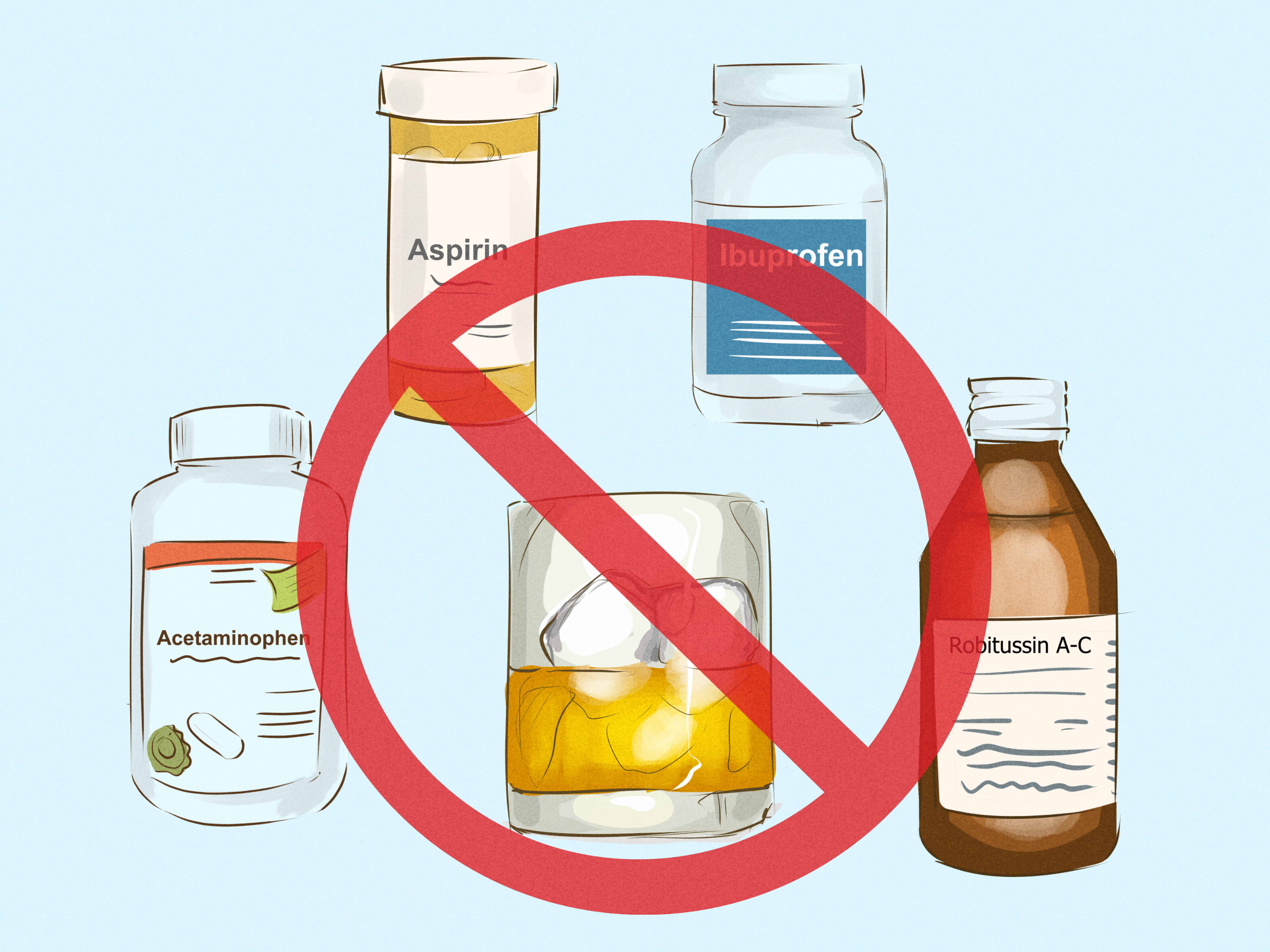
The U.S. Food and Drug Administration warns about severe liver damage in people who consume three or more alcoholic drinks per day while using acetaminophen. Ask a pharmacist or healthcare professional about alcohol if you are uncertain about any medicine.
Alcohol and Cold Medicine Can Be a Risky Combination
Many cough, cold, allergy, and nighttime formulas contain ingredients that cause drowsiness. Alcohol can intensify that effect, increasing dizziness, poor coordination, slowed reactions, and the risk of falls or driving accidents.
The NIAAA’s medication-interaction guidance warns that mixing alcohol with certain medicines can cause vomiting, headaches, fainting, breathing difficulties, internal bleeding, and excessive drowsiness. Relevant ingredients may include sedating antihistamines, cough suppressants, pain relievers, and sleep aids.
The FDA also advises avoiding alcohol with some antihistamines because the combination can increase drowsiness. Read the entire Drug Facts label, including the active ingredients and alcohol warning. “Over the counter” means available without a prescription; it does not mean available without consequences.
People who are pregnant, younger than the legal drinking age, managing liver disease, taking interacting medications, recovering from alcohol use disorder, or planning to drive should avoid alcohol. Children should never receive alcoholic drinks as cold remedies.
What Actually Helps a Common Cold?
Most uncomplicated colds improve with time. Symptoms often peak during the first few days, although a cough or runny nose may continue for 10 to 14 days. MedlinePlus home-care guidance recommends supportive care rather than attempting to eliminate the virus with an unproven remedy.
- Rest: Reduce demanding activities and give your body time to recover.
- Fluids: Choose water, broth, soup, or caffeine-free tea to support hydration.
- Honey: Adults and children older than one year may use honey for temporary cough relief.
- Saline: Saline nasal spray or drops can moisturize nasal passages and loosen mucus.
- Humidity: A properly cleaned cool-mist humidifier may ease dryness and congestion.
- Appropriate medicine: Ask a pharmacist which single-symptom product is compatible with your health conditions and current medications.
Testing may be appropriate when symptoms could be caused by flu or COVID-19, especially for someone at higher risk of complications. Antiviral treatment is available for those illnesses and works best when started promptly; ordinary alcohol remains conspicuously absent from the prescription pad.
When to Contact a Healthcare Professional
Seek medical advice if symptoms are severe, unusual, worsening, or not improving as expected. Prompt evaluation is particularly important for trouble breathing, chest pain, confusion, dehydration, blue or gray lips, persistent high fever, coughing up blood, or symptoms that improve and then return dramatically.
People with weakened immune systems, chronic lung or heart disease, pregnancy, or other significant medical conditions should contact a healthcare professional earlier. A baby younger than three months with a temperature of 100.4°F (38°C) or higher needs prompt medical attention.
Experiences and Practical Lessons
The following scenarios are illustrative composites based on common remedy habits. They are not presented as individual medical case reports.
The toddy that workeduntil the whiskey received credit
Imagine an adult with a mild cold making a traditional toddy before bed. The warm cup eases the scratchy feeling in the throat, honey calms the cough, and steam makes nasal breathing temporarily easier. By morning, the person announces that whiskey cured the cold.
A second night provides a useful comparison: the same drink is prepared without whiskey. It feels just as soothing, hydration is better, and sleep is less fragmented. The experience reveals how easily the most memorable ingredient can receive credit for the work performed by warm water, honey, rest, and time. The ritual was helpful; the liquor was mostly wearing a tiny medical costume.
The nightcap that borrowed comfort from tomorrow
Another person cannot fall asleep because of congestion and decides that two strong drinks will solve the problem. Drowsiness arrives quickly, which seems like success. Several hours later, however, the person wakes thirsty with a dry mouth, headache, and worse nasal irritation. Returning to sleep is difficult.
The following night, the routine changes: saline spray, a warm shower, water, a clean humidifier, and no alcohol. Falling asleep may take slightly longer, but the sleep period is steadier. The practical lesson is that sedation and restorative sleep are not interchangeable. A remedy should be judged by the entire night and the following morning, not merely by how rapidly the eyelids close.
The medicine-label surprise
A person takes a nighttime multi-symptom product and later considers having a glass of wine. A quick look at the label reveals a sedating antihistamine, a cough suppressant, and acetaminophen. Instead of assuming that one glass must be harmless, the person asks a pharmacist and skips the wine.
This small decision illustrates a major cold-care habit: check active ingredients before combining products. Brand names can disguise overlapping medicines, and nighttime formulas often produce more drowsiness than expected. When several substances act on the central nervous system or liver, the risk cannot be estimated simply by counting beverages. Reading one label may prevent a miserableand potentially dangerousnight.
The rubbing-alcohol tradition that needed retirement
A caregiver remembers being wiped with rubbing alcohol during childhood fevers and considers repeating the practice with a child. Instead, the caregiver checks current medical guidance and learns that isopropyl alcohol can be absorbed through a child’s skin and cause poisoning. The bottle remains closed.
The child receives fluids, comfortable clothing, rest, and age-appropriate care recommended by a pediatric professional. The fever is monitored, and warning signs are taken seriously. This experience demonstrates why “my family always did it” is not the same as “it is safe.” Many home remedies survive because no obvious harm occurrednot because the method was tested, effective, or risk-free.
The larger takeaway from these experiences
Cold symptoms naturally fluctuate. A person may try a remedy shortly before symptoms improve and understandably credit the remedy. That timing can make weak treatments look powerful. Evaluating a cold remedy requires asking three questions: Does it have a believable medical mechanism? Is there evidence that it helps? Could its risks outweigh temporary comfort?
Alcohol-based cold remedies perform poorly under that examination. A warm alcohol-free toddy, saltwater gargle, saline spray, humidified air, adequate fluids, and genuine sleep provide the comforting parts without creating avoidable intoxication, medication interactions, or poisoning hazards.
Conclusion
There are not four scientifically supported ways to use alcohol to treat a cold. There are four popular alcohol remediesthe hot toddy, nightcap, liquor gargle, and rubbing-alcohol applicationand each has a safer replacement.
If a warm toddy feels good, keep the hot water, honey, and lemon and leave the whiskey in the cabinet. Choose quality sleep instead of alcohol-induced drowsiness, use salt water rather than liquor for gargling, and never apply rubbing alcohol as a fever treatment. Above all, avoid mixing alcoholic drinks with cough, cold, allergy, pain, or sleep medicines unless a healthcare professional has confirmed that the combination is safe.
Alcohol may be traditional, but viruses are famously unimpressed by tradition. Sensible symptom care, careful medication use, hydration, and time remain the better recovery team.