

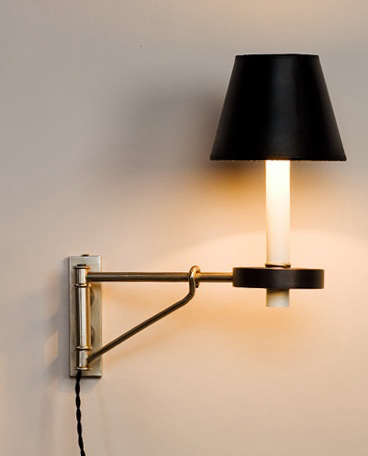
A power cord is usually the part of a lamp that designers politely ask furniture to hide. It gets tucked behind a table leg, pushed against a baseboard, or blamed for disrupting an otherwise immaculate room. Sundial cloth-covered electrical cord takes a different approach: instead of treating the wire as an embarrassing necessity, it dresses it for dinner.
With braided cotton or rayon in colors ranging from restrained neutrals to lively patterns, Sundial cord turns an ordinary electrical component into visible decorative hardware. It is particularly well suited to pendant lights, plug-in sconces, restored table lamps, floor lamps, and fixtures inspired by early industrial, Arts and Crafts, farmhouse, or midcentury design.
The appeal is not merely nostalgic. Beneath the fabric is newly manufactured electrical wire with modern insulation. That distinction matters. Authentic-looking cloth-covered cord can provide the character of vintage wiring without asking homeowners to trust brittle insulation that remembers the invention of radio.
What Is Sundial Cloth-Covered Electrical Cord?
Sundial cloth-covered wire is modern electrical cord finished with an exterior braid of cotton or rayon. Depending on the style, the internal construction may include two or three stranded copper conductors protected by PVC insulation. The decorative braid surrounds that insulated cord and supplies the color, texture, and period appearance.
In other words, the fabric is not expected to perform the entire electrical-safety job. It is the visible outer finish. The insulated conductors underneath carry the current and protect against contact between wires. This layered construction is what makes contemporary cloth-covered lamp cord fundamentally different from genuinely old fabric-insulated wiring.
Cotton Braid
Cotton has a dry, natural texture that works beautifully with aged brass, unfinished wood, painted metal, ceramic sockets, and utilitarian fixtures. It tends to look especially convincing in historic reproductions and Arts and Crafts interiors. A black cotton cord can make a new pendant feel as though it was discovered in a century-old workshop, minus the century-old dust and questionable wiring decisions.
Rayon Braid
Rayon is made from cellulose and has a smoother, more lustrous appearance. Its subtle sheen can resemble traditional silk-covered cord, making it suitable for polished brass lamps, colorful glass fixtures, elegant sconces, and decorative pendants. Rayon generally reads as refined, while cotton leans rustic or industrial, although color and braid pattern can easily blur those boundaries.
Why Designers Make the Cord Visible
Exposed electrical cord once suggested that someone had not finished installing the light. Today, a carefully chosen cord can be part of the composition. Pendant lights often depend on the vertical line between canopy and socket. Plug-in sconces create another visible path from fixture to outlet. When that line is intentional, the cord becomes a design element rather than visual clutter.
It Adds Texture Without Adding Bulk
Rooms need contrast, but not every surface needs another basket, pillow, or heroic piece of reclaimed timber. A braided electrical cord introduces a small amount of tactile detail without occupying useful space. Against plaster, tile, brick, or painted drywall, the weave softens the hard geometry of lighting hardware.
It Connects Old Fixtures With Modern Rooms
A restored porcelain socket or vintage metal shade may look awkward with a shiny white plastic cord. Cloth-covered wire bridges that gap. It echoes the fixture’s original era while allowing the lamp to function with modern internal materials. The result feels preserved rather than patched together.
It Makes Plug-In Lighting Look Intentional
Renters and homeowners who do not want to open a wall often rely on plug-in sconces and swag pendants. These fixtures are practical, but their cords remain visible. A coordinating fabric cord can turn that unavoidable line into part of the fixture’s personality. Suddenly the cord is not dangling; it is making an architectural gesture. Very sophisticated. Possibly wearing a tiny black turtleneck.
Understanding the Main Cord Styles
Choosing cloth-covered electrical wire by color alone is tempting, but construction matters more than the online swatch that perfectly matches the kitchen cabinets. The shape, conductor count, gauge, listing, and intended application must suit the fixture.
Parallel Cord
Parallel cord places two insulated conductors side by side, producing a flat profile. Sundial covers this cord with a herringbone-style fabric braid. It is commonly associated with table lamps, floor lamps, and some small appliances. Although product photos can make the braid appear rounded, the underlying cord is flat.
Parallel cord can work well where the wire passes through a narrow lamp body or must lie relatively close to a surface. Its profile may be less visually satisfying for a long pendant drop, where a truly round cord usually hangs more naturally.
Pulley Cord
Pulley cord is round and is available with two or three conductors. Its substantial profile makes it a popular choice for pendant lights, swag fixtures, counterweight lamps, and designs in which the cord is intentionally exposed. The round shape tends to drape cleanly and looks balanced beside sockets, strain-relief fittings, and ceiling canopies.
Twisted-Pair Wire
Twisted-pair wire uses individually covered conductors twisted around each other. It produces the most overtly historic appearance and is often associated with early electric lighting. However, a vintage appearance does not automatically make a particular wire suitable for every project. The exact product rating and intended use must be checked before installation.
How to Choose the Right Sundial Cord
Start With the Fixture, Not the Color
Determine whether the project involves a table lamp, pendant, floor lamp, plug-in sconce, or another device. Check how the original cord enters the fixture, how it is secured, whether grounding is required, and what type of plug or canopy will be used. A cord can be visually perfect and mechanically wrong at the same time, which is an expensive way to learn that electricity does not appreciate mood boards.
Confirm the Number of Conductors
Two-conductor cord is commonly used for suitable double-insulated or polarized lamp assemblies that do not require a separate equipment-grounding conductor. Three-conductor cord includes an additional conductor for grounding and may be required for certain metal fixtures or assemblies.
Do not decide that a metal lamp “probably looks grounded.” Grounding is an electrical characteristic, not a personality trait. Follow the fixture manufacturer’s requirements and applicable local codes. When restoring an old fixture with uncertain construction, consult a qualified lamp-repair specialist or licensed electrician.
Verify Gauge, Temperature, Voltage, and Listing
Sundial offers multiple wire constructions, and not every decorative style necessarily carries the same certification or rating. The company identifies many of its 18-gauge pulley cords and parallel cords as UL-listed for the United States and Canada, but buyers should verify the listing on the exact product selected.
Look for the cord type, conductor count, wire gauge, voltage rating, temperature rating, and certification information. A listing on the wire does not automatically make a homemade lamp or modified fixture a listed finished product. Every component, connection, fitting, and installation method still matters.
Select a Braid That Belongs in the Room
Black, brown, cream, gold, silver, and muted woven patterns are versatile choices for vintage lighting. A cord close to the wall color creates a quieter effect. A contrasting color emphasizes the cord’s path and turns it into a graphic line.
For warm interiors with oak, walnut, terracotta, or brass, earthy cotton colors feel natural. Rayon in silver, gold, or jewel tones works well with glass, lacquer, polished metal, and more glamorous fixtures. Patterned cords can energize a simple socket-and-bulb pendant, but they should not compete with an already elaborate shade.
Safety Matters More Than the Braid
Decorative cord is still electrical cord. It should never be selected or installed solely because it looks charming in a photograph. Safe use depends on the complete assembly and on compliance with the National Electrical Code, local regulations, product instructions, and the fixture’s design.
Use Proper Strain Relief
A cord must not hang from terminal screws or allow pulling force to reach electrical connections. Appropriate strain-relief hardware protects the conductors where the cord enters a socket, plug, canopy, enclosure, or fixture body. Openings may also require suitable bushings or fittings so that sharp edges cannot cut the insulation.
Respect Polarity
In a polarized lamp assembly, the neutral conductor connects to the silver-colored terminal and the hot conductor connects to the brass-colored terminal. The neutral side of standard lamp cord is typically identified by ridges, markings, or another distinguishing feature. Identification methods vary, so the exact cord should be examined rather than wired by guesswork.
Do Not Substitute Flexible Cord for Building Wiring
Flexible lamp cord is intended for permitted cord-connected applications. It should not be routed through walls, ceilings, floors, doorways, or other concealed building spaces as a substitute for permanent wiring. It should also remain protected from crushing, abrasion, heat, water, and traffic.
Inspect It Regularly
Replace cord that shows cuts, severe fraying, crushed sections, exposed insulation, discoloration, overheating, or damage near the plug and fixture entry points. A decorative braid can disguise early wear, so inspection should include gently examining the entire accessible length while the lamp is unplugged.
Best Applications for Cloth-Covered Lamp Cord
Minimal Pendant Lights
A bare socket, attractive bulb, ceiling canopy, and fabric-covered cord can form a complete pendant with very few parts. Because the design is so simple, every component remains visible. A high-quality braid adds enough texture to keep the fixture from looking like temporary construction lighting.
Vintage Table and Floor Lamps
Rewiring a vintage lamp can improve reliability while preserving its character. A cloth-covered replacement cord looks more compatible with ceramic bases, carved wood, old brass, and painted metal than generic molded plastic. The socket, plug, switch, grommets, insulation, and internal wiring should be evaluated at the same time.
Plug-In Wall Sconces
A wall-mounted light with a visible cord can be practical in bedrooms, reading corners, kitchens, and rental apartments. Choosing the cord before positioning the fixture helps create a deliberate route to the outlet. Decorative clips or approved supports may guide the cord, provided they do not pinch, pierce, or damage it.
Swag and Pulley Lighting
Round cloth-covered pulley cord is a natural match for lights suspended from hooks, pulleys, or adjustable counterweights. In these installations, the cord is both visually prominent and subject to movement. All support hardware must be designed so the cord is not carrying loads or rubbing against damaging edges.
Common Mistakes to Avoid
One mistake is buying an arbitrary length and joining pieces later. Flexible cord should generally be continuous between approved termination points, not patched together with casual splices. Measure the full route, include sensible working allowance, and purchase enough cord in one length.
Another mistake is ignoring the diameter of holes, nipples, strain reliefs, plugs, and socket caps. Cloth braid increases the cord’s exterior size. Hardware that accepted an old plastic cord may be too tight for the replacement, and forcing it through can bunch or damage the braid.
Running a lamp cord beneath a rug is also unsafe. Foot traffic and furniture can crush the insulation, while covering the cord can trap heat and conceal damage. Route it where it remains visible, ventilated, and protected.
Finally, do not assume that a low-wattage LED bulb makes careless wiring acceptable. LEDs can reduce energy use and fixture heat compared with incandescent bulbs, but loose terminals, damaged insulation, missing strain relief, and incorrect grounding remain hazards.
Project Experience: What Working With Decorative Cord Is Really Like
The first surprise in a cloth-covered cord project is usually how much the cord changes the fixture. A plain pendant socket with ordinary plastic wire can feel temporary. Replace that visible line with a textured braid, and the same basic components begin to resemble a designed object. The improvement is especially noticeable in simple fixtures because there is nowhere for weak details to hide.
The second lesson is that ordering samples can prevent disappointment. Screen colors are approximate, and fabric reacts strongly to surrounding materials. A cream cord may look warm beside oak but unexpectedly gray beside white paint. Gold rayon can appear quietly antique in soft light and dramatically shiny beneath bright LEDs. Holding a short sample against the wall, canopy, shade, and socket provides more useful information than staring deeply into a product thumbnail and hoping for spiritual guidance.
Measuring also requires patience. A pendant drop is not merely the distance from ceiling to bulb. The cord may need to pass through a canopy, strain relief, socket cap, switch, or plug. A swag installation needs additional length for curves and routing. Cutting too early turns a satisfying project into an emergency search for a much shorter lamp.
During handling, cotton and rayon braids behave differently from bare plastic jackets. Cut ends may loosen or fray, so installers commonly plan the cut carefully and follow the wire manufacturer’s recommended preparation method. Tape, heat-shrink material, ferrules, cord grips, or other finishing components may be appropriate in specific assemblies, but any method must remain compatible with the cord and hardware. A decorative shortcut is not worth compromising the insulation.
Another practical realization is that visible cord encourages better planning. With ordinary wire, the instinct is to hide excess length behind furniture. With an attractive braid, the route becomes part of the room. A gentle curve may look better than an aggressively straight line, while a neat vertical drop can reinforce the architecture. The cord should look relaxed but controllednot as though it escaped from the lamp and is making for the nearest outlet.
Living with cloth-covered cord also changes maintenance habits. Dust is more visible on dark braid, particularly near floors and behind tables. Cleaning should be done with the lamp unplugged, using a dry, gentle method that does not soak or abrade the fabric. The cord should periodically be checked where it bends near the plug, socket, switch, and furniture.
Perhaps the most useful experience is knowing when to stop. Replacing a cord on a straightforward lamp may be manageable for someone with suitable knowledge and tools. A corroded fixture, damaged socket, unfamiliar grounding arrangement, brittle internal insulation, or hardwired installation calls for professional help. The most successful restoration is not the one with the most heroic do-it-yourself story. It is the one that looks beautiful, operates correctly, and does not produce an exciting electrical subplot at midnight.
Is Sundial Cloth-Covered Cord Worth Choosing?
For projects in which the electrical cord remains visible, Sundial cloth-covered wire offers a meaningful aesthetic upgrade. Its cotton and rayon braids provide texture, color, and historic character, while modern copper conductors and insulation make it suitable for contemporary lighting applications when the correct listed product is selected and properly installed.
It is particularly valuable for pendant lighting, restored lamps, plug-in sconces, and minimalist fixtures where the cord is impossibleor undesirableto conceal. The cost of decorative cord may be higher than generic lamp wire, but relatively little material is often required. In exchange, one of the least glamorous parts of the fixture becomes one of its defining details.
The sensible buying order is simple: confirm the electrical requirements, select the proper construction and listing, choose compatible hardware, and then enjoy choosing the color. Style belongs in the process, just not ahead of safety.
Conclusion
Sundial cloth-covered electrical cord proves that practical hardware does not have to disappear. A carefully chosen braid can complement vintage fixtures, strengthen an interior color palette, and make plug-in or suspended lighting feel deliberate. Cotton brings natural, workshop-like texture, while rayon offers a smoother, silkier finish.
The cord’s beauty, however, is only the visible layer. Correct gauge, conductor count, certification, polarity, grounding, strain relief, routing, and installation determine whether the completed fixture is appropriate and safe. Get those details right, and the humble lamp cord can finally stop hiding behind the furniture.