

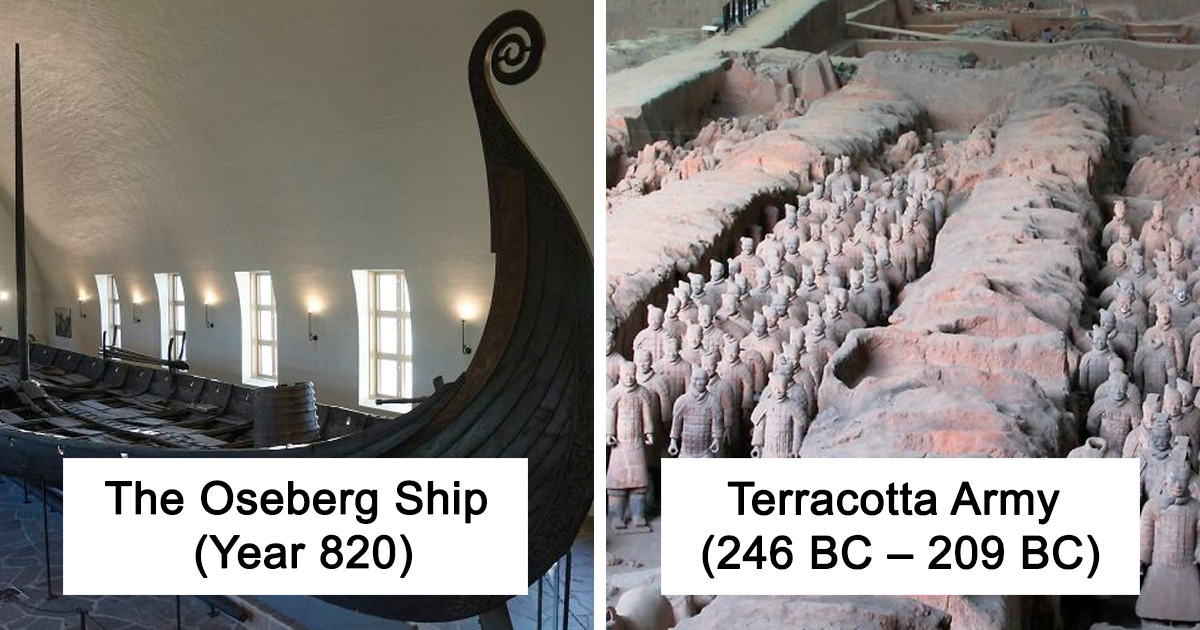
History is not only written in dusty books, royal proclamations, and the occasional overly dramatic marble statue. Sometimes, the past speaks through a broken pot, a scratched tablet, a shipwrecked machine, or a tiny bead that looks unimpressive until an archaeologist gently ruins everyone’s lunch by saying, “Actually, this changes everything.”
Artifacts are physical evidence of human life. They reveal how people governed, worshiped, traded, cooked, fought, counted time, buried their dead, explored the world, and occasionally made terrible decisions with excellent craftsmanship. A single object can confirm an ancient text, challenge a popular myth, or introduce an entire civilization that had been hiding under layers of soil, sand, seawater, or museum storage labels.
This list of 40 well-known artifacts that revealed important historical information explores objects from ancient Egypt, Mesopotamia, China, Europe, the Americas, Africa, and beyond. Some are glamorous. Some are mysterious. Some are basically old paperwork with better durability than modern printer ink. Together, they show why archaeology matters: the past is not dead; it is just very good at playing hide-and-seek.
Why Historical Artifacts Matter
Historical artifacts help scholars move from guessing to knowing. Ancient writers could exaggerate, rulers could brag, and legends could grow bigger than a Pharaoh’s ego. Objects, however, provide evidence. A legal stele can show how justice worked. A map can reveal how people understood the world. A weapon can show technological skill. A funerary mask can explain beliefs about death and power. Even the location of an object matters because context is archaeology’s favorite detective clue.
Of course, artifacts do not explain themselves. The Rosetta Stone did not politely announce, “Hello, I will now unlock Egyptian hieroglyphs.” It took scholars years to compare its scripts. Likewise, the Antikythera Mechanism looked like corroded metal until imaging technology revealed gears complex enough to make a modern watchmaker quietly sweat. The value of an artifact lies not only in what it is, but in what researchers can ask of it.
40 Well-Known Artifacts That Revealed Important Historical Information
1. The Rosetta Stone
The Rosetta Stone is one of the most famous historical artifacts because it helped scholars decipher ancient Egyptian hieroglyphs. Inscribed with the same decree in Greek, Demotic, and hieroglyphic script, it became the translation key that opened thousands of years of Egyptian history. Without it, Egyptology would have been less science and more frustrated staring.
2. The Dead Sea Scrolls
Discovered near Qumran, the Dead Sea Scrolls include biblical manuscripts, religious writings, legal texts, and community rules. They revealed how Jewish religious thought developed during the Second Temple period and provided some of the oldest known versions of Hebrew Bible texts. In short, they made historians very busy and footnotes much longer.
3. The Terracotta Army
China’s Terracotta Army revealed the military organization, artistic skill, and imperial ambition of Qin Shi Huang, the first emperor of unified China. Thousands of life-size soldiers, horses, and chariots guarded his tomb complex. Each figure shows individuality, proving that mass production and personal detail could coexist long before factory robots got involved.
4. Tutankhamun’s Golden Mask
The golden funerary mask of Tutankhamun became an icon of ancient Egypt. Found in the young king’s nearly intact tomb, it revealed royal burial practices, elite craftsmanship, religious symbolism, and the wealth of the New Kingdom. Tutankhamun was not Egypt’s most powerful pharaoh, but his tomb had the public relations department of a superstar.
5. The Code of Hammurabi Stele
This basalt stele preserves one of the most complete legal codes from the ancient Near East. It revealed Babylonian ideas about justice, class, property, family, labor, and punishment. The famous “eye for an eye” principle sounds simple, but the laws also show a complex society obsessed with contracts, responsibility, and very serious fine print.
6. The Cyrus Cylinder
The Cyrus Cylinder records the Persian king Cyrus the Great’s conquest of Babylon and his restoration of temples and religious images. It revealed how ancient rulers used royal inscriptions to promote legitimacy. Often discussed in relation to tolerance and imperial policy, it is also a reminder that political messaging did not begin with campaign commercials.
7. The Antikythera Mechanism
Recovered from a shipwreck near the Greek island of Antikythera, this geared device revealed an astonishing level of ancient technological knowledge. It could model astronomical cycles and predict eclipses. The artifact proved that ancient Greek mechanical engineering was far more advanced than once assumed, basically saying, “Yes, we had analog computers. Try to keep up.”
8. The Narmer Palette
The Narmer Palette is a carved ceremonial object from ancient Egypt that appears to show King Narmer wearing the crowns of Upper and Lower Egypt. It revealed early royal iconography and helped scholars understand the political unification of Egypt around 3100 BCE. It is propaganda, art, and political announcement all in one elegant stone package.
9. The Bust of Nefertiti
The painted limestone bust of Queen Nefertiti revealed the artistic sophistication of Egypt’s Amarna period. It also helped modern scholars visualize the cultural world of Akhenaten, whose religious reforms centered on the Aten. The bust’s elegance has made it famous, though its one unfinished eye still gives it a slightly mysterious “I know something” expression.
10. The Venus of Willendorf
This small Paleolithic figurine, dating to roughly 25,000 years ago, revealed symbolic expression among Ice Age peoples. Scholars debate whether it represented fertility, identity, beauty, ritual, or something else entirely. Its importance lies in showing that early humans created portable objects with meaning beyond survival. Even in prehistory, people had culture, imagination, and accessories.
11. The Lascaux Cave Paintings
Although technically painted on cave walls rather than portable artifacts, the Lascaux images revealed the artistic and symbolic abilities of Paleolithic humans. The animals, signs, and layered compositions suggest ritual, storytelling, memory, or teaching. They prove that early humans were not just surviving the Ice Age; they were decorating it.
12. The Nebra Sky Disc
The Nebra Sky Disc, a Bronze Age object from Germany, revealed sophisticated astronomical observation in prehistoric Europe. Its gold symbols appear to represent the sun or moon, crescent moon, stars, and possibly the Pleiades. It changed assumptions about Bronze Age cosmology, calendrical knowledge, and the human urge to turn the night sky into a planning app.
13. Linear B Tablets
Clay tablets inscribed in Linear B revealed that Mycenaean Greeks used an early form of Greek centuries before the classical age. Their decipherment transformed knowledge of Bronze Age administration, economy, and palace organization. The tablets are not poetry; they are mostly records. Apparently, bureaucracy is one of civilization’s oldest hobbies.
14. The Phaistos Disc
Found on Crete, the Phaistos Disc remains undeciphered, but it revealed the complexity of Minoan-era symbol systems. Its stamped signs suggest an unusual method of producing text or symbolic communication. The disc is important partly because it refuses to explain itself, which is rude, but historically fascinating.
15. The Sutton Hoo Helmet
The Sutton Hoo helmet helped rewrite early English history. Found in an Anglo-Saxon ship burial, it revealed elite warrior culture, long-distance trade, and sophisticated metalwork in seventh-century East Anglia. The burial challenged the old idea of a “dark” early medieval Europe by showing a world bright with gold, garnets, and political ambition.
16. The Staffordshire Hoard
This enormous collection of Anglo-Saxon gold and silver military fittings revealed the wealth, craftsmanship, and warrior culture of early medieval England. Its objects suggest elite conflict, religious symbolism, and skilled metalworking. The hoard is basically what happens when history drops a treasure chest and archaeologists responsibly pick it up.
17. The Lewis Chessmen
The Lewis Chessmen, carved mostly from walrus ivory, revealed cultural connections across the medieval North Atlantic. Found in Scotland and likely made in Scandinavia, they show how games, trade, art, and social hierarchy traveled with people. They also prove that medieval chess pieces had more personality than many modern office meetings.
18. The Bayeux Tapestry
The Bayeux Tapestry tells the story of the Norman Conquest of England in 1066. It revealed details about warfare, ships, clothing, political claims, and medieval storytelling. Although not neutral, it remains one of the richest visual records of the period. Think of it as an embroidered documentary with a strong Norman editorial policy.
19. The Magna Carta
Magna Carta revealed how medieval political conflict helped shape later ideas about law, rights, and limits on royal authority. Issued in 1215, it originally addressed disputes between King John and his barons, but its later legacy influenced constitutional thought in Britain and America. It is proof that paperwork can sometimes scare kings.
20. The Domesday Book
Commissioned by William the Conqueror in 1086, the Domesday Book revealed the landholding structure, population, resources, and taxable wealth of Norman England. It is one of the most important administrative records of medieval Europe. Imagine a national property survey so thorough that people compared it to Judgment Day. Subtle? Not especially.
21. The Book of Kells
The Book of Kells revealed the artistic brilliance of early medieval monastic culture. Its decorated Gospel texts combine Christian theology, Celtic design, and extraordinary manuscript craftsmanship. The manuscript shows how religious devotion, scholarship, and visual imagination flourished in medieval Ireland, even when making one page probably required the patience of a saint.
22. The Codex Sinaiticus
Codex Sinaiticus is one of the most important early Christian manuscripts. Written in Greek, it revealed early biblical text transmission and helped scholars compare variations in scripture. Its survival showed how ancient books were copied, preserved, corrected, and circulated. For historians of religion, it is a manuscript treasure; for copy editors, it is ancestral evidence.
23. The Vindolanda Tablets
These Roman-era wooden tablets from northern Britain revealed everyday life near Hadrian’s Wall. They include military records, supply lists, personal letters, and even a birthday invitation. Unlike grand monuments, they show ordinary concerns: food, shoes, friends, schedules, and paperwork. Ancient Romans, it turns out, also had inbox problems.
24. The Vindolanda Writing Tablets
Closely related to the broader Vindolanda finds, the writing tablets are especially valuable because they preserve informal Latin handwriting. They revealed the voices of soldiers, officers, women, and families living at the empire’s edge. Their charm lies in their normality: history becomes more human when someone asks for socks.
25. The Uluburun Shipwreck Cargo
The Uluburun shipwreck revealed the vast trade networks of the Late Bronze Age Mediterranean. Its cargo included copper ingots, tin, glass, ivory, jewelry, and goods from multiple regions. The wreck proved that ancient economies were deeply connected long before modern globalization made everyone complain about shipping delays.
26. The Royal Tombs of Ur Artifacts
Objects from the Royal Tombs of Ur, including lyres, jewelry, vessels, and the famous “Standard of Ur,” revealed the wealth, social hierarchy, warfare, music, and ritual life of ancient Mesopotamia. These artifacts helped scholars understand Sumerian elites and ceremonial death practices. They also demonstrate that ancient luxury was not shy.
27. The Library of Ashurbanipal Tablets
The clay tablets from Ashurbanipal’s library revealed literature, medicine, astronomy, divination, royal records, and administrative knowledge from ancient Assyria and Mesopotamia. The collection preserved the Epic of Gilgamesh and thousands of cuneiform texts. If knowledge is power, this library was a royal power bank made of baked clay.
28. The Aztec Sun Stone
The Aztec Sun Stone revealed information about Mexica cosmology, calendar systems, ritual cycles, and imperial ideology. Often miscalled a “calendar stone,” it is more accurately a symbolic monument tied to time, sacrifice, and cosmic order. It shows that measuring time was never just practical; sometimes it was intensely political.
29. Maya Codices
The surviving Maya codices revealed advanced knowledge of astronomy, mathematics, ritual calendars, and divination. Though only a few survived colonial destruction, they remain essential to understanding Maya intellectual life. Their pages show that ancient American civilizations developed complex systems for tracking time, planets, ceremonies, and the eternal question: “Is Venus behaving today?”
30. Inca Quipu
Quipu, systems of knotted cords used by the Inca, revealed a non-written method of recording information. Scholars believe they tracked numbers, labor, tribute, census data, and possibly narratives. Quipu challenge the assumption that writing must look like marks on paper. Sometimes, history is tied up in knotsliterally.
31. Clovis Points
Clovis points revealed important information about early human activity in North America. These distinctive stone tools, used for hunting, helped define the Clovis culture and shaped debates about when and how people first populated the Americas. Later discoveries have complicated the timeline, but Clovis points remain central to the story.
32. The Kennewick Man Artifacts and Remains
The Kennewick Man discovery, along with associated archaeological study, revealed complex information about ancient populations in North America. It also sparked major debates about science, ancestry, ethics, and Indigenous rights. Its significance lies not only in what researchers learned, but in how archaeology must respect living communities connected to the past.
33. The Hope Diamond
The Hope Diamond revealed more than gemological beauty. Its ownership history connects India, France, Britain, and the United States, showing how luxury objects travel through empire, trade, wealth, and mythmaking. The famous “curse” may be dramatic marketing, but the diamond’s historical journey is genuinely fascinating.
34. The Star-Spangled Banner Flag
The flag that inspired the U.S. national anthem revealed the material culture of wartime patriotism. Made for Fort McHenry before the War of 1812 battle in Baltimore, it became a national symbol through memory, preservation, and song. It shows how an object can become larger than fabric, thread, and weather damage.
35. The Apollo 11 Command Module Columbia
The Apollo 11 Command Module Columbia revealed the engineering, risk, and human achievement behind the first crewed Moon landing. As the spacecraft that carried Neil Armstrong, Buzz Aldrin, and Michael Collins back to Earth, it is a modern artifact of exploration. History is not always ancient; sometimes it has heat shields.
36. The Waldseemüller Map
The 1507 Waldseemüller map revealed a major shift in European geographic knowledge. It was the first known map to use the name “America” and to show the New World as separate from Asia. This artifact demonstrates how maps do not merely describe the world; they help create the world people imagine.
37. The Benin Bronzes
The Benin Bronzes revealed the artistic, political, and ceremonial sophistication of the Kingdom of Benin in present-day Nigeria. Their plaques and sculptures preserve court life, rulers, warriors, foreign contact, and sacred authority. They also raise urgent questions about colonial looting, museum ownership, and cultural restitution.
38. The Great Zimbabwe Soapstone Birds
The soapstone birds of Great Zimbabwe revealed symbolic and political traditions in a powerful medieval African city. They helped connect the site to local Shona heritage and challenged colonial-era myths that denied African authorship of the ruins. These artifacts show how archaeology can correct history when prejudice has been doing sloppy work.
39. The Moche Lord of Sipán Artifacts
The tomb of the Lord of Sipán in Peru revealed extraordinary information about Moche society, religion, metalworking, warfare, and elite burial practices. Gold ornaments, ceramics, weapons, and sacrificed attendants showed a complex political and ceremonial world. The discovery transformed understanding of pre-Inca civilization on the north coast of Peru.
40. The Voynich Manuscript
The Voynich Manuscript is famous because it has not fully revealed its secrets. Filled with unknown script, strange plants, diagrams, and mysterious illustrations, it challenges linguists, historians, cryptographers, and optimists with too much free time. Its historical value lies in showing how mystery itself can drive research across disciplines.
What These Artifacts Teach Us About History
These artifacts reveal an important truth: history is not a straight hallway; it is a messy house with secret rooms. The Antikythera Mechanism shows that ancient technology could be breathtakingly sophisticated. The Library of Ashurbanipal shows that literature, science, and recordkeeping were already deeply developed in Mesopotamia. The Terracotta Army shows how state power could mobilize labor, art, and belief at a staggering scale.
Other artifacts complicate popular myths. Magna Carta did not instantly create modern democracy, but it became a powerful symbol for the rule of law. Clovis points once seemed to represent the earliest widespread human culture in the Americas, but newer evidence has pushed scholars to rethink migration timelines. The Benin Bronzes and Great Zimbabwe birds challenge old colonial assumptions and highlight the brilliance of African civilizations.
The best artifacts also make history personal. The Vindolanda tablets are not grand imperial monuments; they are messages from real people living on the Roman frontier. The Star-Spangled Banner is not just a national symbol; it is a damaged, preserved textile that passed through family memory before becoming public heritage. Tutankhamun’s mask is royal and dazzling, but it also reminds us that a young person died and was prepared for eternity according to the beliefs of his culture.
Experiences Related to Famous Historical Artifacts
Experiencing historical artifacts is different from simply reading about them. A textbook can say that the Rosetta Stone helped decode hieroglyphs, but standing near an inscribed stone and realizing that its surface helped unlock an entire civilization creates a different kind of understanding. The object has weight, texture, damage, and presence. It is no longer an abstract “important artifact.” It becomes a survivor.
Museum visits are often the first experience people have with famous artifacts, and the best visits are not rushed. It is tempting to walk through a gallery like a checklist: mask, sword, tablet, famous thing, gift shop. But artifacts reward patience. Look at the small details: tool marks, repairs, missing pieces, faded pigments, fingerprints in clay, or the places where an object has been worn smooth by human touch. Those details can feel more powerful than gold.
One useful experience is comparing famous artifacts with ordinary ones. A golden mask may grab attention, but a cooking pot, shoe, bead, or wooden writing tablet may reveal more about daily life. The grand object tells us what a society admired. The ordinary object tells us how people lived. Together, they make history fuller and less stiff. Kings and queens matter, but so do bakers, soldiers, scribes, traders, children, and whoever first lost a sandal in the mud and accidentally helped future archaeologists.
Artifacts also teach humility. Many objects on this list were misunderstood, ignored, looted, damaged, or debated before scholars recognized their meaning. The Antikythera Mechanism needed modern imaging to show its complexity. The Phaistos Disc and Voynich Manuscript still resist confident interpretation. These mysteries remind us that history is not a finished puzzle. It is a long conversation between evidence, technology, cultural knowledge, and careful skepticism.
Another powerful experience is seeing how artifacts connect cultures. The Uluburun shipwreck shows that Bronze Age trade linked regions across the Mediterranean. The Lewis Chessmen connect Scotland, Scandinavia, gaming, ivory trade, and medieval status. The Hope Diamond connects geology, Indian mines, European courts, American collecting, and modern museum display. Objects travel, and when they travel, they carry stories with them.
Finally, famous artifacts encourage ethical thinking. Who owns the past? Should objects taken during colonial conquest remain in foreign museums? How should human remains be studied, protected, or returned? What happens when an artifact is both a scientific resource and a sacred inheritance? These questions are not side notes. They are central to modern archaeology. The past belongs not only to scholars, but also to communities whose identities, memories, and rights are connected to it.
That is why artifacts remain so compelling. They are evidence, but they are also bridges. They connect ancient hands to modern eyes. They turn historical information into something visible, fragile, and sometimes breathtaking. A famous artifact may sit behind glass, but its story is never sealed. Every new question, technology, and generation can make it speak again.
Conclusion
Well-known artifacts that revealed important historical information prove that the past is often preserved in objects small enough to hold, heavy enough to move empires, or strange enough to confuse experts for centuries. From the Rosetta Stone and Dead Sea Scrolls to the Terracotta Army, Antikythera Mechanism, Benin Bronzes, and Apollo 11 Command Module, these objects have expanded what we know about language, law, religion, technology, trade, art, identity, and power.
The most exciting lesson is that history is still unfolding. New tools can extract fresh information from old objects. New ethical standards can reshape how artifacts are displayed and interpreted. New discoveries can overturn old assumptions. Artifacts are not silent relics. They are witnesses, and when studied carefully, they can tell stories that written records forgot, ignored, exaggerated, or never bothered to mention.
Note: This article is based on real historical information synthesized from reputable museum, academic, archaeology, library, and cultural heritage sources. It contains no contentReference markers or unnecessary source-code elements.