

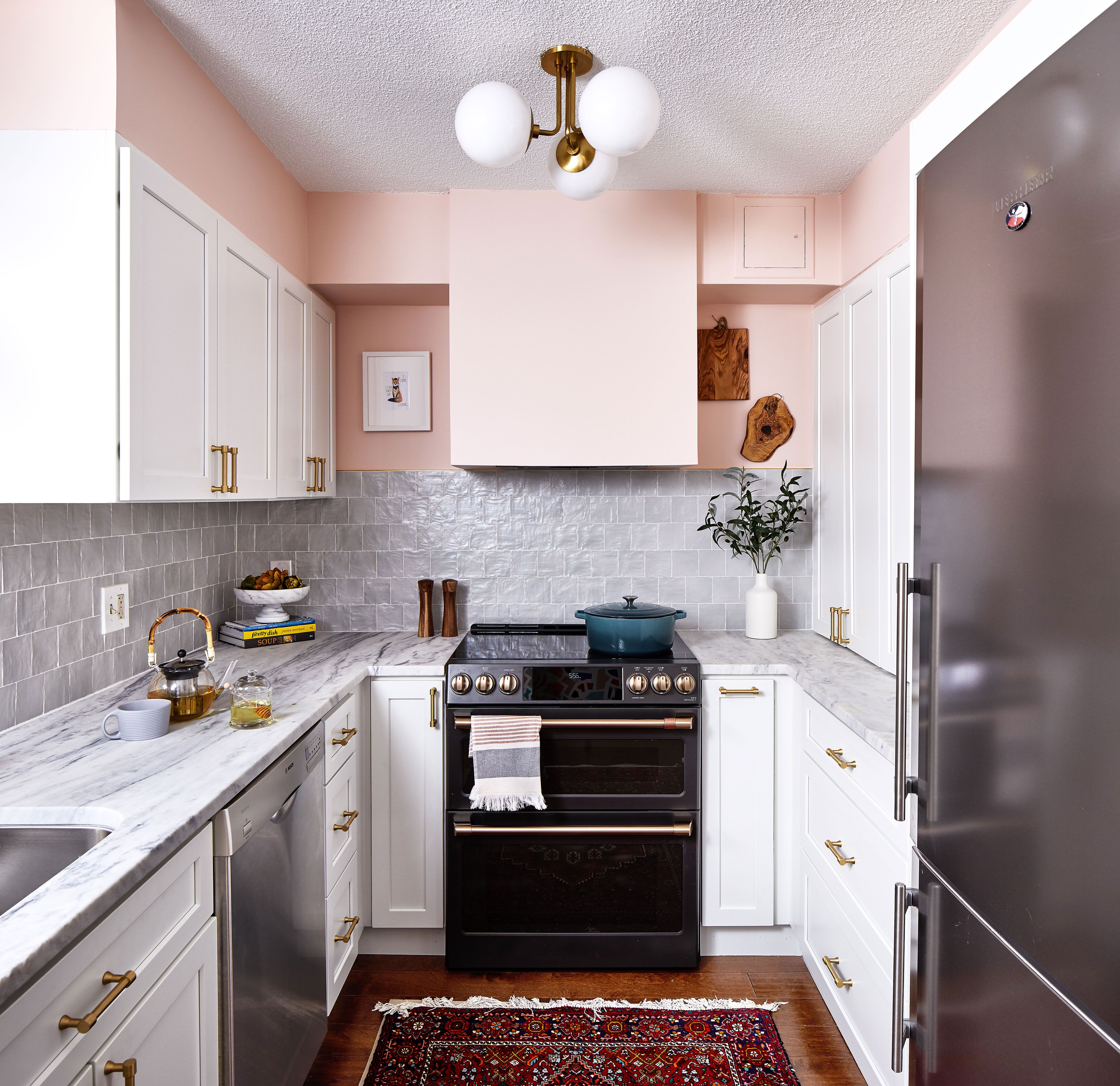
A small kitchen is not a design problem. It is a personality test with cabinets. Every mug, spice jar, cutting board, and mysterious extra lid asks the same question: “Do I deserve prime real estate?” The good news is that a compact kitchen can look stylish, feel organized, and work beautifully without needing a celebrity chef’s square footage or a renovation budget that makes your wallet hide under the sofa.
The best small kitchen decor ideas combine beauty with function. A pretty shelf should also hold something useful. A backsplash should add personality without shouting over the toaster. Lighting should make chopping vegetables easier and make your kitchen look less like a sad airport snack bar. Below are 47 practical, stylish, and realistic ways to give a small kitchen big style.
Smart Small Kitchen Decor Ideas That Make Space Feel Bigger
1. Start with a lighter color base
Soft white, warm cream, pale gray, muted sage, and light beige can help a small kitchen feel brighter and more open. You do not have to create an all-white kitchen, but using lighter tones on cabinets, walls, or backsplash gives the eye room to breathe.
2. Add one bold accent color
A compact kitchen can handle color when it is used with confidence. Try navy stools, a terracotta runner, forest-green cabinet pulls, or a cheerful yellow kettle. One strong accent keeps the room lively without turning it into a paint-sample convention.
3. Use open shelving carefully
Open shelves can make a small kitchen feel airy, especially when replacing bulky upper cabinets. The secret is restraint. Display everyday dishes, glassware, or a few attractive jars. If the shelf starts holding batteries, coupons, and one lonely screw, it is no longer decorit is a cry for help.
4. Style shelves by color
Group white plates, clear glasses, wood bowls, or black mugs together. A simple palette makes open storage look intentional rather than accidental.
5. Hang a rail for utensils
A wall-mounted rail with hooks can hold spatulas, ladles, measuring cups, or small pans. It frees drawer space and adds a practical, bistro-style look.
6. Install a magnetic knife strip
A magnetic knife strip removes the bulky knife block from the counter and creates a clean, professional look. Mount it near your prep zone so it is useful, not just decorative.
7. Choose slim floating shelves
Floating shelves above a coffee station, near a window, or on an empty side wall can hold mugs, spices, small plants, or cookbooks without making the kitchen feel boxed in.
8. Use the side of the fridge
The side of a refrigerator is often wasted space. Add magnetic spice tins, a paper towel holder, a small calendar, or a slim basket for tea bags and grocery lists.
9. Bring in under-cabinet lighting
Under-cabinet lights instantly make a small kitchen feel more polished. They brighten prep areas, add depth, and create a warm evening glow when you are making toast at 10 p.m. like a responsible adult.
10. Layer your lighting
Combine ceiling lighting, under-cabinet lighting, and a small pendant or wall sconce if space allows. Layered lighting makes a tiny kitchen feel designed instead of merely illuminated.
11. Pick reflective finishes
Glossy tile, polished hardware, glass cabinet fronts, and stainless steel appliances can bounce light around the room. A little shine goes a long way in a compact space.
12. Use a mirror strategically
A small mirror near a breakfast nook or opposite a window can visually expand the room. Avoid placing it where it reflects clutter, unless you want twice the chaos for free.
Storage That Doubles as Decor
13. Try a rolling kitchen cart
A rolling cart can act as a mini island, pantry, coffee bar, or produce station. Choose one with shelves or drawers, and roll it away when you need more floor space.
14. Use pretty baskets above cabinets
If your cabinets do not reach the ceiling, use matching baskets to store seasonal items, linens, or rarely used serving pieces. Matching containers make high storage look tidy.
15. Add cabinet-door organizers
The inside of cabinet doors can hold pot lids, cutting boards, measuring spoons, wraps, or cleaning supplies. Hidden storage is the quiet hero of small kitchen design.
16. Use drawer dividers
Drawer dividers keep utensils, gadgets, and cooking tools from becoming one tangled metal orchestra. Organization may not sound glamorous, but neither does digging for a peeler while onions burn.
17. Store baking sheets vertically
Use vertical dividers for sheet pans, cutting boards, muffin tins, and trays. Vertical storage is easier to access and looks cleaner than a leaning tower of cookware.
18. Decant pantry staples
Clear containers for flour, rice, pasta, oats, coffee, and snacks can make shelves look calmer. Label them for style and sanity.
19. Use a small lazy Susan
A turntable works beautifully for oils, vinegars, sauces, spices, or condiments. It prevents the “lost bottle in the back of the cabinet” mystery.
20. Add a pegboard wall
A pegboard can hold pans, utensils, baskets, herbs, and small shelves. It is flexible, affordable, and especially useful in rental kitchens if installed with renter-safe methods.
21. Choose stackable containers
Stackable bins and containers help pantry shelves use vertical space. Just avoid buying organizers before decluttering; otherwise, you are simply giving clutter nicer shoes.
22. Keep daily items within reach
Store the things you use every day in the easiest spots: plates, cups, coffee, oil, salt, and your favorite pan. Rarely used items can move higher, lower, or even outside the kitchen.
23. Use a storage bench
If your small kitchen has an eating nook, choose a bench with hidden storage. It can hold table linens, extra dishes, or small appliances.
24. Hang mugs under shelves
Cup hooks under a shelf or cabinet free up cabinet space and create a cozy coffee-shop feel. Bonus: mugs are cute. Most of them, anyway.
Decor Details That Add Big Personality
25. Upgrade cabinet hardware
New knobs or pulls can change the entire mood of a small kitchen. Try brass for warmth, matte black for contrast, chrome for shine, or wood for a softer look.
26. Add peel-and-stick backsplash
Peel-and-stick tile is a renter-friendly way to add pattern, color, or texture. Choose subtle subway tile, marble-look panels, zellige-inspired squares, or a simple geometric pattern.
27. Use a washable runner
A narrow runner adds color, softness, and warmth to a galley kitchen. Choose washable materials because kitchens are where tomato sauce practices gymnastics.
28. Display cutting boards
Wood cutting boards leaned against the backsplash add warmth and texture. They also hide outlets or awkward blank spots while staying useful.
29. Add a small plant
Herbs, pothos, succulents, or a tiny potted fern can make a kitchen feel alive. If natural light is limited, choose low-light plants or realistic faux greenery.
30. Create a mini herb station
A few small pots of basil, mint, parsley, or thyme near a sunny window add freshness and fragrance. They also make you feel like someone who casually says, “I’ll just snip some herbs.”
31. Hang small art
Kitchen art does not need to be expensive. Frame a vintage recipe card, botanical print, food illustration, or small abstract piece. Art makes a kitchen feel like a room, not just a work zone.
32. Use matching soap dispensers
Swap plastic bottles for matching soap and lotion dispensers. It is a small detail, but small kitchens reward small details.
33. Style a tray on the counter
Use a tray to group olive oil, salt, pepper, a candle, or a small plant. A tray turns loose items into a vignette, which is decorator language for “this clutter has a plan.”
34. Choose attractive small appliances
If an appliance must live on the counter, make it earn its keep visually. A sleek toaster, compact coffee maker, or colorful mixer can become part of the decor.
35. Hide less attractive appliances
Store bulky or rarely used appliances in a cabinet, pantry, cart, or nearby closet. Counter space is precious; do not let the waffle maker squat there rent-free if it appears twice a year.
36. Use glass cabinet inserts
Glass fronts can lighten upper cabinets and show off neat dishware. For a softer look, try reeded or frosted glass.
37. Paint lower cabinets darker
Dark lower cabinets with lighter upper walls or shelves can ground a small kitchen without making it feel heavy. Navy, charcoal, olive, and deep teal work especially well.
38. Try color drenching
Painting cabinets, trim, and walls in one tone can blur visual boundaries and make a small kitchen feel more cohesive. Soft green, warm beige, pale blue, or creamy white are approachable choices.
39. Add wallpaper in a small dose
Wallpaper behind open shelves, inside a breakfast nook, or on one accent wall can add charm. In a small kitchen, a little pattern feels special rather than overwhelming.
40. Use vertical stripes or vertical tile
Vertical lines can draw the eye upward, making ceilings feel higher. Try vertical subway tile, narrow paneling, or striped wallpaper.
Layout and Styling Tricks for Small Kitchens
41. Keep counters mostly clear
Clear counters make a kitchen look larger and work better. Aim to leave one main prep zone open. Your future sandwich will thank you.
42. Create zones
Group items by task: coffee zone, baking zone, prep zone, cooking zone, and cleanup zone. Zones reduce visual mess and make the kitchen easier to use.
43. Use the sink area wisely
An over-sink cutting board or roll-up drying rack can create temporary workspace. This is especially helpful in kitchens with very limited counter space.
44. Choose backless stools
If you have a small peninsula or breakfast bar, backless stools tuck underneath and keep sightlines open.
45. Add a narrow wall shelf
A shallow picture ledge or spice shelf can hold small jars, art, tea tins, or cookbooks without stealing much depth from the room.
46. Use ceiling-height storage
When possible, extend storage upward with tall cabinets, shelves, or stacked baskets. Small kitchens need to think vertically because the floor is already busy doing floor things.
47. Edit often
The most powerful small kitchen decor idea is editing. Keep what you use, love, and have space for. Donate duplicates, toss broken items, and stop saving every takeout container like it might one day inherit the family business.
Small Kitchen Decor Experiences: What Really Works in Everyday Life
The biggest lesson from decorating a small kitchen is that style and function cannot be separated. In a large kitchen, you might get away with a purely decorative corner. In a tiny kitchen, every inch has to audition for its role. If something is beautiful but always in the way, it becomes annoying. If something is practical but ugly, it slowly drains the joy out of the room. The sweet spot is choosing pieces that do both jobs at once.
One of the most effective changes is clearing the counter before buying anything new. Many people start with baskets, jars, shelves, and organizers. That sounds productive, but it can accidentally create better-dressed clutter. The smarter approach is to remove everything from the counter and ask what genuinely needs to live there. Usually, the answer is fewer items than expected: maybe a coffee maker, a utensil crock, a cutting board, and a tray for oils. Once the counter is calm, the whole kitchen feels bigger.
Lighting is another upgrade that feels almost magical. A small kitchen with one overhead light can look flat and shadowy. Add under-cabinet lights, and suddenly the backsplash has texture, the counters look cleaner, and cooking feels easier. Even battery-operated lights can make a big difference for renters. Warm light is especially helpful because it makes the room feel cozy rather than clinical.
Open shelving is helpful, but only when used honestly. It works best for items used daily, such as plates, bowls, mugs, and glasses. These pieces do not have time to collect much dust, and their repetition creates a neat visual rhythm. Open shelving works poorly when it becomes a museum for fragile dishes nobody touches or a parking garage for random pantry overflow. A good rule is simple: if it is on display, it should be either useful, beautiful, or preferably both.
Color also matters more in a small kitchen than many people think. Light colors can make the space feel open, but that does not mean everything must be white. Warm neutrals, pale greens, dusty blues, and natural wood tones can add personality while keeping the room soft. For people who love bold color, lower cabinets, a backsplash, a runner, or small appliances are safer places to experiment. That way, the kitchen gets style without feeling visually crowded.
The most satisfying small-kitchen decor often comes from solving daily irritations. If spices are hard to find, a drawer insert or magnetic spice rack feels life-changing. If pans are stacked like a metal avalanche, vertical dividers save time and nerves. If there is nowhere to chop vegetables, an over-sink board or rolling cart creates instant workspace. These fixes may sound humble, but they change how the kitchen feels every day.
Finally, a small kitchen benefits from regular editing. Food expires, mugs multiply, gadgets lose their charm, and somehow one household becomes the proud owner of seven spatulas. A quick monthly reset keeps the space from shrinking emotionally, even if the square footage stays the same. Big style in a small kitchen is not about having more. It is about making better choices, letting useful things look beautiful, and giving every object a proper home.
Conclusion
A small kitchen can be stylish, efficient, and genuinely enjoyable when decor choices support the way you cook, clean, and live. The best ideas are not always expensive or dramatic. Sometimes the biggest transformation comes from brighter lighting, smarter vertical storage, a clear counter, fresh hardware, or a single shelf styled with everyday dishes. With the right mix of color, texture, organization, and personality, even the tiniest kitchen can serve big style without breaking a sweator a cabinet hinge.