

Overactive bladder has terrible timing. It does not care that you just sat down for a movie, stepped into a meeting, zipped yourself into jeans that require engineering-level effort, or finally got comfortable in bed. Suddenly, your bladder sends a dramatic message: “We must leave. Immediately.”
If this sounds familiar, you are not alone. Overactive bladder, often shortened to OAB, can cause sudden urges to urinate, frequent bathroom trips, nighttime wake-ups, and sometimes leaking before you reach the toilet. For many females, symptoms may become more noticeable after pregnancy, childbirth, hormonal changes, menopause, weight changes, pelvic surgery, chronic constipation, or years of “just in case” bathroom habits.
The encouraging news: exercise can help. Not the “run ten miles and become a superhero by Tuesday” kind of exercise. We are talking about targeted, practical movements that improve pelvic floor strength, coordination, relaxation, bladder control, and confidence. The best routine for an overactive bladder is not about clenching all day like you are guarding state secrets. It is about learning when to contract, when to relax, how to breathe, and how to train your bladder to stop acting like an overcaffeinated group chat.
This guide covers the five best exercises for females with an overactive bladder, including how to do them, why they work, common mistakes, and how to build them into real life without turning your day into a pelvic floor boot camp.
Understanding Overactive Bladder Before You Exercise
Overactive bladder is usually defined by urgency: a sudden, hard-to-ignore need to urinate. It may come with urinary frequency, nocturia, and urge incontinence. Unlike stress incontinence, which causes leaking during coughing, laughing, jumping, or lifting, OAB is more about the bladder contracting or signaling too early. Some women have both, which is called mixed incontinence.
Exercises help because bladder control is not only a bladder issue. It involves the pelvic floor muscles, the urinary sphincter, the nervous system, the core, breathing patterns, posture, and daily habits. Think of it as a team sport. The bladder may be the loudest player, but the pelvic floor is the calm teammate whispering, “We have a plan.”
When to check with a healthcare professional first
Before starting an exercise program, consider talking with a healthcare professional or pelvic floor physical therapist if you have pain, burning with urination, blood in urine, recurrent urinary tract infections, pelvic heaviness, difficulty emptying your bladder, new leakage after surgery, symptoms after childbirth, or sudden changes in bladder habits. Kegels are helpful for many women, but not everyone needs more tightening. Some women have pelvic floor muscles that are already tense, overactive, or poorly coordinated. In that case, relaxation and guided therapy may be more helpful than endless squeezing.
Exercise 1: Classic Kegels for Pelvic Floor Strength
Kegel exercises are the best-known pelvic floor exercise, and for good reason. They train the muscles that support the bladder, uterus, urethra, vagina, and rectum. Stronger and better-coordinated pelvic floor muscles can help reduce leakage and improve control during sudden urges.
The key word is “better-coordinated.” A good Kegel is not a full-body clench. Your face, shoulders, inner thighs, buttocks, and abs do not need to join the meeting. In fact, if your eyebrows are doing Kegels, you have gone too far.
How to do classic Kegels
- Sit, lie down, or stand comfortably. Beginners often do best lying down.
- Imagine you are trying to stop gas or gently lift the muscles around the vagina and anus.
- Squeeze and lift the pelvic floor muscles without holding your breath.
- Hold for 3 to 5 seconds.
- Relax fully for 5 to 10 seconds.
- Repeat 8 to 10 times.
As you get stronger, work toward holding each contraction for 8 to 10 seconds. Aim for one to three sets per day, depending on your comfort and professional guidance.
Why it helps overactive bladder
Pelvic floor muscle training may help suppress urgency by improving the muscles that support the urethra and assist bladder control. When these muscles respond well, they can help send a calming signal to the bladder during an urge. It is like telling your bladder, “Thank you for your concern, but we are not sprinting through Target today.”
Common mistakes to avoid
Do not practice Kegels by repeatedly stopping urine midstream. It may help you identify the muscles once, but doing it regularly can interfere with normal emptying. Also avoid squeezing your buttocks, tightening your belly hard, or holding your breath. The release matters as much as the squeeze. A pelvic floor that never relaxes can become irritated, tired, and less cooperative.
Exercise 2: Quick Flicks for Urgency Suppression
Quick flicks are short, fast pelvic floor contractions. They are especially useful when urgency hits suddenly. Instead of panicking and racing to the bathroom, quick flicks help you pause, breathe, and regain control before walking calmly to the toilet.
Yes, calmly. Not the tiny penguin shuffle of desperation. We are aiming for dignity with sensible shoes.
How to do quick flicks
- When an urge hits, stop moving if possible.
- Sit down or stand still.
- Take one slow breath.
- Quickly squeeze and release your pelvic floor muscles 5 times.
- Keep breathing and relax your shoulders.
- Wait for the urge wave to settle.
- Walk to the bathroom at a normal pace, or delay a few minutes if you are bladder training.
You can also practice quick flicks when you do not have urgency. Try 5 to 10 quick contractions, once or twice daily. The goal is responsiveness, not exhaustion.
Why it helps overactive bladder
Urgency often arrives in waves. If you immediately rush, your brain and bladder learn that every urge is an emergency. Quick flicks interrupt that pattern. They help activate the pelvic floor and may reduce the bladder contraction signal long enough for you to choose your next step instead of being bossed around by your bladder.
Best time to use quick flicks
Use quick flicks when you hear running water, arrive home and suddenly need to go, put your key in the door, stand up from your desk, or feel that “now-now-now” sensation. These are common trigger moments for people with overactive bladder. With practice, quick flicks can turn the volume down on those triggers.
Exercise 3: Diaphragmatic Breathing with Pelvic Floor Relaxation
Not every bladder problem needs more squeezing. Some females with OAB also carry tension in the pelvic floor, hips, jaw, abdomen, or lower back. If your pelvic muscles are always gripping, they may have trouble coordinating properly when you need them. Diaphragmatic breathing helps relax the nervous system and encourages the pelvic floor to move naturally.
This exercise may look like you are doing nothing, which is wonderful. Finally, a health habit that respects your couch.
How to do diaphragmatic breathing
- Lie on your back with knees bent, or sit with your feet supported.
- Place one hand on your lower ribs and one hand on your belly.
- Inhale through your nose and let your ribs expand gently.
- Imagine the pelvic floor softening or dropping slightly as you inhale.
- Exhale slowly through your mouth.
- Let your body relax instead of forcing a contraction.
- Repeat for 2 to 5 minutes.
Why it helps overactive bladder
Breathing affects the pelvic floor. When you inhale deeply, the diaphragm moves downward and the pelvic floor can gently lengthen. When you exhale, the pelvic floor naturally rebounds. This rhythm helps improve awareness, reduce tension, and support better coordination. For women who feel urgency during stress, breathing can also calm the fight-or-flight response that makes bladder signals feel louder.
Try it during urge waves
When urgency appears, pause and take three slow breaths. Relax your belly. Unclench your jaw. Drop your shoulders. Then use quick flicks if needed. This combination can be surprisingly effective because it addresses both the muscle response and the nervous system response.
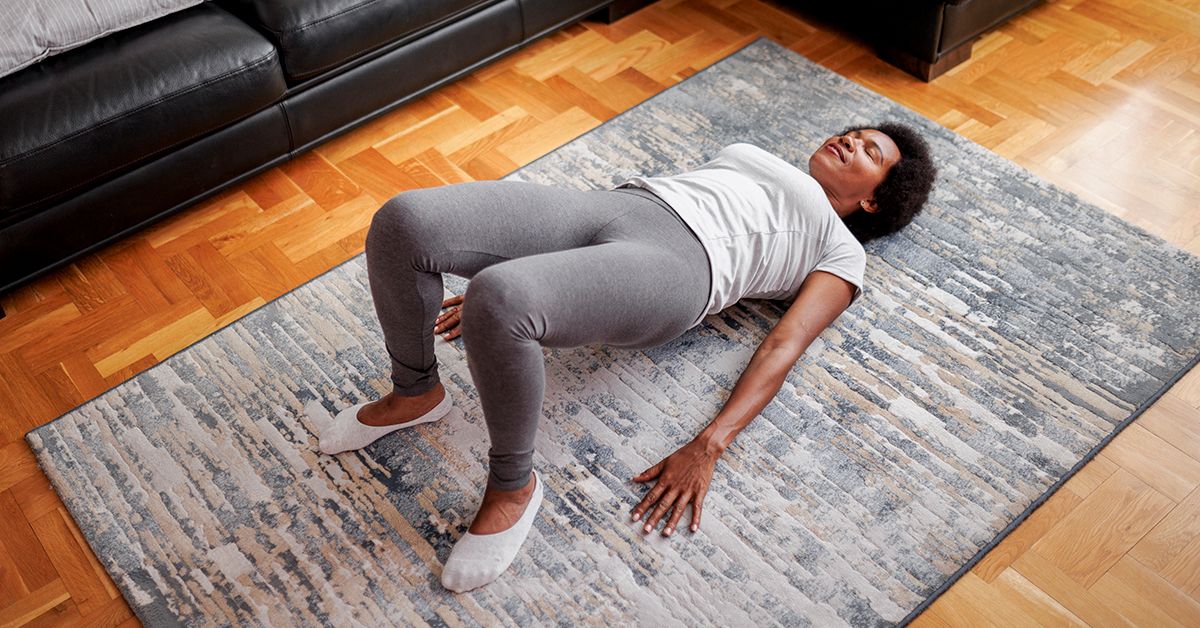
Exercise 4: Glute Bridge with Pelvic Floor Coordination
The pelvic floor does not work alone. It teams up with the glutes, deep core muscles, hips, and breathing system. A glute bridge is a gentle strengthening exercise that can help support pelvic stability without high-impact bouncing. For women with overactive bladder, the bridge is useful because it trains the pelvic floor in a functional movement pattern.
Translation: your body learns bladder control while doing something more realistic than lying still and thinking about your urethra.
How to do a glute bridge
- Lie on your back with knees bent and feet hip-width apart.
- Rest your arms by your sides.
- Inhale and relax your pelvic floor.
- Exhale, gently engage your pelvic floor, and lift your hips.
- Keep your ribs relaxed and avoid arching your lower back.
- Inhale at the top.
- Exhale as you lower your hips slowly.
- Repeat 8 to 12 times.
Why it helps overactive bladder
Bridges strengthen the glutes and encourage coordination between breathing, core support, and pelvic floor activation. This can be especially helpful for women who leak with movement or feel urgency when changing positions. The goal is not to squeeze as hard as possible. It is to create a gentle lift and controlled release.
Make it easier or harder
To make it easier, lift only halfway or place a pillow under your hips for support. To make it harder, pause for two seconds at the top while continuing to breathe. Avoid adding resistance bands or single-leg variations until you can perform the basic bridge without pressure, breath-holding, or urgency.
Exercise 5: Chair Squats for Functional Bladder Control
Chair squats, also called sit-to-stand exercises, train the muscles you use every day. You squat when you sit, stand, pick up laundry, lower onto the toilet, get into a car, and rescue snacks from the bottom shelf. For females with OAB, chair squats build lower-body strength while teaching the pelvic floor to coordinate with movement.
This is bladder-friendly strength training. No jumping jacks. No trampoline. No “surprise leak Olympics.”
How to do chair squats
- Stand in front of a sturdy chair with feet hip-width apart.
- Inhale as you bend your knees and send your hips back toward the chair.
- Lightly touch the chair with your hips.
- Exhale as you stand, gently lifting the pelvic floor.
- Keep your knees tracking over your toes.
- Repeat 8 to 10 times.
Why it helps overactive bladder
Chair squats improve leg, hip, and core strength, which supports better posture and pelvic stability. They also train timing. Many women accidentally bear down during effort, which can increase pressure on the bladder and pelvic floor. Exhaling as you stand helps reduce downward pressure and encourages a gentle pelvic floor lift.
How to keep it bladder-safe
Do not hold your breath. Do not push your belly downward. Keep the movement slow and controlled. If urgency increases, reduce the range of motion or practice near a wall for support. If you feel pelvic heaviness or pain, stop and ask a pelvic floor physical therapist for guidance.
Bonus Habit: Bladder Training Works Best with Exercise
Although bladder training is not a gym-style exercise, it is one of the most useful “workouts” for overactive bladder. It teaches your bladder and brain to tolerate gradually longer intervals between bathroom trips.
Start by keeping a bladder diary for three days. Write down when you urinate, what you drink, when urgency happens, and whether leaking occurs. Then identify your usual bathroom interval. If you typically go every hour, try stretching to 1 hour and 10 minutes. Once that feels manageable, add another 5 to 15 minutes. Small steps matter.
During the waiting period, use quick flicks, slow breathing, distraction, and calm walking. The goal is not to suffer. The goal is to retrain the system gently. Your bladder is not a toddler, but it may respond well to patient boundaries.
Weekly Routine for Females with Overactive Bladder
A simple routine is easier to keep than a complicated one. Here is a realistic beginner plan:
- Daily: 1 set of classic Kegels, 8 to 10 repetitions.
- Daily: 2 minutes of diaphragmatic breathing.
- Most days: Practice quick flicks once when calm, then use them during urgency.
- Three days per week: 1 to 2 sets of glute bridges.
- Three days per week: 1 to 2 sets of chair squats.
- Daily or weekly: Use bladder training intervals based on your bladder diary.
Progress should feel steady, not punishing. Many women notice small improvements first: fewer panic urges, longer time between bathroom trips, more confidence leaving the house, or fewer nighttime wake-ups. That is real progress. Your bladder does not need a motivational speech; it needs consistency.
Lifestyle Tips That Support These Exercises
Exercise works better when daily habits support bladder health. Consider reducing common bladder irritants such as caffeine, alcohol, carbonated drinks, acidic juices, and artificial sweeteners if they trigger symptoms. Drink enough water, but avoid chugging huge amounts at once. Manage constipation, because a full bowel can press on the bladder. Maintain a healthy weight if recommended by your clinician, and avoid smoking, which can worsen coughing and bladder pressure.
Also, do not make “just in case” bathroom trips your default setting. Going too often can train your bladder to expect emptying at smaller volumes. Of course, use common sense before long drives or events. But if you are visiting the bathroom every 30 minutes out of fear, bladder training may help rebuild trust.
When Exercises Are Not Enough
Exercises are powerful, but they are not the only option. If symptoms continue despite consistent practice, a healthcare professional may discuss pelvic floor physical therapy, biofeedback, medications, nerve stimulation, bladder injections, or other treatments. Getting help is not failure. It is simply upgrading your toolkit.
Pelvic floor physical therapists can check whether your muscles are weak, tight, poorly coordinated, or compensating with nearby muscles. This matters because two women can have the same symptom but need different strategies. One may need strengthening; another may need relaxation and down-training. Personalized care can save months of guesswork.
Real-Life Experience: What It Feels Like to Start These Exercises
For many women, the hardest part of overactive bladder is not the bathroom trip itself. It is the planning. You scan every room for exits. You know which grocery stores have clean restrooms. You avoid long walks unless the route includes a bathroom. You sit near the aisle at theaters, not because you love legroom, but because your bladder has appointed itself event coordinator.
Starting pelvic floor exercises can feel oddly personal at first. You may wonder, “Am I doing this right?” That question is normal. Many beginners accidentally squeeze their glutes, tighten their thighs, or hold their breath. Some feel nothing at all. Others overdo it on day one and end up with pelvic tension. The best approach is gentle curiosity. Instead of chasing a perfect contraction, focus on awareness: Can you feel a lift? Can you release fully? Can you breathe while doing it?
A practical experience-based tip is to attach exercises to habits you already have. Do one set of Kegels after brushing your teeth. Practice diaphragmatic breathing before sleep. Use quick flicks when you reach your front door and feel that classic “key-in-lock” urgency. Try bridges before a shower or chair squats during a short work break. The routine should fit your life, not require a personality transplant.
Another common experience is impatience. Bladder improvement may be gradual. You might not go from twelve bathroom trips a day to five in one week. Instead, you may notice that the urge feels less bossy. You may delay for three minutes, then five, then ten. You may sleep a little longer before waking. You may stop crossing your legs every time you sneeze. These small wins are worth celebrating because they show the brain-bladder-pelvic floor connection is learning.
It also helps to reduce shame. Overactive bladder is common, especially among women, but many suffer quietly because they think it is “just aging” or “just what happens after kids.” Common does not mean untreatable. You deserve support, dry underwear, road trips without fear, and coffee decisions based on pleasure rather than restroom math.
One of the most useful mindset shifts is learning that urgency is a signal, not always an emergency. When the urge hits, pause. Breathe. Relax your shoulders. Try quick flicks. Remind yourself that you can walk, not sprint. This calm response teaches your nervous system that you are in charge. Not the bladder. Not the bathroom map. You.
Finally, if the exercises make symptoms worse, cause pain, or leave you feeling tense, stop and ask for help. A pelvic floor physical therapist can be a game changer. Many women spend months doing random Kegels when what they actually need is relaxation, coordination, or a different strength plan. The right guidance can turn frustration into progress.
Conclusion
The best exercises for females with an overactive bladder focus on strength, coordination, relaxation, and control. Classic Kegels build pelvic floor support. Quick flicks help calm sudden urgency. Diaphragmatic breathing teaches the pelvic floor to relax. Glute bridges improve hip and core coordination. Chair squats train bladder-friendly movement for real life.
Overactive bladder can be annoying, inconvenient, and occasionally rude, but it is not something you simply have to tolerate forever. With consistent practice, smart bladder training, supportive lifestyle habits, and professional guidance when needed, many women can reduce urgency, improve confidence, and spend less time negotiating with their bladder like it is a tiny, dramatic landlord.
Note: This article is for educational purposes only and does not replace medical advice. Anyone with pain, blood in urine, recurrent infections, difficulty emptying the bladder, pelvic pressure, new symptoms, pregnancy-related concerns, or worsening leakage should consult a qualified healthcare professional.