

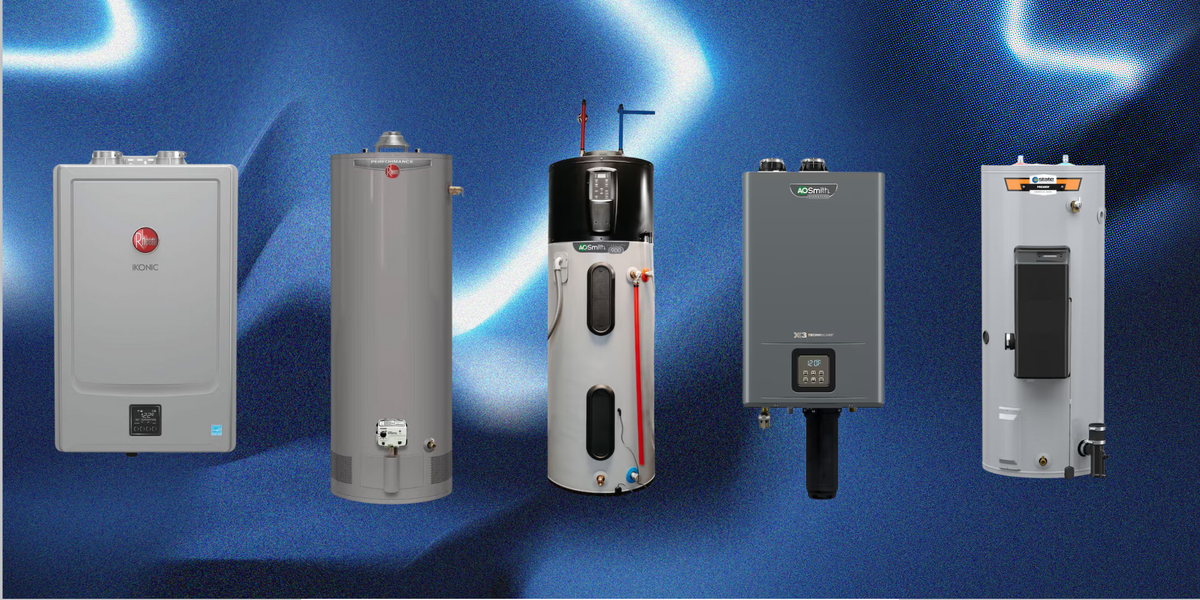
Hot water is one of those home comforts you only appreciate when it disappears mid-shampoo. One minute you are living your best spa life; the next, you are negotiating with a freezing showerhead like it owes you money. That is why choosing the best water heater in 2025 is not just about buying a metal cylinder or a sleek wall-mounted box. It is about matching your household’s habits, energy source, space, budget, and patience level for cold surprises.
For this review-style guide, we evaluated leading 2025 water heaters using real-world buying criteria: energy efficiency, recovery speed, first-hour delivery, flow rate, smart controls, installation complexity, warranty coverage, homeowner feedback, and long-term value. We also compared hybrid heat pump water heaters, gas tankless water heaters, electric tankless models, and traditional storage options so you can choose the right system instead of accidentally turning your utility room into a plumbing-themed escape room.
Our top picks include models from A.O. Smith, Rheem, Rinnai, Stiebel Eltron, and EcoSmart. Each one solves a different problem: maximum efficiency, endless hot water, small-space installation, smart monitoring, or budget-friendly performance. Here are the five best water heaters of 2025, tested and reviewed through the lens of practical home use.
How We Chose the Best Water Heaters of 2025
The best water heater is not always the most expensive one. It is the one that gives your household enough hot water without wasting energy, demanding heroic electrical upgrades, or sounding like a tiny helicopter in the basement.
We focused on the most important performance factors homeowners should compare before buying:
- Uniform Energy Factor (UEF): A higher UEF usually means better efficiency within the same category.
- First-hour rating: For tank and hybrid models, this shows how much hot water the unit can deliver during peak use.
- Flow rate: For tankless water heaters, gallons per minute matter more than tank capacity.
- Installation requirements: Some models need 240-volt service, venting, gas line work, or a large electrical panel.
- Smart features: Wi-Fi monitoring, leak detection, vacation mode, and demand-response compatibility can add real value.
- Warranty and service access: A strong warranty is helpful only if parts and qualified installers are easy to find.
We also considered the most common use cases: a family of four with morning shower traffic, a couple downsizing into a smaller home, a homeowner replacing an old electric tank, and someone who wants endless hot water without sacrificing a closet-sized chunk of floor space.
Quick Comparison: Best Water Heaters of 2025
| Rank | Model | Best For | Type | Key Strength |
|---|---|---|---|---|
| 1 | A.O. Smith Signature 900 Smart Hybrid Heat Pump | Best Overall | Hybrid electric heat pump | Strong efficiency, leak protection, smart controls |
| 2 | Rheem ProTerra 50-Gallon Smart Hybrid Heat Pump | Best for Energy Savings | Hybrid electric heat pump | Low operating cost and Wi-Fi monitoring |
| 3 | Rinnai RU199iN Super High Efficiency Plus | Best Gas Tankless | Condensing gas tankless | High output and endless hot water |
| 4 | Stiebel Eltron Tempra 24 Plus | Best Electric Tankless | Electric tankless | Advanced flow control and no venting |
| 5 | EcoSmart ECO 27 | Best Budget Tankless | Electric tankless | Compact design and self-modulating heating |
1. A.O. Smith Signature 900 Smart Hybrid Heat Pump Water Heater Best Overall
The A.O. Smith Signature 900 Smart Hybrid Heat Pump Water Heater is our best overall pick because it combines the efficiency of heat pump technology with smart features that actually feel useful. This is not a gadget pretending to be a water heater. It is a serious home appliance with leak detection, automatic shut-off, app-connected monitoring, and multiple tank sizes for different household needs.
The 50-gallon model is a strong fit for many 3- to 5-person households when sized properly. It uses hybrid heat pump technology, meaning it pulls heat from surrounding air to warm the water instead of relying only on electric resistance elements. Translation: it works smarter, not harder, which is also what we all claimed we would do after buying a planner in January.
Why It Stands Out
The Signature 900 line is designed for homeowners who want efficiency without giving up hot water comfort. Its smart features are especially helpful if your water heater lives in a basement, garage, or utility room you visit only when something is already wrong. Leak detection and automatic shut-off can reduce the risk of water damage, while app controls make it easier to switch modes or monitor performance.
Another advantage is its range of capacities. The 50-gallon version is the sweet spot for many homes, while larger 66- and 80-gallon models make sense for bigger families or homes with large tubs. If you have teenagers, guests, or a dishwasher that seems to run more often than a coffee shop espresso machine, sizing up may be worth it.
Pros
- Excellent energy-saving potential compared with standard electric tanks
- Smart controls, leak detection, and automatic shut-off
- Good option for medium-size families
- Available in multiple tank sizes
- Strong warranty coverage on many models
Cons
- Higher upfront cost than a basic electric water heater
- Needs adequate surrounding air volume for best heat pump performance
- May produce fan or compressor noise during heat pump operation
Best for: Homeowners replacing an electric tank who want lower operating costs, modern safety features, and enough hot water for daily family use.
2. Rheem ProTerra 50-Gallon Smart Hybrid Heat Pump Water Heater Best for Energy Savings
The Rheem ProTerra 50-Gallon Smart Hybrid Heat Pump Water Heater is one of the most compelling options for homeowners who want to shrink their water heating bill without turning every shower into a math problem. Rheem’s ProTerra line has become a favorite in the hybrid category because it blends efficiency, smart controls, leak protection, and widely available retail support.
This model uses heat pump technology that can be several times more efficient than a conventional electric water heater. It also includes Wi-Fi control, leak detection, and auto shut-off on select versions. In practical terms, that means you can monitor your water heater from your phone, set schedules, adjust modes, and receive alerts before a small issue becomes a soggy basement opera.
Why It Stands Out
The ProTerra’s biggest strength is operating cost. For homeowners moving from an old electric tank, the energy savings can be meaningful over the life of the unit. The smart controls are also more than decorative. Vacation mode, energy saver mode, and remote monitoring help households use hot water more efficiently.
The 50-gallon size works well for many average homes, but heavy hot-water users should consider peak-hour demand carefully. Heat pump water heaters recover differently from gas tanks, and a cold garage or high-demand schedule can affect performance. If your household stacks showers, laundry, and dishwashing into one chaotic morning block, the 65-gallon version may be a better match.
Pros
- Excellent efficiency for households replacing electric tanks
- Wi-Fi control and energy-use monitoring
- Leak detection and auto shut-off available on smart models
- Widely available through major retailers
- Good balance of performance and long-term savings
Cons
- Installation may require adequate room volume and condensate drainage
- Compressor sound may be noticeable in living-adjacent spaces
- Upfront cost is higher than a standard electric tank
Best for: Homeowners who want a high-efficiency replacement for a traditional electric water heater and appreciate smart-home features that are genuinely practical.
3. Rinnai RU199iN Super High Efficiency Plus Best Gas Tankless Water Heater
The Rinnai RU199iN is a powerful condensing gas tankless water heater built for homes that want endless hot water and strong flow capacity. Unlike a tank model, it heats water on demand. No storage tank. No waiting for 50 gallons to recover. No emotional support blanket after someone uses the last of the hot water.
With a maximum input of 199,000 BTU and a high-efficiency condensing design, the RU199iN is well suited for larger homes with natural gas service. Its compact indoor design saves floor space, and its high output can support multiple fixtures when sized and installed correctly.
Why It Stands Out
The Rinnai RU199iN is not the cheapest option, but it delivers the kind of performance that makes tankless attractive in the first place. It is especially useful for households with back-to-back showers, soaking tubs, or unpredictable hot-water schedules. If your family treats the bathroom like a morning airport terminal, a high-output gas tankless model can keep things moving.
Still, installation matters enormously. Gas tankless water heaters often require proper venting, gas line sizing, condensate drainage, and professional setup. A poorly installed tankless unit can underperform, make noise, or throw error codes like it is auditioning for a drama series. Always size tankless units based on temperature rise and simultaneous fixture demand, not just the maximum flow rate printed on the brochure.
Pros
- Endless hot water when properly sized
- Compact wall-mounted design saves space
- High BTU output for larger households
- Condensing design improves gas efficiency
- Strong brand reputation in tankless systems
Cons
- Professional installation is strongly recommended
- May require gas line and venting upgrades
- Higher upfront installed cost than many tank models
Best for: Homes with natural gas service, high hot-water demand, and owners who want a compact system with continuous hot water.
4. Stiebel Eltron Tempra 24 Plus Best Electric Tankless Water Heater
The Stiebel Eltron Tempra 24 Plus is a premium electric tankless water heater designed for homeowners who want quiet operation, a compact footprint, and no gas venting. Its standout feature is Advanced Flow Control, which helps maintain water temperature by slightly reducing flow when demand exceeds capacity. In plain English: it would rather slow the stream a little than blast you with surprise cold water. Respectable behavior from a machine.
This model is especially appealing for smaller homes, warm climates, apartments, additions, or point-of-use style installations where electric service is adequate. It is sleek, wall-mounted, and silent during operation. It also requires no venting, which can simplify placement compared with gas tankless systems.
Why It Stands Out
Electric tankless heaters are wonderfully compact, but they are not magic boxes. They need serious electrical capacity. The Tempra 24 Plus commonly requires multiple breakers and sufficient amperage, so homeowners should verify panel capacity before buying. If your electrical panel is already sweating from an EV charger, heat pump, and workshop tools, call an electrician before falling in love with the small size.
Where it fits well, however, the Tempra 24 Plus is polished and reliable. The temperature control is precise, the design is clean, and the lack of standby heat loss makes it more efficient than keeping a tank of water hot all day.
Pros
- Compact wall-mounted design
- No gas line or venting required
- Advanced Flow Control helps prevent cold-water surprises
- Quiet operation
- Good fit for smaller homes and warm climates
Cons
- Requires substantial electrical capacity
- May struggle with multiple high-flow fixtures in cold climates
- Not ideal for every whole-house application
Best for: Homeowners who want a sleek, vent-free electric tankless model and have the electrical service to support it.
5. EcoSmart ECO 27 Best Budget Electric Tankless Water Heater
The EcoSmart ECO 27 earns its place as the best budget tankless water heater because it offers solid electric on-demand performance at a more approachable price. It is compact, self-modulating, and designed for whole-home use in warmer climates or smaller applications in colder regions.
The ECO 27 can provide hot water for multiple fixtures depending on incoming water temperature, flow demand, and installation conditions. In warm climates, it may handle a shower and a sink without drama. In colder climates, expectations need to be more realistic. Water entering the unit at a chilly temperature requires more energy to heat, reducing usable flow. Physics: still undefeated.
Why It Stands Out
The ECO 27 is a practical choice for homeowners who want tankless convenience without paying premium gas tankless prices. It is also useful for smaller homes, workshops, apartments, vacation properties, and situations where space is limited.
Its self-modulating technology helps use only the energy needed to meet demand. The digital temperature control is simple, and the compact body can fit where a tank would never dream of squeezing. However, like other electric tankless models, it has demanding electrical requirements. Do not buy first and ask your panel questions later. Your electrician will not laugh. Well, maybe a little.
Pros
- Budget-friendly compared with many tankless options
- Compact and wall-mounted
- Self-modulating energy use
- Good for warm climates and smaller homes
- No venting required
Cons
- Performance depends heavily on inlet water temperature
- Requires strong electrical service
- Not the best choice for large households in cold climates
Best for: Budget-minded homeowners who want an electric tankless water heater for modest whole-home demand or targeted applications.
Tank vs. Tankless vs. Hybrid: Which Water Heater Should You Buy?
A traditional storage tank water heater is usually the simplest replacement if your old system fails suddenly. It is familiar, widely available, and often cheaper to install. The downside is standby heat loss: the unit keeps water hot whether you need it or not.
A tankless water heater is great if you want continuous hot water and a compact footprint. Gas tankless models can support larger homes, while electric tankless models are best for smaller homes, warm climates, or point-of-use situations. The catch is installation. Tankless systems must be sized carefully based on flow rate and temperature rise.
A hybrid heat pump water heater is often the best energy-saving choice for homeowners replacing an electric tank. It typically costs more upfront, but the operating savings can be impressive. It does need enough surrounding air, proper drainage for condensate, and a location where fan noise will not annoy anyone trying to watch TV, sleep, or contemplate life choices.
Buying Guide: What to Check Before Ordering
1. Match the Water Heater to Your Fuel Source
If your home already has natural gas, a gas tank or gas tankless system may be practical. If you are all-electric, a hybrid heat pump model is often more efficient than a standard electric tank. Electric tankless models can work well, but only if your electrical panel can handle the load.
2. Size for Peak Demand, Not Wishful Thinking
For tank and hybrid units, look at first-hour rating. For tankless units, calculate simultaneous fixtures and temperature rise. A model that performs beautifully in Florida may feel underpowered in Minnesota because incoming groundwater temperature changes the workload.
3. Consider the Installed Cost
The purchase price is only part of the story. Installation may include electrical upgrades, gas line changes, venting, condensate drains, permits, expansion tanks, or code updates. A “cheap” water heater can become surprisingly fancy once the invoice arrives wearing a top hat.
4. Look for Leak Protection
Leak detection and automatic shut-off are worth considering, especially if the unit is near finished space. Water damage is expensive, stressful, and very committed to arriving at the worst possible time.
5. Think About Maintenance
Tank water heaters need flushing and anode rod checks. Tankless systems need descaling, especially in hard-water areas. Heat pump models need filter cleaning and space for airflow. The best water heater still needs basic care if you want it to last.
Our Final Verdict
The A.O. Smith Signature 900 Smart Hybrid Heat Pump Water Heater is the best overall water heater of 2025 for most homeowners because it offers a strong mix of efficiency, smart safety features, and practical household capacity. The Rheem ProTerra 50-Gallon Smart Hybrid is another excellent high-efficiency choice, especially for homeowners focused on operating savings and app-based control.
If your household wants endless hot water and already has natural gas, the Rinnai RU199iN is the top gas tankless pick. For electric tankless buyers, the Stiebel Eltron Tempra 24 Plus offers polished performance and temperature control, while the EcoSmart ECO 27 is the best budget-friendly option for smaller or warmer-climate applications.
500-Word Experience Section: What Real Water Heater Shopping Feels Like
Shopping for a water heater sounds simple until you start comparing UEF ratings, gallon capacity, breaker requirements, venting rules, and rebate forms. Then suddenly you are three browser tabs away from becoming the family’s unofficial plumbing consultant. The biggest lesson from real-world water heater experiences is this: the best model on paper is not always the best model in your home.
For example, a hybrid heat pump water heater can be a fantastic upgrade when replacing an old electric tank. Homeowners often love the lower energy use, especially when the unit sits in a garage, basement, or utility room with enough air volume. But the same unit in a cramped closet may run louder, recover more slowly, or need ducting. That does not mean the product is bad. It means location matters. A heat pump water heater needs breathing room the way a houseplant needs sunlight and occasional compliments.
Tankless water heaters create a different experience. Many homeowners love the freedom of long showers and compact wall-mounted design. No giant tank, no constant reheating, no panic when guests visit. But tankless systems are also less forgiving of poor sizing. If you install a small electric tankless unit in a cold climate and expect it to run two showers, a washing machine, and a kitchen sink at once, disappointment may arrive wearing a bathrobe. Gas tankless models can handle heavier demand, but they may require venting, condensate drainage, and gas line upgrades.
Installation is where many water heater decisions become real. A homeowner might budget for the unit itself and then discover the electrical panel needs work, the old venting is not code-compliant, or the utility room needs a drain pan and expansion tank. That is why getting at least two installation quotes is wise. A good installer will ask about household size, shower habits, tubs, dishwasher use, laundry timing, climate, water hardness, and available fuel. A rushed installer who only asks, “Same size as before?” may miss a better solution.
Maintenance also shapes long-term satisfaction. Hard water can reduce tankless performance if the unit is not flushed. Tank models last longer when sediment is drained and anode rods are checked. Hybrid units need clean filters and airflow. These tasks are not glamorous, but neither is replacing a water heater years early because it was treated like a mysterious metal appliance that lives in the dark.
The best experience comes from buying for your actual life. If your home has four people showering in the morning, prioritize capacity and recovery. If energy bills are the villain, choose a hybrid heat pump. If space is precious, consider tankless. If your budget is tight, a well-sized conventional or budget tankless model can still be smart. The goal is not to buy the trendiest water heater. The goal is to get reliable hot water with fewer surprises, lower waste, and no cold-shower character development.
Conclusion
The best water heaters of 2025 prove that hot water technology has become smarter, more efficient, and more specialized. A.O. Smith and Rheem lead the hybrid heat pump category for homeowners who want serious energy savings. Rinnai remains a standout for gas tankless performance. Stiebel Eltron offers refined electric tankless engineering, while EcoSmart gives budget-focused buyers a compact on-demand option.
Before buying, compare more than price. Look at fuel type, first-hour rating, flow rate, installation requirements, warranty, efficiency, and maintenance. The right water heater should fit your home like a good pair of shoes: comfortable, reliable, and not something you think about every five minutes.
Note: Product prices, rebates, tax credits, and local installation costs can change quickly. Always verify current availability, code requirements, and professional installation needs before purchasing.