

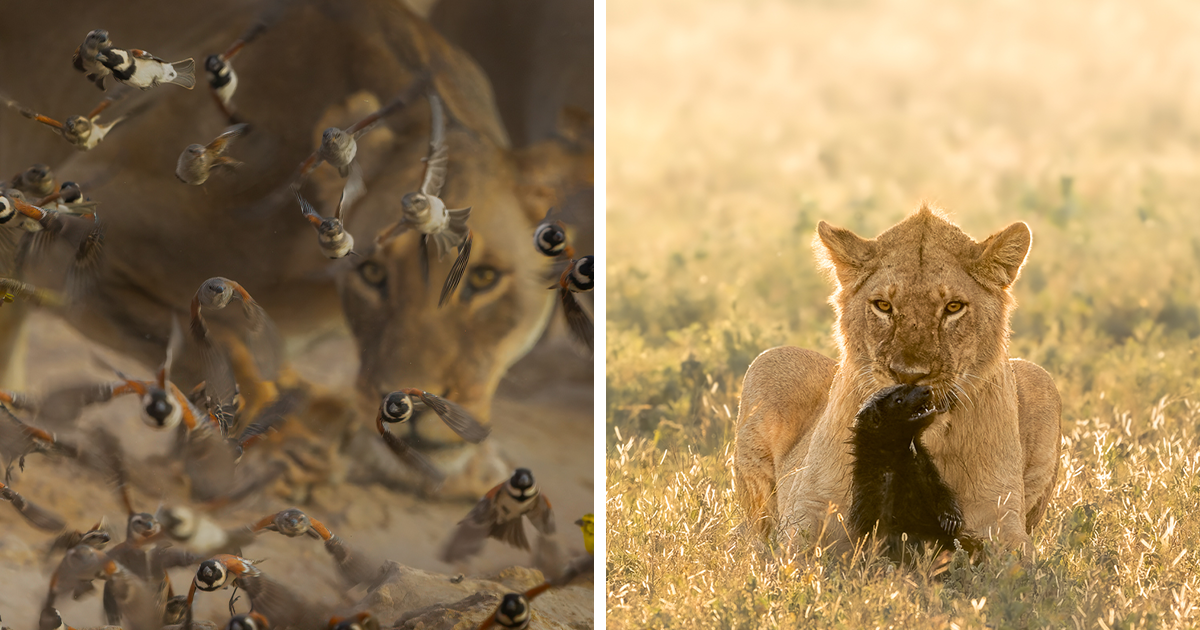
Some people say the world has lost its magic. Those people have clearly never stared at an award-winning nature photo of a blue Arctic fox perched above a foggy Alaskan cliff, a brown hyena wandering through a ghost town, or a lemur launching itself across a Madagascar ravine with a baby on its back like it just remembered the floor is lava. Nature photography has a wonderful habit of proving us wrong. The planet is not boring. The planet is dramatic, hilarious, tender, brutal, dazzling, and occasionally very weird in the best possible way.
The most powerful award-winning nature photos do more than look pretty on a screen. They stop the scroll. They make us lean closer. They remind us that wildlife is not an abstract idea living somewhere far away in a documentary voice-over. It is alive, nervous, hungry, clever, fragile, resilient, and often standing in perfect light while a patient photographer whispers, “Please don’t blink.”
This article explores the magic behind 50 kinds of award-winning nature photos, inspired by real winners and finalist themes from major photography competitions such as Wildlife Photographer of the Year, the Audubon Photography Awards, the National Wildlife Photo Contest, BigPicture Natural World Photography, World Nature Photography Awards, and other respected nature photography showcases. Together, these images prove that our planet still has plenty of wonder left. We just have to pay attention.
Why Award-Winning Nature Photos Still Matter
In a world flooded with images, an award-winning nature photo has to do something special. It needs composition, timing, technical skill, emotional force, and a story. A great image might capture a split-second behavior, such as a bird exploding from the water with droplets suspended around it like crystal confetti. Another might show a quiet relationship between animal and habitat: a fox navigating a snowy bluff, a frog tucked into a miniature green world, or a shark appearing from blue silence.
These photos matter because they make conservation personal. Data tells us what is happening to ecosystems, but photography helps us feel it. A picture of habitat loss can turn an environmental issue into a face, a stare, or a lonely animal searching for shelter. A picture of abundance can remind us what is still worth protecting. Basically, award-winning nature photography is science, art, patience, and a little bit of “how on Earth did they get that shot?” all rolled into one.
A Visual Journey Through 50 Magical Nature Photo Moments
1. The Ghost Town Visitor
A rare hyena standing in the ruins of an abandoned mining town feels like a scene from a gothic fairy tale written by a wildlife biologist. Photos like this show nature reclaiming spaces humans leave behind, quietly and without asking for the keys.
2. The Arctic Fox On The Cliff
A blue Arctic fox on Alaska’s St. George Island looks almost unreal, especially when fog, sunlight, and sea cliffs join the composition. It is the kind of image that makes viewers believe winter has its own secret mythology.
3. The Lemur’s Leap
A brown lemur carrying her baby across jagged limestone cliffs in Madagascar is not just a wildlife image. It is a tiny action movie with fur, balance, and terrifyingly high stakes.
4. The Kingfisher Splash
Bird photography often rewards speed. A kingfisher bursting from the water with a fish or droplets flying around it captures the exact moment when hunting becomes choreography.
5. The Frigatebird Halo
A magnificent frigatebird framed against sky and sunlight can feel celestial. The bird becomes less like an animal and more like a symbol of freedom with wings wide enough to humble your weekend plans.
6. Northern Gannets Under The Milky Way
When seabirds and stars share a frame, the result reminds us that wildlife does not live under a separate sky. It belongs to the same cosmic stage we do.
7. The Moose Movie Poster
Three bull moose in Grand Teton National Park can look like they are posing for the wilderness version of a blockbuster film. Antlers, mist, water, mountainsnature knows production design.
8. The Peregrine Attack
A peregrine falcon defending its young from a much larger bird shows why speed and courage matter. It is parental protection at 200 miles per hour, minus the minivan.
9. The Flamingo Dawn
Flamingos at sunrise transform wetlands into watercolor. Their reflections, silhouettes, and soft colors prove that elegance in nature sometimes arrives on very long, very pink legs.
10. The Mushroom Planet
Close-up photos of fungi can look like alien landscapes. A mushroom’s underside becomes valleys, ridges, and glowing texture. The forest floor suddenly feels like outer space with better humidity.
11. The Frog In A Miniature Jungle
A tree frog hidden among leaves or microgreens reminds us that nature magic is not always remote. Sometimes it lives in a garden, on a farm, or right outside the back door.
12. The Underwater Shark Stare
An underwater image of a nurse shark meeting the camera’s gaze can feel intimate rather than frightening. The best wildlife photography often replaces fear with curiosity.
13. The Salp And Its Tiny Passengers
Transparent marine life drifting through dark water looks like science fiction. A salp carrying tiny organisms inside its clear body proves the ocean specializes in plot twists.
14. Lava Crossing The Road
Nature photos are not only about animals. A vehicle escaping an Icelandic lava flow moments before the road disappears shows Earth as a living, fiery force with absolutely no respect for traffic patterns.
15. The Snow Geese Abstraction
A flock of snow geese can become a pattern of white, gold, and motion. At the right shutter speed, birds turn into brushstrokes.
16. The Burrowing Owl In Human Debris
A small owl framed against lumber or urban material creates a sharp conservation message. Wildlife adapts, but adaptation is not the same as safety.
17. The Brandt’s Cormorant With Sea Plants
A bird carrying algae or seagrass for nesting material turns a simple behavior into a study of habitat connection. Birds are builders, decorators, engineers, and occasionally interior designers with feathers.
18. The Warbler With A Moth
A tiny warbler holding prey captures the daily drama of survival. Small birds may look delicate, but they live in a high-speed world of hunting, migration, and constant energy management.
19. The Owl At Sunset
Owls photographed in golden marsh light have an unfair advantage. They already look wise, mysterious, and slightly judgmental. Add sunset, and suddenly the photo deserves its own soundtrack.
20. The Parrots In The City
Parrots nesting or feeding near traffic show how wildlife and human life overlap. Bright feathers against urban backgrounds can be funny, beautiful, and a little worrying all at once.
21. The Snowy Vineyard Deer
Two deer running through a snowy vineyard can turn an ordinary landscape into a dream. The magic often comes from not being too close: the animal belongs to the entire scene, not just the center of the frame.
22. The Cuttlefish Duel
Two giant cuttlefish fighting underwater create color, movement, and tension. Cephalopods are already strange enough; add competition, and the ocean becomes theater.
23. The Octopus Mother
Images of octopus behavior can be deeply emotional. Their intelligence, texture, and strange beauty make them some of the ocean’s most unforgettable subjects.
24. The Insect Eye View
Macro photography reveals a universe at ankle height. Insects become dragons, astronauts, acrobats, and jewel-like creatures that most of us walk past without noticing.
25. The Bison In Winter Fog
Bison moving through snow and steam feel prehistoric. Their breath becomes atmosphere, and suddenly the American landscape looks ancient, powerful, and very cold.
26. The Coyote At Dusk
A young photographer capturing a coyote at Point Reyes during a dramatic evening sky shows that age is not the main requirement for great nature photography. Attention is.
27. The Fox Family Moment
Fox kits playing near their mother deliver instant charm, but strong photos avoid cuteness alone. They also show behavior, habitat, and respect for distance.
28. The Turkey Hen And Poults
A turkey family returning to roost may not sound glamorous, but nature photography often rewards quiet observation. Not every magical moment roars. Some softly cluck.
29. The Fire Aftermath
Photos of burned forests, glowing embers, and smoke can be haunting. They show destruction, but also the complicated role fire plays in many ecosystems.
30. The Hummingbird And Flowers
A hummingbird hovering near a bloom turns speed into stillness. These images are popular because they show something our eyes can barely hold.
31. The Coastal Bird Feeding Its Chick
A parent bird delivering food to a chick is both tender and practical. Wildlife parenting is love, labor, and an endless grocery run.
32. The Bird Migration Scene
Migration photos remind us that borders are human inventions. Birds stitch continents together with wings, instinct, and absurdly impressive navigation.
33. The Forest Cat In Shadow
Big cats photographed in filtered light carry mystery. Whether lynx, leopard, or puma, they remind us that wildness often watches before it is seen.
34. The Tiny Amphibian Portrait
Close portraits of frogs, salamanders, or newts can feel like meeting ambassadors from a wet, hidden kingdom. Amphibians are fragile indicators of environmental health, and great photos make them unforgettable.
35. The Whale Encounter
Images of whales breaching, feeding, or being rescued can feel enormous in every sense. They show scale, intelligence, vulnerability, and the emotional pull of the sea.
36. The Coral Reef Explosion
Reef photography shows color as habitat. Fish, coral, crustaceans, and light all crowd the frame, proving biodiversity is not a conceptit is a party with fins.
37. The Desert Survivor
A lone animal crossing sand or rock tells a story of endurance. Desert images use space beautifully; emptiness becomes part of the subject.
38. The Rainforest Canopy
Rainforest photos are layered with life. Birds, insects, vines, mist, and filtered light create a scene that feels less photographed than discovered.
39. The Polar Landscape
Ice, snow, and wildlife make some of the most visually striking nature photos. They also carry urgent climate meaning without needing to shout.
40. The Animal In Human Space
Urban wildlife photos are powerful because they ask uncomfortable questions. If animals are appearing in our roads, buildings, fences, and ruins, what does coexistence really require?
41. The Bird Against Storm Clouds
Weather can elevate a wildlife image from lovely to legendary. A bird flying before a storm becomes a symbol of persistence.
42. The Mountain Silhouette
Animals framed against ridgelines or peaks remind us that scale matters. A tiny subject in a huge landscape can feel more powerful than a tight portrait.
43. The Night Creature
Camera traps and low-light photography reveal animals we rarely see. The night is not empty; it is busy, glowing-eyed, and probably judging our flashlight technique.
44. The Plant Close-Up
Award-winning plant photography can be just as magical as wildlife photography. Leaves, seeds, flowers, and fungi show architecture that looks designed by a very patient genius.
45. The Predator And Prey Moment
Nature is not always gentle. Images of hunting can be difficult, but they show the truth of ecosystems: every life depends on another.
46. The Animal Rescue Scene
Photos involving rescued wildlife or human intervention can be heartbreaking and hopeful. They show damage, but also responsibility.
47. The Young Photographer’s Discovery
Youth category winners often bring fresh wonder to familiar subjects. Their work reminds adults that curiosity is a skill we should not misplace.
48. The Drone Landscape
Aerial nature photography reveals patterns invisible from the ground: river braids, forest geometry, animal trails, and coastlines drawn like calligraphy.
49. The Quiet Eye Contact
Some of the strongest photos are simple portraits where an animal looks back. That shared gaze can collapse distance between species in a second.
50. The Image That Makes You Care
The best award-winning nature photo is not always the rarest or most technically complicated. It is the one you remember laterthe one that changes how you see a bird on a wire, a mushroom after rain, or a patch of wild grass near the sidewalk.
What These Photos Teach Us About The Planet
Looking across major nature photography awards, a few themes appear again and again. First, patience is everything. Many winning images require hours, days, seasons, or even years of effort. A photographer may wait through cold mud, sea fog, mosquitoes, failing light, and the spiritual crisis of realizing the snack bag is empty. The result can look effortless, but it rarely is.
Second, habitat is the hidden hero. A fox is not just a fox; it is a fox shaped by cliffs, fog, dens, prey, weather, and distance from humans. A bird is not just a bird; it is migration routes, nesting sites, food plants, wetlands, forests, and sky. Award-winning nature photos succeed when they show the subject as part of a living system.
Third, beauty and crisis often share the frame. A stunning image may also reveal habitat fragmentation, climate pressure, urban encroachment, pollution, or recovery after fire. This is what makes nature photography so emotionally complicated. It can make us gasp and worry at the same time.
Why Viewers Love Award-Winning Wildlife Photography
People love these images because they combine surprise with recognition. We recognize parenthood in a bird feeding its chick. We recognize courage in a tiny animal crossing a dangerous space. We recognize mystery in a night predator, comedy in a clumsy-looking bird, and dignity in an animal simply existing in its home.
There is also something democratic about nature photography. Yes, expensive lenses help. Yes, advanced technique matters. But many memorable images begin with noticing. A backyard frog, a city owl, a mushroom, or a sunset flock can become extraordinary when seen with patience and respect. The planet keeps offering scenes. The challenge is learning how to look.
Experience: What 50 Magical Nature Photos Feel Like In Real Life
Spending time with award-winning nature photos feels a little like going on a world tour without needing airport security to inspect your shampoo. One moment, you are on a foggy island in Alaska with a fox balanced on a cliff. The next, you are underwater with a shark, then in Madagascar watching a lemur leap across stone towers, then under a night sky full of gannets and stars. It is travel, education, emotion, and visual caffeine in one sitting.
The most surprising experience is how these photos slow you down. Online, we are trained to scroll quickly. But a great nature photo resists that habit. You notice the background. You notice the animal’s posture. You wonder what happened five seconds before and five seconds after. You start asking questions: How long did the photographer wait? Was the animal safe? What does this place sound like? Is that snow, mist, ash, spray, or magic dust? Sometimes the answer is spray. Sometimes, emotionally, it is magic dust.
Another powerful feeling is humility. Humans often act like the main characters of Earth, but award-winning nature photos are excellent at correcting that little misunderstanding. A whale surfacing beside a boat, a bison steaming in winter air, or a tiny insect photographed at eye level reminds us that the world is full of lives with their own urgency. They are not background decoration for our species. They are neighbors, engineers, hunters, pollinators, parents, survivors, and occasionally spectacular weirdos.
These images can also change how ordinary places feel. After seeing macro photography, a garden stops being “just a garden.” It becomes a jungle of beetles, spiders, frogs, pollen, dew, and leaf architecture. After seeing bird photography, a city park becomes a migration stop. After seeing coastal wildlife, a beach becomes nursery, hunting ground, highway, and weather station. The magic is not only in rare places. It is in learning to recognize life where we previously saw scenery.
For anyone who wants to experience this kind of wonder personally, the first step is not buying the biggest camera. It is practicing attention. Walk slower. Watch the edges of things: reeds, fences, tide pools, tree bark, puddles, rooftops, and shadows. Visit the same place in different weather. Learn animal behavior. Respect distance. Let wildlife remain wild. The best photographers are not just image collectors; they are careful witnesses.
And perhaps that is the deepest lesson from 50 award-winning nature photos: our planet is still full of magic, but magic is not always loud. Sometimes it is a fox pausing in fog, a bird crossing a halo of sun, a frog resting in leaves, a mushroom glowing after rain, or a hyena walking through the ruins of human ambition. The world is still astonishing. We just need to stop long enough to let it astonish us.
Conclusion
Award-winning nature photos remind us that Earth is not finished telling beautiful stories. From Arctic cliffs to tropical forests, from city-nesting birds to deep-sea creatures, from volcanic roads to quiet backyard frogs, these images reveal a planet that is still alive with drama, humor, tenderness, and mystery. They also remind us that wonder and responsibility belong together. If these photos prove our planet is full of magic, they also ask us to protect the stage where that magic happens.
The next time someone says there is nothing new to see, show them a kingfisher exploding from water, a lemur flying over limestone, or a fox standing in fog like it wandered out of a myth. Nature is not out of miracles. We are just learning how to notice them again.