

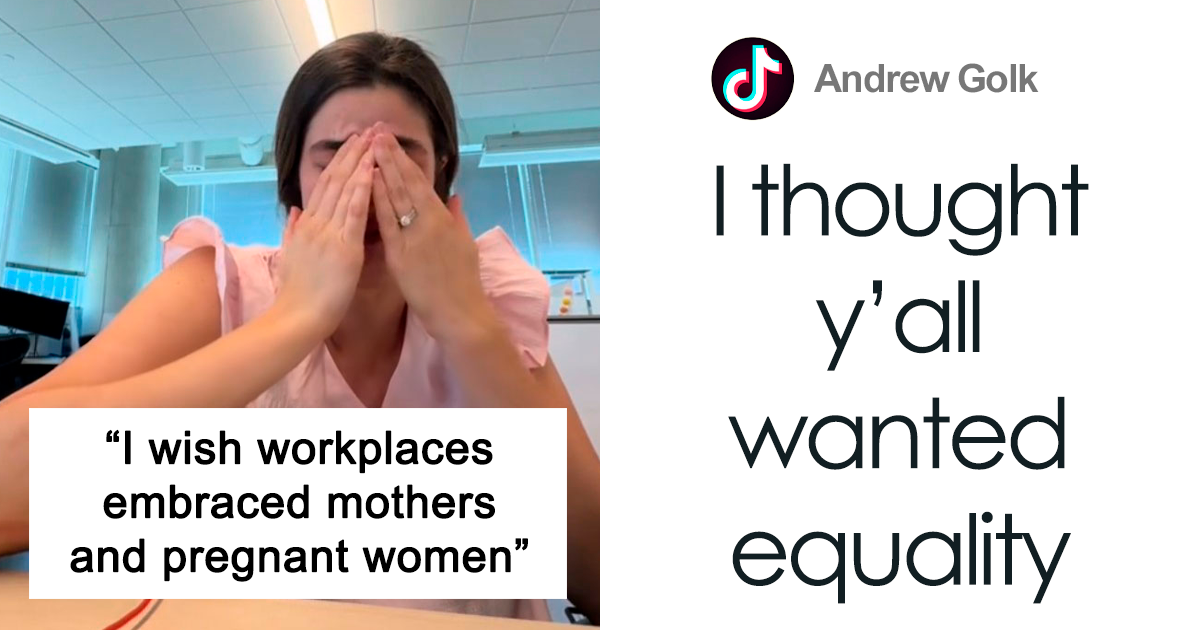
Being a working mother in America is often sold as the ultimate empowerment story: career, kids, confidence, calendar invites, and maybe a matching blazer if the baby has not spit up on it yet. But many moms are asking a sharper question: should this really be the dream, or have we simply learned to applaud survival?
The Viral Truth Behind the Working Mother Dream
The phrase "This is an America problem" hits hard because it says the quiet part out loud. The struggle of being a working mother is not only about personal choices, individual ambition, or whether someone is “organized enough.” It is about a system that expects mothers to work like they do not have children and parent like they do not have jobs.
Across the United States, millions of mothers are doing exactly what society told them to do. They got the job. They built the resume. They paid taxes, packed lunches, answered emails, remembered pajama day, scheduled pediatric appointments, bought the birthday gift, and still somehow got judged for leaving work early when daycare called. If this is the dream, it comes with a suspicious number of alarms, unpaid labor, and coffee reheated four times.
The modern working mom is not failing. The model is failing her. That distinction matters. When one mother demonstrates the exhaustion, absurdity, and emotional tug-of-war of trying to “do it all,” she is not just venting. She is pointing to a national issue: America has built an economy that depends on mothers’ labor while treating caregiving as a private inconvenience.
Why Working Motherhood Feels So Heavy in America
Working motherhood is not automatically miserable. Many mothers love their careers. Work can offer independence, purpose, income, creativity, adult conversation, health insurance, and a place where nobody asks for a snack every seven minutes. The issue is not that mothers work. The issue is that the United States often gives families too little structural support and then acts surprised when everyone is exhausted.
Childcare Costs Can Turn a Paycheck Into a Magic Trick
Childcare is one of the biggest reasons the working mother dream starts to feel less like a dream and more like a spreadsheet with emotional damage. In many areas, full-time care for infants or toddlers rivals rent, mortgage payments, or college tuition. For families with two young children, the math can become brutal: one parent may be working largely to pay for the care that allows them to work.
This creates an impossible calculation. If a mother stays home, she may lose income, career momentum, retirement contributions, and professional identity. If she works, a large portion of her earnings may go straight to childcare. Either way, the family is forced to solve a public infrastructure problem at the kitchen table, usually after bedtime, with a calculator and a mild sense of doom.
Paid Leave Is Still Treated Like a Luxury
Another reason the American working mother experience feels uniquely punishing is the lack of guaranteed federal paid parental leave. The Family and Medical Leave Act can protect eligible workers’ jobs for qualifying reasons, but the leave is unpaid. That means a new parent may technically have time off, but only if they can afford to go without income.
For many families, unpaid leave is not leave; it is a financial cliff with a cute baby blanket on top. Some workers have employer-provided paid leave, but access varies widely by industry, wage level, location, and job status. Higher-paid corporate workers are far more likely to receive generous leave than hourly workers, part-time employees, and people in service industries. The result is a system where the families who most need income protection are often least likely to get it.
The Sick-Day Problem Never Ends
Children get sick. This is not breaking news; it is basically their side hustle. Yet many workplaces still operate as if employees live in sealed glass pods where no child ever develops a fever at 9:12 a.m. on a Tuesday. The United States has no universal federal paid sick leave requirement for all workers, which means many parents must choose between caring for a sick child and protecting their paycheck.
That choice lands heavily on mothers. Even in households with two working parents, moms are often the default contact for school calls, doctor appointments, medication schedules, and the mysterious backpack note that was apparently due yesterday. The “second shift” is not just housework after work. It is the mental load of anticipating everything before it catches fire.
The Myth of "Having It All"
The phrase “having it all” has done a lot of damage while wearing very nice shoes. It suggests that the goal is to collect every desirable life category at once: career success, loving family, clean home, attractive meals, financial stability, emotional availability, social life, fitness, sleep, and a glowing complexion. In reality, most working mothers are not trying to have it all. They are trying to have enough.
Enough time to do their jobs well. Enough money to keep the household stable. Enough flexibility to attend a school conference without acting like they are smuggling state secrets out of the office. Enough energy to be present with their children instead of collapsing on the couch like a phone at one percent battery.
The American version of “having it all” often places the burden on individual mothers to become more efficient. Wake up earlier. Meal prep harder. Use a planner. Outsource what you can. Lean in. Lean out. Stand on one foot while answering Slack messages. But time management cannot fix unaffordable childcare, weak leave policies, rigid schedules, or workplaces that reward constant availability.
When mothers say being a working mom should not be the dream, they are not saying women should not have careers. They are saying survival should not be rebranded as empowerment. A mother should not have to prove her strength by enduring a system that was not designed with her life in mind.
Why This Is Not a "Mom Problem"
Calling this a mom problem makes it sound small, private, and solvable with a better morning routine. Calling it an America problem is more accurate because the effects ripple through families, employers, and the broader economy.
Employers Lose When Care Systems Fail
When childcare falls through, parents miss work, arrive late, leave early, decline promotions, reduce hours, or exit the workforce entirely. Businesses then lose experienced employees and spend more time hiring and training replacements. A company may think childcare is not its problem, but when half the team is one daycare closure away from chaos, the problem has entered the building and probably brought a tiny backpack.
Flexible schedules, remote work options, predictable shifts, backup care benefits, and paid family leave are not just “nice perks.” They are workforce strategies. Companies that understand caregiving realities are better positioned to retain talented employees, especially women in mid-career years when many are both raising children and advancing professionally.
Children Benefit When Parents Are Supported
Children do not need perfect parents. They need safe, loving, reasonably supported adults. When parents are constantly stretched by money stress, unpredictable work schedules, and lack of care options, family life becomes harder than it needs to be. A supported mother has more than a paycheck; she has breathing room.
That breathing room matters. It can mean reading a bedtime story without mentally calculating tomorrow’s commute. It can mean attending a school event without risking workplace punishment. It can mean recovering after birth without rushing back before the body and mind are ready. It can mean choosing work because it is meaningful, not because the family is trapped by medical bills, rent, and childcare costs.
Fathers and Partners Must Be Part of the Conversation
One reason the working mother dream becomes so lopsided is that caregiving is still culturally assigned to mothers, even when both parents work full time. A better model requires fathers, partners, employers, and policymakers to treat caregiving as shared responsibility, not maternal destiny.
Paid leave for fathers and non-birthing parents matters because it changes expectations from the beginning. When only mothers take leave, workplaces may quietly assume women are the “risky” employees and men are the uninterrupted workers. When all parents are expected and encouraged to take leave, caregiving becomes normal instead of career-threatening.
What a Better Dream Could Look Like
The goal should not be to shame working mothers or romanticize staying home. Both paths can be beautiful. Both can be exhausting. Both can be chosen freely, or forced by money, policy, and circumstance. A better dream is not “every mother works” or “every mother stays home.” A better dream is that families have real choices.
Affordable, Reliable Childcare
Affordable childcare would change the daily reality for millions of families. It would allow parents to work without feeling like their paychecks vanish at drop-off. It would help employers retain workers. It would support children’s development and reduce the pressure on grandparents, neighbors, and informal care networks that often fill gaps without recognition.
Paid Family and Medical Leave
Paid leave would help parents recover, bond, and care without immediate financial panic. It would also support workers caring for seriously ill family members or managing their own health needs. A humane economy does not ask people to choose between a paycheck and a newborn, a sick child, or a medical crisis.
Flexible Work Without Career Penalties
Flexibility should not be code for “mommy track.” A parent who adjusts hours, works remotely, or leaves at 4:30 for pickup is not less committed. They are navigating reality. Workplaces can measure performance by results instead of chair time, meeting attendance, or how convincingly someone pretends not to have a personal life.
A Cultural Shift Away From Martyrdom
America loves a tired mom. It loves the image of her doing everything, sacrificing everything, smiling through everything, and calling it gratitude. But martyrdom is not a family policy. Mothers should not have to be superhuman to be respected. They should be allowed to be human: ambitious, loving, tired, funny, frustrated, brilliant, imperfect, and occasionally uninterested in making homemade cupcakes at midnight.
Why the Working Mother Shouldn’t Have to Be the Hero
There is a strange admiration reserved for mothers who manage impossible schedules. People say, “I don’t know how you do it,” and usually the honest answer is, “Neither do I, and also I forgot lunch.” But admiration can become a trap when it replaces action. Praising mothers for surviving without support is easier than building systems that make survival less dramatic.
The working mother should not have to be the hero of a story that did not need a villain. She should not have to carry the family calendar, office expectations, household labor, emotional care, and social judgment while being told she is lucky to have choices. Luck is not the same as policy. Choice is not meaningful when every option has a penalty.
A mother who wants to work should be able to work without being punished for caregiving. A mother who wants to stay home should not be forced into paid work because one income cannot cover basic life. A mother who wants to reduce hours should not lose her entire career trajectory. A mother who wants to grow professionally should not be treated as less devoted to her children.
That is the real point behind the phrase “This is an America problem.” The problem is not mothers wanting too much. It is a society asking them to do too much with too little.
Experiences That Reveal the Reality of Working Motherhood
Imagine a mother named Elena. She works in healthcare administration, starts her day at 6:00 a.m., and has already completed three unpaid jobs before opening her laptop: breakfast negotiator, sock detective, and emotional support human for a preschooler who has strong opinions about blueberries. By 8:30, she is answering work emails with one hand and texting the daycare director with the other because her toddler has a rash that may be nothing or may be a full family scheduling emergency.
Elena likes her job. That detail matters. She is not trapped in some cartoon office dungeon, and she is proud of the career she built. But liking work does not erase the strain of having no slack in the system. If daycare closes, she has no backup. If her child is sick, she has to calculate whether she has enough paid time off left. If she takes too many unexpected days, she worries about being seen as unreliable. Her husband helps, but his workplace is less flexible, so the family’s “shared” solution often becomes Elena’s problem by default.
Now picture Jasmine, a retail manager whose schedule changes weekly. She cannot simply “work from home,” because customers generally frown upon managers appearing by hologram near the checkout line. Her childcare provider needs consistent pickup times, but her job needs closing shifts. She wants more hours for the income, fewer hours for survival, and a crystal ball for the schedule. When people tell her to “just find better childcare,” she laughs because the waitlists in her area are long enough to qualify as historical documents.
Then there is Priya, a software project lead who has what many would call a “good job.” She has benefits, salary, and remote-work options. Still, she finds herself working in fragments: early morning before the kids wake up, meetings during school hours, project updates after bedtime. Her flexibility is real, but so is the invisible expansion of the workday. Because she can work anytime, she often works all the time. Her laptop has become the third adult in the household, and frankly, it is not pulling its weight with dishes.
These experiences differ by income, industry, race, location, marital status, immigration status, and family support. But they share a theme: mothers are constantly asked to bridge gaps that policy and workplace design leave wide open. They patch childcare gaps with favors. They patch paid-leave gaps with savings. They patch sick-day gaps with guilt. They patch career gaps with late-night labor. And then they are told the patchwork is inspiring.
What many working mothers want is not applause. They want infrastructure. They want affordable care, predictable schedules, paid leave, fair wages, and partners who know where the pediatrician’s number is saved. They want schools, workplaces, and communities to understand that raising children is not a hobby squeezed between meetings. It is essential work that makes every other form of work possible.
The most honest experience many mothers share is this: they do not regret their children, and many do not regret their careers. What they resent is the false choice. They resent being told to chase the dream while the country refuses to build the stairs. They resent a culture that celebrates Mother’s Day with flowers and then returns Monday morning to policies that make motherhood harder than it has to be.
That is why one mom’s demonstration can resonate with so many people. It is not just her story. It is a mirror. And when enough mothers look into that mirror and say, “This is not working,” the conversation should not end with tips for a better planner. It should begin with a bigger question: what would America look like if it valued care as much as it values work?
Conclusion: The Dream Needs a Rewrite
Being a working mother should be an option, not an obstacle course disguised as empowerment. The dream should not require mothers to stretch themselves until they become invisible. It should not depend on who has grandparents nearby, who can afford a nanny, who has a generous employer, or who can function on five hours of sleep and a granola bar found in the car.
The better dream is simple: mothers should have real choices, families should have real support, and work should be designed around actual human life. Until then, when a mom says, “This is an America problem,” she is not being dramatic. She is being accurate.
The working mother should not be the dream because struggle should not be the standard. The dream should be freedom: to work, to care, to rest, to earn, to parent, and to live without needing superpowers just to make Tuesday happen.