

Every kitchen has a secret museum. Open the back of a drawer and you may find a lonely pot lid, a chipped mug, three food containers with no lids, a whisk that looks like it survived a tornado, and a muffin tin you bought during your “I’m going to bake every Sunday” era. The good news? Much of that old kitchen stuff does not need to become landfill confetti.
Repurposing old kitchen stuff is one of the easiest ways to save money, reduce household waste, organize your home, and add personality to ordinary spaces. A mason jar becomes a bathroom organizer. A colander becomes a hanging planter. A worn baking sheet becomes a magnetic command center. Even mismatched spoons can retire from soup duty and begin a glamorous second career as garden markers.
This guide covers 53 creative, realistic, and surprisingly stylish ways to upcycle kitchen items you already own. Some ideas take five minutes. Others are weekend projects. All of them prove that “old” does not mean “useless.” Sometimes it just means “ready for a plot twist.”
Before You Begin: A Smart Repurposing Checklist
Before turning your kitchen castoffs into home décor, storage tools, or garden helpers, give each item a quick reality check. Wash and dry everything thoroughly. Avoid using cracked plastic, rusty metal, chipped ceramic, or damaged glass for food storage. If a container was not designed for reheating, do not microwave it. If an item once held food but is now being used for crafts, label it clearly so nobody accidentally stores leftovers in a glitter cup. Charming? Yes. Confusing? Also yes.
When in doubt, use old kitchen items for non-food purposes such as organizing, planting, decorating, crafting, or garage storage. That way, you still reduce waste while keeping safety and common sense on the menu.
53 Creative Ways To Repurpose Old Kitchen Stuff
Glass Jars, Bottles, and Containers
- Turn glass jars into pantry storage. Clean pasta sauce jars, pickle jars, and jam jars can hold rice, lentils, oats, dried beans, tea bags, or homemade snack mixes. Add labels and suddenly your pantry looks like it has its own lifestyle blog.
- Use mason jars as bathroom organizers. Old jars are perfect for cotton swabs, makeup brushes, hair ties, toothbrushes, or bath salts. Group three on a tray for a polished look.
- Create mini vases from narrow bottles. Empty olive oil bottles, syrup bottles, or vinegar bottles can hold single stems, dried flowers, or herbs. They look especially good lined along a windowsill.
- Make a jar candle holder. Place a tea light or battery-operated candle inside a clean jar. Add twine, ribbon, or a little sand at the bottom for rustic charm without rustic-level effort.
- Build a craft-supply station. Use jars to sort buttons, beads, markers, paintbrushes, rubber bands, and paper clips. Clear glass makes it easy to find what you need before you buy duplicates.
- Use jars for homemade gifts. Layer cookie mix, hot cocoa mix, granola, or bath soak in a jar. Add a handwritten tag and you have a thoughtful gift that does not scream “I bought this while panicking.”
- Turn large jars into terrariums. Add small stones, soil, moss, and tiny plants. Keep the lid off for succulents or use a loose lid for humidity-loving plants.
- Use old bottles as soap dispensers. Fit a pump top onto a sturdy glass bottle and use it for dish soap, hand soap, or lotion. This works especially well with attractive amber or clear bottles.
Old Mugs, Cups, and Teacups
- Make a pencil cup for your desk. A chipped mug that is no longer food-safe can still hold pens, scissors, paintbrushes, or small tools.
- Turn teacups into succulent planters. Add a layer of pebbles, a bit of cactus soil, and a small succulent. Because most teacups do not have drainage holes, water lightly.
- Create a jewelry catchall. Place a pretty cup or saucer on your nightstand to hold rings, earrings, or watches.
- Use mugs as seed starters. Old mugs can start herbs indoors. Once seedlings are ready, transplant them into larger pots or the garden.
- Make a whimsical bird feeder. Attach a teacup to its saucer, add birdseed, and hang it securely outdoors. It is cottage-core with wings.
- Turn mugs into small gift containers. Fill one with candy, tea bags, coffee packets, or mini spa items. Wrap with cellophane and ribbon for an easy, reusable gift.
Plates, Bowls, and Serving Dishes
- Use plates as wall art. Mismatched plates can create a beautiful gallery wall. Mix colors, shapes, and patterns for a collected-over-time look.
- Turn bowls into entryway organizers. A shallow bowl near the door can hold keys, sunglasses, coins, or earbuds.
- Make a tiered tray. Stack plates with candlesticks or sturdy cups between them to create a tiered organizer for jewelry, cupcakes, fruit, or craft supplies.
- Use serving dishes for bathroom storage. A vintage platter can corral perfumes, lotions, or skincare products and make the counter easier to wipe clean.
- Repurpose chipped bowls as plant saucers. If the bowl is too damaged for eating but still sturdy, use it under a planter to catch water.
- Create mosaic art from broken dishes. Carefully break damaged plates into smaller pieces, then use them to decorate stepping stones, frames, trays, or garden pots.
Pots, Pans, and Bakeware
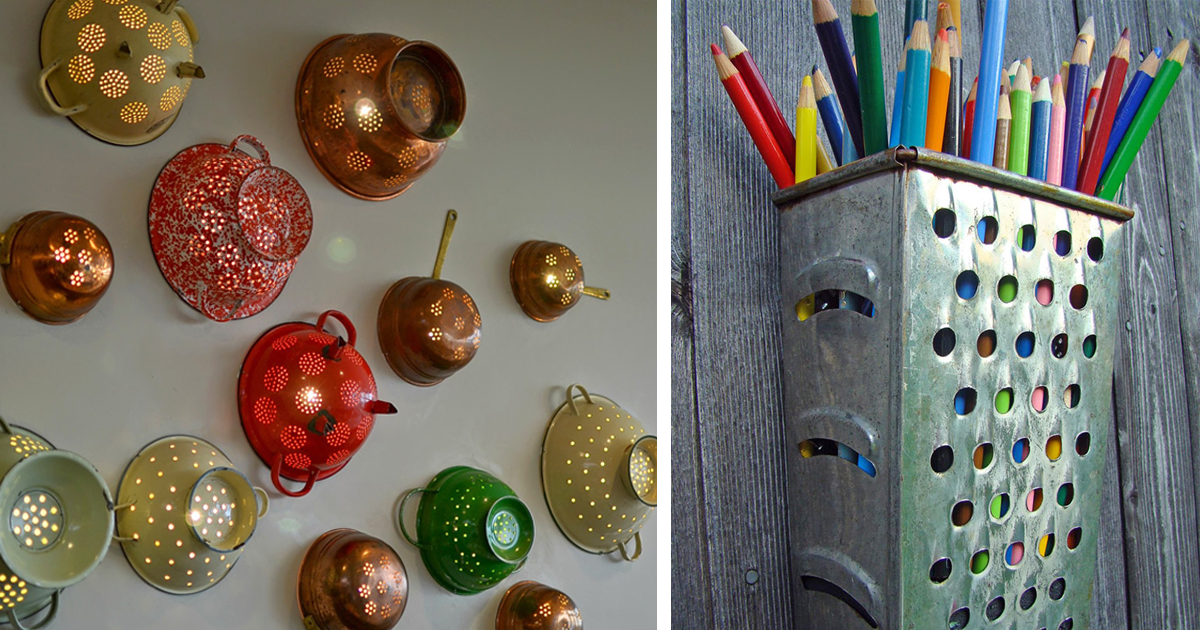
- Turn a colander into a hanging planter. Colanders already have drainage holes, which makes them excellent homes for herbs, trailing flowers, or strawberries.
- Use a muffin tin as a drawer organizer. Each cup can hold paper clips, pushpins, beads, screws, buttons, or jewelry.
- Make a baking sheet into a magnetic board. Paint or cover an old metal baking sheet with paper or fabric, then use magnets to hold notes, recipes, or reminders.
- Use loaf pans for desk storage. Old loaf pans can hold mail, notebooks, charging cords, or office supplies.
- Repurpose a roasting pan as a boot tray. Place it near the door to catch mud, rainwater, or snow from shoes. Your floor will send a thank-you card.
- Turn cake pans into wall shelves. Round cake pans can be mounted as small shadow-box shelves for lightweight décor.
- Use an old skillet as garden décor. Hang a cast iron pan on a fence or shed wall as rustic decoration, or turn it into a shallow planter if it has enough drainage.
- Make a cooling rack into an earring holder. Hang earrings through the grid and lean or mount the rack inside a closet or on a vanity wall.
- Use baking sheets to dry herbs. Line a clean sheet with parchment, spread herbs in a single layer, and let them air-dry in a warm, dry spot.
- Turn a Bundt pan into a centerpiece. Fill it with ornaments, pinecones, citrus, flowers, or candles. The center hole finally gets to be useful outside of cake season.
Utensils and Cutlery
- Turn spoons into garden markers. Flatten old spoons slightly, write herb names on them, and place them in pots or garden beds.
- Make fork photo holders. Bend the tines of an old fork carefully to hold small photos, place cards, or recipe cards.
- Create hooks from old spoons. Bend spoon handles into hooks and mount them on wood for keys, aprons, or lightweight towels.
- Use a whisk as a hanging candle holder. Place a small battery-operated tea light inside the whisk and hang it from a hook for playful kitchen décor.
- Turn a rolling pin into a towel rack. Mount an old rolling pin between brackets to hold dish towels or craft ribbon.
- Repurpose a ladle as a tiny planter. Mount a ladle on a board or fence, add soil, and plant a small succulent or trailing herb.
- Use old tongs in the garden. Tongs are great for picking up prickly seed pods, moving compost scraps, or handling messy outdoor items.
- Make wind chimes from cutlery. Hang spoons, forks, and small metal tools from a hoop, strainer, or colander for a charming backyard sound.
- Use a potato masher as wall décor. Vintage kitchen tools look surprisingly good displayed in a farmhouse-style kitchen, breakfast nook, or potting shed.
Food Containers, Lids, and Packaging
- Use lidless containers as drawer dividers. Food containers without lids can organize batteries, cords, hardware, craft supplies, or junk-drawer chaos.
- Turn plastic lids into paint palettes. Large yogurt or takeout lids are useful for kids’ crafts, touch-up paint, or glue projects.
- Use egg cartons as seed starters. Cardboard egg cartons are excellent for starting seeds. Cut the cups apart when seedlings are ready to transplant.
- Repurpose cereal boxes as magazine holders. Cut the box diagonally, cover it with paper or fabric, and use it to store magazines, notebooks, or cutting boards.
- Use coffee cans for garage storage. Metal or sturdy plastic coffee cans can hold nails, screws, paintbrushes, zip ties, or small tools.
- Turn tin cans into herb planters. Remove sharp edges, add drainage holes, paint the outside, and plant basil, parsley, mint, or chives.
- Use takeout containers for non-food organizing. If they are clean and sturdy, use them for craft supplies, toy parts, sewing notions, or travel toiletries.
Linens, Baskets, and Odds and Ends
- Turn old dish towels into cleaning rags. Cut worn towels into smaller squares for dusting, wiping spills, or cleaning windows.
- Use aprons as garden tool belts. An old apron with pockets can hold seed packets, gloves, plant labels, and pruning snips.
- Repurpose napkins as reusable gift wrap. Cloth napkins can wrap candles, books, jars, or small gifts using a knot or ribbon.
- Use baskets as pantry organizers. Old bread baskets or produce baskets can group snacks, spices, tea, potatoes, or onions.
- Turn a spice rack into a craft organizer. Empty spice jars can hold glitter, beads, tiny screws, sequins, or pins.
- Use an old cutting board as a tablet stand. Add a small wood ledge near the bottom and prop it on the counter for recipes, videos, or calls.
- Turn a kitchen cart into a mobile hobby station. If your cart no longer serves the kitchen, use it for gardening supplies, art materials, office tools, or kids’ homework gear.
Best Items To Repurpose First
If you are new to upcycling kitchen items, start with the easiest wins: glass jars, mugs, muffin tins, food containers, and old linens. These require little to no tools and can solve everyday storage problems quickly. A single jar can organize cotton balls. A muffin tin can rescue a junk drawer. A worn towel can become ten cleaning cloths. This is not extreme DIY. This is practical magic with crumbs involved.
For more decorative projects, focus on items with character: vintage plates, teacups, colanders, rolling pins, and serving trays. These pieces often look better with a little age, especially if your style leans farmhouse, cottage, eclectic, or thrift-store treasure hunter.
What Not To Repurpose for Food Use
Not every kitchen item deserves a second life near your sandwich. Avoid storing food in containers that are cracked, stained, cloudy, strongly scented, or not labeled food-safe. Do not reuse packaging that previously held non-food products for food storage. Chipped ceramics may expose porous material or sharp edges, so use them for décor instead. Old plastic containers can still be useful, but they are often better suited for drawer organization, craft supplies, or garage storage than repeated heating or long-term food storage.
The basic rule is simple: if an item looks questionable, give it a non-food job. Your old takeout tub can hold crayons. It does not need to hold hot chili for the seventh time like it is training for the Olympics.
Real-Life Experiences: What Happens When You Actually Start Repurposing Old Kitchen Stuff
The funny thing about repurposing old kitchen stuff is that it starts as a practical project and quickly becomes a personality trait. You begin by saving one glass jar for rice. Then another jar becomes a pencil holder. Then you find yourself rinsing a salsa jar at 10 p.m. and saying, “This has potential.” Congratulations. You have entered the upcycling era.
One of the best experiences is discovering how much organization you can create without buying anything new. A kitchen drawer that once looked like a raccoon packed it during an earthquake can become calm and useful with a few lidless containers. One can hold batteries, another rubber bands, another tiny sauce packets you may or may not ever use. The transformation is oddly satisfying because the solution was already in your house, hiding under a pile of mismatched lids.
Repurposed jars are another small victory. In the pantry, they make dry goods easier to see. In the bathroom, they keep cotton swabs and hair ties from roaming free. On a desk, they stop pens from disappearing into whatever dimension pens apparently enjoy visiting. Clear jars also create a sense of order because you can instantly see what is inside. This reduces duplicate buying, which is great for your budget and your cabinet space.
Garden projects bring their own kind of joy. A colander full of trailing herbs looks cheerful, drains well, and feels far more interesting than a plain plastic pot. Egg cartons make seed starting less intimidating. Old spoons used as plant markers add charm to herbs and vegetables. These projects remind you that gardening does not have to be expensive or picture-perfect to be rewarding. Sometimes the best garden tools are the ones that used to live beside the can opener.
There is also a creative confidence that grows with each project. Repurposing teaches you to look at objects differently. A baking sheet is not just a baking sheet; it might be a magnetic board. A chipped teacup is not trash; it might be a succulent planter. A serving tray can become a perfume station, coffee bar organizer, or entryway drop zone. Once you build this habit, you naturally pause before throwing things away and ask, “Could this solve a problem somewhere else?”
Of course, not every idea works perfectly. Some jars are too narrow to clean easily. Some mugs are too heavy for delicate shelves. Some DIY projects look better in your imagination than on your counter. That is part of the process. Repurposing is not about forcing every object into a heroic second life. It is about choosing useful, safe, attractive ways to extend the life of items that still have value.
The biggest lesson is that old kitchen stuff can make a home feel more personal. Store-bought organizers are tidy, but repurposed pieces tell a story. A grandmother’s teacup becomes a jewelry dish. A dented muffin tin organizes art supplies. A worn cutting board becomes a recipe stand. These objects carry memory, usefulness, and a little humor. In a world full of disposable things, that feels refreshingly human.
Conclusion
Repurposing old kitchen stuff is more than a cute DIY trend. It is a smart, budget-friendly way to reduce waste, organize your home, refresh your décor, and make everyday items work harder. With a little imagination, jars become storage, colanders become planters, mugs become desk organizers, and tired towels become cleaning heroes. The best part is that these projects do not require perfection. They only require curiosity, common sense, and maybe a label maker if you enjoy feeling powerful.
Before tossing anything from your kitchen, pause for a moment. Ask whether it can organize, decorate, plant, hold, sort, display, or simplify something else in your home. You may discover that your old kitchen clutter is not clutter at all. It is a collection of future projects waiting for their big comeback.