

Politics and acting have always had an awkward handshake. Politicians perform for cameras, memorize talking points, hit their marks at podiums, and pretend they love county fair corn dogs even when their stomach is clearly drafting a resignation letter. So when real politicians wander into movies and TV shows, you might expect smooth charisma. Instead, we often get something stranger: stiff cameos, bizarre comedy sketches, and moments so oddly staged that they feel like deleted scenes from democracy itself.
This list is not about polished actor-politicians like Ronald Reagan or Arnold Schwarzenegger, who built Hollywood careers before running for office. It is about politicians showing up in entertainment in ways that feel weird, funny, oddly revealing, or gloriously uncomfortable. Some played themselves. Some played fictional characters. Some appeared for charity, publicity, satire, or pure “How did this happen?” energy. Together, these movie and TV roles prove one thing: public service may prepare you for hard questions, but it does not necessarily prepare you for blocking, timing, or believable facial expressions.
Why Politician Cameos Are So Weirdly Fascinating
Politician cameos work because they collide with our expectations. A senator is supposed to be serious. A governor is supposed to be formal. A presidential candidate is supposed to look ready to handle a crisis, not deliver a sitcom joke beside a cartoonish detective agency phone call. That clash is the comedy. When the scene works, it humanizes the politician. When it fails, it becomes a cultural fossil: a tiny preserved moment when someone’s media team apparently said, “Yes, this is a good idea.”
For SEO readers searching for strange politician movie cameos, famous political TV appearances, or weird roles played by politicians, this list covers six of the most memorable examples. Some are charming. Some are cringe. Some are so random they deserve their own congressional subcommittee.
1. Hillary Clinton as “Hillary Rodham Gump”
The role: A Forrest Gump parody star with a box of political chocolates
In 1995, Hillary Clinton appeared in a Gridiron Club dinner video parodying Forrest Gump. The setup was pure Washington-insider comedy: Clinton, reimagined as “Hillary Rodham Gump,” sits on a bench outside the White House with a box of chocolates, reflecting on decades of political history. The bit spoofed the famous “life is like a box of chocolates” idea and blended it with jokes about campaigns, presidents, reporters, and the strange ecosystem of D.C. power.
What makes the role so unusual is not just that a sitting First Lady participated in a movie parody. It is the intensity of the commitment. Wigs, accents, political flashbacks, and Bill Clinton’s own cameo turn the whole thing into a time capsule from the mid-1990s, when political humor still came wrapped in banquet-room applause and low-resolution video.
The performance is funny in the way old office party videos are funny: partly because of the joke, partly because of the bravery required to watch it years later. Clinton was not trying to become Meryl Streep. She was doing the kind of self-aware Washington comedy that says, “Yes, I know you make jokes about me, so I will make one first.” That is smart politics, even if the acting style lands somewhere between campaign ad and school assembly skit.
As politician TV and movie cameos go, “Hillary Rodham Gump” is fascinating because it shows how image management works. The parody softens a high-profile figure by placing her in a familiar pop-culture frame. It also reminds us that politicians have always chased viral moments; they just used to do it on VHS.
2. Ben Carson in Stuck on You
The role: A real surgeon playing a head surgeon in a Farrelly Brothers comedy
Before Ben Carson became a presidential candidate and later served in government, he was already famous as a neurosurgeon. That background made his cameo in the 2003 Farrelly Brothers comedy Stuck on You both logical and deeply strange. The film stars Matt Damon and Greg Kinnear as conjoined twins, and Carson appears as the surgeon involved in their separation.
On paper, the casting makes sense. If a movie needs a respected surgeon, why not bring in an actual world-famous surgeon? In practice, the cameo has the awkward charm of watching your very serious doctor suddenly enter a sketch-comedy universe. Carson delivers lines in a calm, gentle, almost sleep-mode tone, which becomes unintentionally funny when placed inside a broad comedy built on escalating absurdity.
The strangest part is how the movie uses his real-life authority for a joke. The scene leans on the audience knowing that Carson was associated with complex surgeries involving conjoined twins. It turns professional credibility into a punchline, but not in a cruel way. The humor comes from the contrast: a medical figure known for precision steps into a Hollywood gag machine and somehow looks like he would rather be anywhere else, possibly including a seven-hour committee hearing.
For readers interested in politicians who appeared in movies, Carson’s cameo stands out because it came before his national political identity took over. Looking back, it feels like a preview of how celebrity, expertise, and politics can blur. One minute, someone is a celebrated doctor. The next, they are in a Farrelly Brothers movie. A few years later, they are on debate stages. America is nothing if not committed to plot twists.
3. Bernie Sanders as Rabbi Manny Shevitz
The role: A wedding officiant who turns the ceremony into a baseball rant
Bernie Sanders has one of the most recognizable speaking styles in American politics: urgent, blunt, slightly raspy, and always one sentence away from becoming a lecture on economic inequality. That is why his role as Rabbi Manny Shevitz in the 1999 indie romantic comedy My X-Girlfriend’s Wedding Reception feels so oddly perfect.
In the film, Sanders officiates a wedding and then veers into a long tangent about baseball, especially the old Brooklyn Dodgers. The scene is supposed to be comic, but it has an accidental-documentary quality. Even when he is playing a fictional rabbi, Sanders sounds unmistakably like Sanders. The rhythm is there. The frustration is there. The sense that a small ceremonial speech might suddenly become a civic lesson is absolutely there.
The role is not polished in the traditional actorly sense, but that is part of the fun. Sanders is not disappearing into character; the character is basically borrowing his existing energy and putting a yarmulke on it. In another context, that would be a weakness. Here, it becomes the whole joke. You are watching a future presidential candidate perform a low-budget wedding scene with the same intensity he might bring to prescription drug prices.
Even better, Sanders also had a small appearance in Sweet Hearts Dance, a 1980s film starring Susan Sarandon, Jeff Daniels, and Don Johnson. His screen career is not long, but it is weirdly memorable. In the universe of famous politicians acting on screen, Sanders proves that authenticity can be more entertaining than polish. He may not have delivered a movie-star performance, but he delivered a Bernie performance, and that is a genre of its own.
4. Joe Biden on Where in the World Is Carmen Sandiego?
The role: A senator calling a kids’ game show with a joke award
Long before Joe Biden became president, he appeared as then-Senator Biden in a 1993 episode of the PBS children’s geography game show Where in the World Is Carmen Sandiego?. The cameo involved Biden calling host Greg Lee and offering him a mock honor: “somewhat notable detective of the next twelve minutes.”
On the weirdness scale, this one is magnificent. It combines a U.S. senator, a kids’ educational game show, a fake detective award, and the kind of deadpan delivery that makes you wonder whether everyone involved was operating on three hours of sleep and a cafeteria muffin. Biden was not playing a fictional villain or a dramatic statesman. He was playing himself, but filtered through public television whimsy.
The scene matters because it captures an older style of politician media appearance. Before TikTok clips, podcast tours, and endless late-night segments, politicians often showed up in public-service-flavored entertainment to seem accessible. A children’s geography show was a safe place to be friendly, educational, and harmlessly goofy. Still, the final result is delightfully odd: a senator phoning into a fictional detective agency as if Congress had briefly outsourced its ceremonial duties to ACME.
Biden later appeared in more polished pop-culture settings, including Parks and Recreation, where his cameo played directly into Leslie Knope’s political fandom. But the Carmen Sandiego appearance remains special because of its handmade awkwardness. It is not slick. It is not glamorous. It is a tiny piece of pre-internet political TV weirdness, and it deserves a tiny museum with a big red phone.
5. Patrick Leahy in the Batman Universe
The role: A real senator repeatedly entering Gotham City
Former Vermont Senator Patrick Leahy may be the most successful political cameo artist in superhero history. A lifelong Batman fan, Leahy appeared in multiple Batman-related projects, including feature films and animated work. His roles included Gotham-adjacent officials, party guests, and authority figures who somehow found themselves close to Bruce Wayne’s chaotic social calendar.
Unlike some politician cameos that feel like publicity stunts, Leahy’s Batman appearances had a genuine fan-story behind them. He loved the character, supported libraries, and donated earnings from his Batman roles to the Kellogg-Hubbard Library in Vermont. That detail makes the whole thing much sweeter. This was not merely a senator chasing screen time. It was a senator using screen time to fund books, which is probably the most wholesome sentence ever written about Gotham.
Still, the visual remains funny: a real U.S. senator standing in the middle of a comic-book world where billionaires dress as bats, clowns menace dinner parties, and boardroom meetings can end with explosions. Leahy’s best-known Batman moments work because he appears calm and official while everything around him is absurd. That is basically the job description for the U.S. Senate, but with fewer capes.
His repeated appearances also show how franchise cameos can become part of a fan identity. Leahy was not just dropping in once. He became a recurring Easter egg for viewers who knew both politics and Batman lore. In an era when cinematic universes reward obsessive attention, a senator quietly becoming a Bat-regular is wonderfully bizarre.
6. Donald Trump in Ghosts Can’t Do It
The role: Himself, in a romantic fantasy comedy that won the wrong kind of awards
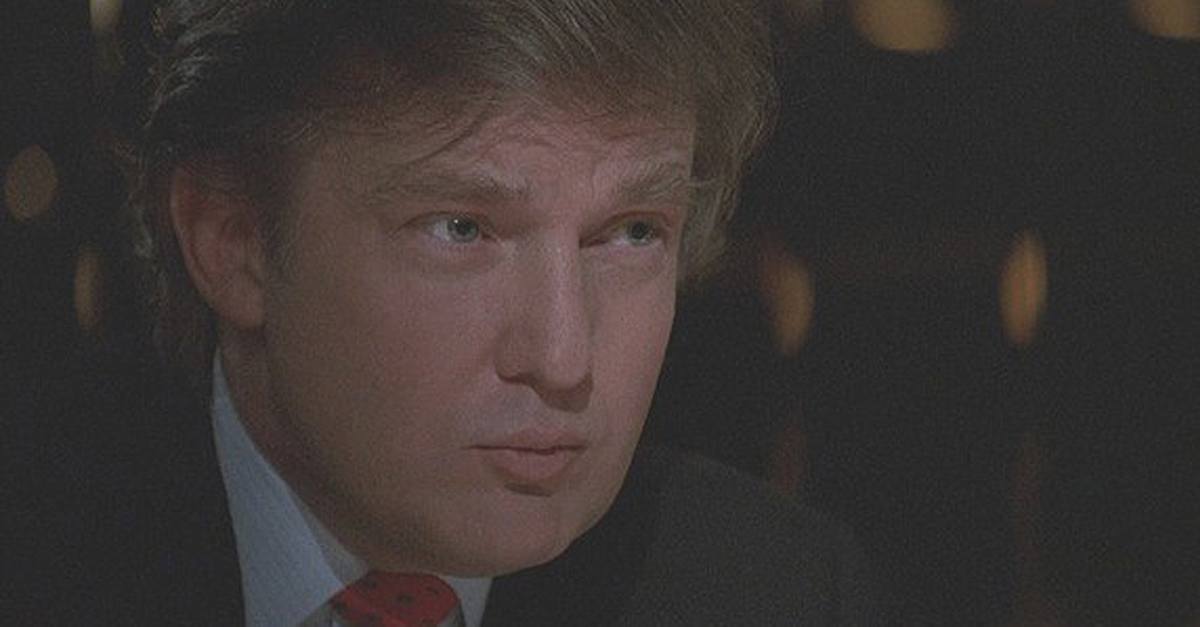
Donald Trump has appeared as himself in many movies and TV shows, often as a shorthand for wealth, New York flash, or gold-plated confidence. But his appearance in the 1990 romantic fantasy comedy Ghosts Can’t Do It occupies a special place in strange celebrity-cameo history.
The film, starring Bo Derek and Anthony Quinn, has the kind of premise that sounds like someone lost a bet with a screenwriter. Trump appears as himself in a business-related scene, delivering dialogue with the unmistakable energy of a man who believes the camera is lucky to be in the room. The result earned him a Golden Raspberry Award for Worst Supporting Actor, which is technically an award, though not one people usually display next to family photos.
What makes the cameo so fascinating now is the way it captures Trump’s pre-political entertainment persona. Before the presidency, before the rallies, before the constant political news cycle, Trump was frequently used by movies and television as a symbol. His job was to appear, be recognized, and radiate “rich guy in Manhattan.” That was the character, even when the credit said he was playing himself.
In Ghosts Can’t Do It, that persona crashes into a movie already famous for being critically disliked. The awkwardness is almost architectural. Every line seems to echo through a room built entirely of bad decisions. Yet as a cultural artifact, it is valuable. It shows how entertainment helped construct a public image long before that image became a political force. Sometimes a weird cameo is not just a cameo. Sometimes it is a trailer for the future.
What These Roles Reveal About Politics and Performance
The funniest thing about politician cameos is that they expose the difference between public performance and acting. Politicians perform constantly, but political performance is usually about control. They control the message, the facial expression, the setting, and the applause line. Acting requires a different kind of control: listening, reacting, surrendering to a scene, and making someone else’s words sound natural.
That is why these moments can feel so stiff. A politician may be comfortable at a podium, but a movie set is another planet. Suddenly there are marks on the floor, multiple takes, lighting setups, and a director asking for “more warmth, but less senator.” The result can be charmingly unnatural. It reminds viewers that confidence in one arena does not automatically transfer to another.
These roles also reveal how entertainment uses politicians as symbols. Hillary Clinton’s parody turned her into a pop-culture punchline before she could be turned into one by others. Ben Carson’s cameo leaned on his medical reputation. Bernie Sanders’ rabbi role accidentally captured his authentic cadence. Joe Biden’s game-show cameo used public office as a friendly stamp of legitimacy. Patrick Leahy’s Batman appearances transformed fandom into civic generosity. Donald Trump’s movie cameo used celebrity wealth as visual shorthand.
In other words, these scenes are not random. They are tiny negotiations between politics, fame, comedy, and image. Some are funny because they are bad. Some are funny because they are sincere. Some are funny because nobody involved could have predicted how differently they would look years later.
Experience Notes: Watching Politician Cameos as a Pop-Culture Time Machine
Watching old movie and TV roles played by politicians is a strange experience because the viewer brings future knowledge into scenes that were never designed to carry it. A cameo that once seemed like a harmless joke can become loaded with meaning after the person runs for president, wins office, loses an election, becomes controversial, or turns into a meme. The footage does not change, but the audience does.
That is especially true with politician cameos because public figures are never just performers. They carry policies, scandals, speeches, elections, supporters, critics, and decades of media framing into every frame. When a regular actor gives a weird performance, we judge the performance. When a politician gives a weird performance, we judge the performance, the strategy, the ego, the campaign instincts, and the staffer who probably approved it after lunch.
From a content-writing perspective, this topic works because it gives readers three pleasures at once. First, there is discovery: many people simply do not know that Bernie Sanders played a rabbi, Ben Carson appeared in a Farrelly Brothers movie, or Joe Biden once called into Carmen Sandiego. Second, there is contrast: the formality of politics looks hilarious when placed beside superhero movies, kids’ shows, low-budget rom-coms, and ghostly fantasy comedies. Third, there is hindsight: old appearances become funnier when seen through everything that happened later.
The experience is also a reminder that fame is cumulative. Politicians do not become recognizable overnight. Their public image is built from speeches, interviews, debates, ads, jokes, cameos, and unexpected pop-culture moments. A cameo may last only seconds, but it can become part of the larger myth. Patrick Leahy’s Batman roles strengthened his reputation as a genuine fan. Trump’s self-cameos reinforced his image as a flashy business celebrity. Clinton’s parody showed an attempt at self-deprecating humor. Biden’s public television cameo made him look approachable, if slightly wooden. Sanders’ indie-film role now feels less like acting and more like accidental brand consistency.
For website publishers, the best way to write about these roles is to balance humor with accuracy. It is easy to mock awkward performances, but the article becomes stronger when the jokes are supported by real context. Who was the politician at the time? Why did the cameo happen? How did the role connect to their public identity? What makes it interesting now? Those questions turn a simple listicle into an evergreen entertainment article with search value.
Most importantly, these cameos are fun because they show powerful people looking slightly ridiculous. That can be healthy. Democracy is serious, but politicians are still human beings who sometimes agree to wear wigs, deliver clunky dialogue, stand in Gotham, or accept a fake detective honor from a children’s game show. The result may not be great acting, but it is excellent internet archaeology.
Conclusion
The strangest movie and TV roles played by politicians prove that pop culture has always been part of political branding. Some cameos are strategic, some are charitable, some are accidental comedy gold, and some should probably have been stopped by a trusted friend holding a clipboard. But each one gives audiences a rare look at what happens when public officials step away from speeches and into scripted entertainment.
Hillary Clinton’s Forrest Gump parody, Ben Carson’s surgeon cameo, Bernie Sanders’ baseball-ranting rabbi, Joe Biden’s Carmen Sandiego call-in, Patrick Leahy’s Batman fandom, and Donald Trump’s Razzie-winning self-portrait all belong in the same odd museum. The exhibit title would be simple: “Politics Is Theater, But Theater Is Hard.”