

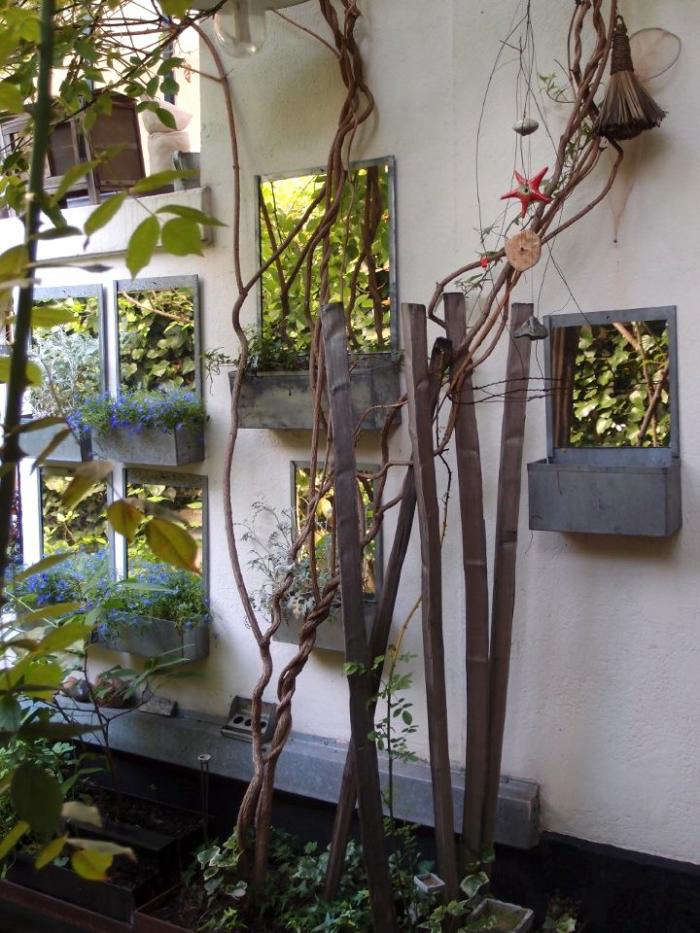
Some decorating ideas whisper. This one practically winks at you from across the courtyard.
Mirrored planters from Paris have the kind of charm that makes design lovers stop mid-scroll, zoom in, and mutter, “Okay, now that is annoyingly brilliant.” They combine two elements that already know how to work a room: plants and mirrors. Put them together, and suddenly a plain wall feels deeper, a compact balcony looks more generous, and a modest container arrangement starts behaving like it belongs in a dreamy European apartment where everyone somehow owns better linen napkins than the rest of us.
At first glance, the idea sounds almost theatrical. A planter with a reflective back? Very extra. But that is exactly why it works. Mirrored planters borrow light, double greenery, and create the illusion that foliage is floating outward instead of sitting flat against a wall. In a small urban space, that trick is not just pretty. It is strategic.
This is the real magic of the Parisian version: it is not flashy in a disco-ball way. It is subtle, weathered, romantic, and a little mysterious. Think aged zinc, soft reflections, trailing vines, and that collected-over-time atmosphere French spaces do so well. Nothing screams for attention, but everything quietly earns it.
What Are Mirrored Planters, Exactly?
Mirrored planters are containers paired with a reflective backing, panel, or framed mirror surface so the plants appear fuller, brighter, and more dimensional. In the Paris-inspired interpretation, they often look like wall-mounted window boxes with mirrors rising behind the foliage. The mirror is not there for checking your outfit before watering basil. It is there to multiply light, visually extend the space, and make even a narrow balcony feel layered.
That layered effect matters. Regular planters read as objects. Mirrored planters read as little scenes. You do not just see the plant itself; you also see its shadow, its reflection, the sky bouncing back, and nearby stems repeating in a way that feels lush without requiring twenty more pots and an emergency potting-soil budget.
In other words, mirrored planters are what happen when container gardening gets a design degree.
Why Paris Makes So Much Sense for This Idea
Paris is not exactly known for enormous suburban backyards and football-field patios. What it does have is a long tradition of turning compact outdoor areas into poetic little worlds. Courtyards, balconies, windowsills, and narrow terraces are treated as extensions of the home, not afterthoughts. That mindset is the perfect home for mirrored planters.
The Parisian approach is less about stuffing a space with decor and more about editing carefully. A weathered metal planter. A reflective surface. A climbing jasmine. A faded chair. A stone wall. Done. The look feels complete because each element is doing more than one job. The mirror adds light and atmosphere. The planter adds greenery and softness. The wall becomes a backdrop instead of dead space.
French-inspired decorating also thrives on contrast: rustic and refined, relaxed and elegant, natural and decorative. Mirrored planters sit right in that sweet spot. They have the old-world romance of antique garden decor, but they also deliver a very modern small-space solution. They are useful, yes, but they are also a little bit dramatic in the best possible way.
The Secret Sauce: Why Mirrored Planters Look So Good
1. They bounce light around
Mirrors are famous for helping spaces feel brighter, and that benefit does not suddenly retire the moment you step onto a balcony. A reflective backing catches daylight and throws it back into the scene, which is especially helpful in narrow outdoor spaces, enclosed courtyards, or balconies with tall walls nearby. Even a soft, imperfect reflection can make the area feel more open.
2. They make plants look fuller
A trailing ivy that looks modest from the front can appear rich and abundant when doubled by reflection. A single fern starts to read like a whole thicket. That visual fullness is one of the biggest reasons mirrored planters feel luxurious even when the planting palette is simple.
3. They create depth in tiny spaces
Small-space design lives and dies by visual tricks. Mirrored planters create an illusion of distance, making a flat wall feel less flat and a shallow balcony feel less boxy. It is the gardening equivalent of great lighting in a restaurant: technically functional, emotionally persuasive.
4. They blur the line between decor and garden
Most planters are either practical or pretty. Mirrored planters insist on being both. They function like containers, but they style a wall the way artwork would. That dual purpose is why they feel so smart in compact homes.
The Materials That Make the Look Work
If you want the true “mirrored planters from Paris” feeling, skip anything that looks too slick, too chrome, or too showroom-fresh. This style shines when it has texture and patina.
Zinc and galvanized metal are ideal because they feel timeworn and architectural. They also pair beautifully with greenery, stone, wood, and old brick. The cool tone of the metal keeps the overall look crisp without stealing the spotlight from the plants.
Antique or foxed mirror is especially effective if you want softness instead of full-on reflection. Aged mirror has a more romantic look than standard glass and feels more forgiving outdoors. Instead of bouncing back a hard, sharp image, it creates atmosphere. Think reflection with a filter, but classy.
Iron frames, weathered wood, and architectural salvage also play nicely here. The best versions feel as though they could have been discovered at a flea market, carried home triumphantly, and installed with the words, “This old thing? I found it in Paris.”
How to Style Mirrored Planters Without Making Them Look Gimmicky
The line between chic and “why is my flower box auditioning for a magic show?” is thinner than we would all like to admit. Here is how to stay on the right side of it.
Keep the planting palette restrained
Choose plants with elegant forms and a little movement. Trailing ivy, jasmine, rosemary, lavender, ferns, geraniums, boxwood, and compact hydrangeas all work well. You want texture, shape, and a touch of looseness. What you do not want is a botanical traffic jam.
Let the reflection do some of the work
Because mirrors visually multiply greenery, you can plant a little more lightly than usual. That means fewer overstuffed containers and more intentional arrangements. A mirrored planter can make one excellent plant look like a whole composition.
Use repetition
A row of matching mirrored planters on a wall has a calm, architectural elegance. Repetition makes the look feel considered. It is one of the easiest ways to get that polished European rhythm instead of a random collection of pots that happened to survive last summer.
Balance romance with restraint
The Parisian look is emotional, but it is not messy. Pair mirrored planters with café chairs, gravel, limestone, old terracotta, or a single lantern. Add too many decorative accents and the effect starts to wobble. Let the mirrors and the foliage be the stars.
Best Places to Use Mirrored Planters
Balconies
This is their natural habitat. On a balcony, mirrored planters can make a narrow footprint feel airier while turning a blank wall into a focal point.
Courtyards
Mirrored planters soften masonry and help enclosed outdoor spaces feel less severe. If your courtyard gets limited light, the reflective quality is especially welcome.
Window-adjacent walls
These locations can be especially beautiful because the planter is visible both from inside and outside. That double view gives the installation even more visual value.
Entryways and porches
If you want a front entrance to feel charming without going full-theme-park French, mirrored planters can add elegance and greenery with a lighter touch than oversized urns.
Real-Life Gardening Rules Still Apply
Design fantasy is wonderful. Root rot is not. A mirrored planter still needs to function like a proper planter.
Start with drainage. If the container does not allow excess water to escape, your romantic Paris moment can quickly become a sad, swampy science experiment. Use a planter with drainage holes, or place a nursery pot with drainage inside a more decorative outer vessel.
Also, do not rely on the old “rocks in the bottom” trick to solve drainage problems. It sounds clever, but it is not the plant-care miracle it is often made out to be. Good soil depth and proper drainage matter more than a decorative gravel layer hidden where nobody can even admire it.
Use a quality potting mix, choose plants suited to the amount of sun the space actually gets, and remember that reflective surfaces can sometimes intensify brightness. A little extra light is lovely. A leaf-scorching glare situation is less charming. Watch the space at different times of day before committing to a full installation.
How to Get the Look at Home
You do not need a Haussmann balcony or a Left Bank zip code to pull this off. You just need the right balance of materials, scale, and attitude.
Start with one wall-mounted planter and one aged-looking mirror panel behind it. Keep the width proportional to your wall, and avoid going too tiny. The beauty of mirrored planters is their scene-making ability, and that is harder to achieve when everything is undersized.
Next, choose a simple planting scheme. One trailing plant, one upright plant, and one soft filler is often enough. Think ivy plus rosemary plus white geraniums, or a fern paired with mossy textures and a little cascading greenery. You want layers, not chaos.
Then style the surrounding area lightly. A folding bistro chair, a gravel-toned outdoor rug, a weathered table, or a few terracotta pots nearby will support the look without competing with it. If it starts to feel like every design idea you have ever saved is now fighting for custody of the wall, edit.
Why This Idea Feels Fresh Again
Mirrored planters are having a quiet comeback because they speak to several things people want right now. We want homes to feel personal, not mass-produced. We want outdoor spaces to work harder, especially small ones. We want decor that feels collected, layered, and slightly storied. And we want natural elements to feel integrated into daily life, not parked in a lonely pot by the door like an afterthought.
This idea checks all those boxes. It is decorative but not disposable. Romantic but useful. A little unusual, yet grounded in classic design principles like reflection, repetition, scale, and texture. It solves a problem while still looking like it wandered in from a beautiful old photograph.
That is the sweet spot. Not trend for trend’s sake. Just a smart, elegant idea that happens to look really good while doing its job.
The Experience of Living With Mirrored Planters
What makes mirrored planters memorable is not only how they look in a photo, but how they behave over time. In the morning, they catch pale light and make dew-speckled leaves seem twice as lush. Around midday, they can sharpen the architecture of a space, reflecting railings, shutters, sky, and branches in a way that makes the whole setup feel animated. In the evening, they soften again, turning into moody little panels of shadow and glow. A regular planter is static. A mirrored planter changes with the day, which makes the experience feel more emotional and alive.
That changing quality is part of the appeal. You water the plants and notice clouds moving in the reflection. You sit down with coffee and see greenery doubled behind the chair. You open the door from inside and catch the planter from another angle entirely, which suddenly makes the window view feel curated. It is one of those rare design moves that rewards you for simply passing by.
There is also something deeply satisfying about how mirrored planters make a small space feel intentional. A narrow balcony that once felt like a holding area for folding chairs starts reading as a real outdoor room. A blank wall becomes an asset. A modest row of herbs feels almost cinematic. Even practical plant choices such as rosemary, thyme, ivy, or compact hydrangeas look elevated because the reflection gives them presence. It is like flattering lighting for your garden, minus the ring light.
Of course, the experience is not only glamorous. There is maintenance involved, because beautiful things love a little attention. Leaves drop. Water spots happen. Outdoor mirrors collect dust and pollen. Metal develops patina. But oddly, those details often improve the effect instead of ruining it. A slightly foxed mirror or weathered zinc box can look richer and more believable than something that appears brand-new and overly polished. This is a look that benefits from a little age and imperfection.
Socially, mirrored planters are conversation magnets. Guests notice them quickly because they are familiar enough to understand and unusual enough to remember. People lean in, realize what they are seeing, and then immediately start imagining where they would put one. That reaction is a clue to why the idea sticks. It feels inventive without being weird for the sake of weird. It is practical, but it still has romance. It nods to gardening, decorating, architecture, and atmosphere all at once.
Most of all, mirrored planters create the experience of abundance. Not excess, but abundance. More light. More depth. More greenery. More mood. More beauty squeezed from the same small footprint. And in a time when so many people are trying to make balconies, patios, porches, and tiny gardens feel meaningful, that kind of visual generosity is hard to resist. It is no wonder the Paris version continues to haunt the imagination of design lovers. A mirrored planter does not just hold plants. It stretches a moment, doubles a view, and makes an ordinary wall feel like part of a story.
Conclusion
Mirrored planters from Paris are proof that the best design ideas are often the ones that solve a practical problem with a little poetry. They brighten dark corners, enlarge tight spaces, and turn container gardening into something more atmospheric and architectural. Best of all, they do it without losing the soul of the garden itself.
If you love French-inspired decor, small-space design, or simply the idea of getting more beauty out of one well-placed planter, this look is worth borrowing. It is elegant, clever, and just dramatic enough to make your balcony feel like it has better taste than half the internet. Frankly, that is a solid use of a mirror.