

“Rankings” for a museum sound simpleuntil you realize there are about a dozen ways to rank a place that has a WWII submarine, a tornado you can walk into, and a class where kids play forensic scientist without accidentally dusting the teacher for fingerprints.
This guide breaks down Museum of Science and Industry rankings in a way that’s actually useful: not just “who’s #1,” but
why a museum rises on certain lists, which location you’re really talking about, and how to pick the best school classes and field-trip programs for your grade level.
What “rankings” really measure (and why they don’t always agree)
1) Popularity rankings
These are driven by visitor volume and reviewsthink big travel platforms and “top attractions” pages. They reward crowd-pleasers:
iconic exhibits, easy navigation, family-friendly fun, and the ability to keep everyone happy from grandparents to a third-grader with the attention span of a caffeinated squirrel.
2) Editorial rankings
Local and national publications often rank museums by cultural value, uniqueness, and overall “you must do this while you’re here” credibility.
Editorial lists are less about raw review counts and more about storytelling: history, architecture, signature experiences, and what makes the museum unforgettable.
3) Education rankings
For schools, the most meaningful ranking isn’t “best museum in a city.” It’s:
best learning outcomes per hour. The winners usually offer structured, standards-aligned labs, strong facilitation, clear grade-band fit,
and enough hands-on time that students don’t leave feeling like they watched science happen from a distance.
The “Museum of Science and Industry” name: the two U.S. locations people mean
When someone says “Museum of Science and Industry,” they’re usually referring to one of two major U.S. institutions. Rankings can get confusing if you don’t separate them first.
Location #1: Chicago, Illinois The Griffin Museum of Science and Industry (formerly MSI Chicago)
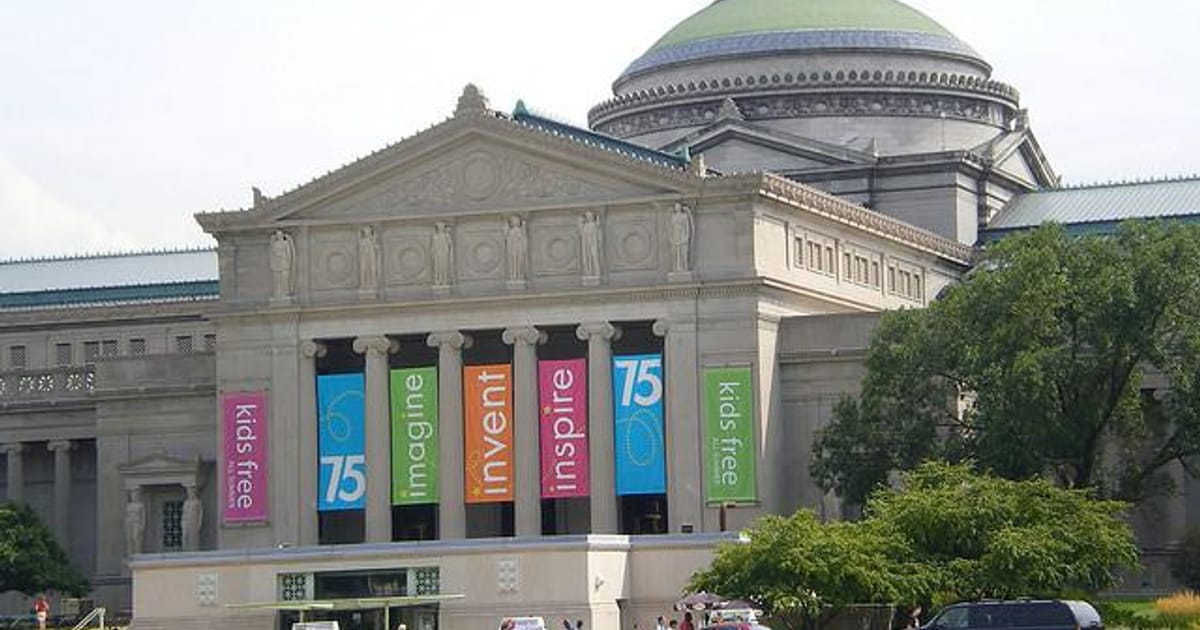
Chicago’s museum is one of the biggest names in American science museumsand it’s literally housed in history: the Palace of Fine Arts from the 1893 World’s Fair.
In 2024, it officially took on the name Kenneth C. Griffin Museum of Science and Industry, often shortened to “Griffin MSI.”
Location #2: Tampa, Florida MOSI (Museum of Science & Industry)
Tampa’s MOSI is a science center with a strong family and school-trip focus. In 2025, it re-entered the spotlight with upgrades and new experiences,
including a major dome theater/planetarium push. If your ranking source mentions a “planetarium reopening” or “digital dome” in 2025, that’s typically Tampa’s MOSI.
Ranking snapshot: where these museums show up on major lists
Below is a practical way to read common ranking sources. Notice how the “winner” changes depending on the question you’re asking.
| Ranking source type | What it rewards | Chicago (Griffin MSI) | Tampa (MOSI) |
|---|---|---|---|
| Travel review platforms | High ratings, volume of reviews, broad appeal | Frequently appears near the top of Chicago museum lists and is often described as a must-see | Strong family appeal; often highlighted for hands-on activities and dome/planetarium experiences |
| City travel guides | “Best things to do” credibility | Regularly featured as a top Chicago attraction, especially for families and first-time visitors | Often positioned as a standout Tampa Bay family attraction |
| Editorial “best museums” lists | Uniqueness, signature exhibits, cultural weight | Commonly ranked among Chicago’s top museums; recognized for iconic, big-ticket exhibits | More likely to be praised for innovation and local repeat-visit strategy |
| Education/program guides | Standards alignment, facilitation, structured labs | Deep menu of Learning Labs (onsite + mobile) and specialized programs | Field trips built around add-on workshops, dissection labs, and planetarium shows |
A ranking rubric you can actually use
Instead of pretending there’s one universal scoreboard, use this simple rubric. The “best” museum is the one that wins the category you care about.
- Icon factor: Do they have signature exhibits you can’t replicate elsewhere?
- Hands-on density: How often can students touch, test, build, and experiment?
- School-program strength: Are classes clearly matched to grade bands and standards?
- Time efficiency: Can you run a high-quality visit in 2–4 hours without chaos?
- Repeat-visit potential: Will families/schools want to come back next semester?
Location rankings: which one is “best” depends on your mission
Best “big day” destination: Chicago (Griffin MSI)
If your goal is a full, cinematic museum daywhere students see something huge, historic, and story-drivenChicago tends to win.
A museum with enough exhibit space to make you consider packing a snack like you’re hiking a small national park is a special kind of flex.
Best for “hands-on + flexible field trip menu”: Tampa (MOSI)
Tampa’s MOSI is built to be a classroom extension: you can do general admission, then upgrade the learning with structured workshops, dissection labs,
or planetarium programming. It’s a clean, understandable field-trip modelespecially for schools that need predictable timing.
Best for iconic artifacts: Chicago (Griffin MSI)
Chicago’s museum is famous for signature experiences like exploring a captured WWII German submarine (the kind of exhibit students remember years later).
If your class is studying WWII, engineering constraints, or “how did humans survive in a metal tube under the ocean,” this is a strong category win.
Best for a “planetarium headline” in 2025: Tampa (MOSI)
If your ranking source is buzzing about a dome theater/planetarium upgrade and new shows, Tampa’s MOSI is the one to watch.
That “wow” factor matters for student engagementspace content is basically catnip for curiosity.
School classes rankings: best picks by grade band (Chicago + Tampa)
Below are “best of” picks based on how well each program typically maps to classroom needs: clear concepts, manageable time, high engagement, and real skills.
(Translation: fewer glazed-over stares, more “Waitcan we do that again?”)
Grades 3–5: Best for building foundational curiosity
- Chicago: Water: A Vital Question or Mobile Weather Wise strong for patterns, environment, and real-world science.
- Chicago: Mobile Water Lab easy to connect to local water systems and simple testing concepts.
- Tampa: Planetarium programs + a hands-on workshop great for “hooking” students with awe, then grounding it with activities.
Grades 4–8: Best for high-energy, high-participation labs
- Chicago: Colorful Chemistry memorable reactions, clear cause-and-effect learning, and the safest way to make science feel dramatic.
- Chicago: Crime Lab (or Mobile Crime Lab) perfect for evidence-based thinking without needing a full courtroom drama soundtrack.
- Chicago: Engineering Design: Bridges ideal for engineering design cycle practice and teamwork.
- Tampa: Educational workshops (engineering/robotics/forensics/weather) good choice if you want targeted skill-building with a set time block.
Grades 6–8: Best for “systems thinking” and challenge-based learning
- Chicago: Mars 2040 (or Mobile Mars 2040) students solve human-needs problems using science, not vibes.
- Chicago: Mobile MedLab introduces health science through measurable vital signs and interpretation.
- Tampa: Planetarium + robotics/engineering workshop excellent pairing for schools doing STEM career exploration.
Grades 7–12: Best for career pathways and “real lab” feel
- Chicago: MedLab: Asthma, MedLab: Diabetes, MedLab: Heart Disease highly aligned to health pathways and diagnostic reasoning.
- Tampa: Dissection Labs a strong option for biology/anatomy units (and a relief for teachers who don’t want to transport 30 trays of supplies).
- Chicago: Live from the Heart (virtual) best for schools that want authentic medical-career exposure without travel logistics.
All school classes at Chicago’s Griffin MSI: complete Learning Labs list
Mobile Learning Labs (the museum comes to you)
- Mobile Chem Lab (Grades 4–8): chemical reactions and observation skills
- Mobile Crime Lab (Grades 4–8): forensic analysis and evidence reasoning
- Mobile Mars 2040 (Grades 5–8): mission planning, constraints, and systems
- Mobile MedLab (Grades 6–12): vital signs and patient assessment basics
- Mobile Water Lab (Grades 3–6): water quality concepts and testing
- Mobile Weather Wise (Grades 3–5): patterns, prediction, and weather basics
Museum Learning Labs (onsite, facilitated)
- Colorful Chemistry (Grades 4–8)
- Crime Lab (Grades 4–8)
- Engineering Design: Bridges (Grades 4–8)
- Mars 2040 (Grades 6–8)
- MedLab: Asthma (Grades 7–12)
- MedLab: Diabetes (Grades 7–12)
- MedLab: Heart Disease (Grades 7–12)
- Moving With Newton (Grades 4–8)
- Water: A Vital Question (Grades 3–6)
Special/virtual program
- Live from the Heart (Virtual): students observe a real-time heart surgery via video conference with museum-facilitated discussion.
- Note on virtual labs: some virtual Learning Lab offerings have been temporarily paused, with plans announced for a return in early 2026.
All school classes at Tampa’s MOSI: what “field trips” can include
MOSI’s field-trip structure is designed to be modular. Schools can do self-guided exhibits, then add one or more structured learning blocks.
- Educational workshops: topic-based sessions (often ~45 minutes) across areas like chemistry, engineering, robotics, forensics, weather, and space
- Dissection labs: guided anatomy/biology experiences for older students or life-science units
- Planetarium programs: sky shows and space content led by astronomy staff, often built into admission packages with add-on options
How to turn rankings into a better visit (without losing your mind)
If you’re a family
- Pick 3 “must-dos,” not 30. A big museum rewards focus. Choose one iconic exhibit, one hands-on zone, and one “wow” show or tour.
- Budget for add-ons. The highest-ranked experiences are sometimes ticketed separately. Decide in advance what matters most.
- Use rankings like a menu, not a mandate. “Top-rated” is greatunless your kid is obsessed with trains, in which case trains win. Always.
If you’re a teacher
- Start with your standards, then pick the lab. Programs that explicitly align to grade bands save you planning time.
- Schedule one structured class block. Self-guided exploration is fun, but a facilitated lab is where the learning becomes measurable.
- Build a simple reflection assignment. One claim + one piece of evidence + one question students still have is enough to justify the trip academically.
If you’re homeschooling
- Look for facilitated labs and guided programs. They provide the “classroom” structure you may want without recreating a lab at your kitchen table.
- Use the museum for multi-subject learning. Science + history + writing prompts can all come out of one well-planned visit.
Experiences: what it’s like to “rank” a Museum of Science and Industry day
Imagine you’re trying to rank two science-museum daysChicago’s Griffin MSI and Tampa’s MOSIbased on one question:
Which day gives students the most “I get it now!” moments?
In Chicago, the experience often starts before you even touch an exhibit. The building itself carries a “World’s Fair” grandeur that makes students
sit up a little straighterlike they’ve stepped into a place where Important Things Happen. A great ranking day here usually has a rhythm:
start with a high-impact exhibit that grabs attention, then move into something structured where students get hands-on with a clear goal.
For many groups, that structure comes from a Learning Lab. When a facilitator guides students through chemistry reactions or forensic analysis,
it doesn’t feel like passive museum wanderingit feels like class got upgraded to the deluxe edition.
The “icon” moments matter too. Big artifacts and immersive exhibits create shared reference points for the whole class.
Later, when you’re back in the classroom and a student says, “Remember when we saw…,” you’ve got a memory anchor you can teach from for weeks.
That’s a hidden ranking category most lists never name: stickiness. The best experiences don’t just entertain; they become learning shorthand.
Tampa’s MOSI experience can be ranked differentlybecause it’s often easier to build a tight, predictable schedule. A typical high-scoring day might look like:
self-guided exhibits first (students explore, burn off energy, and discover what they’re curious about), then a workshop that channels that curiosity into
skill-building. If your group adds a planetarium program, you get an emotional “wow” moment that resets attention and makes the day feel special.
For teachers, that kind of pacing is gold. It keeps the trip from turning into the educational equivalent of a group text thread: loud, chaotic, and somehow off-topic.
The best “ranked” MOSI field-trip experiences also do something subtle: they make science feel doable. Workshops and labs break big topics into
45-minute chunks with clear outcomes. Students leave thinking, “I can do this,” not “Science is a thing that happens in a locked room somewhere.”
And if you’re teaching older students, dissection labs can create a serious, focused energyone of those rare moments where everyone’s paying attention
because the learning feels real.
So what’s the takeaway from this experience-based ranking? Chicago often wins when you want a marquee, iconic, once-in-a-year museum day
with deep lab options and unforgettable artifacts. Tampa often wins when you want a modular, standards-friendly field trip where you can
reliably mix exhibits + workshops + planetarium into a clean, teachable schedule. Either way, the highest rank goes to the trip that matches your students’
grade level, attention span, and learning goalsbecause the real scoreboard is what they remember (and can explain) after they get back on the bus.
Conclusion
“Museum of Science and Industry rankings” aren’t one listthey’re a bunch of different scoreboards measuring different wins.
Chicago’s Griffin MSI tends to dominate when the ranking values iconic exhibits, scale, and big-ticket experiences. Tampa’s MOSI shines when the ranking values
structured field trips, workshops, and a schedule-friendly model for schools.
If you’re choosing for a class: start with the grade band, pick one structured lab or workshop, and treat the rest like exploration time with a purpose.
That’s how you turn rankings into resultswithout turning your chaperones into unpaid air-traffic controllers.