

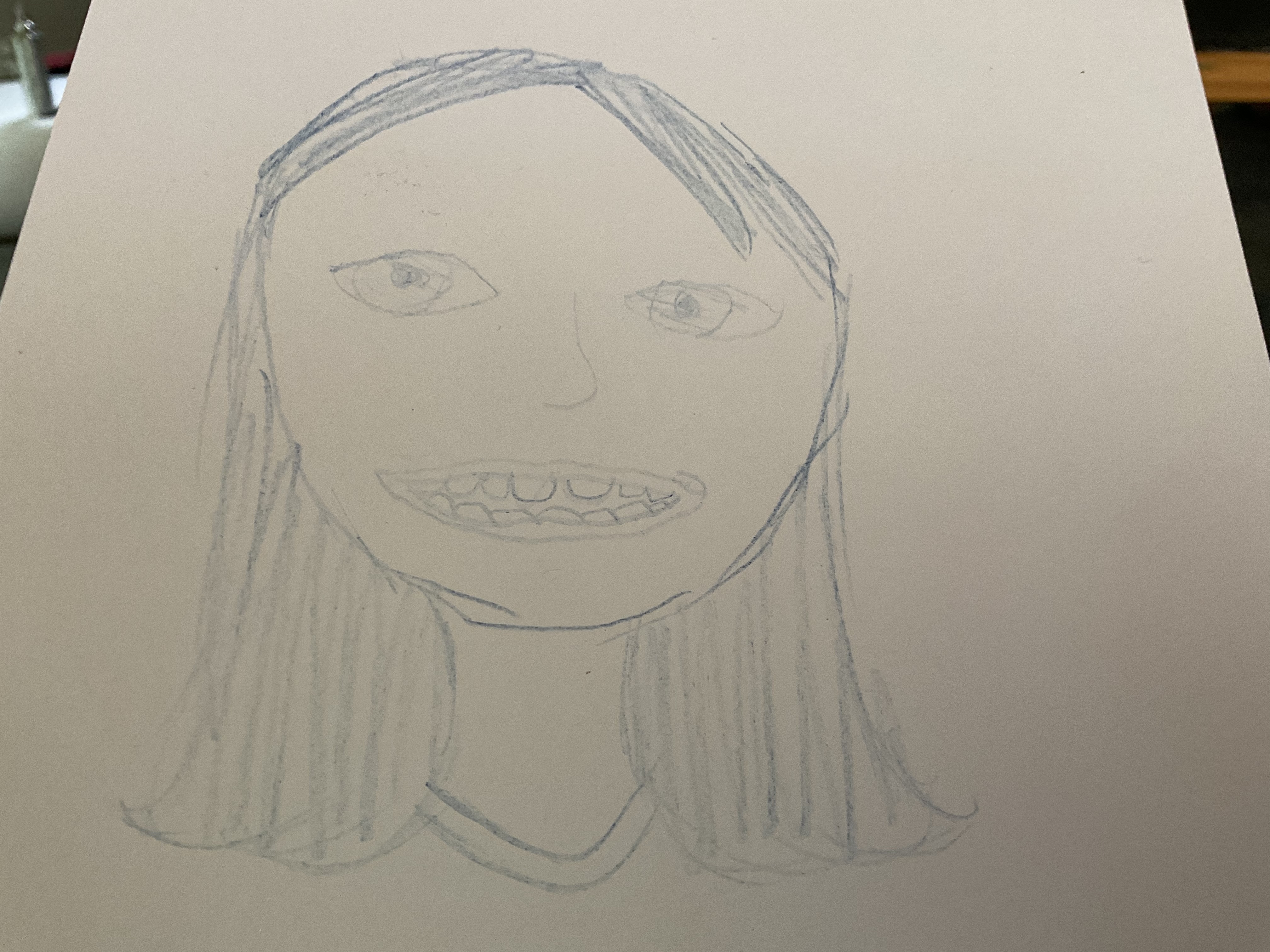
Some internet challenges ask you to dance, cook, clean your room, or pretend you know what “core strength” means. This one is much kinder, much sillier, and possibly more honest: draw yourself with your non dominant hand and post the result.
The idea is simple. If you normally write with your right hand, pick up the pencil with your left. If you are left-handed, give your right hand a dramatic little spotlight moment. Then draw a self-portrait. Not a perfect portrait. Not a museum-ready masterpiece. Just you, interpreted by the hand that usually sits there like an unpaid intern.
That is exactly why the challenge is so funny, charming, and weirdly meaningful. A non dominant hand drawing challenge removes the pressure to be polished. Your lines wobble. Your eyes may become cousins instead of twins. Your smile might look like it is trying to escape your face. But somewhere inside that chaos is a strangely accurate little version of you.
For Bored Panda-style communities, this kind of prompt is gold. It is low-pressure, easy to join, visually hilarious, and surprisingly personal. You do not need expensive supplies, professional art training, or a studio with dramatic north-facing light. You need paper, a pencil, five minutes, and the courage to let your “wrong” hand run the meeting.
What Is the Non Dominant Hand Drawing Challenge?
The non dominant hand drawing challenge asks people to create art using the hand they do not normally use for writing, drawing, brushing teeth, or pointing accusingly at the empty snack drawer. In this version, the subject is yourself. That means the challenge becomes part art exercise, part personality test, and part comedy show.
When you draw with your dominant hand, your brain leans on familiar habits. You know how to control pressure, curve lines, place features, and correct mistakes quickly. With your non dominant hand, all of that confidence walks out of the room. Suddenly, drawing a circle feels like guiding a shopping cart with one bad wheel.
That loss of control is the point. The drawing becomes playful rather than perfect. Instead of trying to impress people, participants usually end up laughing at the result, sharing the process, and discovering that imperfect art can be more memorable than a carefully polished sketch.
Why Drawing With Your Non Dominant Hand Feels So Strange
Most people have a preferred hand for detailed tasks. Around the world, right-handedness is far more common than left-handedness, which means many people will experience this challenge as a left-hand adventure. For left-handed artists and doodlers, the challenge flips the experience and gives the right hand a chance to cause harmless artistic mayhem.
Fine motor control takes practice. Your dominant hand has years of experience forming letters, controlling utensils, unlocking phones, and pretending to take notes during meetings. Your non dominant hand does not have the same smooth muscle memory. So when it tries to draw a nose, it may produce something between a comma and a potato.
But the awkwardness can be useful. Because the non dominant hand is less predictable, it forces you to slow down. You notice the shape of your face, the direction of your hair, the size of your glasses, or the fact that eyebrows are basically two emotional caterpillars. The exercise turns drawing into observation instead of performance.
Why This Challenge Works So Well Online
It Is Easy for Anyone to Join
A strong online art challenge should not require rare tools or advanced skills. This one passes that test beautifully. Anyone can grab a notebook, receipt, napkin, tablet, pencil, pen, marker, or crayon and participate. The barrier to entry is wonderfully low.
It Creates Instant Personality
A non dominant hand self-portrait has built-in character. Even if two people follow the same prompt, the results will look completely different. One drawing might be cute and lopsided. Another might look like a haunted passport photo. Another might accidentally become abstract expressionism with bangs.
It Encourages Kind, Funny Comments
The best version of this challenge is not about judging skill. It is about celebrating effort, humor, and originality. A good community prompt invites people to comment things like, “This looks exactly like how Monday feels,” or “Your non dominant hand has a bold artistic vision.” That kind of supportive humor keeps the conversation light and enjoyable.
How to Draw Yourself With Your Non Dominant Hand
You do not need a complicated tutorial. In fact, too many rules can ruin the fun. Still, a little structure helps people start without staring at a blank page like it just insulted their family.
Step 1: Choose Your Tools
Pick something simple. A pencil is perfect because it gives your hand some control without being too slippery. A marker creates bold, hilarious lines. A crayon makes the whole thing feel like a kindergarten flashback, which is not a problem. It is a feature.
Step 2: Set a Time Limit
Give yourself five to ten minutes. A time limit keeps the challenge playful and prevents you from trying to “fix” every strange line. Remember, the wobble is the content. The wobble is the star. The wobble has arrived in a tiny limousine.
Step 3: Start With the Face Shape
Draw the outline of your head first. Do not worry if it becomes an oval, bean, moon, pancake, or geological formation. This is your non dominant hand speaking, and apparently it has opinions.
Step 4: Add Features Without Overthinking
Add eyes, eyebrows, nose, mouth, hair, ears, and anything else that makes the drawing feel like you. Glasses, freckles, a hoodie, headphones, earrings, facial hair, or a favorite hat can make the sketch instantly recognizable even if the proportions are doing parkour.
Step 5: Post the Result With a Caption
When you share it, include a caption that adds context. Try something like, “My left hand has never met my face before,” or “I asked my right hand to draw me and it filed a complaint.” Captions make the artwork more shareable and help other people feel comfortable joining in.
Funny Caption Ideas for Your Non Dominant Hand Self-Portrait
If your drawing looks strange, congratulations. You understood the assignment. A good caption can turn a wobbly sketch into a tiny comedy masterpiece.
- “Me, according to the hand that usually just holds snacks.”
- “My non dominant hand saw me once in a dream.”
- “This is either a self-portrait or a warning sign.”
- “I have never looked more emotionally accurate.”
- “My left hand tried its best, and HR has been notified.”
- “Same face, different operating system.”
- “Honestly, this captured my Monday energy perfectly.”
The Creative Benefits of Making Imperfect Art
One of the best things about drawing with your non dominant hand is that it breaks the perfection trap. Many people avoid drawing because they think they are “bad at art.” But this challenge makes everyone bad at art on purpose. That levels the playing field in the funniest way possible.
Creative exercises like this can help people loosen up, experiment, and focus on the process instead of the result. When the goal is not perfection, your brain has more room to play. You may notice interesting lines, unexpected expressions, or emotional details you would never create with careful control.
Art-making is also widely used as a way to support relaxation and self-expression. You do not have to label your doodle as therapy to enjoy the calming effect of sitting down and making something with your hands. Sometimes the simple act of drawing, coloring, or sketching gives your mind a small break from scrolling, planning, overthinking, and wondering why your inbox has become a digital swamp.
Why Self-Portraits Make the Challenge More Interesting
Drawing a random object with your non dominant hand is funny. Drawing yourself is funnier and more revealing. A self-portrait adds identity to the challenge. You are not just drawing “a person.” You are drawing your own face, your own mood, your own style, and possibly your own confusion.
Self-portraits also invite self-acceptance. The finished image might not be flattering in the traditional sense, but it can feel oddly truthful. Maybe your non dominant hand exaggerates your tired eyes, dramatic hair, shy smile, or permanently skeptical eyebrow. Somehow, those exaggerations can make the drawing feel more alive.
That is why this prompt works so well for a community post. It is personal without being too serious. It lets people show themselves in a way that feels safe, silly, and creative. Nobody expects glamour. Nobody expects symmetry. Everybody expects chaos with a signature at the bottom.
Tips for Making Your Drawing More Fun
Use a Mirror or Selfie
You can draw from memory, but using a mirror or selfie makes the exercise more specific. Try to notice one or two unique details. Maybe your hair parts in a dramatic direction. Maybe your glasses dominate your face. Maybe your resting expression says, “I know what you did to the last cookie.”
Try Continuous Line Drawing
For an extra challenge, keep your pencil on the paper the entire time. Continuous line drawing makes the result even more unpredictable. The face may become tangled, but it often gains a cool, expressive quality.
Add Color Afterward
If your outline looks wildly unstable, color can bring it together. Use bright colors, weird shading, or dramatic blush. The more confidently you decorate the chaos, the more intentional it looks.
Compare Dominant and Non Dominant Versions
Draw yourself once with your dominant hand and once with your non dominant hand. Place the drawings side by side. The first one may look controlled. The second one may look like it knows a secret. Together, they make a great post because the contrast is instantly funny.
How to Turn the Challenge Into a Great Community Post
If you are publishing this as a community prompt, keep the instructions short and friendly. A post titled “Hey Pandas, Draw Yourself With Your Non Dominant Hand And Post The Result!” already has the right energy. It sounds casual, inviting, and slightly dangerous in the safest possible way.
Add a few simple rules: use your non dominant hand, draw yourself, keep it original, and be kind in the comments. Encourage people to share the story behind their drawing. Did their hand cramp? Did their dog judge them? Did the final portrait look like a distant relative from another planet? Those details make the thread more entertaining.
You can also ask participants to include their dominant hand in the caption. For example: “Right-handed, drew this with my left.” This helps readers understand the level of difficulty and makes the challenge feel more authentic.
What Makes a Non Dominant Hand Drawing Worth Posting?
The best answer is: honesty. A great non dominant hand drawing does not need to be “good.” It needs to look like a real attempt. The charm comes from visible effort. The shaky lines, uneven eyes, mysterious jawline, and floating ears are not mistakes. They are evidence that the challenge happened.
In fact, overly polished entries can feel less fun. The community wants the glorious mess. It wants the portrait that says, “I tried, I suffered, I laughed, and now this belongs to the internet.” That kind of vulnerability is exactly what makes user-generated content engaging.
Experiences From Trying the Challenge
The first thing many people notice when trying the non dominant hand drawing challenge is how quickly confidence disappears. You sit down thinking, “It is just a face. I have one of those.” Then your non dominant hand picks up the pencil and immediately behaves like it has been living under a couch cushion for twenty years.
The beginning is usually the funniest part. The head shape comes out too wide, too narrow, or strangely heroic. The eyes refuse to line up. The nose becomes a tiny mountain range. The mouth, which should be simple, suddenly requires the emotional strength of a final exam. Yet the longer you draw, the more you start to enjoy the weirdness.
One common experience is the sudden urge to apologize to the paper. People often laugh out loud before they even finish. That laughter matters. It turns the drawing from a test into a game. Instead of asking, “Is this good?” you start asking, “How strange can this get before it becomes modern art?”
Another experience is surprise. Even when the drawing looks messy, it may capture something real. Maybe the tilt of the head feels accurate. Maybe the eyebrows somehow show your actual personality. Maybe the uneven smile looks more like your real smile than the carefully drawn version would have. Non dominant hand drawings often remove the polished mask and leave behind a loose, expressive impression.
The challenge can also be a little humbling. People who are used to being good at drawing may feel awkward because their usual skill does not transfer neatly. Beginners, meanwhile, may feel unexpectedly free because everyone is starting from a clumsy place. That makes the challenge unusually democratic. Skilled artists, casual doodlers, and people who only draw during phone calls can all participate and laugh together.
There is also a social experience built into the challenge. Posting the result invites responses that are usually warmer than typical online comments. People recognize the bravery of sharing something imperfect. They compare wonky features, celebrate funny details, and reassure each other that the goal was never perfection. A drawing with crooked eyes might get more affection than a flawless portrait because it feels more human.
For families, classrooms, friend groups, and online communities, this prompt works especially well because it creates instant conversation. One person may discover their non dominant hand draws excellent hair but catastrophic mouths. Another may produce a portrait that looks like a cartoon detective. Someone else may make a drawing so chaotic it becomes the unofficial mascot of the group chat.
By the end, the biggest lesson is not about drawing. It is about permission. Permission to be bad at something. Permission to make something without editing it into boredom. Permission to post a silly self-portrait and let people enjoy it. In a web culture full of filters, perfect angles, and polished personal brands, a shaky non dominant hand drawing feels refreshingly honest. It says, “Here I am, sort of. My other hand did the paperwork.”
Conclusion
The “Hey Pandas, Draw Yourself With Your Non Dominant Hand And Post The Result!” challenge is funny because the results are unpredictable, but it is memorable because the process feels freeing. It gives people a reason to create without pressure, share without pretending, and laugh at the wonderfully imperfect side of self-expression.
Whether your final portrait looks adorable, confused, dramatic, or like it just heard bad news from a toaster, it deserves a place in the challenge. The point is not to prove you are an artist. The point is to prove that creativity can survive a shaky line, a lopsided face, and a hand that clearly did not attend orientation.
So grab a pencil, switch hands, draw yourself, and post the result. Your non dominant hand has been waiting for its big break. Please be patient with it. It may be talented. It may be chaotic. It may also be both.