

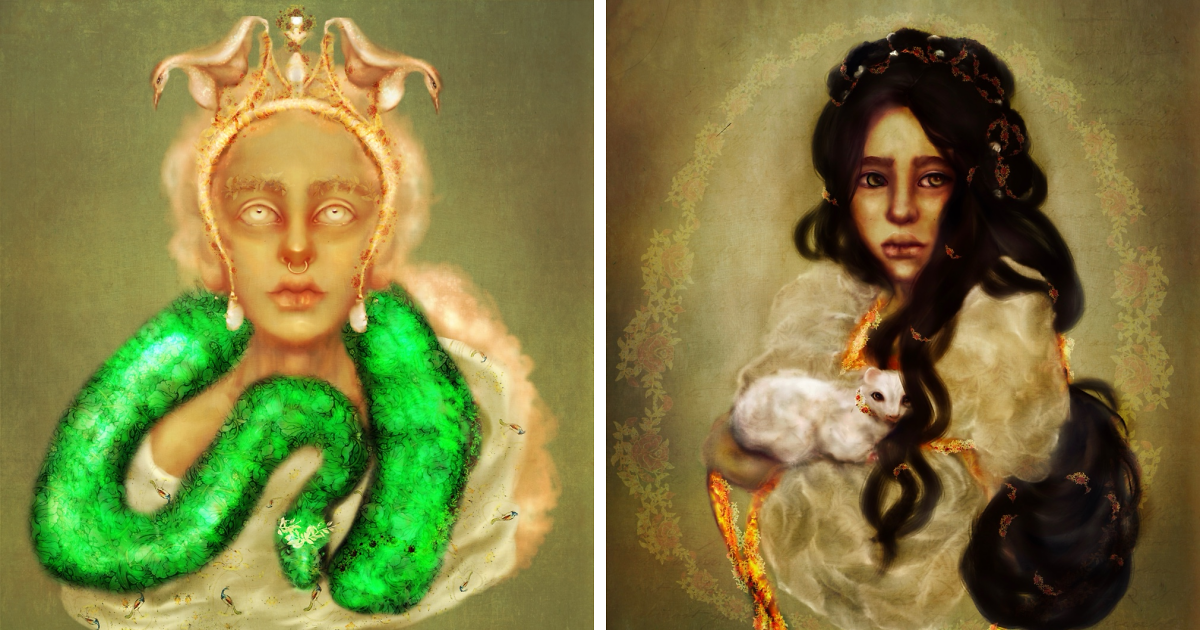
November has a strange reputation. It is the month that arrives after Halloween has eaten all the good candy and before December starts jingling bells in your face. The trees look tired, the daylight leaves work early, and even your favorite sweater may begin to resemble a wearable sigh.
That makes November an unexpectedly perfect setting for fairy paintings. Fairies do not need blazing summer gardens or storybook sunshine to make an entrance. In fact, they often work better among bare branches, mossy stones, faded leaves, candlelit windows, and forests that appear to be holding a secret meeting after dark.
The original November Fairy Paintings collection presents 17 whimsical works by illustrator and children’s-book creator Monica Michelle. Rather than treating fantasy as a glitter cannon, the paintings lean into a quieter kind of magic: small wonders, woodland moods, delicate characters, and the feeling that something extraordinary may be hiding one leaf pile away. The collection also carries a more personal undertone, because the artist described drawing as one way to stay connected to creativity during a difficult November.
Why November Makes Such a Good Fairy Tale Setting
Summer fantasy art often feels loud in the best way. It comes packed with bright flowers, dragonflies, glowing ponds, and enough golden light to make every mushroom look like it has an agent. November fairy art takes a different route. It is moodier, softer, and more willing to let a little darkness sit at the table.
Late autumn has a natural color palette that artists can stretch into fantasy without much effort. Burnt orange leaves, deep berry reds, brown-gold grasses, smoky gray skies, and dark evergreen shadows already look as though they were selected by a woodland costume designer. Even the real science of fall color feels a bit magical: as daylight shortens and temperatures drop, trees break down chlorophyll and reveal yellows, oranges, reds, and other pigments that were hiding in plain sight all along. Nature, as usual, was doing special effects before humans invented Photoshop.
November also gives fantasy art room to breathe. A busy spring garden can feel like it has seventeen things to say at once. A November garden says less, but it says it with excellent posture. Bare branches become graphic lines. Fallen leaves become texture. A single red berry can look like a jewel. A patch of moss can become a kingdom with a zoning board, a mayor, and at least one suspicious owl.
That visual restraint is part of the appeal. Fairy paintings inspired by late autumn invite viewers to slow down and notice details that would be easy to miss in a brighter season: a curled leaf, a twig caught in frost, a lantern in a darkened field, or a tiny figure tucked into the roots of an old tree.
Fairy Art Has Always Been More Than Sparkly Wings
Fairies have appeared in visual art for centuries, but they have never belonged to just one mood. They can be playful, eerie, elegant, mischievous, romantic, mysterious, or all five before breakfast. Historic fairy imagery has moved through theater, folklore, illustration, printmaking, watercolor, decorative art, and children’s books.
American artist Dora Wheeler’s 1888 work Fairy in Irises, for example, used watercolor, gouache, and graphite to place a fairy figure inside a richly botanical world. That combination still feels familiar today: a human-like character becomes more enchanting when the surrounding plants are treated with as much care as the face, dress, or wings.
Storybook illustration also helped shape the way modern audiences picture fairies. Museums in the United States preserve works ranging from delicate watercolor-and-gouache fairy-tale images to bold prints, engraved books, and theatrical fantasy scenes. Fairy tales have been interpreted through fine line work, moody silhouettes, tiny decorative details, watercolor washes, and highly textured forests. In other words, there is no official fairy art uniform. Wings are optional. Personality is not.
November fairy paintings fit naturally into that tradition because they treat fantasy as a way of looking rather than merely a type of character. A fairy may appear in the image, but the deeper enchantment often comes from the atmosphere. The forest feels alive. The ordinary world becomes a little less ordinary. A puddle becomes a mirror. A mushroom becomes a chair. A crow becomes someone who clearly knows more than it is willing to explain.
17 Little Things to Notice in November Fairy Paintings
-
1. The quiet kind of magic
Not every magical image needs lightning bolts or a castle balanced on a cloud. November fairy paintings often let the mood do the work. A dim forest, soft glow, or unusual shadow can be enough to make a scene feel enchanted.
-
2. Leaves that act like confetti with feelings
Autumn leaves bring movement into a still scene. They swirl, gather, cling to boots, cover pathways, and make every fairy look as though she has just stepped out of a very tiny fashion editorial.
-
3. Moss as interior design
In fairy art, moss is never just moss. It becomes a blanket, roof, staircase, sofa, or luxury green carpeting for creatures with highly specific taste.
-
4. Woodland characters with jobs
The best fantasy scenes suggest that every little creature has something to do. Someone is guarding a teacup. Someone is collecting acorns. Someone is probably late for a moonlit committee meeting.
-
5. A limited fall palette
Rust, ochre, berry red, charcoal, olive, plum, and warm brown make a painting feel seasonal without turning it into a pumpkin-spice emergency.
-
6. Details that reward a second look
Fairy paintings often hide their best ideas in corners: a tiny animal, a candle, a miniature door, an embroidered hem, or a creature watching from behind a branch.
-
7. The useful mystery of fog
Fog is the artist’s way of saying, “There may be a mountain back there, but I am not ready to discuss it.” It adds depth, distance, and a little polite suspense.
-
8. Animals as unofficial narrators
Owls, foxes, ravens, mice, moths, and deer often make fairy scenes feel like stories in progress. They are not background props. They are witnesses, sidekicks, and occasional critics.
-
9. Tiny doors and large possibilities
A small door in a tree trunk instantly turns a normal woodland scene into a question: Who lives there? What is the rent? Is there Wi-Fi? Fantasy art wisely refuses to answer all of this.
-
10. Candlelight that behaves dramatically
Warm light against a dark November setting creates instant intimacy. A candle can make a fairy seem welcoming, secretive, homesick, powerful, or simply better prepared than the rest of us.
-
11. Clothing inspired by the landscape
Fairy dresses often echo leaves, bark, petals, feathers, and mist. In late-autumn fantasy art, clothing can feel almost grown rather than sewn.
-
12. Branches that frame the story
Bare branches create beautiful lines across a painting. They can form a doorway, a cage, a crown, or a visual trail that leads the eye toward the central character.
-
13. A hint of the uncanny
The strongest fairy art is not always sugary. A little strangeness gives it texture. A forest should feel beautiful, but it should also feel like it has rules you have not been told yet.
-
14. Nostalgia without dusting off the attic
Whimsical fairy paintings can recall old storybooks, vintage illustrations, and childhood imagination while still feeling fresh enough for modern fantasy lovers.
-
15. The beauty of small scale
Miniature scenes encourage viewers to lean in. The world feels more intimate when a mushroom can be a table and a fallen leaf can be a boat.
-
16. Nature as a character, not a backdrop
In the most memorable fairy paintings, trees, grasses, stones, flowers, and clouds have personality. The setting is not merely where the story happens. It is part of the story.
-
17. A little hope under the gray sky
November art does not need to pretend that everything is cheerful. Its magic comes from finding brightness inside the muted parts of the season, like a lantern glowing just before dusk.
What These 17 Fairy Paintings Suggest About Creativity
The most appealing part of a collection like this is not simply that it contains fairies. Plenty of fairy art exists. The more interesting idea is that creativity can give shape to a difficult season. A painting does not have to solve a problem to matter. It can create a pause. It can offer a place for the eye to rest. It can take an ordinary month and give it moss-covered boots.
That is especially true of small, repeatable creative practices. A quick sketch, a watercolor study, a tiny character design, or a painted leaf can become a manageable way to mark time. You do not need to build an entire enchanted kingdom before lunch. One mushroom is enough. Two mushrooms may become a village. By the third mushroom, you should probably consider a local government.
For artists, November fairy paintings are a reminder that seasonal inspiration does not have to be obvious. You do not need a giant orange pumpkin in the center of every canvas. You can work with the colors, textures, and emotions of late autumn instead: quiet, change, memory, dimness, warmth, and the wish for one more bright thing before winter arrives.
Related Experiences: Finding Your Own November Fairy Moment
There is a certain experience that happens on a cold November afternoon when you are walking somewhere familiar and suddenly notice that the world has changed. The same sidewalk is there. The same trees are there. The same neighbor’s dog is probably still barking at a leaf that has committed no crime. Yet the light is lower, the air is sharper, and the season has edited the scenery until everything looks slightly more dramatic.
That is the feeling November fairy paintings capture so well. They remind us that imagination does not always need a grand event. It can begin with a branch tapping lightly against a window. It can appear in the curve of a mushroom, the shadow of a bird crossing a field, or a wet pile of leaves that looks suspiciously like it might contain a sleeping hedgehog with a tiny hat.
One of the nicest ways to experience this mood is to take a slow walk without treating it like a mission. Leave the headphones out for a few minutes. Notice the sounds that are usually buried under traffic, music, notifications, and the internal debate about whether you remembered to answer that email. Listen for dry leaves moving across pavement, wind in nearly bare branches, distant crows, and the soft crunch of gravel under shoes.
Then look for colors that do not shout. November is more than brown. There are wine-colored leaves pressed into the grass, pale gold birch branches, blue-gray clouds, dark green ivy, black tree bark after rain, and clusters of red berries that look as though someone hung tiny ornaments outside too early. These are the colors that can inspire a fairy painting without requiring you to paint an actual fairy at all.
A cozy indoor version of the same experience works, too. Put a small lamp near a window after sunset. Make tea. Pull out a sketchbook, a few colored pencils, or even a notebook. Draw a leaf from memory. Invent a creature that might live under it. Give that creature a name, a job, and one oddly specific complaint. Perhaps it repairs broken spiderwebs. Perhaps it collects lost buttons. Perhaps it is furious that humans keep calling every small woodland creature “cute.”
Creative play becomes more useful when it is allowed to be imperfect. The fairy does not need symmetrical wings. The forest does not need realistic perspective. Your moon can be too large. Your owl can look like a potato with opinions. None of that ruins the experience. Fantasy has room for awkwardness because it was never meant to be a spreadsheet.
There is also something comforting about seasonal art because it gives change a shape. November can feel like an in-between month, but in-between places are often where stories begin. The trees are letting go. The year is slowing down. The air asks you to stay inside more often. A fairy painting can turn that transition into something gentler: not an ending, exactly, but a small lantern-lit passage between one season and the next.
That may be why these paintings feel so inviting. They do not demand that viewers escape the real world. They simply encourage a softer way of seeing it. The forest can still be a forest. The rain can still be rain. But perhaps the moss is keeping a secret, the raven is delivering a message, and the leaf caught on your coat is proof that you were briefly invited somewhere magical.
Conclusion: A Little Enchantment for the Longest-Looking Month
November Fairy Paintings (17 Pics) is a gentle reminder that fantasy art does not need to be loud to feel powerful. Through late-autumn color, woodland details, delicate character design, and a touch of mystery, these fairy-inspired paintings turn one of the grayest months of the year into a place worth exploring.
Whether you are an art lover, a seasonal mood collector, a fantasy fan, or simply someone who thinks tiny doors in trees deserve more respect, November fairy paintings offer a useful invitation: look closer. The ordinary world may be less ordinary than it first appears.
Note: This is an original editorial companion inspired by the theme of November fairy paintings. It does not reproduce or replace the original 17 artworks.