

Pocket doors used to be the charming throwback detail you noticed in a 1920s bungalow right before you stubbed your toe on a radiator.
In 2026, they’re something else entirely: a strategic, space-saving, design-forward move that feels tailor-made for how people actually live now.
Homeowners want rooms that can flexopen when the party’s popping, closed when the Zoom call is… not.
And pros keep pointing to the same quiet hero that makes all of this possible: a door that disappears when you don’t need it.
If you’ve been sensing “pocket door energy” in renovations, new builds, and home tours, you’re not imagining it. The modern version is smoother,
sturdier, and far more customizable than the cranky, rattly sliders you might remember. And yessome of them even close softly now,
like they’re tucking your house in for a nap.
What Is a Pocket Door, Exactly?
A pocket door is a sliding door that glides into a compartment (“pocket”) inside the wall instead of swinging into the room.
When it’s open, the door essentially vanishesno swing arc, no door blocking furniture placement, no awkward “sorry, I can’t stand there because the door is doing
a full-body sweep” moment.
Pocket doors aren’t new, but the why behind them has evolved. In older homes, they were often used for formal room transitions.
In 2026, they’re used to make square footage work harder, create “optional” privacy, and add architectural personality without adding clutter.
Why Pocket Doors Are Trending Hard in 2026
If you ask designers and builders why pocket doors are everywhere, you’ll hear a few themes on repeatkind of like your favorite playlist,
but for floor plans.
1) Space is still premiumand we’re done donating it to door swings
A traditional hinged door needs clearance to open, which quietly steals usable floor space. Pocket doors give that space back.
That matters in powder rooms, narrow hallways, closets, laundry nooks, and small bedroomsplaces where six extra inches can be the difference between
“this works” and “why does this feel like a game of Tetris?”
2) The “open concept vs. closed concept” debate has a third option
The last decade loved open plans. Then real life happened: work calls, noisy kitchens, kids’ homework, guests, pets, and the need to occasionally shut a door
without declaring emotional war on your household. Pocket doors let you keep openness when you want it and privacy when you need it.
Think of them as the relationship status of home design: “it’s complicated, but functional.”
3) Hardware got a glow-up (quietly… and literally)
Modern pocket door systems aren’t the flimsy tracks of yesteryear. Today’s options include heavier-duty frames, smoother rollers, soft-close mechanisms,
and better guides to reduce wobble and rattle. In other words: the door slides like it has health insurance now.
4) They look more intentionalless “builder basic,” more “architectural”
Pocket doors can be nearly invisible (painted to match walls with minimal pulls) or a statement element (glass panels, fluted/reeded glass,
French-door styles, or oversized double openings). The aesthetic range is wide enough to satisfy both minimalists and people who own exactly twelve
decorative brass objects “for warmth.”
5) Accessibility and aging-in-place design are driving smarter openings
Wider openings and easier circulation matter more than ever. Pocket doors can support accessible layouts because they don’t block pathways when open.
They’re often discussed alongside universal design and “future-proofing” choicesespecially for primary suites and bathrooms where clearances matter.
Where Pocket Doors Work Best (and Why Pros Keep Specifying Them)
Pocket doors are not a one-size-fits-all solution, but they shine in specific spots. Here are the rooms where designers most often reach for themand what
you gain when you do.
Bathrooms and powder rooms
Small bathrooms are basically a masterclass in negotiating with physics. A pocket door removes the swing arc that bumps into vanities, toilets,
towel bars, or knees. For a powder room off a hallway, it can also prevent the “door opens into traffic” problem.
Primary suite layouts (bath/closet transitions)
Pocket doors are a favorite between bedroom and bath or closet zones: they keep sightlines cleaner, preserve wall space for storage, and let the suite
feel open in the morning and private at night. A set of double pocket doors can create a grand, hotel-like threshold without the footprint of swinging doors.
Laundry rooms and laundry closets
Laundry is a functional necessity that most people don’t want to headline their interior design. Pocket doors (and pocket cabinet doors)
are increasingly used to conceal stacked units, folding stations, and storagemaking “laundry zone” feel like it belongs in the home instead of
apologizing for existing.
Home offices and flex rooms
The ability to close off a workspace without sacrificing flow is huge. Pocket doors offer separation for calls or focus, then slide away to reconnect the space.
Glass pocket doors are especially popular here: they preserve light while adding a boundary.
Pantries, butler’s pantries, and kitchen-adjacent storage
Kitchens are busy, and door swings can be a hazard when multiple people are cooking or moving through. A pocket door can hide clutter (hello, appliances),
keep walkways clear, and still give you the option to close things off when you want the kitchen to look “effortless.”
Mudrooms, utility rooms, and awkward hallways
Tight transition spaces are where pocket doors earn their keep. They keep circulation smooth, reduce collisions, and help these hardworking areas feel less cramped.
Room dividers: dining rooms, libraries, media rooms, and “optional open concept” spaces
Designers love pocket doors for creating a sense of drama and flexibilityespecially with oversized openings and double doors.
Close them for coziness; open them for entertaining. It’s like having two floor plans without adding square footage.
Pet zones and kid-friendly boundaries
Pocket doors are increasingly used to create subtle “gates” for pets or toddlersespecially where a standard door swing is annoying.
It’s one of those practical moves that doesn’t look like a practical move, which is basically the highest compliment in home design.
Pocket Doors: Pros, Cons, and the Honest Truth
The pros
- Space savings: No swing arc means more usable floor area and fewer furniture-placement headaches.
- Flexible privacy: Open when you want flow; closed when you want separation.
- Cleaner sightlines: Especially helpful in narrow hallways, small baths, and tight transitions.
- Design versatility: Disappearing minimalist door, statement glass panels, or grand double openingsyour pick.
- Accessibility perks: Can support wider, clearer openings and smoother circulation.
The cons (and how to avoid common regrets)
-
Sound control is usually weaker than a hinged door.
Pocket doors often have more gaps, and the wall cavity limits sealing.
Fix: Choose solid-core doors, consider acoustic-oriented hardware/seals, and be strategic about placement (maybe not for the bedroom of a light sleeper). -
Locking/privacy hardware can feel less robust.
Many pocket door locks are designed for privacy, not security.
Fix: Use quality privacy hardware and set expectations: pocket doors are for “please knock,” not “bank vault.” -
Installation is more complexespecially in existing walls.
Retrofitting can require opening the wall and rerouting electrical or plumbing.
Fix: Plan early, verify what’s inside the wall, and hire a pro if you’re not comfortable with framing and finish work. -
You lose “useful wall” space inside the pocket.
The wall section that holds the door can’t easily host outlets, switches, plumbing, or heavy wall-mounted items.
Fix: Treat that wall like a “no-fly zone” for utilities and plan your layout accordingly. -
Maintenance can be annoying if access is limited.
If something goes wrong with the track, you don’t want to demolish half your wall.
Fix: Use a high-quality system and ensure the design allows reasonable access where possible.
Pocket Doors vs. Barn Doors vs. Hinged Doors
If you’re deciding between door types, here’s the quick, practical comparison:
-
Pocket doors: Best when you want space savings and a cleaner look. Better privacy than most barn doors,
but typically less sound isolation than a well-sealed hinged door. -
Barn doors: Easy-ish retrofit and a statement look, but they need wall clearance and often leak sound/light because they sit off the wall.
Great for “soft separation,” not great for “please don’t hear my entire meeting.” -
Hinged doors: The most straightforward for sound and privacy, easiest to repair, but they demand swing space.
In tight areas, that swing can be a daily nuisance.
What Pocket Doors Look Like in 2026
The biggest visual shift is that pocket doors are no longer treated like a compromise. They’re treated like a feature.
Here are the looks pros are leaning into right now:
Oversized openings with double pocket doors
Double pocket doors can create a dramatic threshold between living/dining, kitchen/pantry, or primary suite zones.
When open, the passage feels expansive. When closed, the rooms feel intentionally definednot chopped up.
Glass that brings light, not exposure
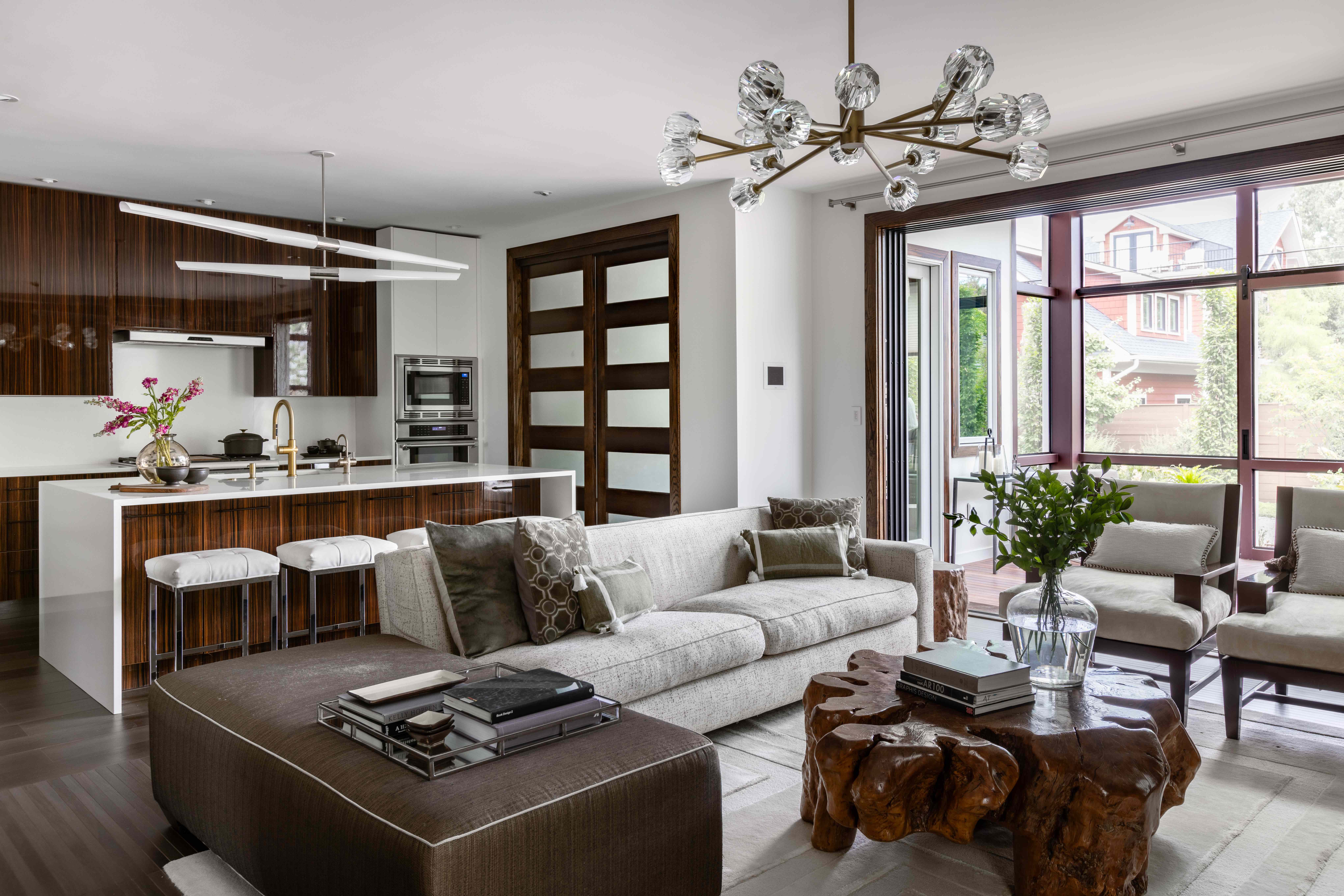
Frosted, reeded, seeded, or fluted glass gives you separation without turning your home into a cave.
It’s especially popular for offices, libraries, and spaces where you want daylight to travel.
“Disappearing” doors that match the wall
Paint-grade doors, minimal pulls, and quiet trim details create an almost seamless wall plane.
This works beautifully in modern homes and in smaller spaces where visual clutter makes rooms feel tighter.
Hardware you can feel (and hear… less)
Soft-close hardware has become a major upgrade that changes how pocket doors feel day-to-day.
Instead of a door that slams or rattles, you get a smooth glide and a gentle finishespecially valuable in bathrooms, bedrooms,
nurseries, and late-night snack missions.
“Smart-ish” pocket doors (still niche, but growing)
Some higher-end projects are experimenting with automation and smart-home integration for sliding doors.
For most households, the bigger story is still better mechanicsnot turning your pantry into a sci-fi film.
Installation Reality Check: What to Know Before You Commit
Pocket doors are easiest when planned during new construction or a major remodelwhen walls are open and the framing can be designed around the pocket.
Retrofitting into an existing wall can be done, but it’s rarely a “quick weekend DIY” unless you’re very experienced.
Step one: make sure the wall can actually host a pocket
The wall cavity needs to be clear. That means no plumbing in the pocket zone and, ideally, no outlets/switches or other obstacles in that section.
Load-bearing walls can still work, but they may require engineered framing and more careful planning.
Budget expectations in 2026
Costs vary by region, door type, and whether you’re installing during new construction or retrofitting. Many U.S. cost datasets place the
typical installed cost in the ballpark of the low-thousands for a standard project, with retrofits trending higher when wall work is involved.
If you’re planning premium doors (glass, French styles, double doors) or a complex retrofit, costs can climb quickly.
Translation: the door slab itself is rarely the whole story. The wall work, finish carpentry, and “surprise, there’s wiring here” moments are what move the needle.
Don’t cheap out on the part you’ll touch every day
A pocket door’s “feel” is almost entirely determined by hardware quality and installation precision.
If you’ve ever used a pocket door that felt like dragging a shopping cart with one wonky wheel, you’ve met the consequences of cutting corners.
Choose reputable hardware rated for the door’s weight, and consider upgrades like soft-close mechanisms for high-use locations.
A quick planning checklist
- Door type: solid-core (better feel and sound) vs. hollow-core (lighter, but often less satisfying)
- Single vs. double: single for tight spaces; double for wide openings and “room divider” drama
- Wall depth: 2×4 vs. 2×6 framing impacts which systems and door thicknesses work best
- Hardware: track/rollers, guides, pulls, privacy lock, soft-close (optional but beloved)
- Finish plan: trim details, paint continuity, and access for future adjustments
How to Make Pocket Doors Age Well
Pocket doors can be low-drama for yearsif they’re installed well and treated like a real door system, not a novelty.
- Keep the track clean: dust and debris are the silent enemies of smooth sliding.
- Use a good floor guide: it reduces wobble and the “rattle-in-the-pocket” effect.
- Choose durable finishes: high-traffic doors benefit from tougher paint and careful edge finishing.
- Plan for adjustability: quality systems allow height/level tweaks over time.
- Put them in the right places: they’re amazing in tight zones; they’re not always ideal for maximum acoustic privacy.
Conclusion: A Trend That’s Actually Practical
Pocket doors are having a major moment in 2026 because they solve real problems: space, flexibility, and the modern need to toggle between togetherness and quiet.
They’re not just “back”they’re better. The best projects treat them like an architectural decision, not a gimmick:
pick the right location, invest in good hardware, and plan the wall like it’s part of the system (because it is).
Do that, and you get a home that feels more spacious without adding a single square footjust a door that knows when to make an exit.
500+ words of experience-based content
Real-Life Pocket Door Moments: The “Okay, I Get It Now” Experiences People Talk About
When pros say pocket doors are “having a moment,” they don’t just mean they look good in photos.
They mean pocket doors keep showing up in the stories homeowners tell after they’ve actually lived with themespecially in homes where every inch matters.
Here are the kinds of experiences that keep coming up in 2026 conversations, project recaps, and post-reno debriefs.
1) The powder room that stopped causing hallway traffic
One of the most common “why didn’t we do this earlier?” moments happens in a powder room off a main hallway.
People describe the same chain reaction: guests aren’t awkwardly stepping aside, no one gets lightly bonked by a door edge,
and suddenly the hallway feels wider even though nothing moved. The pocket door becomes an invisible traffic controllerquietly preventing
the kind of minor collisions that make a house feel cramped and chaotic.
2) The laundry closet that went from eyesore to “laundry speakeasy”
Laundry is essential, but nobody wants it starring in the open-plan show. Homeowners who add pocket doors to laundry closets often say the biggest win isn’t
even the spaceit’s the mental calm. The machines can be hidden instantly. The detergent clutter disappears.
The “I’ll fold that later” pile stops being a permanent piece of decor. People describe it as the easiest way to make a hardworking corner feel intentional:
open the door when you’re using it, close it when you want your home to look like you have your life together.
3) The home office that stops being “in your face” after 5 p.m.
In multi-use homes, pocket doors create a psychological boundary as much as a physical one.
Homeowners describe the satisfaction of sliding a door shut and reclaiming their living spaceespecially when the office is near the kitchen or living room.
It’s not about hiding a mess (though that’s a bonus). It’s about switching modes. Pocket doors help the house feel like it has chapters:
work time, family time, quiet time, hosting timeeach with a simple slide.
4) The “optional open concept” dinner party trick
This is where pocket doors become social magic. People hosting friends or family love being able to open spaces wide for flowthen close a set of doors when they
want to dampen kitchen noise, hide prep chaos, or create a cozier vibe in the dining room. Unlike a permanent wall (too final) or no wall at all (too loud),
pocket doors let hosts curate the experience. The best part is how seamless it feels: the doors don’t intrude into the room when open, so the house looks
cleaner and more expansive when guests arrive.
5) The small bedroom that suddenly fits real furniture
A frequent “experience” story is about furniture placement: the dresser that can finally go where it makes sense, the bedside table that doesn’t need to be
a tiny compromise, the closet area that stops feeling pinched. When you remove a door swing, you often unlock a wall.
Homeowners describe pocket doors as a weirdly satisfying upgrade because it changes daily movementhow you enter a room, how you carry laundry,
how you navigate cornerswithout feeling like a flashy renovation.
6) The regret story: “We didn’t think about sound” (and what they’d do differently)
Not every pocket door story is a love story. The most common regret is sound leakage, especially in bedrooms and shared walls.
People describe realizing that a pocket door can feel less “sealed” than a traditional doorthen wishing they’d chosen a solid-core slab, upgraded hardware,
or used pocket doors in a slightly different location. The lesson from these experiences is consistent: pocket doors are incredible for space and flexibility,
but if acoustic privacy is non-negotiable, you need to specify the right construction and details. Done thoughtfully, this regret is avoidable.
7) The tiny daily delight: soft-close feels absurdly luxurious
Finally, there’s the small, surprisingly emotional experience people rave about: the way a good pocket door closes.
With quality hardware and a soft-close mechanism, the door doesn’t bang, rattle, or need a “finishing shove.”
It glides and settles. Homeowners describe it as one of those upgrades you feel every daylike a well-balanced cabinet drawer, but life-sized.
It’s not dramatic. It’s just quietly satisfying… which is basically the entire pocket door vibe in 2026.