

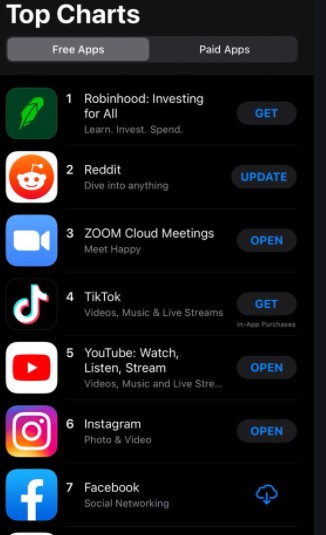
Robinhood began with a beautifully simple promise: stock trading without commissions. For millions of first-time investors, that felt less like opening a brokerage account and more like downloading freedom from an app store. No mahogany desk. No stern advisor in a navy suit. No “minimum balance” that made you feel like you accidentally walked into the VIP room wearing flip-flops.
Now the question is bigger: will Robinhood become the Facebook of finance? In other words, can Robinhood evolve from a trading app into the default social, financial, and behavioral platform for a generation of investors? The comparison is tempting. Facebook did not win merely by letting people post photos. It won by becoming the place where identity, attention, relationships, ads, communities, and commerce all collided. Robinhood may be trying to do something similar with money: trading, crypto, retirement, banking, credit cards, financial news, AI investing tools, prediction markets, and global access all inside one sleek ecosystem.
But finance is not social media with dollar signs taped to it. A bad post can embarrass you. A bad options trade can vaporize your rent money before lunch. So the real answer is complicated: Robinhood could become a Facebook-like financial platform, but only if it solves the trust problem that has followed it since the GameStop era.
What “the Facebook of Finance” Really Means
Calling Robinhood the Facebook of finance does not mean users will start tagging friends in screenshots of index funds while Aunt Linda comments, “Looks risky, sweetie.” It means Robinhood could become a high-engagement platform where people return daily, build habits, consume information, use multiple financial products, and generate valuable behavioral data.
Facebook’s superpower was not just social networking; it was the combination of scale, habit, personalization, and monetization. The more people used it, the more useful and profitable it became. That is the classic network-effect flywheel. Robinhood has a different version of that flywheel. The more users fund accounts, subscribe to Robinhood Gold, trade options, buy crypto, use banking features, read Sherwood News, or try AI-powered tools, the more Robinhood can cross-sell products and deepen customer loyalty.
In plain English: Robinhood wants to be where your money lives, moves, learns, speculates, saves, borrows, and maybe occasionally wears sunglasses indoors.
Robinhood’s Growth Story: From Trading App to Financial Platform
Robinhood is no longer just the cute little app that made Wall Street nervous. As of 2026, the company reports tens of millions of funded customers and hundreds of billions of dollars in total platform assets. Its revenue mix has expanded beyond stock trading into options, crypto, net interest income, subscriptions, futures, event contracts, advisory products, and card-related services.
That matters because platform companies are strongest when they are not dependent on one product. Facebook became Meta by layering Instagram, WhatsApp, Messenger, ads, video, creators, commerce, and AI. Robinhood is attempting its own financial layering strategy: stocks, ETFs, options, crypto, retirement accounts, cash management, Robinhood Gold, managed investing, credit cards, banking benefits, AI research, and international expansion.
The strategy is obvious: acquire the customer early, keep the customer engaged, and add products as the customer’s financial life becomes more complex. A 24-year-old who starts by buying fractional shares may later need an IRA, margin, premium research, a credit card, crypto exposure, tax tools, advisory services, and banking features. If Robinhood can keep that person inside the garden, it becomes less of an app and more of a financial operating system.
The Facebook Similarity: Attention Is the Product
Facebook monetized attention through advertising. Robinhood monetizes attention through financial activity. That difference is huge, but the psychological engine is familiar. Both platforms are easy to open, easy to refresh, and easy to personalize. Both benefit when users check in frequently. Both can turn small moments of curiosity into measurable business outcomes.
On Facebook, a notification might lead to a comment, a scroll session, an ad click, or a marketplace purchase. On Robinhood, a market alert might lead to a trade, an options contract, a crypto order, a Gold subscription, or a transfer into a higher-yield cash product. In both cases, friction is the enemy. The easier the action, the more likely users are to act.
That is why Robinhood’s design matters so much. The app made investing feel approachable, even playful. For beginners, that was powerful. Traditional brokerage interfaces often looked like cockpit controls designed by someone who hated weekends. Robinhood made the experience clean, mobile-first, and emotionally simple. That design advantage helped push the entire brokerage industry toward zero-commission trading.
Where Robinhood Already Looks Like a Financial Super App
1. Robinhood Gold as the subscription layer
Robinhood Gold is becoming one of the company’s most important products because it turns occasional users into paying members. Gold offers premium features such as higher cash rates, research tools, lower margin rates, IRA benefits, and access to advanced tools. A subscription model changes the relationship. The user is no longer just a trader; the user becomes a member.
That is very Facebook-like in one respect: the platform becomes stickier as more services are bundled into the experience. The more benefits users attach to Gold, the harder it becomes to leave. A rival brokerage may offer excellent research or lower fees, but if Robinhood combines trading, cash, retirement perks, card rewards, and AI insights in one place, switching starts to feel like moving apartments.
2. Crypto and global expansion
Robinhood has also made crypto a major part of its identity. Its acquisition of Bitstamp gave the company a more established global crypto exchange presence, including institutional and international customers. Its WonderFi acquisition marked an entry into Canada through regulated digital asset platforms. Meanwhile, Robinhood has expanded stock-token and crypto-related services for users outside the United States.
This is not a side quest. It is a global platform strategy. If traditional brokerage is Robinhood’s home base, crypto is its passport. Younger users often do not separate “investing” and “crypto” the way older financial institutions do. Robinhood understands that. Whether regulators love that enthusiasm is another matter entirely, and regulators are not known for throwing confetti.
3. AI-powered investing tools
Robinhood Cortex, the company’s AI-powered investing assistant, is another step toward becoming a full financial interface rather than a mere order-entry screen. AI can summarize market news, highlight trends, explain price moves, and help users understand portfolio changes. If done responsibly, that can reduce confusion. If done poorly, it could become a high-speed machine for confident misunderstanding.
The opportunity is massive. Most people do not want to read 80-page reports before deciding what an earnings surprise means. They want plain-English interpretation. Robinhood’s challenge is to make AI helpful without making it feel like a casino host whispering, “You’re due.”
The Big Difference: Finance Requires Trust, Not Just Engagement
Here is where the Facebook comparison gets dangerous. Social media platforms can survive user frustration because the switching cost is social. Your friends, photos, groups, and messages keep you there. In finance, switching costs exist too, but trust is more fragile. If users believe a platform is not protecting them, not executing orders fairly, or not explaining risks clearly, they may leaveor regulators may force changes.
Robinhood’s past controversies still matter. The GameStop trading restrictions in January 2021 damaged trust among many retail traders. The company said the restrictions were tied to clearinghouse deposit requirements, but users experienced it emotionally as a locked door during a financial riot. Robinhood has also faced regulatory actions and fines related to disclosures, supervision, anti-money-laundering controls, and order-handling issues.
That history does not mean Robinhood cannot become dominant. Facebook itself became dominant while navigating privacy scandals, misinformation concerns, antitrust pressure, and user distrust. But it does mean Robinhood’s road is narrower. A social platform can apologize for a privacy setting. A financial platform must answer for money, execution, suitability, custody, risk, and compliance.
Payment for Order Flow: The Business Model Debate That Will Not Go Away
Robinhood helped popularize commission-free trading, but free is never truly free. One major revenue source for commission-free brokers is payment for order flow, or PFOF. In this model, market makers pay brokers for routing customer orders to them. Supporters say this system helps keep trading costs low for ordinary investors. Critics argue it creates potential conflicts because brokers may have incentives that are not perfectly aligned with best execution.
For most small stock trades, the impact may be tiny. But the optics matter. If Robinhood wants to be the Facebook of finance, users must believe the platform is not quietly optimizing the house edge while smiling through a friendly green interface. Transparency is not a nice-to-have; it is the price of long-term trust.
Options, Event Contracts, and the Casino Question
One reason Robinhood is so powerful is also one reason critics worry: the platform is excellent at making financial products feel accessible. That is great when people buy diversified ETFs, build emergency savings, or start retirement accounts. It is more controversial when users trade short-dated options, crypto, leveraged products, or event contracts without fully understanding the downside.
Options trading can be useful for hedging and strategy, but it is also complex and risky. Crypto can be innovative, but it is volatile. Prediction markets can provide interesting signals, but they can also look suspiciously like sports betting wearing a finance blazer. Robinhood’s future depends on whether it can encourage engagement without encouraging financial self-harm.
This is the same tension Facebook faced with attention. More engagement was good for business, but not always good for users. Robinhood faces a financial version of that dilemma. More trading can mean more revenue, but more trading is not always better investing.
Why Robinhood Could Actually Pull It Off
Despite the risks, Robinhood has several advantages that should not be underestimated.
A younger customer base
Robinhood has strong brand recognition among younger investors. That matters because financial habits often compound. A customer who opens a first brokerage account at 22 may still be valuable at 42, especially if the platform grows with them.
A mobile-first product culture
Traditional finance often treats mobile apps like digital brochures. Robinhood treats the app as the product. That design-first culture gives it an advantage in a world where financial decisions increasingly happen on phones.
A growing product ecosystem
Robinhood’s expansion into retirement, banking, advisory services, credit cards, crypto, AI, and global markets gives it more ways to retain customers. The more financial jobs Robinhood can handle, the more it resembles a platform rather than a tool.
A strong cultural identity
Robinhood has always had a clear story: democratize finance. Even when critics challenge whether the company fully lives up to that mission, the story is memorable. In crowded markets, a memorable story is a weapon.
Why Robinhood Might Not Become the Facebook of Finance
There are also serious limits. First, finance is heavily regulated. Facebook could “move fast and break things” because the broken things were often social norms, privacy expectations, or advertiser relationships. In finance, broken things become enforcement actions, lawsuits, and angry customers with account statements.
Second, Robinhood faces strong competition. Fidelity, Schwab, Vanguard, Interactive Brokers, Coinbase, SoFi, Webull, Cash App, PayPal, and traditional banks all want pieces of the same customer relationship. Some competitors have deeper trust. Others have broader product menus. Robinhood’s interface is excellent, but interface alone is not a moat forever.
Third, users may not want one company controlling every part of their financial lives. The “super app” dream is attractive to executives, but many customers prefer separation. They may trade in one place, save in another, bank elsewhere, and keep long-term retirement assets with a trusted institution. Not everyone wants their crypto wallet, credit card, IRA, speculative trades, and financial news feed living in the same digital kitchen.
The Best-Case Scenario for Robinhood
In the best-case scenario, Robinhood becomes the everyday finance platform for the mobile generation. It helps users start investing earlier, understand markets better, automate long-term savings, access global assets, and use AI to make more informed decisions. It turns financial literacy from a boring homework assignment into a daily habit. It grows internationally and becomes one of the most recognizable financial brands in the world.
In that world, Robinhood is not merely the Facebook of finance. It is closer to a hybrid of Facebook, Coinbase, Fidelity, Cash App, and a personal finance coach who drinks cold brew and speaks in push notifications.
The Worst-Case Scenario
In the worst-case scenario, Robinhood becomes too dependent on trading intensity, risky products, and market cycles. Users treat the app like entertainment. Regulators crack down on disclosures, order routing, crypto, event contracts, or gamified design. Trust erodes. Competitors copy the best features while avoiding the most controversial ones. Robinhood remains popular, but not dominant.
That outcome would not be shocking. Financial platforms can grow quickly during bull markets and look less magical when volatility cuts the other way. A true Facebook-level platform must survive not only hype cycles, but boredom cycles. The real test is whether Robinhood is useful when markets are flat, crypto is sleepy, and nobody is yelling about a meme stock.
Experience-Based Lessons: What It Feels Like When Finance Becomes Social
The most interesting part of the Robinhood story is not just the company’s product roadmap. It is the way people experience money when finance starts to feel social, mobile, and immediate. Anyone who has watched friends talk about stocks in group chats knows this shift is real. A market move is no longer something you read about the next morning. It is a screenshot, a meme, a push alert, a reaction emoji, and three people saying, “Should I buy?” before anyone has opened a balance sheet.
For new investors, that can be exciting. Robinhood lowered the emotional barrier to entry. People who once thought investing was only for wealthy professionals suddenly had access to fractional shares, simple charts, and instant account opening. That matters. The first step is often the hardest, and Robinhood made the first step feel less intimidating. Many users learned basic investing vocabulary because the app made markets visible in everyday life. That is a genuine achievement.
But there is another side. When finance becomes social, comparison becomes constant. A friend posts a big gain, and suddenly your boring index fund feels like a bowl of unsalted oatmeal. Someone brags about a crypto trade, and you forget they did not post the five trades that went face-first into a cactus. This is where Robinhood’s Facebook-like potential becomes both powerful and risky. Social energy can educate, but it can also pressure people into decisions they do not understand.
The best personal finance experiences tend to share one trait: they slow you down at the right moments. A good platform should make saving easy, investing understandable, and speculation clearly labeled as speculation. It should not shame beginners, but it should also not flatter them into thinking every tap is wisdom. A healthy Robinhood experience would help a user ask, “Does this fit my plan?” before asking, “Is this going up by Friday?”
Imagine a user who starts with $50 in fractional shares. Over time, that user learns about ETFs, recurring investments, emergency savings, retirement accounts, tax documents, portfolio diversification, and risk tolerance. That is a success story. Now imagine a different user who starts with $50, discovers zero-day options, follows hype on social media, borrows on margin, and confuses volatility with skill. That is not democratized finance. That is a financial treadmill with fireworks attached.
The experience lesson is clear: Robinhood’s future depends on the habits it rewards. If it rewards learning, long-term planning, transparency, and responsible access, it can become a trusted financial home for millions. If it rewards compulsive checking, risky trading, and dopamine-driven activity, it may become famous without becoming trusted. Facebook became unavoidable because it captured attention. Robinhood can become more valuable if it captures attention and then turns that attention into better financial behavior.
That is the line Robinhood must walk. Make finance simple, but not simplistic. Make investing accessible, but not reckless. Make the app engaging, but not addictive. Make money feel less intimidating, but never make risk feel invisible. In other words, become the Facebook of finance only where Facebook succeededand learn very carefully from where Facebook stumbled.
Conclusion: So, Will Robinhood Become the Facebook of Finance?
Robinhood has a real shot at becoming a Facebook-like platform for finance. It has scale, brand recognition, product ambition, mobile fluency, subscription growth, crypto expansion, AI tools, and a strong connection with younger investors. It understands that the future of finance is not only about lower fees; it is about experience, convenience, identity, and daily engagement.
But becoming the Facebook of finance is not automatically a compliment. It could mean massive scale, powerful network effects, and cultural relevance. It could also mean regulatory headaches, trust issues, behavioral concerns, and accusations that the platform profits too much from user attention. Robinhood’s destiny depends on whether it becomes a responsible financial ecosystem or merely the most entertaining trading machine in your pocket.
The smartest answer is this: Robinhood may become the Facebook of finance, but the better goal is to become the Apple of financesimple, trusted, beautifully designed, and hard to leave for the right reasons. If it can pull that off, Wall Street should keep paying attention. And maybe, just maybe, your brokerage account will become the next social platformminus the vacation photos and political arguments from distant relatives.
Note: This article is based on publicly available information from Robinhood company disclosures, SEC and FINRA materials, consumer finance analysis, market news, and major U.S. business publications. It is for educational and editorial purposes only and should not be treated as investment, legal, tax, or financial advice.