

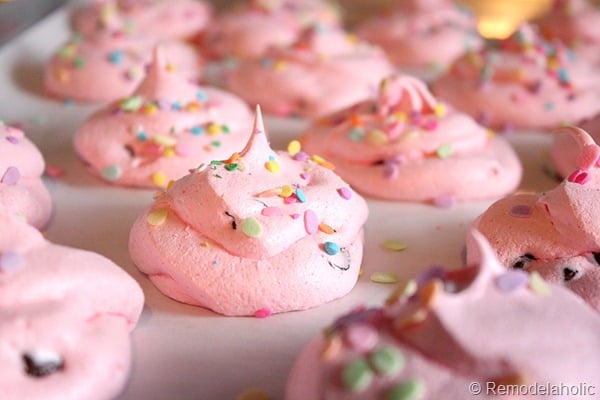
Strawberry meringue cookies are what happens when a bowl of egg whites decides to dress up for spring. Crisp, featherlight, naturally pink, and packed with berry flavor, these delicate cookies look impressi
The secret is freeze-dried strawberries. Fresh berries are wonderful on shortcake, in smoothies, and eaten directly over the sink, but their moisture can turn meringue into a sticky pink puddle. Freeze-dried strawberries deliver concentrated flavor and color without adding enough liquid to weaken the egg-white foam.
This recipe produces crisp strawberry meringue kisses that dissolve almost instantly on the tongue. They are ideal for Valentine’s Day, baby showers, bridal showers, cookie boxes, afternoon tea, Easter celebrations, or any ordinary Tuesday that could benefit from tiny edible clouds.
Why You Will Love These Strawberry Meringue Cookies
Traditional cookies rely on flour and fat for structure. Meringue cookies take a completely different route: air is whipped into egg whites, sugar stabilizes the bubbles, and gentle heat gradually removes moisture. The result is a cookie that is crisp rather than chewy, airy rather than dense, and dramatically lighter than its appearance suggests.
They Have Real Strawberry Flavor
Freeze-dried strawberries are made by removing nearly all the water from frozen fruit. Once ground into powder, they contribute bold berry flavor, gentle tartness, and a natural rosy color. Unlike artificial flavoring, the powder tastes unmistakably like actual strawberries rather than vaguely pink candy.
They Require Only a Few Ingredients
You need egg whites, sugar, cream of tartar, salt, vanilla, and freeze-dried strawberries. Optional gel food coloring can deepen the color, but it is not necessary. The ingredient list is short enough that every item matters, so measure carefully and resist the urge to improvise with a splash of strawberry juice.
They Are Naturally Flourless
These strawberry meringue cookies contain no wheat flour. However, anyone preparing them for a strict gluten-free diet should still confirm that extracts, decorations, chocolate, and packaged fruit were processed without cross-contact.
Strawberry Meringue Cookies Recipe
Prep time: 25 minutes
Drying time: 1 hour 30 minutes
Cooling time: At least 1 hour
Total time: About 3 hours
Yield: Approximately 45 to 55 small cookies
Ingredients
- 4 large egg whites, preferably at room temperature
- 1/2 teaspoon cream of tartar
- 1/8 teaspoon fine salt
- 1 cup superfine sugar or finely ground granulated sugar
- 1 teaspoon pure vanilla extract
- 1 cup freeze-dried strawberries, about 3/4 ounce before grinding
- 1 small drop pink or red gel food coloring, optional
- Melted dark or white chocolate for decorating, optional
Equipment
- Stand mixer or electric hand mixer
- Clean glass or stainless-steel mixing bowl
- Food processor, blender, or spice grinder
- Fine-mesh sieve
- Two baking sheets
- Parchment paper
- Piping bag fitted with a large star or round tip
Instructions
-
Prepare the oven and pans.
Preheat the oven to 200°F. Position racks in the upper and lower thirds of the oven. Line two light-colored baking sheets with parchment paper. Avoid greasing the parchment because fat is the sworn enemy of stable meringue. -
Make the strawberry powder.
Place the freeze-dried strawberries in a food processor or spice grinder. Process until finely powdered. Pass the powder through a fine-mesh sieve to remove seeds and large pieces. Set aside about 1 tablespoon for decorating. -
Check the mixing equipment.
Make sure the bowl and whisk are completely clean and dry. Wiping them with a little white vinegar or lemon juice can help remove invisible grease. Dry thoroughly before adding the egg whites. -
Whip the egg whites.
Add the egg whites to the bowl. Beat at medium-low speed until foamy, about 1 minute. Add the cream of tartar and salt. Continue beating at medium speed until soft peaks form. When the whisk is lifted, the peak should rise and then gently curl over. -
Add the sugar gradually.
Increase the mixer to medium-high speed. Add the sugar 1 tablespoon at a time, allowing approximately 15 to 20 seconds between additions. Dumping it in all at once can deflate the foam and leave undissolved sugar crystals. -
Whip to stiff, glossy peaks.
Continue beating until the meringue is thick, glossy, and capable of holding an upright peak. Rub a small amount between two fingers. It should feel smooth rather than gritty. If you can feel sugar crystals, continue mixing for another minute and test again. -
Add the flavor.
Mix in the vanilla and optional gel coloring at low speed. Add the sifted strawberry powder in two portions, folding gently with a flexible spatula after each addition. Stop as soon as the color is mostly even. A few darker pink streaks are charming; deflated meringue is less charming. -
Pipe the cookies.
Transfer the mixture to the prepared piping bag. Pipe 1-inch kisses or rosettes onto the parchment, leaving about 1 inch between them. They will not spread much. Sprinkle the reserved strawberry powder lightly over the tops. -
Dry slowly.
Bake for 1 hour 30 minutes, rotating the pans and switching their positions after 45 minutes. The cookies should look dry, feel firm, and release from the parchment without leaving sticky centers behind. -
Cool in the oven.
Turn off the oven and leave the cookies inside with the door closed for at least 1 hour. For exceptionally crisp cookies, let them remain in the cooling oven for several hours or overnight. -
Decorate if desired.
Once completely cool, drizzle the cookies with melted chocolate or dip their bottoms into chocolate. Let the coating set before storing.
How Meringue Cookies Work
Egg whites are mostly water and protein. Whipping unfolds those proteins and encourages them to form a delicate network around thousands of air bubbles. Sugar makes that network more stable while also giving the cookies sweetness and their crisp, glassy structure.
Cream of tartar adds acidity, which helps the egg-white proteins form a flexible and stable foam. It is possible to make meringue without it, but the small amount used here provides useful insurance, especially for beginners.
The cookies are dried at a low temperature instead of being baked quickly like chocolate chip cookies. High heat can brown the sugar, expand the air too rapidly, and cause cracks. A low oven slowly evaporates moisture while preserving the pale pink color and delicate shape.
Why Freeze-Dried Strawberries Work Best
Fresh strawberry puree contains enough water to weaken a French meringue. Strawberry jam presents a similar problem because it contributes moisture and can make the finished cookies tacky. Freeze-dried strawberry powder offers a more reliable solution by concentrating the fruit’s flavor without turning the mixture runny.
Do not confuse freeze-dried strawberries with ordinary dried strawberries. Dried berries are usually soft, leathery, and sometimes sweetened. Freeze-dried fruit is crisp, brittle, and easy to crush into powder. It is often sold near dried fruit, snack foods, cereal toppings, or specialty baking ingredients.
Tips for Perfect Strawberry Meringue Cookies
Separate the Eggs While Cold
Cold eggs are easier to separate because the yolks are firmer. Separate each egg over a small bowl before transferring the white to the main mixing bowl. This prevents one broken yolk from ruining the entire batch. Let the collected whites warm for approximately 20 to 30 minutes before whipping.
Keep Fat Away From the Egg Whites
Even a small amount of yolk, butter, oil, or greasy residue can interfere with the foam. Use glass or stainless steel rather than a plastic bowl, which may retain traces of fat. Your equipment does not need ceremonial purification, but it should be genuinely clean.
Use Fine Sugar
Superfine sugar dissolves more readily than coarse granulated sugar. When superfine sugar is unavailable, pulse regular granulated sugar briefly in a food processor. Do not process it all the way into confectioners’ sugar, which often contains cornstarch.
Add Sugar Slowly
Gradual addition gives the sugar time to dissolve while the foam develops. Properly whipped meringue should be smooth, glossy, and dense enough to hold a sharp peak. A sandy texture indicates that the sugar needs more time to dissolve.
Avoid Liquid Food Coloring
Gel coloring provides strong color with very little added moisture. One small drop is usually plenty. The freeze-dried strawberries already create a natural blush, so food coloring should enhance rather than announce itself from across the room.
Choose a Dry Day
Sugar attracts moisture from the air, which is why humidity can make meringue cookies sticky. Baking them on a rainy day is possible, but they may need additional drying time and extra-careful storage. Transfer cooled cookies to an airtight container promptly.
Common Meringue Problems and Solutions
The Meringue Will Not Form Stiff Peaks
Grease, egg yolk, or excessive liquid may be interfering with the foam. The whites may also need more mixing time. If the mixture remains thin after extended beating, starting over is usually more productive than staring at the bowl with increasing suspicion.
The Cookies Are Sticky
Sticky meringues are generally under-dried or exposed to humidity. Return them to a 200°F oven for 15 to 30 minutes, turn off the heat, and let them cool inside. Once crisp, store them immediately in an airtight container.
The Cookies Are Brown
The oven may be running hotter than its setting suggests. Use an oven thermometer when possible. Dark baking sheets can also encourage browning, so light-colored aluminum pans are preferable. Placing a second baking sheet beneath a dark pan can provide insulation.
The Cookies Cracked
Minor cracks are normal and do not affect flavor. Large cracks may result from high heat, overwhipping, or rapid temperature changes. Cooling the cookies gradually in the switched-off oven helps protect their fragile structure.
The Meringue Looks Grainy
The sugar was probably added too quickly or did not dissolve completely. Continue whipping and check the mixture by rubbing a little between your fingers. The finished foam should feel silky.
The Piped Shapes Became Flat
The meringue may have been underwhipped or deflated while the strawberry powder was folded in. Make sure the foam holds stiff peaks before adding flavor, and use broad, gentle folding motions rather than vigorous stirring.
Easy Flavor Variations
Chocolate-Dipped Strawberry Meringues
Dip the cooled cookies halfway into melted dark chocolate. The slight bitterness of dark chocolate balances the sweetness and creates a flavor reminiscent of chocolate-covered strawberries.
Strawberry-Lemon Meringues
Add 1/2 teaspoon finely grated lemon zest with the vanilla. Avoid adding too much lemon juice because extra liquid can weaken the foam.
Strawberry-Vanilla Bean Cookies
Replace the vanilla extract with vanilla bean paste. The small vanilla flecks look elegant against the pink cookies and deepen their dessert-shop aroma.
Strawberry Shortcake Meringues
Sandwich two cooled cookies around a small amount of white chocolate ganache or vanilla buttercream. Serve them soon after filling because creamy fillings will gradually soften the meringue.
Mixed-Berry Meringues
Replace part of the strawberry powder with freeze-dried raspberry or blueberry powder. Raspberry adds tartness, while blueberry can produce a lavender-pink color depending on the proportions.
Serving Ideas
Arrange strawberry meringue kisses on a dessert board with fresh berries, dark chocolate, shortbread, and small bowls of whipped cream. They also make attractive cupcake toppers, edible party favors, or decorations for layer cakes.
For a fast Eton mess-inspired dessert, break several cookies into pieces and layer them with lightly sweetened whipped cream and sliced strawberries. Assemble immediately before serving so some pieces remain crisp while others soften into marshmallow-like pockets.
The cookies are also excellent alongside coffee, black tea, or sparkling wine. Their sweetness pairs especially well with tart drinks, citrus desserts, and bittersweet chocolate.
How to Store Strawberry Meringue Cookies
Allow the cookies to cool completely before storage. Place them in an airtight container with parchment paper between layers. Keep the container at cool room temperature away from steam, direct sunlight, and the humid zone above the dishwasher.
Properly dried meringue cookies can remain crisp for approximately one to two weeks, although their texture depends heavily on humidity. Do not refrigerate plain meringues because refrigerators contain moisture that can make them sticky.
For longer storage, freeze the cookies in a rigid airtight container for up to one month. Remove them from the container before thawing so condensation forms away from the cookies. If they soften, refresh them briefly in a low oven.
Frequently Asked Questions
Can I Use Carton Egg Whites?
Some pasteurized carton egg whites whip successfully, while others are formulated in ways that reduce their foaming ability. Check the package for guidance. Fresh egg whites generally provide the most predictable volume for French meringue cookies.
Can I Use Fresh Strawberries?
Fresh strawberries are not recommended in this particular recipe because their water content can destabilize the meringue. Use freeze-dried fruit for the cookies and serve fresh berries alongside them.
Can I Make the Cookies Without a Piping Bag?
Yes. Spoon small mounds onto the parchment using two teaspoons. They will look more rustic, which is culinary language for “delightfully uneven on purpose.”
How Do I Know When They Are Done?
The cookies should feel dry, lift cleanly from the parchment, and sound hollow or crisp when tapped gently. A test cookie should break cleanly rather than revealing a wet center.
Why Are My Meringues Hollow?
A small hollow pocket is common in piped meringues. Large cavities can develop when the oven is too hot and the exterior sets before the interior dries. Lower, slower baking generally produces a more even texture.
Practical Baking Experiences and Lessons
Strawberry meringue cookies teach patience in a way few other cookies do. With ordinary cookie dough, you can usually make a minor measurement mistake and still end up with something edible. Meringue is less interested in casual negotiations. It rewards clean tools, gradual sugar addition, and the ability to leave the oven door alone.
One of the most common first-batch surprises is how dramatically the egg whites expand. Four whites look almost lonely at the bottom of a mixer bowl, but after several minutes they become a glossy white mountain. This is why a generously sized bowl matters. A small bowl may work at first, then suddenly turn the mixer into a meringue-powered snow machine.
Another useful lesson is that the strawberry powder should be extremely fine. Large fruit pieces may seem attractive, but they can clog a piping tip, create weak spots, and absorb moisture unevenly. Sifting the powder feels like an optional fussy step until a chunk of berry becomes lodged in the star tip halfway through piping. After that, sifting becomes a deeply held personal value.
The appearance of the unbaked meringue can also be deceptive. The mixture may look slightly pale before baking, leading to the temptation to add more coloring. Once the cookies are grouped together and sprinkled with berry powder, the pink becomes more noticeable. Heavy coloring can produce cookies that look less like strawberries and more like neon traffic equipment.
Home ovens provide another learning opportunity. Some run hot, others cycle aggressively, and a few appear to have their own emotional weather. The first batch can reveal whether 200°F on the control panel is truly 200°F inside. Browning, large cracks, or rapidly expanding cookies are signs that the actual temperature may be higher. An inexpensive oven thermometer removes much of the guesswork.
Humidity is often the greatest challenge. A batch may emerge perfectly crisp and become tacky an hour later if left uncovered. This is not evidence that the recipe has betrayed you; it is simply sugar doing what sugar doespulling water from the surrounding air. Preparing the storage container before the cookies finish cooling helps preserve their texture.
Piping improves quickly with practice. The first few kisses may resemble tiny pink potatoes, while the final row looks ready for a pastry-case photo shoot. Holding the bag vertically, squeezing without moving, stopping pressure, and lifting straight up creates the cleanest point. Fortunately, imperfect shapes taste identical to perfect ones, a fact worth remembering whenever the piping bag begins behaving like an uncooperative garden hose.
The slow cooling period is another test of restraint. Opening the oven repeatedly releases heat and can invite humid air inside. Leaving the cookies undisturbed produces a drier, crisper result. This makes strawberry meringues convenient for evening baking: turn off the oven, leave the cookies inside, and check them in the morning.
Chocolate decoration is best approached with a light hand. A thin drizzle provides contrast without overwhelming the strawberry flavor. When dipping the bottoms, allow the chocolate to cool slightly first. Very hot chocolate can soften the cookies or make them fragile at the point of contact.
Most importantly, these cookies prove that an elegant dessert does not require complicated equipment or a long shopping list. Technique does the heavy lifting. Once the basic method feels familiar, changing the fruit powder, extract, shape, or decoration becomes easy. The same bowl of meringue can become holiday trees, Valentine hearts, birthday rosettes, or simple rustic spoonfuls. The process may be precise, but the finished cookies leave plenty of room for personality.
Conclusion
Strawberry meringue cookies combine crisp texture, concentrated berry flavor, and bakery-worthy appearance in one surprisingly simple treat. The keys are using moisture-free strawberry powder, adding sugar gradually, whipping to glossy stiff peaks, and drying the cookies slowly at a low temperature.
Once you understand those fundamentals, the recipe becomes highly adaptable. Add lemon zest, dip the cookies in dark chocolate, turn them into sandwiches, or crumble them over whipped cream and fresh fruit. Just remember to keep the mixing bowl grease-free and the finished cookies protected from humidity. Meringue may be delicate, but it is not difficult when treated with a little patience.
Note: Because oven temperatures, cookie sizes, and humidity levels vary, drying time may need to be adjusted. When serving people who are pregnant, elderly, very young, or immunocompromised, use properly handled eggs and make sure the cookies are thoroughly dried and cooked.