

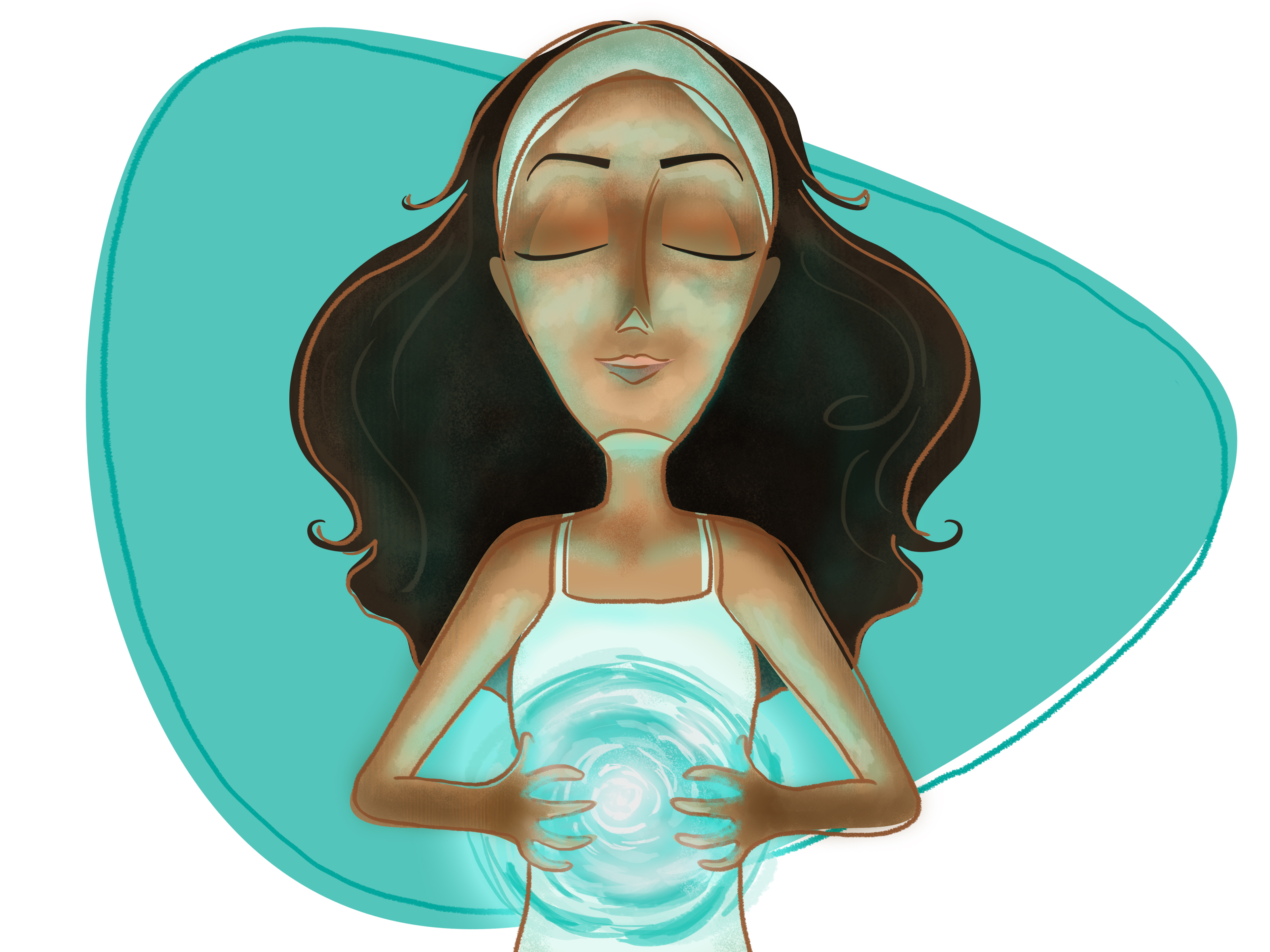
Have you ever walked into a room and immediately sensed tension, eve impressions as sensing an aura, while psychology might frame them as intuition, emotional awareness, body perception, and sensitivity to subtle social cues.
An aura is traditionally understood as an invisible field of energy surrounding a person. Science has not established that people possess a supernatural energy field that can be objectively seen or measured. However, practices commonly associated with aura awarenessmeditation, focused breathing, body scanning, visualization, sensory observation, and journalingcan help you pay closer attention to physical sensations, emotions, and environmental signals.
In other words, you do not need to prove that you are secretly a wizard. You only need curiosity, patience, and a willingness to notice experiences that your busy mind normally files under “deal with this later.”
What Does It Mean to Feel Your Aura?
People who practice aura meditation describe the aura in different ways. Some report warmth, tingling, pressure, coolness, pulsing, or a sense of spaciousness around the body. Others visualize colors or interpret their emotional state as having a particular texture, brightness, or movement.
These experiences do not necessarily demonstrate psychic perception. Warmth between your hands, for example, may be connected to body heat, circulation, attention, muscle tension, or ordinary sensory processing. Visual colors may arise from imagination, lighting, eye fatigue, expectation, or symbolic associations.
That does not make the practice meaningless. Treating the aura as a personal visualization can provide a useful structure for exploring your mood, boundaries, stress level, and intuitive reactions. The goal is not to force a paranormal event. It is to become more observant without turning every goose bump into a telegram from the universe.
Psychic Awareness Versus Everyday Intuition
What many people call psychic sensitivity may overlap with ordinary but highly developed forms of awareness. You may notice changes in facial expression, tone of voice, posture, breathing, personal distance, or the emotional atmosphere of a conversation before you can consciously explain what changed.
You may also become more aware of internal signals such as a tightening stomach, faster heartbeat, relaxed shoulders, or sudden fatigue. This awareness of sensations inside the body is sometimes called interoception. Strengthening it may help you recognize how your body responds to people, places, memories, and decisions.
Step 1: Quiet Your Mind and Ground Your Body
Aura work begins with attention. Unfortunately, attention is often buried beneath notifications, unfinished errands, imaginary arguments, and the urgent need to remember why you entered the kitchen.
Choose a quiet location where you can sit comfortably for 10 to 15 minutes. You do not need incense, crystals, ceremonial robes, or a soundtrack featuring a whale who has discovered synthesizers. A chair and a few uninterrupted minutes are enough.
Use a Simple Grounding Routine
- Sit with your feet resting on the floor and your back supported.
- Relax your jaw, shoulders, hands, and abdomen.
- Inhale gently through your nose for a count of four.
- Exhale slowly for a count of five or six.
- Repeat for five comfortable breathing cycles.
Avoid holding your breath if doing so feels uncomfortable. The purpose is not to win an underwater endurance contest. Let your breathing become smooth and natural.
Next, identify three things you can see, three things you can hear, and three physical sensations you can feel. You might notice the hum of a fan, the pressure of the chair beneath you, or the temperature of the air on your hands. This sensory check helps keep the exercise anchored in the present.
Perform a Slow Body Scan
Move your attention gradually from your feet to the top of your head. Observe each area without immediately trying to change it. Notice warmth, tension, heaviness, movement, numbness, or ease.
When your attention wanders, gently return to the body. Wandering does not mean you have failed. Minds wander because that is one of their favorite hobbies.
Finish by imagining that your body is steady and supported. Some practitioners visualize roots extending from their feet into the ground. Others picture themselves standing beside a strong tree or resting within a calm landscape. Choose an image that makes you feel secure rather than dramatic or frightened.
Step 2: Practice Feeling Energy Between Your Hands
The hand-sensing exercise is one of the simplest ways to explore what people describe as aura energy. It gives your attention a small, specific area to investigate.
Try the Aura Ball Exercise
- Rub your palms together gently for 10 to 15 seconds.
- Separate your hands until they are about six inches apart.
- Hold your palms facing each other without touching.
- Move them slightly closer together and then farther apart.
- Observe any warmth, tingling, resistance, pulsing, or magnetic-like sensation.
Do not decide in advance what you must feel. The sensation may be subtle, obvious, inconsistent, or completely absent. All four outcomes are acceptable.
Rubbing your hands stimulates the skin and increases your awareness of heat and touch. Focused attention can make these ordinary sensations seem more vivid. Spiritual practitioners may interpret the same experience as sensing the edge of an energy field. You can explore the exercise without pretending that one interpretation has been conclusively proven.
Expand the Sensation Around Your Body
Once you are comfortable sensing the space between your hands, slowly move one hand several inches above your opposite forearm. Travel from the wrist toward the elbow without touching the skin.
Notice whether the experience changes as your hand moves. You may perceive heat, cool air, anticipation of touch, tingling, or nothing unusual. Repeat on the other arm and compare the sensations.
Keep your movements slow. Fast movements create air currents that can easily be mistaken for an energetic shift. Psychic development is already mysterious enough without giving the ceiling fan partial credit.
Step 3: Visualize the Shape and Color of Your Aura
Visualization gives abstract feelings a form your mind can work with. It is not necessary to physically see a glowing outline around your body. Instead, allow colors, shapes, images, or words to arise as symbols.
Create an Aura Visualization
Close your eyes and imagine a soft light in the center of your chest or abdomen. With each comfortable breath, picture the light spreading through your torso, arms, hands, legs, neck, and head.
Now imagine the light extending a few inches beyond your skin. Let it form an oval or egg-shaped boundary around your body. Observe its imagined qualities:
- Does it seem bright, dim, clear, cloudy, smooth, or uneven?
- Does it feel close to your body or widely expanded?
- Does a particular color appear naturally?
- Does the boundary feel firm, flexible, open, or fragile?
Avoid searching online for a rigid aura color chart before interpreting your experience. Color symbolism varies across spiritual systems and cultures. Red might represent vitality to one person and irritation to another. Blue might suggest peace, sadness, honesty, distance, or simply the color of the shirt you saw five minutes ago.
Let Personal Associations Guide You
Ask yourself what the color or image means to you. Suppose you visualize dull gray around your shoulders. Rather than declaring that a mysterious force has attached itself to your upper body, consider practical questions:
- Have I been carrying extra responsibility?
- Are my shoulders physically tense?
- Do I feel emotionally exhausted?
- What would help me feel lighter?
Aura visualization becomes most useful when it leads to grounded self-reflection. If you imagine a strong golden boundary, perhaps you feel confident and protected. If the boundary seems thin, you might need rest, privacy, or clearer limits with another person.
Experiment With a Mirror Carefully
Some aura exercises recommend standing against a plain, softly lit wall and looking slightly past the outline of your head or shoulders. You may notice a faint haze, color, or visual afterimage.
Peripheral vision, contrast, lighting, blinking, and eye fatigue can all produce these effects. Do not stare for long periods, strain your eyes, or treat an afterimage as unquestionable proof of supernatural sight. Stop immediately if you develop discomfort, dizziness, or a headache.
Step 4: Test Your Intuition and Record the Results
Intuition becomes more reliable when you record impressions before learning the outcome. Otherwise, the mind is remarkably talented at remembering its victories and quietly deleting its wrong guesses.
Start an Aura and Intuition Journal
After each practice session, write down:
- The date, time, and duration of the session
- Your mood before and after practicing
- Physical sensations you noticed
- Colors, images, memories, or words that appeared
- Environmental factors such as lighting, noise, caffeine, and fatigue
- Any intuitive impression you want to evaluate later
Keep descriptions specific. “I felt strange energy” is difficult to evaluate. “My chest tightened when I considered accepting the invitation, and the feeling eased when I imagined declining” provides something concrete to examine.
Use Low-Stakes Intuition Experiments
Practice with situations that do not involve health, safety, money, or major life decisions. Before checking your phone, guess which friend sent a message. Ask someone to place a colored card in an envelope and record the color that first comes to mind. Predict which song will play next on a shuffled playlist.
Record every attempt, not only the impressive ones. After 20 or 30 trials, review the results. You may discover genuine patterns in your attention, or you may find that chance explains most correct guesses. Either result teaches you something.
Separate Intuition From Fear
Intuition is often described as quiet, brief, and specific. Anxiety tends to repeat itself, imagine multiple disasters, and demand immediate certainty. This distinction is not absolute, but it can be helpful.
When an impression feels urgent or frightening, pause and ground yourself. Check the available facts. Talk to someone you trust. Never use an aura reading as a substitute for medical care, mental health support, legal advice, or objective safety information.
How to Strengthen Aura Awareness Over Time
Practice Briefly but Consistently
Ten focused minutes several times a week will usually teach you more than one heroic two-hour session followed by three months of spiritual hibernation. Begin with short sessions and stop before you become exhausted or frustrated.
Reduce Sensory Clutter
Practice in a comfortable space with moderate lighting and limited noise. Silence your phone, loosen restrictive clothing, and avoid beginning immediately after a large meal or excessive caffeine.
Observe Without Labeling Too Quickly
Describe sensations before interpreting them. Write “warmth in both palms” before writing “healing energy activated.” This habit allows you to remain open-minded without becoming careless.
Respect Emotional and Physical Boundaries
Do not attempt to read another person’s aura without permission. Avoid announcing that someone has a damaged aura, hidden illness, secret trauma, or sinister intentions. Such claims can be invasive, frightening, and unsupported.
A responsible practitioner treats impressions as personal perceptions, not guaranteed facts. Try saying, “I noticed that I felt tense during our conversation,” rather than, “Your aura proves you are dishonest.”
Common Experiences While Learning to Feel an Aura
The following examples are composite learning experiences rather than claims about one specific person. They illustrate what beginners commonly notice and how those impressions can be interpreted without immediately jumping to supernatural conclusions.
Experience 1: The Warm Sphere Between the Hands
A beginner sits quietly, rubs her palms, and holds them several inches apart. At first, she feels nothing except mild self-consciousness. After thirty seconds, warmth appears in the center of both palms. As she moves her hands closer, the space seems almost springy.
Her first thought is that she has activated a powerful psychic force before breakfast. A more balanced interpretation is that rubbing stimulated the skin, while focused attention amplified her awareness of heat and movement. She records both possibilities rather than selecting the most exciting one.
After two weeks, she notices that the sensation becomes easier to detect when she is relaxed and harder to notice when she is rushed. The most useful discovery is not proof of an invisible field. It is recognition of how strongly stress affects her ability to notice subtle physical sensations.
Experience 2: A Color That Reflects an Emotion
Another practitioner visualizes his aura before an important meeting. A sharp orange-red color appears around his chest and face. An aura guide might associate that color with passion or vitality, but he personally connects it with agitation.
Instead of treating the color as a prediction, he checks his body. His jaw is tight, his breathing is shallow, and he is mentally rehearsing everything that could go wrong. He spends five minutes breathing slowly and imagines the red color softening into blue.
The meeting is not magically transformed into a festival of enlightenment, but he enters it calmer and communicates more clearly. The visualization succeeds because it helps him identify and regulate an emotional state.
Experience 3: Feeling Drained Around Someone
A third beginner repeatedly feels heavy and tired after conversations with a particular acquaintance. She initially describes the person as having a “dark aura.” Her journal, however, reveals a more practical pattern: the acquaintance interrupts frequently, dismisses her opinions, and expects constant reassurance.
The sensation she calls aura depletion may be her body’s response to an emotionally demanding interaction. She experiments with shorter conversations and clearer boundaries. Her fatigue decreases.
The experience still feels intuitive because her body recognized the problem before she could explain it. Yet the solution comes from communication and boundaries, not from attempting to cleanse the other person’s mysterious energy.
Experience 4: When Nothing Happens
One student practices for a month and never sees colors, halos, sparks, or anything remotely suitable for a fantasy movie poster. He does, however, become better at noticing tension in his shoulders, recognizing when he needs rest, and pausing before reacting during disagreements.
This is not failure. Aura meditation does not need to produce dramatic visions to be valuable. Increased self-awareness, emotional vocabulary, concentration, and respect for personal boundaries are meaningful outcomes.
The healthiest approach is curious but flexible: enjoy symbolic experiences, investigate physical explanations, test intuitive impressions honestly, and keep daily life firmly connected to observable reality.
Conclusion
Learning how to awaken your psychic power to feel your aura is best approached as an exercise in focused attention, body awareness, visualization, and intuitive reflection. Begin by grounding yourself, explore sensations between your hands, visualize a personal energy boundary, and document your impressions without editing out mistakes.
You may experience warmth, tingling, colors, emotional shifts, or a stronger sense of personal space. You may also experience nothing unusual. Stay curious in either case. The objective is not to manufacture a supernatural performance but to understand your internal signals more clearly.
Let spiritual language inspire exploration, but pair it with critical thinking. Your intuition deserves attention, not unquestioned authority. The most powerful aura may simply be the calm, self-aware presence you develop when you finally stop rushing long enough to notice yourself.