

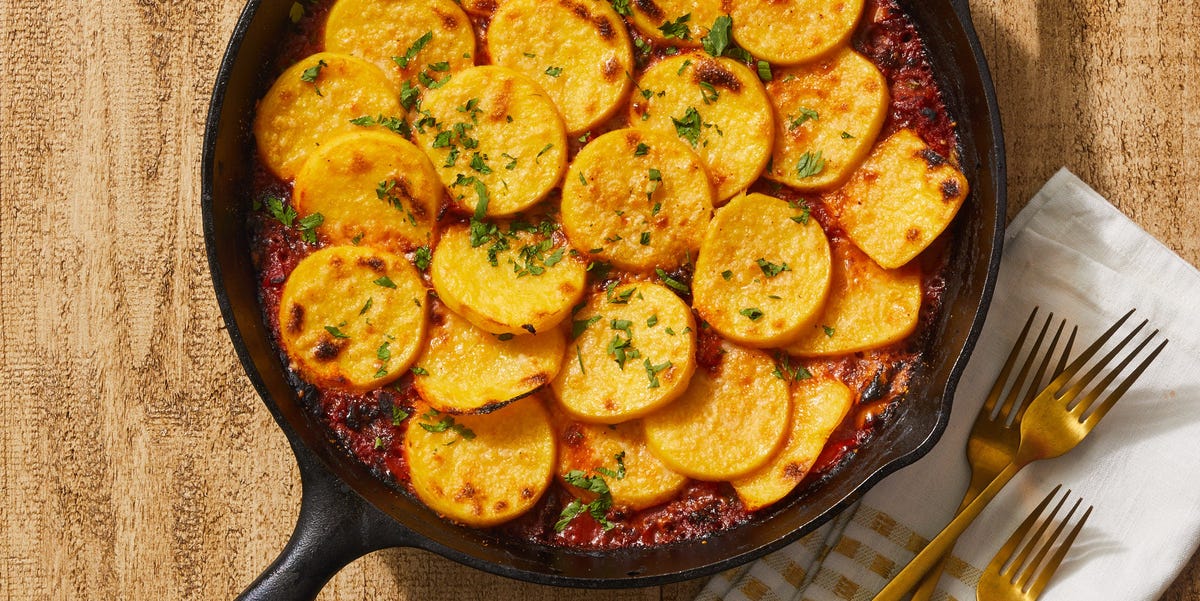
Puttanesca polenta bake is what happens when a bold Italian tomato sauce meets a cozy casserole and decides to wear a golden cheese hat. Underneath the bubbling top, you will find sweet tomatoes, savory anchovies, punchy capers, briny olives, aromatic garlic, and tender bell pepper. Slices of prepared polenta form a hearty upper layer that becomes crisp around the edges while soaking up just enough sauce to stay tender in the middle.
This easy polenta casserole delivers the lively flavors of pasta puttanesca without boiling a single noodle. It is satisfying enough for dinner, attractive enough for a casual gathering, and practical enough for a weeknight when the pantry is doing most of the work. Better still, the recipe takes less than an hour and uses one oven-safe skillet, which means fewer dishes staring accusingly from the sink.
Why This Puttanesca Polenta Bake Works
Traditional puttanesca sauce is built around ingredients with strong personalities: tomatoes, garlic, olives, capers, anchovies, and chile. The trick is not adding as much of everything as humanly possible. The best sauce balances salt, acidity, sweetness, heat, and umami so each flavor remains recognizable.
Polenta is an excellent partner because its mild corn flavor softens the sauce’s sharper edges. Using refrigerated polenta makes the recipe especially convenient. Once sliced, the firm rounds can be layered over the sauce like shingles. Baking warms their centers, while a brief trip under the broiler browns the cheese and creates crisp, irresistible edges.
This version also includes onion and red bell pepper. They bring natural sweetness and a more substantial texture, helping the finished dish taste complete rather than like pasta sauce that misplaced its pasta.
Recipe at a Glance
- Prep time: 15 minutes
- Cooking time: 35 minutes
- Total time: About 50 minutes
- Yield: 4 generous servings or 6 smaller servings
- Equipment: 10- to 12-inch oven-safe skillet or a 2-quart baking dish
Puttanesca Polenta Bake Ingredients
For the Puttanesca Sauce
- 1 tablespoon extra-virgin olive oil
- 1 medium yellow onion, finely chopped
- 1 red bell pepper, cut into small pieces
- 4 garlic cloves, finely chopped
- 4 oil-packed anchovy fillets, drained and minced
- 1/4 teaspoon crushed red pepper flakes, plus more if desired
- 1 tablespoon tomato paste
- 1 28-ounce can whole peeled tomatoes, crushed by hand with their juices
- 1/2 cup pitted olives, roughly chopped
- 2 tablespoons capers, drained and chopped
- 1 teaspoon dried oregano
- 1 teaspoon red wine vinegar
- Freshly ground black pepper
- Kosher salt, only as needed
For the Polenta Topping
- 1 18-ounce tube prepared polenta
- 1 teaspoon olive oil
- 3/4 cup shredded low-moisture mozzarella
- 1/3 cup finely grated Parmesan cheese
- 1/4 cup chopped fresh flat-leaf parsley
- Fresh basil leaves for serving, optional
Choosing the Best Olives
Kalamata olives provide a deep, wine-like flavor, while Gaeta olives are softer and more delicate. Castelvetrano olives are buttery and comparatively mild. A combination creates a more interesting sauce, but there is no need to assemble an olive tasting panel in your kitchen. Use one flavorful variety that you already enjoy.
Do You Really Need Anchovies?
Anchovies dissolve into the hot oil and season the entire sauce. The finished casserole should not taste aggressively fishy. Instead, the anchovies add a savory background note that makes the tomatoes taste richer.
For a vegetarian puttanesca polenta bake, omit them and add another tablespoon of capers, a teaspoon of white miso, or a small splash of soy sauce for extra umami. Choose a vegetarian Parmesan-style cheese if avoiding animal rennet.
How to Make Puttanesca Polenta Bake
Step 1: Prepare the Oven and Polenta
Position one oven rack in the center and a second rack about 6 inches below the broiler. Preheat the oven to 425°F.
Remove the polenta from its package and pat it dry. Cut it into rounds approximately 1/3 inch thick. Keeping the slices reasonably even helps them heat and brown at the same rate. A few imperfect pieces are harmless; this is dinner, not a geometry examination.
Step 2: Build the Vegetable Base
Heat 1 tablespoon of olive oil in a large oven-safe skillet over medium heat. Add the onion and cook for 4 to 5 minutes, stirring occasionally, until softened. Add the bell pepper and cook for another 5 minutes. The pepper should begin to soften but does not need to become completely tender yet.
Add the garlic, anchovies, and red pepper flakes. Cook for about 1 minute, stirring constantly. Press the anchovies with the back of a wooden spoon as they cook. They will break apart and melt into the oil.
Step 3: Concentrate the Tomato Flavor
Stir in the tomato paste and cook for 1 to 2 minutes, until it darkens slightly and begins sticking to the bottom of the skillet. This short caramelization step deepens the tomato flavor and prevents the sauce from tasting flat or canned.
Add the crushed tomatoes and their juices, then stir in the olives, capers, oregano, and several grinds of black pepper. Bring the mixture to a gentle simmer. Cook uncovered for 10 to 12 minutes, stirring occasionally, until the sauce thickens.
Stir in the red wine vinegar and taste. Add salt only if the sauce genuinely needs it. Anchovies, olives, capers, and Parmesan are already bringing plenty of sodium to the party, and they did not arrive quietly.
Step 4: Add the Polenta
Remove the skillet from the heat. Arrange the polenta rounds over the sauce in slightly overlapping rows or concentric circles. Brush the tops lightly with 1 teaspoon of olive oil.
If your skillet is not oven-safe, transfer the sauce to a lightly greased 2-quart baking dish before adding the polenta. Bake on the center rack for 10 to 12 minutes, until the sauce bubbles around the edges and the polenta is hot.
Step 5: Add Cheese and Broil
Remove the skillet from the oven and turn the broiler to high. Sprinkle the mozzarella and Parmesan evenly over the polenta. Return the skillet to the upper rack and broil for 2 to 4 minutes, watching closely, until the cheese melts and develops browned spots.
Broilers can go from “not quite ready” to “call the smoke detector” with impressive speed. Do not wander away to answer an email.
Step 6: Rest and Serve
Let the puttanesca polenta bake rest for 5 to 10 minutes. This gives the sauce time to settle and helps each serving hold together. Finish with parsley, fresh basil, and an extra grind of black pepper.
Tips for the Best Polenta Casserole
Thicken the Sauce Before Baking
A watery puttanesca sauce can make the bottom of the polenta soft and turn the casserole into tomato soup wearing cheese. Simmer the sauce until a spoon drawn across the skillet leaves a trail that takes a moment to close.
Use Whole Peeled Tomatoes
Whole canned tomatoes usually offer better control over texture than pre-puréed sauce. Crush them for a rustic consistency with small pieces of tomato throughout the casserole. Crushed tomatoes also work, but the finished sauce will be smoother.
Drain the Briny Ingredients
Drain olives, capers, and anchovies before adding them. Excess brine or oil can make the sauce unnecessarily salty or greasy. Salt-packed capers should be rinsed especially well.
Give the Polenta Room to Brown
Overlap the rounds slightly, but do not stack them into thick piles. Exposed edges become crisp under the broiler, creating a pleasant contrast with the tender centers.
Grate Cheese Freshly
Freshly grated Parmesan melts more evenly and has a cleaner flavor than shelf-stable pre-grated cheese. Low-moisture mozzarella is preferable to fresh mozzarella because it browns well without releasing as much water.
Easy Variations
Vegetarian Puttanesca Polenta Bake
Leave out the anchovies and increase the capers or olives slightly. Sautéed mushrooms can add body and savory flavor. A spoonful of miso stirred into the sauce also works well, although it is not traditional.
Spicy Polenta Bake
Increase the crushed red pepper to 1/2 teaspoon or add a thinly sliced fresh chile with the garlic. Serve additional chile flakes at the table so heat seekers can make their serving appropriately dramatic.
Protein-Packed Version
Stir drained cannellini beans, cooked Italian sausage, shredded chicken, or oil-packed tuna into the sauce before adding the polenta. Beans are particularly good because their creamy texture complements the tomatoes without overpowering the puttanesca flavors.
Homemade Polenta Version
Cook 1 cup of polenta according to its package directions until thick. Spread it in an oiled pan in an even layer and refrigerate until firm, preferably for at least 2 hours. Cut the chilled polenta into squares or rounds and continue with the recipe.
Dairy-Free Option
Skip the mozzarella and Parmesan or replace them with dairy-free melting cheese. For a crisp topping without cheese, combine seasoned breadcrumbs with olive oil and scatter them over the polenta before broiling.
What to Serve With Puttanesca Polenta Bake
The casserole is rich, savory, and pleasantly salty, so simple sides work best. Serve it with a lemony arugula salad, roasted broccoli, sautéed spinach, or steamed green beans. Bitter greens such as radicchio or escarole provide a refreshing contrast to the sweet tomato sauce.
Warm crusty bread may seem unnecessary beside polenta, but it is extremely useful for collecting the sauce left on the plate. Dinner etiquette permits this. Possibly encourages it.
For entertaining, pair the bake with a crisp rosé, dry Italian white wine, sparkling water with lemon, or a light red wine with bright acidity.
Make-Ahead and Storage Instructions
Making It Ahead
Prepare the puttanesca sauce up to two days in advance and refrigerate it in an airtight container. Assemble the casserole shortly before baking so the polenta does not absorb too much liquid while sitting.
You may also assemble the entire dish without cheese, cover it, and refrigerate it for several hours. Let the skillet stand at room temperature while the oven preheats, then add approximately 5 minutes to the baking time.
Storing Leftovers
Cool leftovers promptly and refrigerate them in an airtight container for up to 3 to 4 days. Reheat individual portions in the microwave, or cover the baking dish and warm it in a 350°F oven until hot. For food safety, leftovers should reach 165°F when reheated.
Can You Freeze It?
The bake can be frozen, although thawed polenta may become slightly softer. Freeze individual portions for up to two months. Thaw overnight in the refrigerator and reheat in the oven, uncovering the dish near the end to help the top regain some texture.
Frequently Asked Questions
Is Puttanesca Polenta Bake Gluten-Free?
The core ingredients are naturally gluten-free, but check the labels on prepared polenta, anchovies, cheese, and other packaged ingredients if cross-contact is a concern. Use products specifically labeled gluten-free when necessary.
Can I Use Marinara Sauce?
Yes. For a shortcut, warm approximately 3 cups of good-quality marinara and add anchovies, olives, capers, red pepper flakes, and oregano. Simmer until thickened before topping it with polenta. Taste carefully because some jarred sauces already contain substantial salt or sugar.
Why Is My Polenta Topping Soggy?
The sauce may have been too thin, the polenta may have been sliced too thickly, or the rounds may have been covered with too much cheese. Simmer the sauce longer, pat the polenta dry, and leave some edges exposed.
Can I Make This Without an Oven-Safe Skillet?
Absolutely. Cook the sauce in a regular skillet, transfer it to a casserole dish, arrange the polenta on top, and bake as directed.
Can I Leave Out the Bell Pepper?
Yes. The pepper adds sweetness and texture but is not essential. Replace it with zucchini, mushrooms, fennel, or another small onion, or simply omit it for a more traditional tomato-forward sauce.
A Realistic Kitchen Experience: What to Expect While Making It
The first stage of this puttanesca polenta bake feels almost suspiciously ordinary. Onion and bell pepper soften in olive oil, and for several minutes the skillet appears to be heading toward a perfectly respectable but unremarkable vegetable sauce. Then the garlic, chile, and anchovies go in. The aroma changes immediately. It becomes deeper, warmer, and far more interesting.
Cooks who believe they dislike anchovies may feel nervous at this point. Four little fillets look surprisingly assertive while sitting on the cutting board. Once they hit the skillet, however, they begin breaking down almost at once. By the time the tomato paste has cooked, there are no obvious pieces left. Their role is less “fish on your pizza” and more “mysterious savory thing making the sauce taste unusually complete.”
The most important practical moment comes after adding the tomatoes. At first, the sauce may look much too loose for a casserole. Patience matters here. As it simmers, moisture evaporates, the peppers finish softening, and the tomatoes begin holding the briny ingredients together. Tasting before adding salt is essential. Depending on the olives, capers, anchovies, and cheese, the sauce may need no additional salt whatsoever.
Slicing prepared polenta is the only mildly awkward part. The cylinder can be slippery, and the first round may emerge looking less like a perfect coin and more like a map of an unidentified island. A sharp knife and a dry cutting board help. Exact circles are unnecessary because the cheese eventually unites everything in a blanket of diplomacy.
Arranging the rounds is unexpectedly satisfying. Starting at the outer edge and working inward creates an attractive spiral, while simple overlapping rows are faster. Small broken pieces can fill gaps around the sides. Those pieces often become the crispiest bites, so they should be considered bonuses rather than construction failures.
During baking, the tomato sauce begins bubbling between the polenta rounds. This is the visual signal that the center is hot. The casserole already looks good at this stage, but broiling transforms it. The mozzarella melts, Parmesan browns, and exposed edges of polenta become lightly crisp. Watching through the oven door is wise because the difference between golden and scorched can be less than a minute.
The finished bake smells more intense than a standard tomato casserole. Olives and capers remain bright, the anchovies provide depth, and the vinegar keeps the sauce from feeling heavy. Resting the dish is difficult because bubbling cheese has excellent persuasive skills, but waiting 5 to 10 minutes produces neater servings and prevents molten tomato sauce from attacking the roof of anyone’s mouth.
The first bite usually delivers three textures at once: crisp cheese, tender polenta, and thick tomato sauce. The mild corn flavor is particularly effective against the salty puttanesca ingredients. A forkful with a browned polenta edge is the ideal bite, especially when it catches a piece of olive and a little sweet pepper.
Leftovers are softer but still flavorful. Reheating them uncovered in the oven gives better results than microwaving because the polenta edges can crisp again. A fried egg placed on top also turns a leftover portion into an excellent brunch, proving that casseroles do not recognize arbitrary meal boundaries.
Final Thoughts
This puttanesca polenta bake combines pantry convenience with bold, layered flavor. The tomatoes provide sweetness and acidity, anchovies add savory depth, olives and capers bring their signature briny kick, and broiled polenta turns the sauce into a complete meal. It is easy enough for a weeknight but attractive enough to carry directly to the table for company.
Note: Because olives, capers, anchovies, and Parmesan vary significantly in saltiness, always taste the sauce before adding extra salt.