

Editorial note: This article discusses only information made public during the church service. It does not speculate about Fin Affleck’s gender identity, medical history, pronouns, or private family conversations.
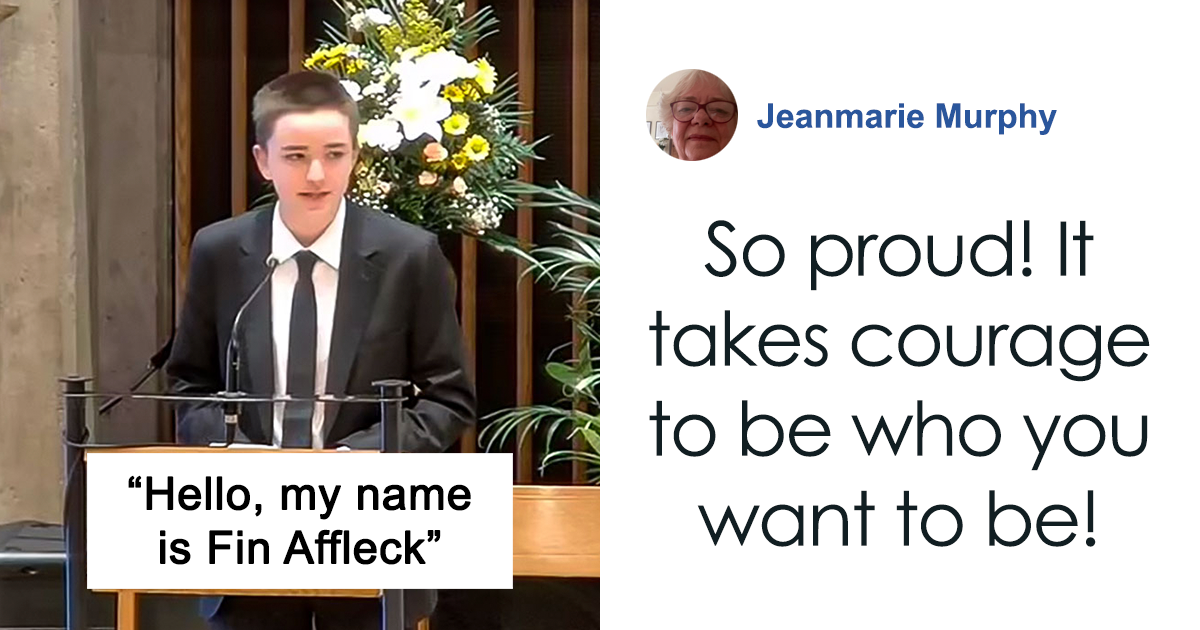
Seven words spoken from a church lectern became an international celebrity story: “Hello, my name is Fin Affleck.”
Fin Affleck, the middle child of actors Jennifer Garner and Ben Affleck, introduced the name while participating in a memorial service for Garner’s father in April 2024. The moment was brief, calm, and connected to a family gathering centered on grief, faith, and remembrance. The internet, naturally, responded as though someone had dropped the final episode of a prestige drama without warning.
Behind the attention-grabbing headline, however, was a much simpler event. A teenager stated a name, read a Bible verse, and honored a grandparent. Understanding that context matters, particularly when the person attracting worldwide curiosity is still a minor.
What Happened During the Church Service?
The memorial service took place on April 6, 2024, at Christ Church United Methodist in Charleston, West Virginia. It honored Jennifer Garner’s father, William John Garner, who died peacefully on March 30 at age 85.
During the service, members of the family took turns speaking and reading from scripture. When Fin approached the lectern, the teenager introduced themself by saying, “Hello, my name is Fin Affleck.” Fin then read Proverbs 16:8, a verse contrasting honest simplicity with wealth obtained through injustice.
The service was streamed online by the church, allowing people outside the congregation to see portions of the family ceremony. Reports about the introduction spread rapidly after clips and descriptions of the service circulated across entertainment publications and social media.
Fin had reportedly been seen carrying an item marked with the name earlier in 2024. The church appearance was significant because it was the first widely reported occasion on which Fin personally used the name during a public event.
The Moment Was Part of a Memorial, Not a Press Conference
Some headlines described the appearance as a dramatic celebrity “reveal.” The setting tells a quieter story. Fin was not standing on a red carpet, launching a social media campaign, or answering questions from reporters. The teenager was attending a grandfather’s memorial service with family.
That distinction should influence how the story is discussed. A public livestream may make an event viewable, but it does not automatically transform every family member into a willing participant in a global debate.
Who Was Jennifer Garner’s Father, William John Garner?
William John Garner was a chemical engineer and the father of Jennifer Garner and her two sisters. Jennifer was raised in Charleston, West Virginia, where her parents created what she has frequently described as a stable and loving home.
In announcing his death, Garner wrote that her father had passed peacefully with his family nearby. She remembered his gentle personality, quiet strength, work ethic, faith, playful sense of humor, and devotion to his children and grandchildren.
Garner also acknowledged that grief can appear unexpectedly even when a loved one has enjoyed a long life. Her tribute balanced sadness with gratitudea combination familiar to nearly anyone who has said goodbye to an older relative after many meaningful years together.
The church service therefore carried several layers of meaning. It was a farewell to a father and grandfather, a return to Garner’s West Virginia roots, and an opportunity for younger family members to participate in remembering him.
What Fin Affleck’s Introduction Didand Did NotConfirm
The verified public information is straightforward: Fin stated the name “Fin Affleck” at the memorial service.
The introduction did not include a lengthy explanation of gender identity, sexual orientation, pronouns, or any medical or legal decisions. Nevertheless, numerous online posts added conclusions that were not contained in the teenager’s remarks.
A name change may be connected to gender identity, personal preference, family tradition, creative self-expression, or another private reason. Sometimes a person explains the meaning. Sometimes the explanation is simply, “This is my name.” Both approaches are allowed. Nobody is required to submit an autobiographical footnote before others can address them respectfully.
Responsible coverage should therefore avoid presenting speculation as confirmation. Fin publicly introduced a name. Anything beyond that should come from Fin or an authorized family representativenot from strangers conducting a forensic examination of hairstyles, clothing, backpacks, or facial expressions.
Why the Difference Matters
When celebrity coverage involves adults, speculation is already a shaky business. When it involves a teenager, the ethical line should be much brighter.
Young people experiment with style, interests, friendships, nicknames, and forms of self-expression as they develop. That process is ordinary, even when the teenager’s parents happen to have Oscars and IMDb pages longer than a grocery receipt.
A respectful response does not require solving every unanswered question. It requires using the publicly stated name, avoiding invasive assumptions, and remembering that adolescence is not a reality show produced for public consumption.
Why Using a Person’s Stated Name Matters
Names are among the first pieces of information people offer when introducing themselves. Using the name someone provides is a basic form of recognition. It communicates, “I heard you, and I understand how you want to be addressed.”
Professional guidance from the American Psychological Association recommends using names and pronouns appropriate to a person’s identity and presentation rather than making assumptions. Media guidance from organizations such as GLAAD similarly emphasizes accuracy, privacy, and respect when writing about gender-diverse people.
Research involving transgender and gender-diverse young people has also found associations between affirmationincluding the use of a young person’s stated nameand better mental-health outcomes. These findings should not be used to diagnose or label Fin. They provide broader context for why respecting someone’s name can be meaningful.
Respect Does Not Require a Perfect Vocabulary
Some people become anxious when discussing names or gender because they fear saying the wrong thing. That anxiety can produce two unhelpful reactions: avoiding the person completely or turning every conversation into an interrogation.
A more practical approach is wonderfully boring. Listen to the name the person uses. Use it. When you make a mistake, correct it without delivering a five-act apology. Then continue the conversation.
For example: “Sorry, I meant Fin.” That is usually more helpful than spending ten minutes explaining that your neighbor’s cousin once knew someone with a similar name and therefore the mistake was technically inevitable.
Jennifer Garner and Ben Affleck Have Long Protected Their Children’s Privacy
Jennifer Garner and Ben Affleck married in 2005, announced their separation in 2015, and finalized their divorce in 2018. They share three children and have continued working together as co-parents.
Both actors have attempted to give their children a relatively private upbringing despite extraordinary media attention. Garner has been especially outspoken about the effect aggressive paparazzi behavior had on the family when the children were young. She also supported efforts in California to strengthen protections against harassment directed at celebrity children.
Garner has described photographers surrounding schools, following vehicles, crowding family outings, and making ordinary childhood activities difficult. Those experiences help explain why restraint is particularly important when reporting on the Affleck-Garner children.
Celebrity parents can choose careers that place them in public view. Their children do not sign the same contract. Being related to famous adults may make public curiosity predictable, but it does not make unlimited intrusion reasonable.
How the Internet Turned a Simple Introduction Into a Culture-War Headline
The original moment contained no argument. Fin introduced a name and read scripture. The argument arrived later, delivered by social media accounts, celebrity blogs, political commentators, and people who apparently believe every family moment requires a panel discussion.
Supportive commenters celebrated Fin’s confidence. Others criticized the teenager, the parents, modern parenting, Hollywood, religion, clothing choices, and occasionally civilization itself. In other words, the internet completed its usual warm-up routine.
This reaction reveals more about online culture than it does about Fin. Social platforms reward outrage, certainty, and dramatic interpretations. “Teenager politely introduces themself at grandfather’s memorial” is accurate, but it does not generate the same engagement as a headline suggesting an explosive announcement.
Appearance Is Not a Reliable Biography
Many reports focused heavily on Fin’s haircut and clothing. Describing relevant details from a public event is one thing. Treating a haircut as evidence of a complete personal history is another.
Short hair does not automatically define gender. A suit does not answer questions about identity. A backpack does not constitute a press release. People express themselves through appearance, but observers should not assume they can reverse-engineer someone’s private life from a photograph.
Accurate reporting starts with what a person actually said. In this case, Fin provided a name. That information is clear enough to use without decorating it with unsupported claims.
The Significance of Introducing a New Name in Church
The church setting attracted attention because public conversations about gender, identity, and religion are frequently framed as automatic conflicts. Real families and faith communities, however, are more complicated than political slogans.
Churches often host significant life events: baptisms, weddings, memorials, holiday gatherings, and community celebrations. For the Garner family, Christ Church United Methodist was already connected to family history. Ben Affleck and Jennifer Garner had previously attended services there with their children, and their son Samuel was baptized at the church in 2013.
Fin’s introduction occurred naturally within that family environment. There was no visible debate from the lectern and no elaborate explanation. A name was stated, a verse was read, and the service continued.
That simplicity may be the most important part of the story. Inclusion is not always accompanied by fireworks, speeches, or hashtags. Sometimes it sounds like a family member being introduced, participating in a ceremony, and being allowed to belong.
What Parents Can Learn From Stories About Chosen Names
Families encountering a name change may experience curiosity, uncertainty, or concern about responding correctly. Parents do not need to understand every detail immediately to behave with care.
Child-development and family-support organizations generally recommend listening without rushing to conclusions. Parents can ask what name their child wants used, where it should be used, whether the information is private, and how the child would like mistakes handled.
Those questions are practical rather than intrusive. They help a young person retain control over personal information, especially at school, in extended-family settings, and online.
Parents should also avoid making the child responsible for managing every adult’s emotions. A teenager should not have to comfort a dozen relatives because Uncle Bob requires three business days to process a new syllable.
Adults can seek education and support from qualified professionals, parent groups, and reputable organizations. The child’s job is to grow. The adults’ job is to create enough safety for that growth to happen.
Related Experiences: What Moments Like Fin Affleck’s Can Teach Families
The attention surrounding Fin Affleck’s new name reflects experiences that occur in many ordinary families, although usually without millions of strangers watching. The following situations illustrate how relatives, schools, churches, and communities can respond thoughtfully when a young person begins using a different name.
1. The First Family Introduction
A teenager may first share a new name at home, perhaps during dinner, in a text message, or through a note left for a parent. The conversation may be carefully planned, or it may arrive while someone is trying to locate the television remote.
The most helpful first response is usually calm acknowledgment: “Thank you for telling me.” Parents can then ask where and when the name should be used. A teenager may be comfortable using it at home but not yet at school, with grandparents, or on public social-media accounts.
Respecting those boundaries gives the young person control over a deeply personal process. Announcing the change to extended family without permissioneven with supportive intentionscan remove that control.
2. Helping Grandparents and Relatives Adjust
Extended family members sometimes need practice. Long familiarity creates habits, and habits can be stubborn little creatures. Honest mistakes may occur, particularly during the first weeks.
The goal should be improvement rather than perfection. A relative who uses the wrong name can correct it briefly and continue: “Finsorrywas telling me about school.” Repeatedly turning the error into a dramatic apology places emotional pressure on the young person.
Parents can help by updating contact names, family group chats, birthday lists, and place cards. These small environmental reminders reduce mistakes without making every gathering feel like a mandatory training seminar.
3. Navigating School Records
Schools frequently contain two parallel identities: the name a student uses and the legal name stored in administrative systems. That difference can create awkward moments during attendance, testing, sports registration, yearbook preparation, or communication with substitute teachers.
Parents and students can meet with appropriate school staff to discuss how the name should appear in classrooms and digital platforms. They should also clarify who may access any legal information and whether the student wants teachers or classmates informed.
Privacy planning is especially important because one accidental announcement can disclose information to an entire classroom. A thoughtful system prevents the student from having to explain personal details repeatedly.
4. Participating in Religious and Community Events
Family ceremonies can provide meaningful opportunities for a person to use a new name. A reading, introduction, performance, or volunteer role allows the name to become part of ordinary community life.
Leaders can support this process by confirming the correct name before printing programs or making announcements. They do not need to explain the person’s history to the congregation. “Our next reader is Fin” is a complete sentence, not the opening line of an investigative documentary.
When communities treat the name naturally, they communicate belonging without turning the individual into a spectacle.
5. Responding to Public Curiosity
Most families will never experience celebrity-level attention, but gossip can still travel quickly through schools, neighborhoods, churches, and online groups. Parents may be asked invasive questions by people who confuse curiosity with entitlement.
A useful response is: “Fin is using this name, and we are respecting it. Other details are private.” The sentence answers the practical question while protecting the young person’s boundaries.
The same principle applies to online commentary. Families are not obligated to debate strangers, correct every rumor, or publish personal records to satisfy skeptics. Silence is not evidence of secrecy or shame. Sometimes it is simply parenting.
A Small Sentence With a Larger Lesson
Fin Affleck’s church introduction became news because of the famous names surrounding it. Yet the central moment was universal: a young person told a room what to call them.
The most respectful response is neither complicated nor theatrical. Use the name Fin publicly used. Avoid inventing details Fin did not provide. Remember that the introduction occurred during a family memorial service, not a celebrity media event.
Jennifer Garner and Ben Affleck’s child may continue to attract attention because celebrity culture rarely discovers the “mind your own business” button. Readers and publishers can still choose accuracy over speculation and dignity over clicks.
Sometimes seven words are enough. “Hello, my name is Fin Affleck.” The sentence does not require a courtroom, a culture war, or a detective board covered in red string. It requires listening.