

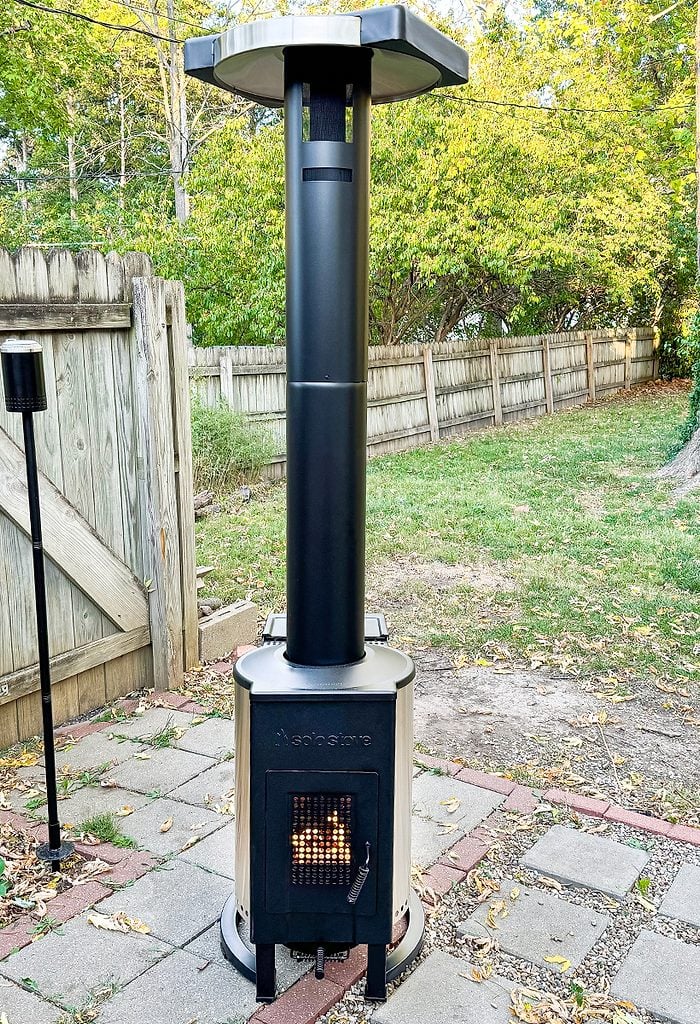
The Solo Stove Tower Patio Heater looks like what might happen if a modern wood stove dressed up for a rooftop cocktail party. It is tall, sleek, dramatically warm, and powered by wood pellets instead of the propane tank hiding beneath most restaurant-style patio heaters.
That unusual fuel system immediately makes the Tower interesting. It promises approximately 72,000 BTUs of heat, a 10-foot heating radius, up to three hours of unattended pellet feeding, and the warm glow of a real flame behind a ceramic-glass window. In other words, it wants to be both a serious outdoor heater and the most attractive guest at your backyard gathering.
After comparing repeated hands-on experiences, manufacturer instructions, operating costs, safety limitations, and real-world heating performance, I found that the Solo Stove patio heater delivers impressive warmth and ambiance. It also demands more planning, space, fuel, and fire awareness than a conventional propane or electric model.
Solo Stove Patio Heater Review: The Quick Verdict
The Solo Stove Tower is a powerful premium patio heater for homeowners who have a spacious, open-air patio and genuinely enjoy managing a real fire. It throws out substantial radiant heat, burns with little visible smoke after startup, and creates an atmosphere that propane heaters cannot quite duplicate.
However, this is not a push-button appliance. It takes time to ignite and reach full temperature, offers no conventional low-to-high heat adjustment, consumes pellets rapidly, and weighs more than 100 pounds. It also becomes extremely hot and must be used outdoors with careful clearance from people, pets, structures, and combustible materials.
- Best for: Open stone, brick, or concrete patios with room for a permanent heater
- Heating output: Approximately 72,000 BTUs
- Effective heat range: Roughly 8 to 10 feet in calm conditions
- Fuel: Natural hardwood or softwood heating pellets
- Hopper capacity: Approximately 25 pounds
- Maximum burn time: Up to about three hours per full hopper
- Weight: Approximately 104 pounds
- Typical price: Around $700 to $800 before accessories or discounts
Overall verdict: Excellent heat and atmosphere for the right patio, but excessive for shoppers who value instant ignition, adjustable temperatures, or easy portability.
What Is the Solo Stove Tower Patio Heater?
The Tower is a pellet-fueled outdoor heater constructed from cold-rolled steel and 304 stainless steel. It stands about 80.5 inches tall and occupies a footprint of roughly 20 by 23 inches, depending on where the widest points are measured.
Instead of using electricity or a propane cylinder, the heater stores compressed wood pellets in a 25-pound hopper mounted behind the firebox. A gravity-fed chute continuously drops pellets into the burn chamber as the existing fuel burns away.
The combustion process does not require an electrical outlet, fan, motor, app, remote, or Wi-Fi connection. Your patio heater will never demand a firmware update while you are trying to enjoy apple cider. Air enters near the bottom, feeds the fire, and carries the hot exhaust upward through the chimney. A deflector near the top redirects a portion of that heat outward.
A small window in the firebox door provides a clear view of the flames. This detail gives the Tower a much more inviting personality than the familiar metal mushroom heater, which often looks as though it was borrowed from the smoking area behind a conference center.
Assembly Is Manageable, but Bring a Helper
The Solo Stove Tower generally arrives in separate packages containing the heavy base and chimney components. Most of the complicated portions are already assembled, leaving the owner to install items such as the chimney, heat deflector, hopper lid, firebox hardware, ash pan, and handles.
Experienced testers have reported assembly times ranging from about 30 minutes to one hour. The instructions are reasonably straightforward, but the size and weight of the components make this a two-person project. One person can technically complete the job, just as one person can technically move a sofa up a staircase. Neither activity is improved by pride.
The upper chimney must be raised and positioned above an already heavy base. A second set of hands reduces the chance of scratching the finish, dropping hardware into the firebox, or inventing new vocabulary in front of the neighbors.
Before the first ignition, inspect the body, welded supports, door, glass, pellet chute, ash pan, and shutoff mechanism for shipping damage. Several independent testers received units with bent or cracked components, so a careful inspection is worthwhile before filling the hopper.
The First Burn Is Smokier Than Normal
The first firing is partly a heating session and partly a finishing process. Solo Stove explains that the initial burn cures the exterior coating and removes manufacturing residue. Some smoke and odor may appear for up to an hour, and the heater’s original finish will begin to change color.
That discoloration is normal. Stainless steel components may shift from bright silver to bronze, while darker coated areas can develop gray or matte patches. The evolving patina does not necessarily indicate damage; it is a predictable result of exposing metal to intense heat.
Do not schedule the first burn for the exact moment guests arrive wearing white cashmere. Complete it in advance, allow the heater to cool, and confirm that the pellet system, firebox door, ash grate, and shutoff plate are operating correctly.
How Do You Light the Solo Stove Patio Heater?
Lighting the Tower is easy once the components are clean and correctly seated. The basic process is:
- Empty the ash pan and inspect the grate and pellet chute.
- Fill the rear hopper with suitable heating pellets.
- Open and lock the pellet shutoff plate so fuel enters the burn chamber.
- Add approximately one tablespoon of approved gel pellet starter.
- Light the starter and close the firebox door.
- Allow the pellets to ignite and establish a strong draft.
The firebox door must remain closed during operation. Opening it disrupts the internal airflow and may cause the pellets to smoke, burn poorly, or go out.
Pellets typically ignite within five to 10 minutes, but noticeable patio-wide warmth takes longer. Depending on weather conditions, expect approximately 10 to 30 minutes before the entire heater reaches its productive cruising temperature.
Heating Performance: Does the Solo Stove Tower Work?
Yes, the Tower can produce a surprising amount of heat. Its advertised output of approximately 72,000 BTUs is substantially higher than the 40,000 to 48,000 BTUs commonly associated with full-size propane patio heaters.
The difference is not limited to a number on a specification sheet. A propane mushroom heater concentrates much of its warmth near the reflector at the top. The Tower radiates heat from the firebox, body, chimney, and upper deflector, giving users a taller and more enveloping zone of warmth.
How Far Can You Feel the Heat?
In calm weather, independent testers have reported feeling useful warmth from approximately eight feet away, with the strongest comfort zone closer to the heater. Solo Stove advertises a 10-foot radius, although wind, temperature, seating position, pellet quality, and clothing all influence the result.
It performs especially well when a group is gathered around a central seating area. It is less effective when expected to heat every corner of a large, exposed backyard. Outdoor heaters warm people and nearby objects; they do not place an invisible roof over the entire property.
Wind Has a Major Effect
Even a strong heater loses effectiveness in moving air. The Tower is intended for calm conditions, and the manufacturer advises against operating it in winds above 5 mph. A breeze carries radiant warmth away, disrupts combustion, and can create additional fire risks.
For best results, place the heater in a legally permitted, open-air location that is shielded from ordinary drafts without enclosing the unit or positioning it beneath an awning.
The Flame Creates Excellent Patio Ambiance
Heat may be the practical reason to buy the Tower, but the visible flame is the feature people remember. The fire shines through the front window and produces a gentle glow, occasional crackling sounds, and the satisfying movement of a real wood fire.
That visual interest makes an evening outdoors feel intentional rather than stubborn. You are not merely refusing to go inside despite the cold; you have created an outdoor room with a fireplace-like focal point.
Once the initial startup phase passes and combustion becomes established, smoke is usually minimal. The Tower is not literally smoke-free under every condition, but dry, high-quality pellets and proper airflow produce a much cleaner burn than an ordinary open wood fire.
Pellet Consumption and Operating Cost
The 25-pound hopper can provide up to approximately three hours of continuous heat. The manual estimates fuel consumption at roughly eight to 10 pounds per hour, so regular users should plan on buying pellets in 40-pound bags rather than carrying home a decorative five-pound pouch.
Use compressed heating pellets made from natural hardwood or softwood. Avoid pellets containing chemical binders or self-starting additives. Food-grade smoking pellets may burn, but they generally cost more and may not deliver the same value for a heater.
Operating cost depends heavily on local fuel prices. Affordable bulk heating pellets can make the Tower cheaper per hour than some propane heaters. Premium barbecue pellets can reverse that advantage very quickly. Burning gourmet cherrywood simply to warm your knees is a financially creative decision.
Pellets must also remain completely dry. Moisture causes them to swell, crumble, and clog the narrow gravity-fed chute. Store fuel indoors or in a sealed weather-resistant container, and protect the hopper from rain and snow.
Temperature Control Is the Biggest Weakness
The Tower does not offer the familiar low, medium, and high settings found on electric and propane heaters. The gravity-fed system is designed to keep pellets moving into the fire at a consistent rate, producing maximum combustion rather than precise temperature control.
Users can stop the pellet supply by closing the shutoff plate, but that begins the shutdown process instead of gently reducing the flame. If the patio becomes too warm, the practical options are to move farther away or end the burn.
This all-or-nothing personality is wonderful on a genuinely cold evening. During milder weather, it can feel like starting a locomotive because one guest mentioned being slightly chilly.
Shutdown and Cleanup
To shut down the heater, put on heat-resistant gloves, open the hopper lid, and close the pellet shutoff plate. The remaining pellets in the firebox will continue to burn. The manual advises allowing approximately 10 to 15 minutes, although the exact time depends on the amount of fuel already in the chamber.
Continue supervising the heater until the flames and embers are fully extinguished. The exterior remains dangerously hot long after visible flames disappear, so do not move, cover, or clean the unit immediately.
Ash falls through the grate into a removable pan. Cleaning is simpler than shoveling a traditional fire pit, but it is not optional. Empty the ash pan before each use and clear buildup around the grate and pellet chute. Place cooled ash in a metal container with a tight-fitting metal lid; hidden embers can remain hot for hours.
The ceramic-glass window may accumulate soot as conditions inside the firebox change. Clean it only after complete cooling, using water, mild soap, and a soft cloth. Dry brushing can scratch the surface.
Size, Weight, and Storage
At roughly 104 pounds, the Tower is mobile only in the generous marketing sense of the word. A built-in rear wheel allows it to be tilted and rolled across smooth pavement after it has completely cooled. It is not intended for regular travel over lawns, gravel, steps, slopes, or uneven pavers.
The weight does provide stability, but buyers should choose the installation area before assembly. This is closer to permanent patio furniture than a heater you casually move beside different chairs throughout the evening.
A protective cover is typically sold separately. That extra purchase is worth considering because the pellet hopper, chute, and firebox must remain dry. Owners who store the heater outdoors should cover it after cooling, while those with garage space can roll it inside between uses.
Important Solo Stove Tower Safety Considerations
The Tower is a real solid-fuel appliance, not a decorative electric lamp. Every exterior surface can become extremely hot, and the heater produces carbon monoxide during combustion.
Use it outdoors only. The instruction manual prohibits operation inside buildings, tents, vehicles, tightly fenced spaces, beneath covered patios or awnings, near open windows, or close to indoor areas. It also requires at least three feet of clearance from combustible materials and recommends keeping flammable liquids or pressurized gas cylinders at least 25 feet away.
A level stone, concrete, brick, or similarly noncombustible surface is the most sensible location. Never leave the heater unattended while it is burning or cooling. Keep children and pets away, wear heat-resistant gloves when operating the pellet shutoff, and maintain access to an appropriate fire extinguisher.
Local burn bans, homeowner association rules, apartment policies, and municipal fire codes may restrict solid-fuel patio heaters. Check those requirements before purchasing a 104-pound appliance that may otherwise become an extremely sophisticated plant stand.
Solo Stove Tower vs. Propane and Electric Patio Heaters
Choose the Solo Stove Tower When You Want:
- Strong, 360-degree radiant heat
- A visible real-wood flame
- No electrical connection or propane cylinder
- Lower-cost operation when bulk heating pellets are inexpensive
- A permanent focal point for a spacious patio
Choose a Propane Heater When You Want:
- Instant ignition
- Adjustable heat settings
- Longer runtime from one standard tank
- A lower initial purchase price
- Faster shutdown and simpler everyday operation
Choose an Electric Heater When You Want:
- Minimal maintenance
- No pellets, ash, smoke, or open combustion
- Targeted warmth for a small seating area
- A practical option for locations where solid fuel is prohibited
- Push-button controls and multiple heat levels
Solo Stove Patio Heater Pros and Cons
Pros
- Powerful 72,000-BTU heat output
- Useful warmth across a broad seating area
- Attractive modern design with visible flames
- Gravity-fed hopper requires little fire tending
- Up to approximately three hours of runtime
- Low smoke after the fire reaches efficient combustion
- Relatively small amounts of easy-to-collect ash
- No electricity or propane tank required
Cons
- Premium purchase price
- No precise heat adjustment
- Consumes eight to 10 pounds of pellets per hour
- Requires 10 to 30 minutes to deliver broad warmth
- Extremely hot exterior surfaces
- Heavy and awkward to relocate
- Protective cover is generally an additional purchase
- Not suitable for enclosed or covered outdoor areas
Who Should Buy the Solo Stove Patio Heater?
The Tower makes sense for homeowners with an open, noncombustible patio who regularly entertain outdoors in cool weather. It is particularly appealing to people who appreciate the ritual and appearance of a wood fire but want less tending and cleanup than a conventional fire pit.
It is not the best choice for balconies, small decks, covered porches, windy yards, households with limited storage, or anyone who wants adjustable heat on demand. Families with energetic young children or pets may also prefer an electric or propane heater with stronger physical barriers and automatic safety controls.
Final Verdict: Is the Solo Stove Tower Worth It?
The Solo Stove Tower Patio Heater succeeds because it does more than create warm air. It produces an experience. The combination of strong radiant heat, glowing flames, minimal smoke, and handsome metal construction can transform a chilly patio into a place people actually want to remain.
Its weaknesses are equally real. The Tower is expensive, heavy, hot, hungry for pellets, and unable to provide modest background warmth. It requires the owner to plan ignition, supervise combustion, manage ash, protect the fuel from moisture, and follow strict placement rules.
For the right homeowner, those responsibilities are part of the charm. For someone who simply wants heat while taking the dog outside, they may feel like joining a tiny volunteer fire department.
Recommendation: Buy the Solo Stove Tower when ambiance, substantial heat, and real-fire character matter more than convenience. Choose propane or electric when speed, temperature control, portability, and simplicity are higher priorities.
Extended Experience Notes: What Repeat Use Really Feels Like
The most revealing thing about living with the Solo Stove patio heater is that it changes the way an outdoor evening begins. With a propane heater, you turn a knob after someone complains about the temperature. With the Tower, you make a small commitment before the gathering starts.
The ash pan needs to be checked, the hopper filled, the chute inspected, and the fire starter lit approximately 20 minutes before guests are expected to settle outside. This routine is not difficult, but timing matters. Light it too late and everyone stands around admiring a stylish metal tower while pretending not to shiver. Light it too early and you may burn several pounds of pellets before anyone sits down.
Once the heater reaches full temperature, the character of the patio changes noticeably. People naturally move their chairs into a loose circle around the Tower. The lower firebox warms legs and torsos, while the hot body and upper deflector spread warmth at different heights. The visible flame gives guests something to watch between conversations, which is surprisingly useful whenever somebody begins explaining cryptocurrency.
Seating distance becomes the unofficial temperature control. A chair positioned four or five feet away can feel intensely warm during a strong burn, while a seat near the edge of the advertised radius receives gentler heat. This arrangement works well for groups because guests can find their preferred comfort zone. It works less well at a fixed dining table where nobody can move without taking the potato salad with them.
Fuel planning also becomes part of ownership. A full hopper may last an evening, but frequent weekend use can empty several 40-pound bags during a cool month. Keeping spare pellets dry and nearby prevents the disappointing discovery that the final bag has absorbed moisture and transformed itself into artisanal sawdust.
Shutdown requires patience. Closing the pellet gate stops additional fuel, but the remaining fire must finish burning. The heater then needs considerable time to cool before it can be covered or moved. Owners quickly learn not to ignite it for a 20-minute visit outside. The Tower rewards longer evenings and punishes spontaneous indecision.
Maintenance is modest but regular. The ash pan is small and convenient, yet ignoring it can restrict airflow. The window occasionally needs cleaning, exterior finishes darken, and the stainless steel develops bronze-colored heat marks. Anyone expecting the heater to remain showroom silver may be disappointed. Anyone who enjoys the evolving appearance of a working fireplace will probably consider the patina part of its personality.
The overall experience falls somewhere between owning an appliance and tending a compact outdoor stove. It is simpler than managing logs in a traditional fire pit, but more involved than pressing an electric heater’s remote control. That middle ground is precisely why some owners love it. The Tower preserves enough fire-building ritual to feel authentic while automating the constant fuel feeding that normally keeps a host away from the conversation.
After repeated use, the deciding question is not whether the Solo Stove Tower produces heat. It does. The better question is whether you enjoy participating in the process. Buyers who view pellets, ignition, supervision, and cleanup as satisfying parts of an outdoor evening will get far more value from the heater than buyers who see those steps as chores.