

Editorial note: This article is based on publicly available information from official U.S. defense sources, congressional oversight material, reputable defense reporting, and established security-analysis organizations. It does not include operational instructions or embedded source links.
The Next Drone War May Not Be in the Sky
When most people hear the word “drone,” they picture a buzzing quadcopter annoying the neighborhood dog, filming a wedding, or delivering a package that somehow lands in a shrub. But the next major chapter in unmanned warfare may not be overhead at all. It may be deep underwater, moving slowly, quietly, and patiently through the world’s most difficult battlefield: the ocean.
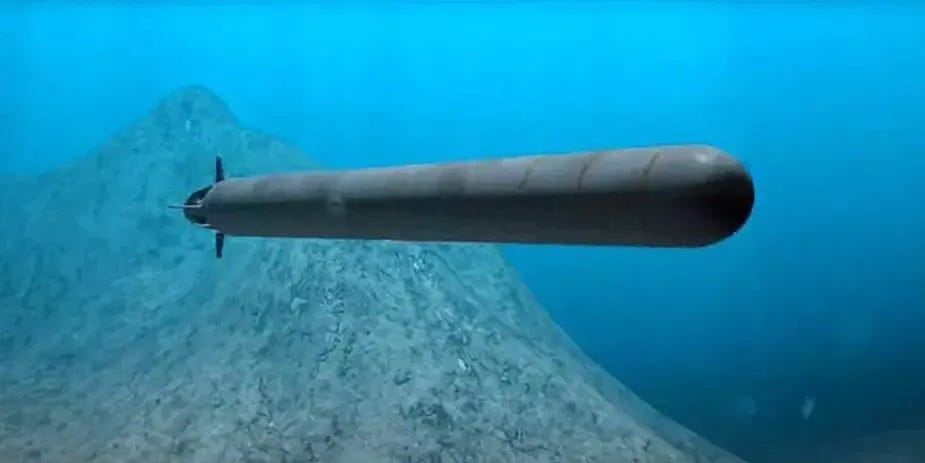
Autonomous underwater warfare is no longer a science-fiction subplot with dramatic sonar pings and a villain stroking a cat in a submarine. It is already here. The United States is testing large unmanned undersea vehicles, the Pentagon is investing in autonomous maritime systems, and allies are racing to integrate drones into naval operations. At the same time, North Korea has claimed progress on nuclear-capable underwater drones, including its “Haeil” family of systems, which Pyongyang says can threaten ports, naval formations, and coastal targets.
The uncomfortable part for Washington is not that North Korea has suddenly become the Apple of underwater robotics. It has not. The uncomfortable part is that a less wealthy, heavily sanctioned country can still create strategic anxiety by combining propaganda, nuclear weapons, coastal geography, and unmanned platforms. In other words, North Korea does not need the world’s best underwater drone. It only needs one scary enough to force the United States, South Korea, and Japan to spend serious time and money defending against it.
Why Autonomous Underwater Warfare Matters Now
The ocean is a terrible place for robots, which is exactly why navies want them there. GPS signals do not work underwater. Radio communications are limited. Saltwater is rude to electronics. Pressure increases rapidly with depth. Visibility can be worse than trying to read a menu in a candlelit restaurant after losing your glasses.
Yet those same difficulties make underwater drones valuable. A successful unmanned underwater vehicle, or UUV, can perform dangerous, dull, or strategically sensitive missions without risking a human crew. These missions can include mine detection, seabed mapping, surveillance, anti-submarine support, intelligence collection, payload delivery, and potentially strike operations. For a navy that already struggles to build enough ships and submarines on time, unmanned systems promise more coverage without requiring a sailor inside every hull.
For the United States, autonomous underwater systems fit into a broader vision of distributed maritime operations. Instead of concentrating power in a small number of expensive ships, the Navy wants a more spread-out force: crewed submarines, surface ships, aircraft, sensors, satellites, unmanned vessels, and autonomous vehicles working together. The theory is simple. If an adversary has to track many smaller nodes instead of a few big targets, the math becomes painful. And in war, making the enemy’s math painful is practically a love language.
North Korea’s Underwater Drone Gamble
North Korea introduced the world to its claimed “Haeil” nuclear underwater attack drone in 2023. Pyongyang later said it tested related systems, including what it called the Haeil-5-23. North Korean state media described these weapons as capable of carrying nuclear warheads and striking ports or naval forces. Analysts have treated those claims carefully, because North Korea has a long history of mixing real military development with theatrical messaging. The regime does not just test weapons; it stages them.
Still, dismissing the threat outright would be a mistake. North Korea has shown persistence in missile development, submarine-launched ballistic missile experiments, cruise missiles, tactical nuclear messaging, and unmanned systems. Its naval forces may be technologically uneven, but the Korean Peninsula is a geography of short distances, busy waters, and high political tension. A slow underwater weapon that would be unimpressive in a blue-water race across the Pacific could still matter in regional waters.
The Haeil concept appears designed less like a sleek American robotic submarine and more like an asymmetric terror weapon. Its value may come from uncertainty. Is it real? How many exist? Can it navigate reliably? Can it carry a nuclear payload? Can it be detected early? Those questions force planners to prepare for worst-case scenarios. North Korea understands this perfectly. Strategic ambiguity is cheaper than building a perfect fleet.
The Threat Is Psychological as Well as Technical
A nuclear-capable underwater drone does not need to win a Top Gun trophy for underwater robots. It only needs to make defenders worry about ports, naval bases, chokepoints, and carrier strike groups. Even if the system is slow, noisy, or vulnerable to anti-submarine warfare, it could complicate crisis planning.
Imagine a tense moment after a missile test or military exercise. North Korea announces that several underwater drones have been deployed. It does not need to prove every detail. The claim itself could force allied navies to search, slow operations, raise alert levels, protect harbors, and divert resources. That is the strategic trick: use uncertainty as a weapon.
America’s High-Tech Answer: Orca, Manta Ray, and More
The United States is not standing still. The Navy has accepted delivery of the first Orca Extra Large Unmanned Undersea Vehicle, a Boeing-built autonomous diesel-electric platform designed with a modular payload section. Orca is intended to support long-range missions and give the Navy a flexible undersea tool that can carry different sensors or payloads depending on the mission.
Then there is DARPA’s Manta Ray program, one of the most visually striking underwater drone efforts in the world. The Northrop Grumman-built prototype completed in-water testing off Southern California in 2024. The program is focused on long-duration, long-range, payload-capable underwater autonomy. In plain English: the Pentagon wants robotic sea creatures that can travel far, stay out for a long time, and do useful work without needing constant babysitting.
These systems show that the United States has a deep bench of technology. American defense contractors, Navy labs, research agencies, universities, and startups are all working on autonomy, energy management, underwater navigation, sonar processing, modular payloads, and human-machine teaming. On paper, the United States has every advantage: money, engineering talent, allies, test ranges, shipyards, and decades of undersea warfare experience.
So why does the title say America is fighting to keep up? Because in military innovation, the best prototype does not matter if it arrives too late, costs too much, or never scales beyond a PowerPoint slide with very confident arrows.
The U.S. Problem: Innovation Is Fast, Procurement Is Not
The Pentagon can produce astonishing technology. It can also turn buying a new thing into a bureaucratic obstacle course that makes a DMV line look like a Formula 1 pit stop. The Navy’s unmanned systems programs have faced familiar challenges: shifting requirements, testing delays, cost concerns, uncertain transition plans, and the difficulty of integrating new platforms into a fleet built around crewed ships and submarines.
Oversight bodies have raised questions about whether major unmanned undersea programs can move from experimentation into reliable operational use. That matters because autonomous underwater warfare is not just about designing the vehicle. It is about training sailors, writing doctrine, building maintenance pipelines, securing communications, validating software, testing autonomy, integrating sensors, and deciding who has authority when machines operate far from human control.
North Korea’s advantage is not better engineering. It is fewer brakes. Pyongyang can announce a system, parade it, test it under opaque conditions, and claim success without congressional hearings, open budget scrutiny, or public acquisition milestones. That does not make the system better. It makes the information environment messier. The United States must prove, test, certify, integrate, and defend. North Korea can simply declare and threaten.
Why Underwater Autonomy Is Harder Than Airborne Drones
The world learned from Ukraine that cheap drones can reshape warfare quickly. Small aerial drones became scouts, artillery spotters, loitering munitions, and propaganda cameras. Naval surface drones also proved dangerous, especially against ships in constrained waters. But underwater drones are a different animal.
Air drones can use GPS, radio links, commercial cameras, and relatively cheap components. Underwater drones must navigate without GPS, often communicate through slow acoustic signals, and manage energy carefully. A flying drone can return to a charging station or crash visibly. An underwater drone may disappear into a cold black soup of pressure, currents, fishing nets, sediment, and marine life that definitely did not sign a defense contract.
Autonomy underwater therefore requires more trust. The vehicle must understand where it is, avoid hazards, manage power, collect data, and sometimes make decisions with limited contact from operators. That makes software reliability and mission planning critical. It also raises ethical and strategic questions, especially when weapons are involved. A mine-hunting robot is one thing. A nuclear-capable underwater drone is another thing entirely.
The Korean Peninsula Is a Dangerous Test Case
The waters around the Korean Peninsula are uniquely suited to this new era of undersea competition. They are crowded, politically sensitive, and militarily watched. North Korea has long maintained a sizable submarine force, much of it aging but still relevant for coastal operations, infiltration, and regional pressure. South Korea and the United States have advanced anti-submarine capabilities, but defending every port, cable, harbor entrance, and naval operating area against unmanned underwater threats is a demanding job.
Japan also has a major stake in this contest. U.S., South Korean, and Japanese naval drills have repeatedly angered Pyongyang, which frames them as invasion rehearsals. North Korea’s underwater drone announcements often appear timed as responses to allied exercises. That timing suggests the systems are not only weapons but political messages aimed at alliance coordination.
The result is a cycle. Allies train to deter North Korea. North Korea announces new threats. Allies improve detection and defense. North Korea seeks new ways to create fear and uncertainty. Somewhere in the middle, underwater drones quietly become part of everyday security planning.
Autonomous Underwater Warfare and the New Arms Race
This competition is not limited to North Korea. China, Russia, the United States, Australia, the United Kingdom, South Korea, and others are all exploring unmanned maritime systems. AUKUS cooperation has placed undersea technology, artificial intelligence, and autonomy near the center of allied defense innovation. The U.S. Replicator initiative has also emphasized faster fielding of autonomous and attritable systems across multiple domains, including maritime operations.
The strategic logic is obvious. Underwater drones can expand surveillance, complicate enemy planning, protect seabed infrastructure, hunt mines, support submarines, and potentially threaten ships or ports. They may also be cheaper than traditional crewed platforms. That does not mean they are cheap in the absolute sense. A large underwater drone can still cost enough to make taxpayers check whether it comes with leather seats and a sunroof.
But cost must be compared with risk. A crewed submarine is an extraordinary asset, but it is expensive, scarce, and politically sensitive. Sending an unmanned vehicle into a dangerous area may be more acceptable. Losing a robot is painful. Losing sailors is a tragedy. That distinction will drive military adoption.
What the U.S. Must Do to Stay Ahead
First, America must move from demonstration to deployment. Prototypes are useful, but deterrence requires credible operational capability. The Navy needs systems that commanders trust, sailors can maintain, and allies can integrate into real exercises.
Second, the United States must invest in counter-UUV defenses. It is not enough to build underwater drones; ports and fleets must be able to detect and defeat enemy systems. That means better sonar networks, harbor defense, seabed sensors, unmanned patrol platforms, rapid data analysis, and cooperation with allies. The underwater threat is not solved by one magic gadget. It is solved by layers.
Third, procurement must become less allergic to speed. The Pentagon does need testing and accountability. Nobody wants a billion-dollar robot submarine that gets confused, bumps into a pier, and becomes the world’s most expensive artificial reef. But the United States also cannot treat every autonomous platform like a 30-year shipbuilding program. Software-driven warfare rewards iteration.
Fourth, Washington must be honest about North Korea’s role. Pyongyang is not leading the world in underwater robotics, but it is pushing the region into a more dangerous undersea era. Its nuclear messaging, drone claims, and submarine ambitions create real operational burdens. The U.S. response should be calm, technical, and persistent, not panicked.
Experience Notes: What This Underwater Shift Feels Like in Practice
Anyone who has followed naval technology for years will recognize a familiar pattern: the future arrives first as a strange-looking prototype, then as a budget line, then as a training headache, and finally as something commanders cannot imagine operating without. Autonomous underwater warfare is somewhere between stages two and three. The machines exist. The budgets exist. The hard part now is turning them into routine capability.
The most important experience-related lesson is that the ocean punishes optimism. A drone that performs beautifully in a controlled test can struggle in rough water, cluttered seabeds, unexpected currents, or contested environments. That is why naval operators tend to be skeptical in the healthiest possible way. They do not ask, “Does it work in a video?” They ask, “Can it work at 2 a.m., after three weeks at sea, with degraded communications, while everyone is tired and the weather is acting personally offended?”
Another practical lesson is that autonomy changes the human job; it does not remove humans from the fight. Sailors and commanders still need to plan missions, interpret data, maintain vehicles, update software, and decide how unmanned systems fit into broader operations. The robot may go underwater alone, but it carries an entire human organization behind it. If that organization is confused, the robot becomes an expensive torpedo-shaped intern.
Exercises also matter more than speeches. A system becomes real when crews launch it, recover it, troubleshoot it, and learn what breaks. That is where doctrine is born. Not in glossy brochures, but in the awkward middle space where an operator discovers that a vehicle needs a different checklist, a better battery plan, or a more practical way to share data with the rest of the fleet.
The North Korea angle adds urgency because it shows how unmanned systems can become strategic symbols before they become proven battlefield tools. Pyongyang understands theater. A photograph of a strange underwater weapon, paired with nuclear language, can produce headlines around the world. The United States, by contrast, must build confidence through repeatable performance. That is slower, less dramatic, and ultimately more useful.
For readers trying to understand the bigger picture, think of autonomous underwater warfare as a contest between patience and speed. The machines must be patient because undersea missions can be long, quiet, and slow. Governments must be fast because rivals are experimenting constantly. The country that wins will not simply be the one with the coolest drone. It will be the one that can build, test, deploy, repair, update, and coordinate these systems at scale.
That is why America’s challenge is so serious. The United States has the technology to lead. It has the allies to multiply that lead. It has the naval experience to understand what matters underwater. But it must convert those advantages into fielded capability before adversaries use cheaper, rougher, and more politically reckless systems to change the rules. In autonomous underwater warfare, the race is not just to build the smartest machine. It is to build the smartest system around the machine.
Conclusion: The Silent Race Beneath the Waves
Autonomous underwater warfare has moved from laboratory curiosity to strategic reality. North Korea’s claimed nuclear-capable underwater drones may be technically uncertain, but their purpose is clear: create fear, complicate allied planning, and expand Pyongyang’s menu of threats. The United States has more advanced programs, deeper expertise, and stronger alliances, but it also faces the burden of moving complex technology through a slow defense system.
The undersea domain has always rewarded stealth, patience, and discipline. Now it is beginning to reward autonomy as well. The next crisis on the Korean Peninsula may involve missiles, aircraft, cyberattacks, or artillery. But it may also involve something quieter: an unmanned system moving beneath the surface, forcing everyone above it to wonder what else is down there.
America is not losing the underwater drone race. But it is being reminded, loudly and uncomfortably, that technological superiority is not the same as operational readiness. North Korea’s advantage is not sophistication; it is disruption. To stay ahead, the United States must make autonomous underwater systems reliable, scalable, defendable, and real. The future of naval warfare is not just on the horizon. It is below the waterline.